
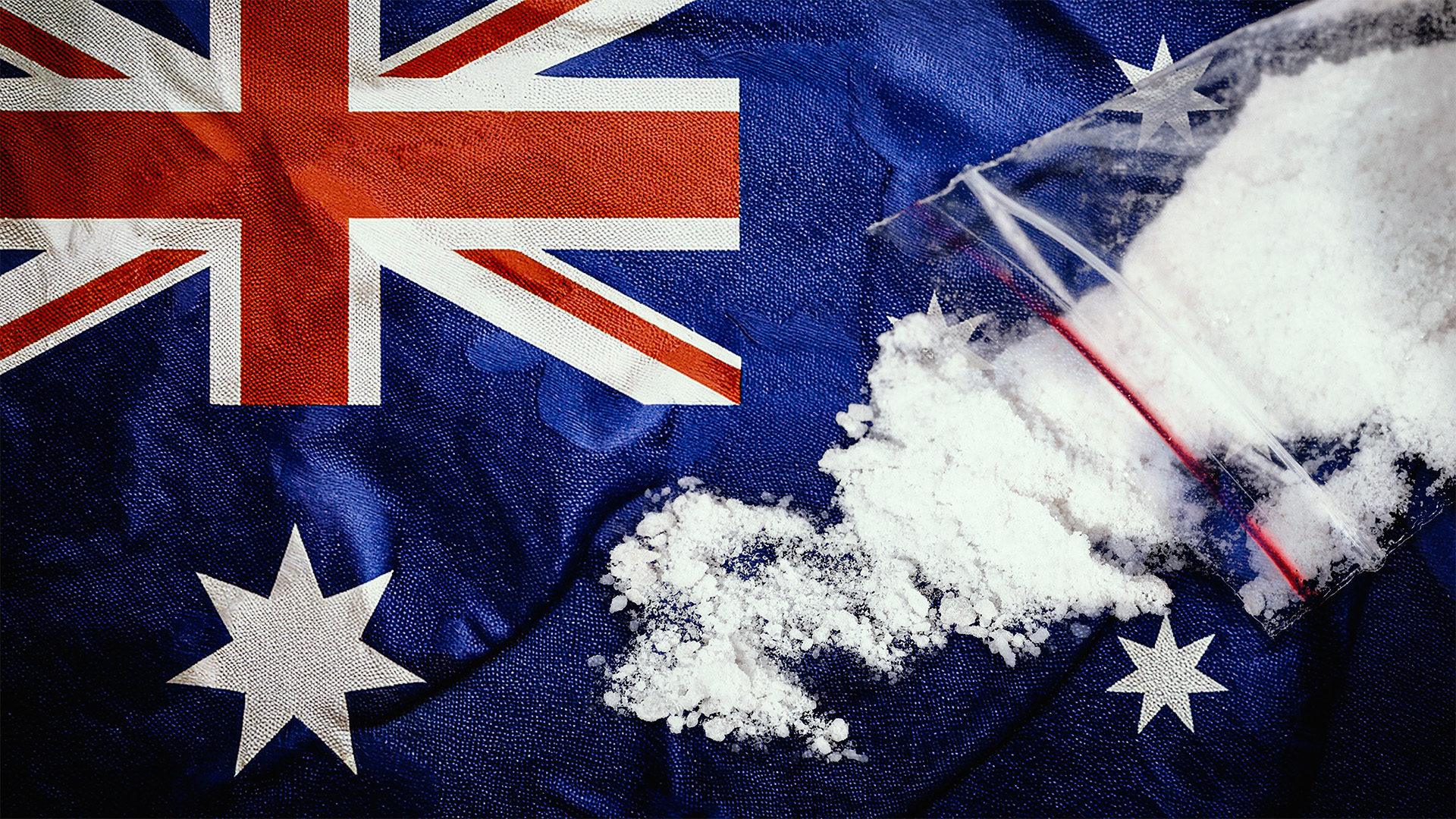
Australia has a serious drug problem. But the biggest price is being paid by the people of tiny island nations spread out across the Pacific, some with populations smaller than a Sydney suburb.
International drug cartels are exploiting the vast open waters, and lack of policing resources, to ferry huge quantities of cocaine, heroin and methamphetamine to Australia across the Pacific. It is one of the world’s most lucrative markets for illicit drugs.
Australians use cocaine and meth at rates that rank among the highest in the world, paying prices that traffickers elsewhere can only dream of. A kilogram of cocaine worth around US$63,000 in North America can reportedly sell for more than US$335,000 in Australia.
In the first five months of this year, 17 tonnes of illicit drugs, mostly cocaine, were seized in a region where some island chain nations have populations in the thousands.
The scale of the trade was underscored once again on June 22, when Australian police announced the country’s largest-ever cocaine seizure: 2.7 tonnes hidden beneath false floors of shipping containers on a property in Sydney.
Police put the street value of the drugs at A$816 million (£432m). The cocaine allegedly came via the tiny township of Midge Point, on the northern Queensland coast, where 40kg was found floating near a boat ramp in May. A “mother ship” seized in the Solomon Islands is believed to be part of the same operation though investigators said they hadn’t yet determined the shipment’s origin.
The Australian Federal Police warned that the “magnitude and endless maritime trafficking of illicit drugs to and through the Pacific” now poses a serious national security threat for Australia and the greater region.
Suggested Reading


Australians couldn’t give an XXXX about Trump’s new tower
In a statement in May, police commissioner Krissy Barrett said: “Most of the illicit drugs being trafficked to and through the Pacific are destined for Australia, so we have a moral responsibility to act and a direct responsibility to the Australian public to stop these drugs from reaching our shores.”
It was, she said, “our nation’s shame that Australians consume too many illicit drugs and pay high prices for them”.
Australia’s response has largely reflected its traditional role as the Pacific’s security partner, with police, intelligence officers, and surveillance aircraft that monitor expanses of ocean stretching further than the eye can see.
Among the methods troubling law enforcement are semi-submersible “narco-subs,” surfboard-shaped vessels painted sea green and capable of carrying tonnes of cocaine thousands of miles from Colombia to Fiji or Tonga.
Sometimes the discarded subs float ashore in the pristine lagoons of far-flung islands, thousands of kilometres from the cocaine labs of South America.
For the subsistence fishing communities of the Solomon Islands, the recent appearance of a beached narco sub was a reminder that the isolation that was once a protection has become a liability.
The Lowy Institute has identified a series of networks that is driving the trade across the Pacific including: Chinese and Asian syndicates; Mexican and South American cartels; Australian and New Zealand organised crime; and local or hybrid indigenous drug gangs.
But the drugs don’t just pass through countries like Fiji, Tonga, Vanuatu, Solomon Islands and Samoa – places better known for exporting rugby players and importing tourists.
The influx of narcotics brings with it organised crime, money laundering and official corruption. Rising addiction and HIV infections linked to intravenous drug use are putting pressure on public services, law enforcement, and family and community structures.
In small island communities where social ties are very close, unexplained wealth rarely goes unnoticed. Luxury watches, designer handbags, and new vehicles are appearing in communities where everyone knows everyone’s business. Sudden prosperity is difficult to explain and nowadays is highly suspect.
The attraction is clear enough: economic opportunities in Pacific nations can be limited and government resources stretched thin. The proceeds from a single drug shipment can be life-changing.
Regional journalists now say that their countries have been transformed by Australia’s appetite for narcotics into transit points on a “global drug superhighway”, exposing them to violence, corruption and addiction.
The trail of dirty money the drugs leave behind is causing serious social, economic and political problems. Lowy has warned that island states are increasingly becoming destinations, production sites and operational bases for criminal groups.
The UN Office on Drugs and Crime reported that Australia and New Zealand now have the world’s highest per capita cocaine use, with 3% of people aged 15-64 having used cocaine in 2023.
Waste water analysis by the Australian Criminal Intelligence Commission also found Australia was the second biggest consumer of meth in the world in 2023-24. It valued illicit drug consumption at over AUD$14 billion a year, with 77% of that spent on meth.
The example that causes particular alarm in Australia and across the Pacific region is Colombia.
Suggested Reading
The Iran war has taught Australia a new, brutal truth about itself
There, cocaine financed the long, left-wing insurgency. A deal in 2016 with the Revolutionary Armed Forces of Colombia created an opening that criminal gangs rushed to fill. The result was not just more cocaine, but the spread of corruption, violence and criminal influence into everyday life.
“In the past, you could point to a group, sit down with the people involved, talk things through,” Nora Taquanas, an indigenous leader, told the FT. “We’re now dealing with groups that are driven primarily by economic interests.”
The fear across the Pacific is that, similarly, once the illicit economy puts down roots it will be impossible to eradicate, eventually corrupting the institutions meant to police it, raising fears that some tiny nation states could become narco-economies.
While the Australian Federal Police has announced cooperative programs with other Pacific police departments, little is being done at the end of the supply chain to educate Australians on the downstream consequences of what is generally regarded as personal choice or recreational indulgence.
Cigarette packets carry grisly photos of tarred lungs or ulcerated legs to warn against smoking. Drug users receive no equivalent reminder that the consequences of their choices are felt far away from where the drugs are consumed.
The cocaine might end up at dinner parties in Sydney or Perth. But it is the small, island communities of the Pacific that are left to bear the consequences.
Lynne O’Donnell is an associate editor of The New World
 Most popular

The problem is they just don’t care about us any more


The New World at 500: Independence isn’t our marketing slogan. It’s our business model


Churchill, the Beatles, St George: All the English heroes who aren’t actually English
Sorry Nigel, but the polls show you’ve had it