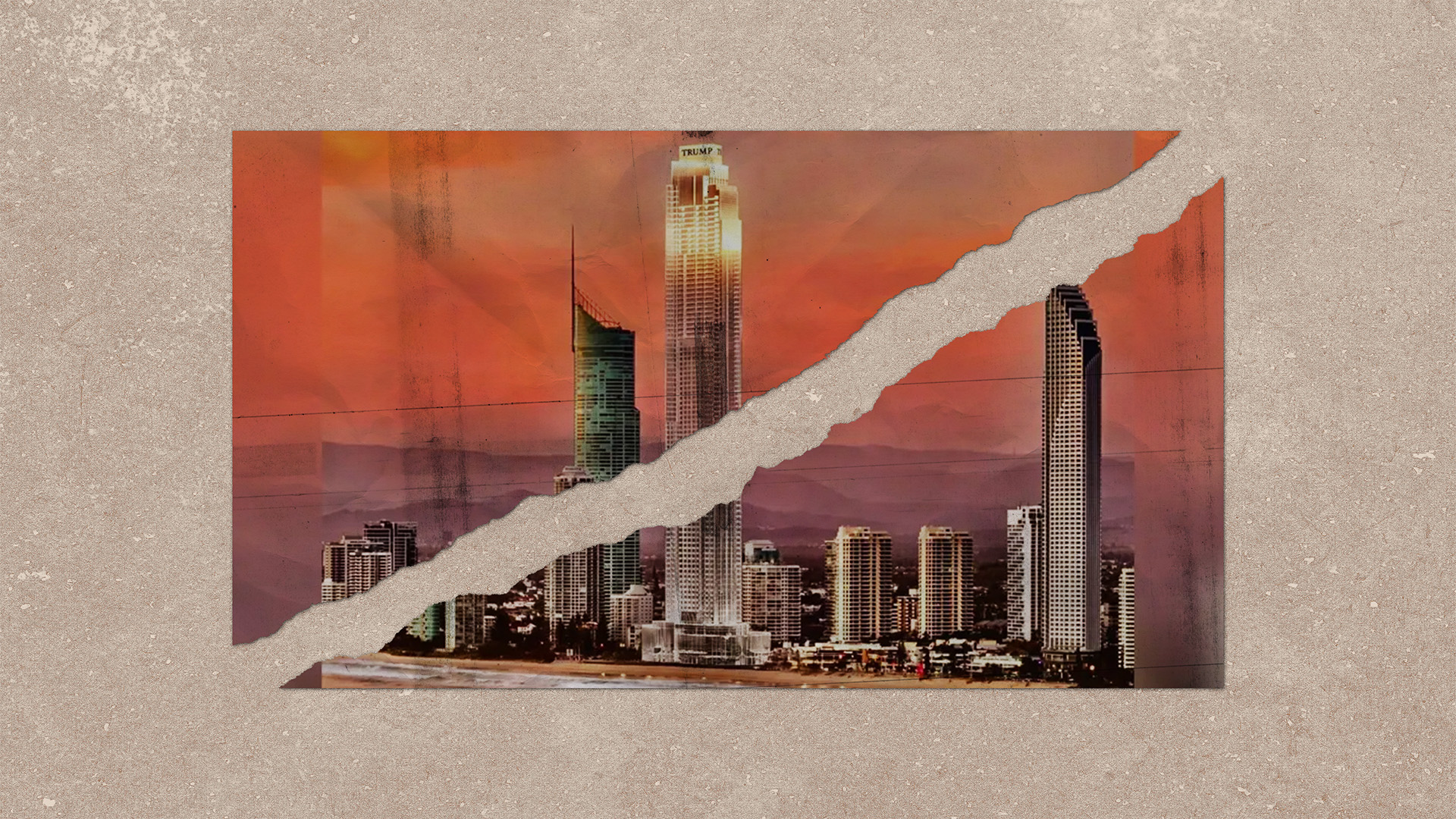
In Australia, an unmissable political metaphor has hit the news: the plan to build a Trump tower in Surfers Paradise, on the Gold Coast, has been abandoned.
The marriage of Trumpian excess and Australia’s most flamboyant beach resort felt like destiny. Surfers Paradise, with its taste for spectacle, height and conspicuous wealth – where Meter Maids in high heels and gold bikinis evolved into Instagram-era promotional glamour – seemed like the Trump brand’s natural habitat.
But just three months after David Young, boss of the Altus Property Group, and the US president’s son, Eric Trump, toasted their deal for the 91-storey behemoth, the dream is over – and the recriminations have begun.
“Let’s just say that with the Iran war and everything else, the Trump brand was increasingly toxic in Australia,” Young told local media. The Trump Organisation said the plan broke down because Young had failed to meet contractual obligations. But local opposition was fierce: more than 124,000 people signed a petition to stop it going ahead.
The collapse is more than a planning dispute. It holds a mirror up to the trajectory of populist politics here in Australia. Queensland, the northern “sunshine state” built largely on agriculture, mining and manufacturing, has had that style of politics for a while. By the time Trump descended the elevator, Pauline Hanson had already spent decades building a populist movement from rural Queensland around nationalism, anti-elite resentment and cultural grievance.
Her election to Queensland’s state parliament in 1996 demonstrated that there was a durable Australian audience for that message. Hanson was Trumpian even before he packaged it for global consumption.
Much of Australia’s political and media establishment have treated Hanson’s supporters the way Hillary Clinton described Trump voters in 2016 – as a “basket of deplorables”. For years, Hanson was mocked for her background as the daughter of small-town fish-and-chip shop owners, for her accent, appearance, lack of formal education and the bluntness of her message. She has been called a racist redneck, white trash, and much more.
Suggested Reading

The racism so deep in Australian culture most people can’t even see it
Then, in 2003, she was sentenced to three years for electoral fraud, but was released after 11 weeks when an appeals court overturned her conviction.
Early in her career, Hanson questioned how billions of dollars could be spent on Indigenous programmes while many First Nations communities remained trapped in violence, addiction, poor health and generational poverty. Much of the political establishment treated those criticisms as beyond the pale.
Just as Trump spoke of “American carnage”, Hanson was able to justify her views by pointing to the social crises erupting across regional Australia. These, she said, exposed the failure of successive governments to translate spending into meaningful change.
Now, Australia has a worsening housing crisis. Property prices and rents are spiralling beyond the reach of many people, an issue that intersects with an increasingly edgy conversation about immigration and a broader sense of the state being under strain.
Politicians and commentators who raise those concerns are regularly accused of xenophobia or dog-whistle politics, even as housing shortages deepen, homelessness rises and home ownership drifts further out of reach. These are the concerns that Hanson tapped into. Younger Australians, like their British counterparts, appear to be drifting into that disillusionment, as the stability and prosperity previous generations took for granted – housing, secure employment, upward mobility – slip away. Even the ability to plan for the future has become harder as technology begins replacing professions once thought safe.
Strong polling and a struggling left wing Labor government have pushed Hanson and her One Nation party to the forefront of Australian politics. With two years still to go before the next federal election, Labor is already reshaping campaign strategy around Hanson’s resurgence.
Such is the potency of the challenge that left-leaning weekly the Saturday Paper quoted Labor Party insiders acknowledging One Nation as the “all-but-official opposition … a wrecking ball” that it was taking “very, very seriously”.
Suggested Reading
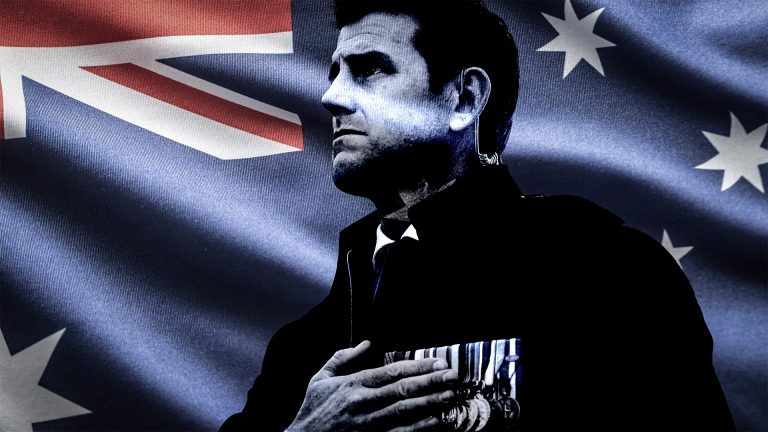
The lesson Australian justice has for Trump – and for the world
Australia is hardly alone in this shift. Across western democracies, parties once dismissed as peripheral or protest movements have moved steadily towards the mainstream as public trust in institutions, media and traditional parties has weakened.
Hanson recognised those tensions early in Australia, much as Farage did in Britain. Trump’s particular talent was to commercialise them, wrapping them in celebrity, branding and performance.
But it seems that Hanson’s appeal might have hit its ceiling – some Aussies might go for the populist option, but not enough to put her into power.
As someone said to me recently, if a Trump Tower couldn’t fly in Surfers Paradise, it couldn’t fly anywhere in Australia. It was intended as a joke, but there was more truth in it than most developers would probably care to admit. The politics surrounding the Trump name may now carry more risk than reward.
Lynne O’Donnell is a journalist, author, broadcaster and is studying for a Master’s in war studies at King’s College London