Ten years ago, I travelled to the east coast of America with my parents for our summer holiday. You might expect a 12-year-old’s most anticipated part of that trip to have been seeing the Empire State Building, riding in a yellow taxi, or discovering quite how much sugar Yanks manage to squeeze into a single fizzy drink.
But I was a pale, weedy child, and so my main request when we arrived in Boston was to visit the site of the Boston Tea Party. The museum – or, as they preferred to call it, an “American Revolution Experience” – was very informative, but unfortunately it was run by Americans, which meant audience participation encouraged by actors in colonial dress-up.
I remember at one point the ‘rebels’ went around asking where all us ‘strangely dressed travellers’ were from.
“California!”
“Arkansas!”
Willing participants cried out.
Then, a few rows ahead of us:
“England.”
“BOOOOO!”
“When someone speaks the name of our tyrannical rulers across the sea, we must all turn up our noses, fellow rebels!” declared the presumably very underpaid theatre student running the show.
When they got to us, my dad and I said we were Irish (we’re Scouse, so it’s only half a lie) to spare ourselves the embarrassment.
One thing we’re very often told in simplified versions of that revolution is that the Americans of 1776 were anti-British. And they were. But that overlooks something important.
Suggested Reading

America’s 250th will be a Trumpian orgy of self-indulgence
The grievance of the founding fathers wasn’t that the King was British. In fact, only a couple of decades before the Declaration of Independence, many colonial Americans had celebrated the British for freeing them from what they saw as the tyrannical rule of the French. Ironically, it was the cost of fighting that war that led Britain to raise taxes in America – which, in turn, helped provoke the Boston Tea Party.
The Revolution wasn’t simply a war for independence from a colonial power. It was also driven by a strikingly novel political belief: that concentrated, unaccountable power was something to be viewed with suspicion.
The American republic was built by learned men. Lawyers, inventors, philosophers and political obsessives who rejected the divine right of kings, and tried to build something the world had never seen before: a republic where liberty belonged to everyone and power belonged to no one.
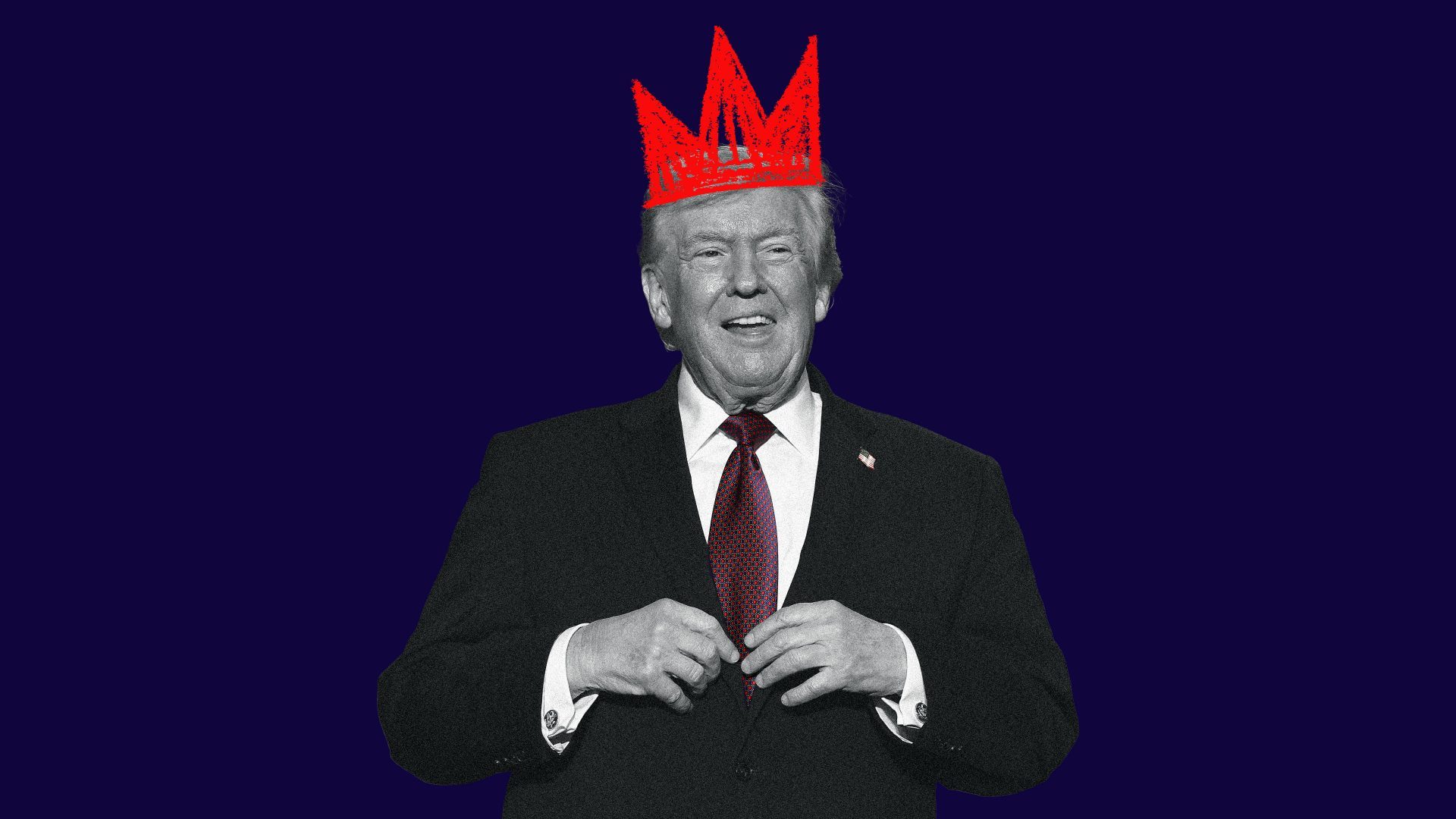
Yet on its 250th birthday, that republic is led by perhaps the stupidest and most pathetic world leader ever elected: a man who seems determined to become the very thing America was created to escape.
This is how America forgot its revolution.
The men of the founding generation devoured the thinkers of the Enlightenment: Locke’s theory of government by consent and ideas of tabula rasa, Montesquieu’s insistence on separation of powers, Rousseau and Paine, to name but a few.
Were these men “great”? That depends on your definition. Many were slaveholders, which obviously sits uneasily with the mythology built around them. But they still genuinely constructed a political experiment from first principles.
Which is why it is all the more nauseating that the man now running that experiment would probably struggle to name five of the Founding Fathers. Of course, America has become less intellectual over time — they are the country that invented television, for God’s sake — but part of what makes its history so compelling is that it was built with a purpose.
And it is endlessly fascinating to watch how differently that purpose has been interpreted over time: in the 250 years since they fought and won independence from us, Americans have repeatedly reinterpreted what the republic was for, and what the liberty at its heart was supposed to mean.
Thomas Jefferson imagined liberty as independence: a nation of self-sufficient citizens, each man owning his own land and owing little to any central authority. Theodore Roosevelt imagined liberty as national strength, opportunity, and civic belonging, where anyone could become fully American via commitment to the republic itself.
What all the founders, and great presidents, probably agree on though, is that liberty means freedom from tyranny: arbitrary rule concentrated in a single executive, justified by birth, insulated from consent, and able to bend law to will.
When designing the constitution, they expected power to corrupt, and they built it accordingly: separation of powers, checks and balances, federalism, courts independent of the executive. They expected bad leaders (but whether they expected one quite this brazenly immoral, history does not say).
Suggested Reading

The American right’s war on Britain
There were some who wanted George Washington to remain president for life. He refused and in his farewell address he warned against factionalism and the poison of personality in politics. How’s that going?
From almost the very beginning of the republic, Americans have accused their leaders of behaving like kings.
Andrew Jackson, a brutal and brilliant populist, was branded “King Andrew” by his enemies. He believed he embodied the will of the people and used that belief to wage war on the Second Bank of the United States, destroying it in a personal crusade that reshaped the American economy for years. He remains infamous, and rightfully hated (except for by Trump) for the Indian Removal Act, which forced tens of thousands of Native Americans from their land – an act of ethnic cleansing known as the Trail of Tears.
During the civil war, Abraham Lincoln suspended habeas corpus, meaning people could be arrested and detained without a trial if they undermined the Union effort. Lincoln argued it was necessary to prevent the Union from collapsing. His critics called him a dictator.
Franklin D Roosevelt faced a different kind of crisis again. The Great Depression and the Second World War demanded a federal state larger and more interventionist than anything America had previously seen. He packed the Supreme Court after it struck down parts of his New Deal. He authorised the internment of Japanese Americans, one of the darkest domestic decisions in American history.
All of these men did great and terrible things. They were titans of their eras. Each one represented something distinctive about the political situation they faced. Whether history ultimately praises or condemns them, they were driven by something beyond themselves: a belief that the country had to be steered through danger, even at the cost of stretching the Constitution.
But Trump is a tyrant without a cause.
He ignores Congress, he diverts funds, he puts pressure on election officials to ‘find’ evidence of fraud, and he starts illegal wars.
In recent weeks, he has managed to outdo even himself when it comes to disrespecting the Constitution.
Suggested Reading

Larry David, the surprising standard-bearer for American hope
The Fourteenth Amendment is one of the clearest statements in American law. If you are born in the United States, you are a citizen.
Trump attempted to challenge it by executive order in 2025, seeking to deny citizenship to children of immigrants born on US soil. Courts blocked it almost immediately, and the Supreme Court this month ultimately ruled against it. Perhaps there is some hope there, but the fact it was even a split decision on such a constitutional no-brainer should be cause for concern.
Trump has no political philosophy. He causes chaos for no discernible reason other than boredom or to marginally better his position on that specific day. I think he would happily watch the country burn so long as he could be king of the ashes.
And so America reaches its 250th year in a peculiar condition: it remembers the victory, the idea of America Number One!, more clearly than the argument that justified it. I wonder what James Madison would recognise as more patriotic: fireworks on the Fourth of July, or defending the republic from tyranny?
We live in a world where there are fewer monarchs than in 1776, yet more kings than the Founders could ever have imagined. Some own data. Some own infrastructure. Some own politicians. The power that John Locke and Jean Jaques Rousseau would have railed against has not disappeared, it has simply changed shape.
On July 4, it will be difficult to watch a man who clearly believes himself the ruler — perhaps even the owner — of America preside over the celebration of its independence from exactly that. But America is not something that can be owned, or ruled.
Because, as cringe as it is to say, America is an idea.
And Americans should remember that men once fought and died for that idea two and a half centuries ago. Do not let a charlatan who could never grasp the quiet extraordinariness of that nation become a living contradiction of it.
Patriots, remember your revolution.
 Most popular
I was at Eton with Charles Spencer – this is how it explains his battle with the royals

Emily Maitlis’s diary: My deep dive into Jeffrey Epstein’s hidden empire – and the network that let him get away with it

The Greens’ foolish anti-Zionism vote is a disaster for Zack Polanski
Putin’s wartime economy is heading for catastrophe