
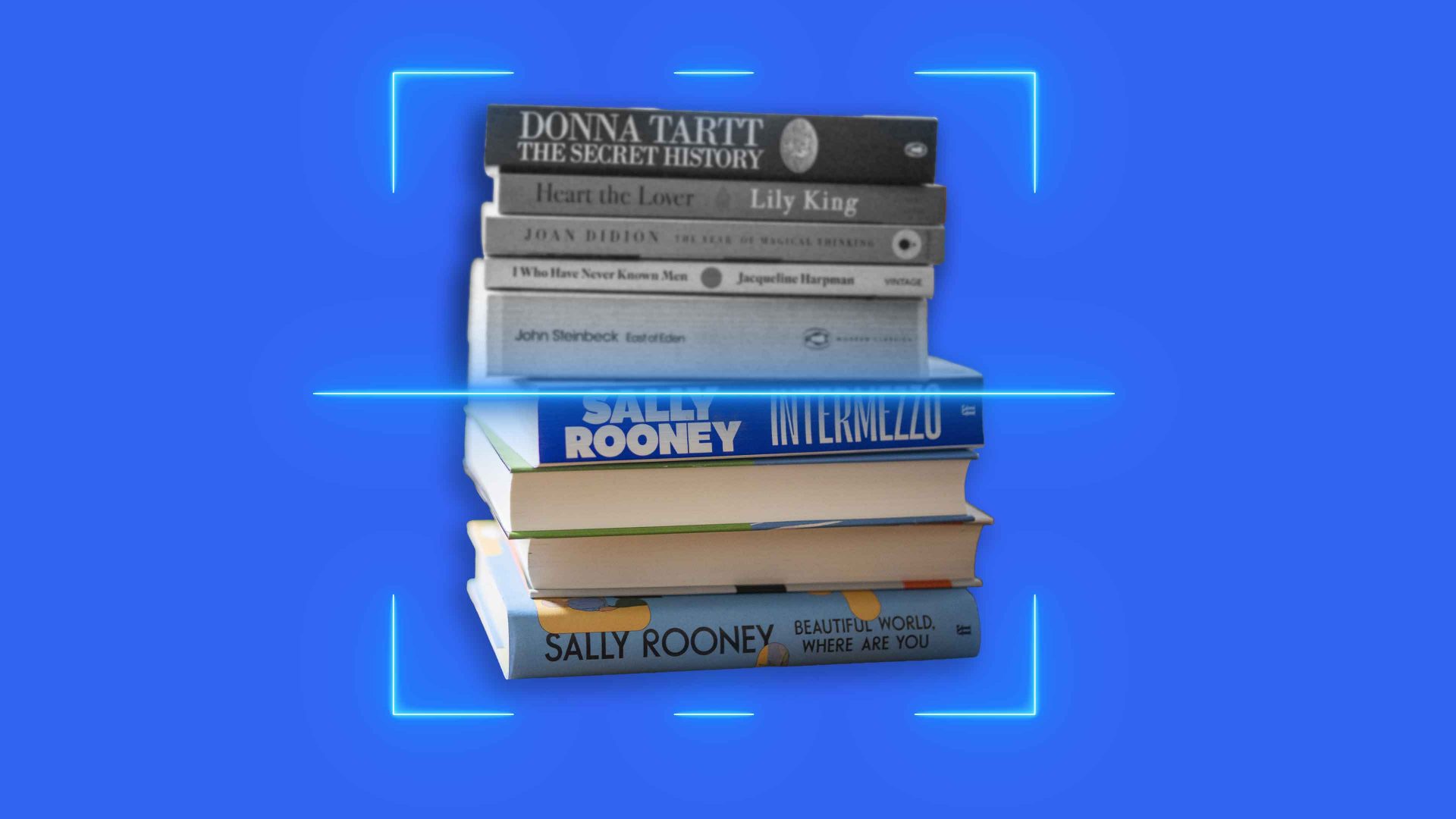
Social media influencer Alix Earle made headlines this week after declaring that she has never read a book. I find the honesty quite refreshing. At least she isn’t pretending to be halfway through The Grapes of Wrath while lying in bed scrolling TikTok.
I suspect the number of people who claim to read books but don’t is staggeringly high. Alix, at least, has the decency to simply not bother.
I recently stumbled across an instagram post by a book club called Read Between the Wines, that said “STOP asking ChatGPT to summarise your book… ask this instead”, and provided a more in depth prompt for AI to provide a book summary “concise enough that I can read in 5 minutes”.
AI book summaries appear to be used by two very distinct groups of people. The first is your classic hyper-optimisation tech bro, who brags online about using AI to do everything from scheduling dates with his (probably imaginary) girlfriend to analysing his sleep score.
Suggested Reading


Sydney Sweeney and the art of political pornography
He likes to read self-improvement “books” (having had to skim-read a few while interning on a few books/lifestyle desks, I use that term lightly) but simply doesn’t have time to read them. So he gets AI to summarise them.
I have seen people online proudly explaining that they get AI to summarise every page of a book into a single sentence. And boom: they have read an entire book on the toilet. What have you done with your day?
The second group is one I have written about before and who never ceases to disappoint me: BookTok. These are people, usually women, whose idea of being cultured and intellectual consists largely of wearing a scarf and taking a photograph of a book next to a coffee. They like the aesthetic of “dark academia”, which appears to mean the library from Beauty and the Beast and the Harry Potter common room.
They run TikTok and Instagram accounts where they proudly announce that they have read dozens of books in a year. You must put aside the fact that many of these books are basically porn. Yes dear reader, I regret to inform you that a sizeable proportion of the books raved about on BookTok are hastily written erotic novels with plots that veer dangerously close to straight copyright infringement of major franchises, and scenes so graphic and bizarre they’d make the late Dame Jilly Cooper seem frigid. But it appears these people are, in fact, doing quite a lot of reading.
Except apparently they aren’t either. They are pretending to have read a book, to collect some sort of inane token of success – which is the real reward for engaging with literature of course, not the intellectual stimulation or cultural expansion.
What these two groups have strangely in common is that they are both symptoms of the same thing: the gamification of hobbies. If you are a young person online, the entire purpose of doing anything offline seems increasingly to be to post about it online afterwards.
There is Strava for running. Letterboxd for films. Beli for restaurants. Goodreads for books. The list goes on. And then there are the social media accounts dedicated to every conceivable hobby: X goes travelling, Y takes photographs, Z bakes. I am not against any of these things. But there is something slightly depressing about needing a Thing to make you do something which, theoretically, you are supposed to enjoy doing anyway.
I saw a girl on BookTok recently asking her followers: “Struggling to read?” Her solution was an app which puts you on a virtual plane and gives you points if you read for the duration of the flight.
Suggested Reading
The women who helped bring down Diddy
And it isn’t just reading. There are apps which turn doing your chores into a game, where you raise a little animal, Tamagotchi-style, by completing tasks like brushing your teeth and taking out the bins. At what point did we become so incapable of doing things for their own sake that we need an app to congratulate us for doing them?
Lying about having read books to seem clever, of course, is nothing new. There is a gag in The Office where David Brent is trying to outdo the temp on his knowledge of Dostoevsky, and is subsequently seen reading an encyclopaedia in his office to prepare. Ten years ago, he would have looked it up on Wikipedia. Now, apparently, we can’t even be bothered to do that.
More depressingly, if more and more grifters are using AI to write books, only for other people to then use AI to summarise books that already exist, what will we be left with? A Frankenstein’s monster of words that all have that cheery, sycophantic, estate agent tone that all LLMs seem to use?
What bothers me about the “if you didn’t post it, it didn’t happen” approach to hobbies is that everything has to be aestheticised, and modern aesthetics are mostly Trojan horses for mass overconsumption. You cannot simply go running; you have to be a running girlie, which naturally can only be achieved via on-trend leggings, water bottle, and a Strava account to track it all.
Suggested Reading
Yesteryear is the smash-hit book of the summer – and it’s abysmal
You cannot simply like books, you have to be a BookTokker, and that requires 14 e-readers. You cannot simply go on holiday, you have to become a travel bro and spend half your pay packet going to an even more obscure location than last year’s travel bros (horseback riding in the Eurasian steppe seems to be the current flavour of the month).
The greater irony is that these are all supposed to be the things that get us away from our phones. Reading, running, cooking, travelling – we are told these will make us happier, healthier and slightly less deranged by the internet.
But if we only do them – or in booktok’s case, lie about doing them – to tell everyone else in the digital hellscape that we have, then what exactly have we escaped?
 Most popular
I was at Eton with Charles Spencer – this is how it explains his battle with the royals


Emily Maitlis’s diary: My deep dive into Jeffrey Epstein’s hidden empire – and the network that let him get away with it


The door that leads back to the EU is finally open. Now let's walk through it

A new film about Elon Musk reveals him as so awful it’s almost tragic. Almost