How does one extricate a historical account of a crime and all that led up to it from a biography of the perpetrator? And when that perpetrator is Sean “Diddy” Combs, currently serving a 50-month sentence for transportation to engage in prostitution but linked to numerous other offences throughout his life, is that even possible?
Rolling Stone journalist Cheyenne Roundtree covered many of the allegations against Combs in a sprawling 2024 article for the music magazine and now uses them as the basis for her impeccably reported new book, Bad Boy for Life: The Rise and Fall of Sean Combs. But she balks at the term “biography.”
“The word ‘biography’ is such a heavy thing,” she tells The New World. “I try to capture as many stages of his life as possible but I kind of shy away from that term.”
Nonetheless, she acknowledges that, dating as far back as the earliest incident of Combs’s violence that she was able to corroborate, from his time at Howard University in Washington DC, “all of these incidents throughout his life story had these repeating themes.”
Combs was born in Harlem in 1969 and raised by his loyal but authoritarian mother Janice after his father was murdered in a suspected drug deal gone wrong when Sean was a toddler.
Janice moved the family to suburban New York several years later in the hope of offering Combs and his two sisters a better life, at least socially and economically. But within her home, Janice seems to have been physically abusive. And you know what they say about the cycle of abuse…
The Combs family’s upward mobility allowed Sean to attend the historically Black college Howard, where in 1988, at the age of 19, he allegedly beat a young Black student he was dating outside one of the dorms, for many to see. The girl left school, and Combs continued on with his studies for another year before dropping out.
“It was an early indicator that he could wriggle out of moments of serious jeopardy with ease,” Roundtree writes.
From there, the accusations piled up. Combs is alleged to have filmed his sexual partners without their consent and distributed the footage amongst his buddies. Joi Dickerson-Neal accused Combs – then making his start in the music business as an intern at Uptown Records in Manhattan – of drugging and raping her in 1991 when she was 19 years old.
A year later and continuing to rise, Combs was allegedly responsible for improperly organising an oversold Aids benefit concert that resulted in the deaths of nine people in a stampede for the exits.
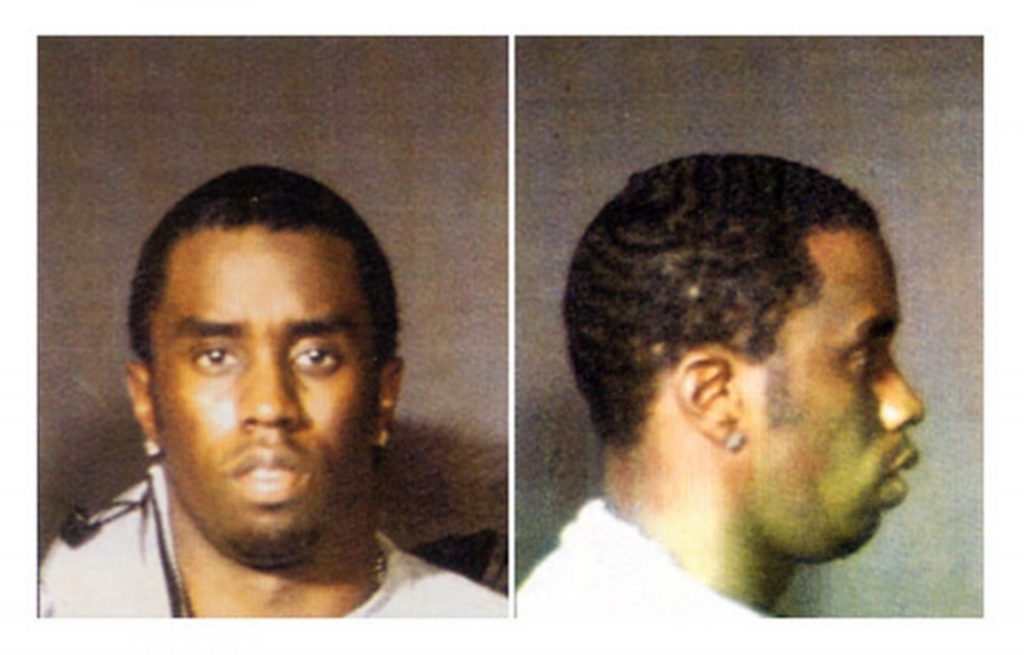
Image: Bureau of Prisons/Getty
Fired from Uptown, Combs established his own Bad Boy Records label, bringing The Notorious B.I.G. – aka Christopher Wallace – along with him. Former Bad Boy employee Kirk Burrowes tells Roundtree that in 1994 he saw Combs beating Misa Hylton, his girlfriend at the time and the mother of his first child, Justin. At around the same time, Roundtree writes, Combs began testing and gradually muddying the waters of Bad Boy by “gradually exposing him to sexual behaviour in the workplace” that would allow much of his future conduct to go unchecked.
Roundtree writes that Combs, perhaps owing to his lack of a father figure in the home, was fuelled by a “macho ego and the subconscious need to impress the men around him.” No doubt this impulse reared its head when Biggie began to blow up with hits like Hypnotize and Big Poppa. Alongside Tupac Shakur, he helped popularise gangsta rap and ignited an east coast-west coast beef that resulted in the murders of both artists in drive-by shootings.
Roundtree’s 2024 Rolling Stone story suggested that Combs might have been involved in Shakur’s murder – which former gang boss Duane “Keffe D” Davis has recently been convicted of orchestrating – and that he took for himself what was intended to be a posthumous cover of that magazine featuring Wallace.
“Bad Boy needed a new star to retain its dominance. Tapping into his uncanny ability to spin untenable circumstances to his advantage, Combs figured, why not him?” Roundtree says generously.
Though Combs tried to paint himself as the attitudinal namesake of his record company, he comes off as a petty, insecure poser throughout much of Bad Boy for Life. But hindsight doesn’t come until later. For much of the late 1990s and throughout the 2000s, Combs, Bad Boy and his copious other brands and collaborations made him a fixture of popular culture.
“I’m not going to go down in history as a Black music maker,” Roundtree quotes an ironically prophetic Combs as saying in a New York Times article from 1997. He added: “I’m going to go down as a music maker that was so incredible that he represented all of culture. You’re not going to be able to label me. You can’t keep on underestimating me and what I can do. Bad Boy is going to go right up there with 20th Century Fox and Dreamworks. There’s no other way.”
At his peak, Sean Combs had a clothing line, alcohol brands and hit songs with top artists like Mariah Carey and Usher. He had Jennifer Lopez on his arm, and several reality shows, including Making the Band and I Want to Work for Diddy.
Cast members from each spoke to Roundtree about Combs’s abuse, as did many other employees of the rap mogul. As it turns out, no, you don’t want to work for Diddy.
Still, it took until May 2024, when surveillance camera footage of Combs physically assaulting his former longtime partner, the singer Cassie Ventura, was released, for many to take note. A year earlier, she had brought a lawsuit against Combs under New York City’s Gender-Motivated Violence Act’s lookback window, which enables survivors of sexual assault to file civil suits outside of the statute of limitations. Combs paid Ventura an undisclosed amount the following day, and the case was dismissed.
A week after the video broke, Roundtree’s article appeared in Rolling Stone. Soon after, Combs was charged with several offences and by the end of that year he was indicted on charges of racketeering, sex trafficking by force, and transportation for purposes of prostitution.
Remanded in Brooklyn’s Metropolitan Detention Center, he was found guilty of the transportation charges last summer and is now serving his sentence in a low-security jail in New Jersey, where he is set to stay until late February 2028, despite pleading for a presidential pardon from Donald Trump.
The best biography and documentary allows its subjects and interviewees to back themselves into a corner with their own words. Roundtree does an expert job of letting her hundreds of sources do the work of pushing Combs there. She doesn’t need to offer her own opinion in the pages of Bad Boy for Life because it’s plain to see from Combs’s actions and their consequences that he’s irredeemable.
Suggested Reading
Wrestling with Hulk Hogan’s very messy legacy
Where Roundtree veers from this is in the final part of the book, which chronicles what she sees as a trial botched by the prosecution. “It should have been made clear to jurors that rampant abuse occurred within the Bad Boy workplace,” she writes.
Instead, she says: “Testimony was disjointed; pieces of stories were told without a clear understanding of how they were supposed to fit into the wider picture. Prosecutors laid the groundwork to accuse Combs of obstruction of justice and witness tampering under the racketeering conspiracy charge, but they failed to clearly connect the dots for the jurors.”
Despite efforts to dismantle it, journalism is a public good. No charges had been formally filed against Combs at the time Roundtree published her Rolling Stone piece in May 2024, even as rumours swirled around him.
She might not call it a biography, but Bad Boy for Life is certainly a portrait of a life marred by immorality.
Bad Boy for Life: The Rise and Fall of Sean Combs is published by Simon & Schuster