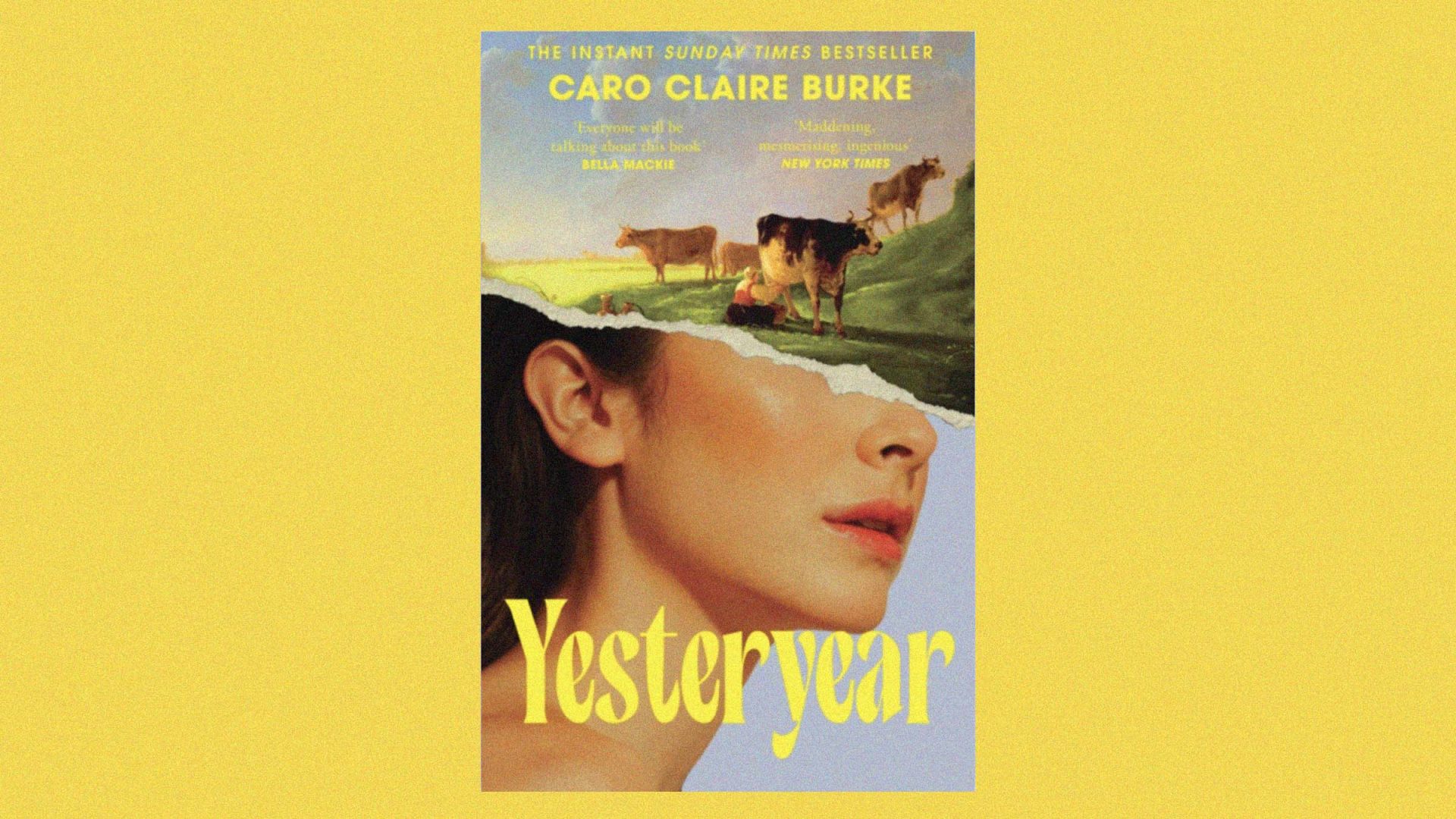
Yesteryear is the worst book I’ve ever devoured.
A tradwife influencer who seemingly gets transported back to the frontier past she so performatively evokes online? That is a great idea for a novel.
If I were Caro Claire Burke, I would have pinched myself with excitement at being the first person to pitch it to a publisher. And if I were the publisher, I would have pinched myself again when I realised it could be the smash-hit bestseller of the year.
Then I’d have looked nervously at the calendar and thought: hang on, if we actually give this woman enough time to write the book properly and edit it, the tradwife moment might be over. So make the bid now, buy it before seeing a finished product, rush it onto shelves — and, for some reason, get Anne Hathaway to buy the film rights.
And that is almost definitely what happened here.
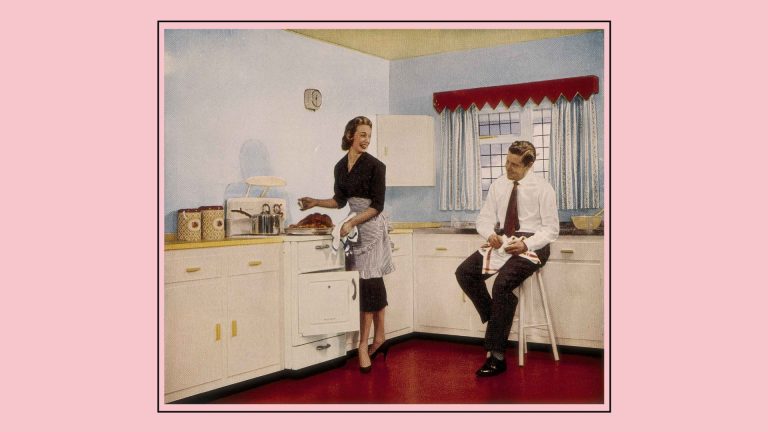
The book follows Natalie, a girl from a religious background who goes off to college, decides she doesn’t like — or fit into — the girlboss feminism of her peers, marries the youngest son of a right wing politician, buys a farm and becomes an Instagram sensation. She is clearly meant to evoke Hannah Neeleman, aka Ballerina Farm with her rustic interiors, the endless children with quaint names, the videos of her collecting eggs, the husband cosplaying as a macho cowboy.
And there are genuinely good observations in it – which you are then hit over the head with repeatedly just to make sure you didn’t miss them. Natalie preaches femininity, domesticity and the virtues of doing everything yourself while employing two nannies and a producer. She rants about her sexually promiscuous former classmates who graduated and became high-flying lawyers, with contemptuous envy, and it’s clear she desperately wants their approval.
There is a whole novel sitting inside the contradictions of modern femininity and its crossovers with class, performance, sex, resentment, and identity. Unfortunately, Yesteryear does not seem particularly interested in writing that novel.
Instead, it is painfully, sometimes hilariously, badly written.

Several sentences even seem to carry the faint whiff of AI, and elsewhere the writer becomes so excited about how many similes she can cram into a paragraph that she forgets she is supposed to be saying something.
BookTok is awash with this kind of writing, the kind that desperately wants to sound Important. You get lines such as, “my father was the kind of man who called women smart only when it worked as a beer-soaked punchline.” See? It sort of makes sense. It has the cadence of something you might post on Instagram. But it isn’t very good.
The characterisation is even more confused; Natalie is apparently supposed to be an unreliable narrator, which is a convenient defence for almost every inconsistency in her character. But I think that gives Burke far too much credit.
Natalie grows up in an extremely traditional Christian household in Idaho, but then gets into Harvard because she wants to become an academic, swings wildly between deeply conservative principles and painfully on-the-nose millennial feminist observations that are so milquetoast they make Barbie look like The Feminine Mystique, and somehow we are expected to understand all of these contradictions as deliberate.
If Burke wanted to write a secret feminist who has sold out to cater to the online right, then great. Write that book. Better still, write a book from the perspective of a woman who genuinely believes in traditional womanhood and gradually becomes radicalised. It would force the reader to inhabit a worldview they might find repellent.
Instead, Yesteryear lands in the most boring possible middle ground because Burke didn’t have the courage to write a book that might leave some dimmer readers thinking she actually thought the things her main character did. You cannot have a provocative premise without accepting any of the discomfort that should come with it.
One of my favourite books is We Need to Talk About Kevin, because the inner world of its narrator is so brilliantly fleshed out. She is flawed, narcissistic and deeply unreliable; you get the sense that she is lying to herself, whitewashing parts of her memory and manipulating you as she goes. The character is revealed in every choice of word, and not a single word is wasted.
Yesteryear is the opposite. I don’t think these inconsistencies were there to make a point, I think they were the result of pure laziness.
Speaking of laziness, there are so many unresearched details that it starts to become insulting. I am not the sort of person who sits in the cinema writhing in disgust because a film set in Ancient Rome has given a gladiator the wrong armour. But there is a point at which an author has not merely made a mistake, they have failed to do the bare minimum of research, apparently on the assumption that nobody reading will notice. And maybe most people didn’t.
But have some f*cking faith in your audience.
Suggested Reading
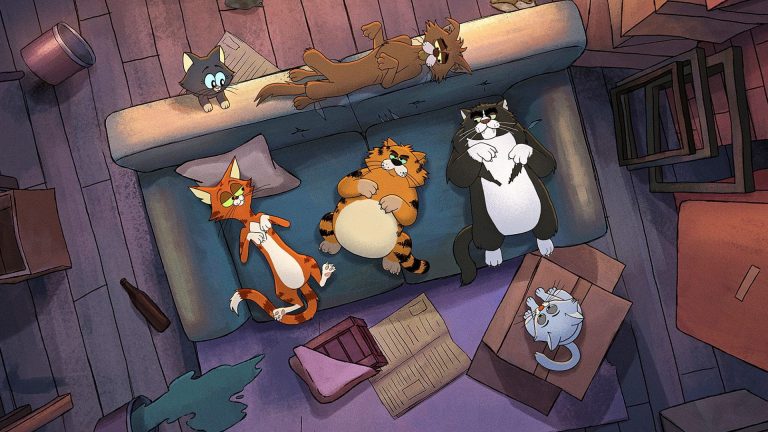

Ricky Gervais’s Alley Cats is even worse than you thought
For example, the religion Natalie is raised in is never explicitly named, but appears to be an extraordinary mix of Amish culture, Jehovah’s Witnesses, Mormonism, Catholicism and Baptism. Then there is the husband’s father, who apparently serves eight terms in the Senate while being only 55 years old, meaning he must have embarked on his political career at the remarkable age of eight.
And don’t get me started on how little the book seems to understand about farming or, frankly, frontier history, because we would be here all day. The point is, if this book had not been rushed out to hit shelves in time for people to read it by the pool, maybe an editor would have spotted some of these.
People are calling this one of the best books of the year. And look, I couldn’t put it down either. I wanted to know what happened.
That is not the same thing as saying it was good.
The plot is compelling – even if the ending is deeply unsatisfying. And maybe that is enough now. In an attention-spanless culture, perhaps a premise that can be explained in five seconds is all a bestseller needs. The publishers clearly thought so.
But I think we can do better than this.
Yesteryear had everything it needed to be a genuinely great book. It could have skewered the hypocrisy of the online right. You can see, on almost every page, the much better book it could have been.
If only someone had bothered to actually write it.
Yesteryear by Caro Claire Burke is published by 4th Estate