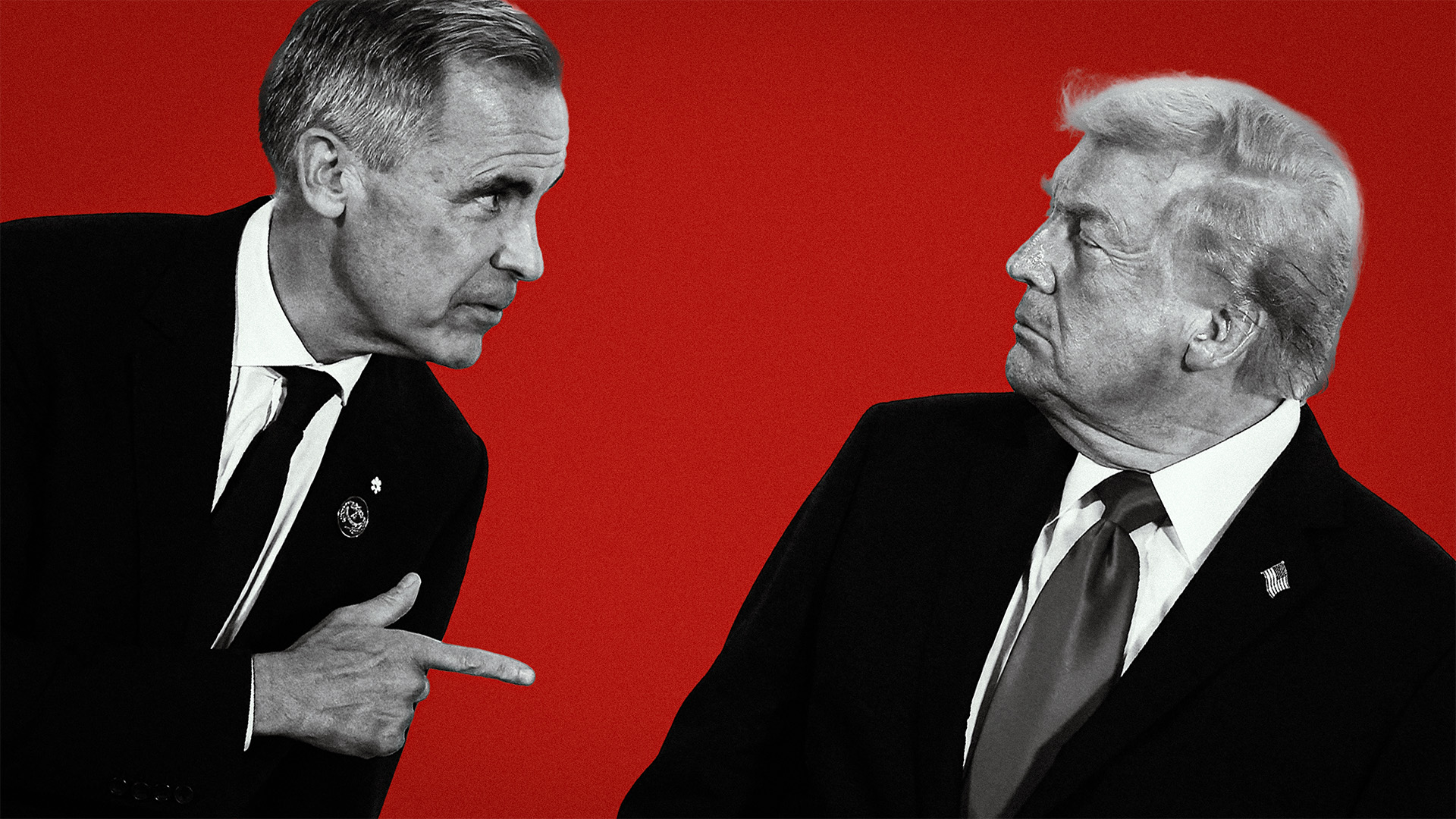
On the day we voted to leave the EU, the then governor of the Bank of England, one Mark Carney, fought to stabilise our plummeting currency in the face of what he had already warned was “the main domestic risk to Britain’s financial stability.”
Ten years on and Mark Carney is prime minister of Canada and trying to deal with the financial, economic, political and diplomatic instability of Donald Trump, while we are still trying to stabilise our finances.
To many people Carney is playing a blinder; standing up for Canadian sovereignty, rejecting outrageous trade demands from Washington, ignoring ridiculous threats to rename Lake Ontario “Lake America”, laughing at the idea of Canada becoming the 51st state and basically doing what probably every other Western leader would like to do; telling Donald Trump to fuck off.
Carney has, as he promised, matched Trump’s tariffs dollar for dollar, placing $20 billion of import duties on US goods. It all means that Mark Carney and Canada have decided that they can no longer trust or rely on America.
As he puts it, America’s “signature was written in pencil “, and as a result the Canadian PM is determined to move his country’s economy away from dependence on the USA.
Suggested Reading
Watch out – Trump could use the mid-terms to trigger a political crisis
He is investing in a new pipeline and ports to increase energy exports to the Far East, signing new trade deals around the world and making it clear the EU is going to be a key partner for Canada. In his speech rejecting Trump’s trade negotiations, Carney announced, “this fall, we will begin discussions with the European Union – the world’s second-largest economy – to build a much stronger and deeper security and economic partnership”.
The scale of the ambition is impressive. Canada does two-thirds of its trade with the USA, although much of that is gas, oil and electricity exports which America will continue to need. It only does around 7% of its trade with the EU and another 2.5% with the UK.
But even at the distance of the other side of the Atlantic, Canada obviously knows that it can trust the EU, negotiate in good faith, try to diversify its markets and build a coalition of like-minded countries looking for security in a world where America is not to be relied on.
Embarrassingly for the UK, all this highlights just what a terrible deal the Conservatives managed to negotiate with the EU when we left. It was a sharp, nasty, bitter and unnecessarily self-harming divorce which burned all bridges, even when they were open in the British interest.
The government’s demands, or red lines – leaving the Single Market and the Customs Union, and ending free movement – meant that the best deal available was almost identical to the one that Canada currently has with Brussels. You might remember Michel Barnier’s handy chart making this crystal clear to even the meanest intelligence.
What all this means is that Mark Carney is now talking with Brussels at the same time that the UK is, but seems to stand a better chance of getting a good deal from them. Whatever Andy Burnham gets will look bad by comparison.
Suggested Reading

Carney spoke to the world. Trump rambled to himself
The government here is trying to make the right noises about a closer relationship with Brussels but is still scared of its own shadow. It is haggling over the minutiae of student numbers allowed to use Erasmus+, yet it wants to join the EU’s new industrial strategy, have free access for food exports and be able to join its defence fund. We just cannot have those things when we are unwilling to pay or make the concessions that the EU thinks necessary.
The UK is held back by a vitriolic Europhobic media, and two political parties that both want to worsen our relationship with our friends and allies rather than improve them. Even while their sad dream of a new Anglophone alliance crashes and burns before their eyes.
Mark Carney can see that the old world order is dead and said as much at Davos in January, when he warned it was undergoing “a rupture, not a transition” and that middle powers negotiating alone with great powers do so from a position of weakness.
We are now, like Canada, a middle power. America treats us, like Canada, with contempt, but unlike Canada, we are not willing to draw the obvious conclusion.
The UK needs the EU, just as Canada does, but far more. Yet only one country has the realism to realise what that means.
O Canada! If only we had your realism, your pragmatism and your leader.
 Most popular
Burnham is already winning the new Brexit wars

Reform and the Greens are fading – the real fight is Tory v Labour

I was at Eton with Charles Spencer – this is how it explains his battle with the royals


The uncomfortable truth about Ariana Grande