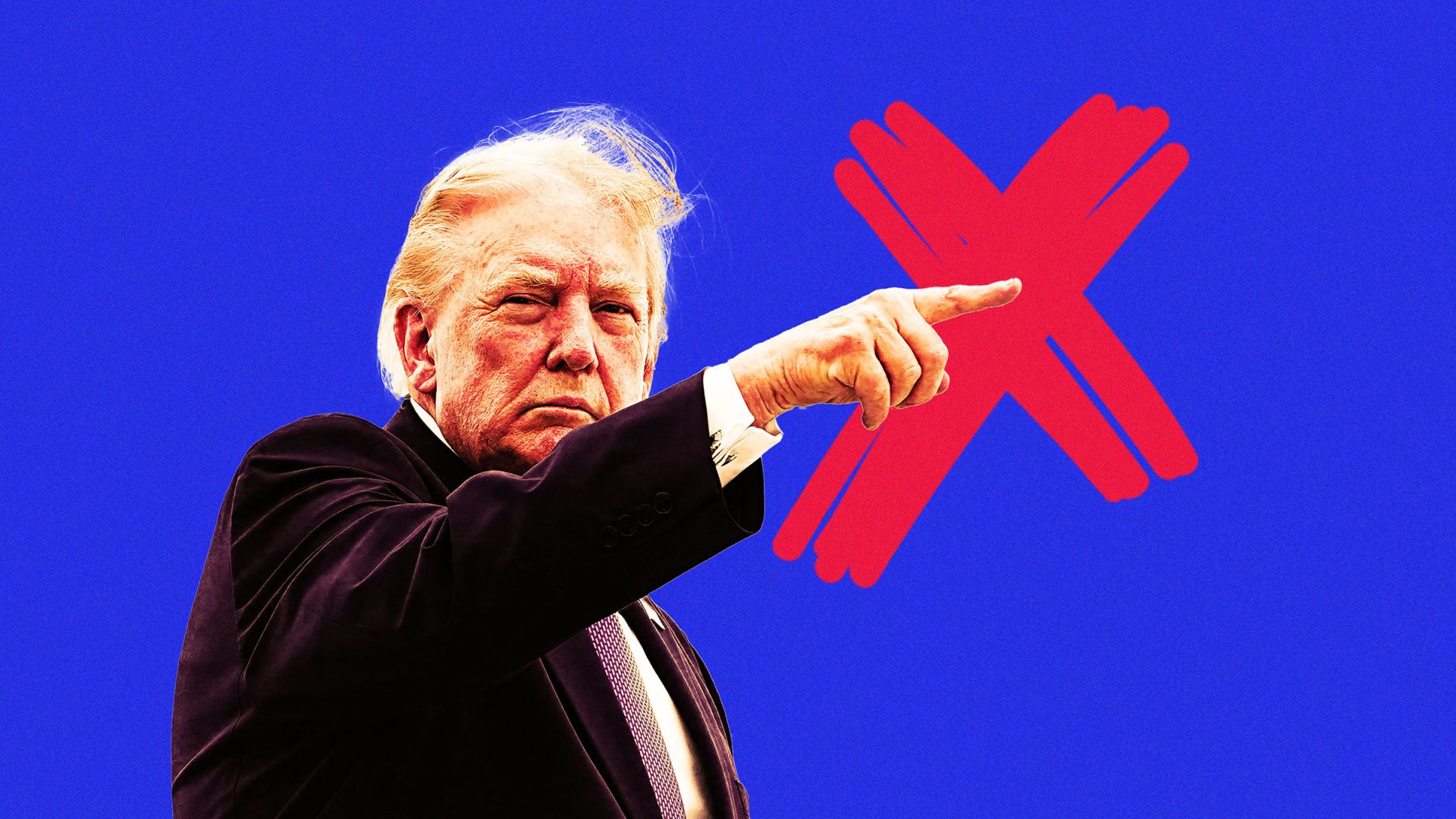
America’s mid-term elections take place on November 3 this year, but there is a strong possibility that they could set off a constitutional struggle that stretches from polling day to the opening session of Congress on 3 January and beyond. The winner may not be decided by voters but by lawyers, judges, election officials and parliamentary procedure.
Trump has already shown America how he reacts to defeat. After losing the presidency in 2020 he refused to concede, filed more than 60 legal challenges, pressured state officials to overturn the result and inspired a mob to march on Congress to halt certification of Joe Biden’s victory. Few Democrats believe that experience was a one-off.
This time, however, the objective may be different. There is no evidence that Trump intends to challenge every Democratic victory. He does not need to. Nor would such a strategy be credible. Instead, the real danger lies in a handful of closely-fought house races where recounts, legal challenges and administrative disputes could delay the seating of Democratic members long enough to influence control of the House of Representatives.
He is likely to choose red states to make his challenges: Texas, Georgia, Florida, Alabama. Those are states where election officials, governors, legislatures and, most importantly of all, judges are likely to prove sympathetic to Trump’s strategy.
It has already started. Trump’s prime time televised address accusing the Chinese (not the Russians) of election interference is part of his strategy. So are his attacks on mail-in and absentee ballots; his campaign to pass his SAVE America Act through congress; demands for voter rolls; suggestions about faulty machines; the pardoning of the January 6 rioters and his suggestions that non-citizens may vote for Democrat candidates.
All the above is meant to undermine confidence in the integrity of the US electoral system and it is laying the groundwork for challenges in close house races.
Suggested Reading


It’s October 2026 and, oh god – Trump has invaded Greenland
That is why January 3 2027 is so important. It is when the new congress meets. At noon on that day every prospective member of the House of Representatives and the Senate must have been certified by their state election body and in their seat on Capitol Hill. If they have not been certified and if they are not in the Capitol building then the business of the legislature begins without them, based on whichever party holds the majority of certified seats.
The constitution does not require every election dispute to be settled before Congress starts its business. It simply provides that members cannot take their seats until they have been certified by their states. That creates the possibility that a temporary Republican majority could exist even if that proves not to be the final result.
Imagine if the Democrats won an eight-seat majority in the house and the Republicans challenged the legitimacy of eight of the house races. The Republicans would, therefore, have a one-seat majority in the House of Representatives. Just one seat is all they need to elect a speaker, which would be the first order of business on 3 January.
It is then the responsibility of the speaker to make all of the committee appointments and set the legislative agenda for the coming session. The balance will change if the Democrats who have been challenged eventually take their seats.
Suggested Reading

Rubio got Cuba, but Vance got Iran: Trump auditions his successors
But Trump and his lawyers – some of whom are now in key positions in the Department of Justice – have proven themselves masters at legal delaying tactics. Trump delayed his prosecution for removing classified documents and the January 6 riots for more than three years.
A classic example of the problem is the 2008 Minnesota senate race between Al Franken and Norm Coleman. Automatic recounts and prolonged litigation meant Franken was not finally seated until July 2009, eight months after polling day.
Closer to the present, New York’s 22nd congressional district remained unresolved until February 2021 following disputes over absentee ballots. These cases demonstrate that exceptionally close contests can remain unresolved for months.
There are problems even if the certification cases are resolved quickly after January 3. The seeds of doubt will have been sown, and a heavy cloud would hang over a Democrat-controlled congress. And rest assured, Trump will use every opportunity to attack the parliament’s legitimacy just as he continues to attack the result of the 2020 election six years after the event.
Democrats clearly understand that they face an unprecedented election environment. Senate minority leader Chuck Schumer and house Democratic leader Hakeem Jeffries have joined the Democratic National Committee in challenging changes to election administration that they believe threaten voting rights.
Democratic lawyers have also conducted contingency exercises covering disinformation, voter intimidation and legal attempts to overturn election outcomes. Vast sums have been spent by lawyers on both sides of the political divide well before the battle has commenced.
The stakes in the mid-term elections could not be higher. Trump secured supreme court immunity for any actions while in office. But his family and friends are another matter. His sons, Don Jr and Eric Trump, according to the New York Times, made $2bn out of the $TRUMP meme coin. Investors lost over $700m. Then there is the $2bn that the Saudis have invested in the private equity firm of his son-in-law, Jared Kushner. Congress also failed to complete its investigation of Trump’s first-term use of the Secret Service for non-presidential activities.
The $400m jet provided by the Qatari government is also likely to come under congressional scrutiny if the Democrats secure control of the House of Representatives. So is a deal to build a Trump golf course and villas in Qatar and a number of construction projects in Saudi Arabia.
Suggested Reading

Help! Donald Trump keeps begging me for money!
Previous presidents have been accused of helping friends. Trump has gone much further. His closest diplomatic envoy is also his business partner; the envoy’s son helps run the president’s cryptocurrency empire; and foreign governments negotiating with Washington have simultaneously become investors in enterprises from which the president and his associates profit.
Then there is Trump’s deeply unpopular Iran War. Hakeem Jeffries and Chuck Schumer have made it clear that a democrat-controlled congress would use the 1973 War Powers Act to force the removal of US forces from the Persian Gulf, Arabian Sea and Gulf of Oman.
Across-the-board tariffs are one of Trump’s keystone policies. These are heading for the legislative dustbin if the Democrats win control. So are some of his political appointees, especially those who have been leading his campaign of retribution such as Todd Blanche (acting attorney general), Kash Patel (FBI director) and Brendan Carr (chairman of the Federal Communications Commission).
Finally, there is the very real possibility that Trump could be impeached for a third time. It is unlikely that he would be removed from office. That requires a two-thirds majority of the Senate. But an impeachment in the lower house would seriously damage Trump’s legacy and the credibility of the Republican party that supported him.
The US constitution assumes that elections produce winners before Congress assembles. In 2027 that assumption may itself be on trial. The most important day in the 2026 mid-terms may not be election day at all. It may be that day in January when the US finally discovers whether it has elected a Congress, or merely begun another constitutional crisis.