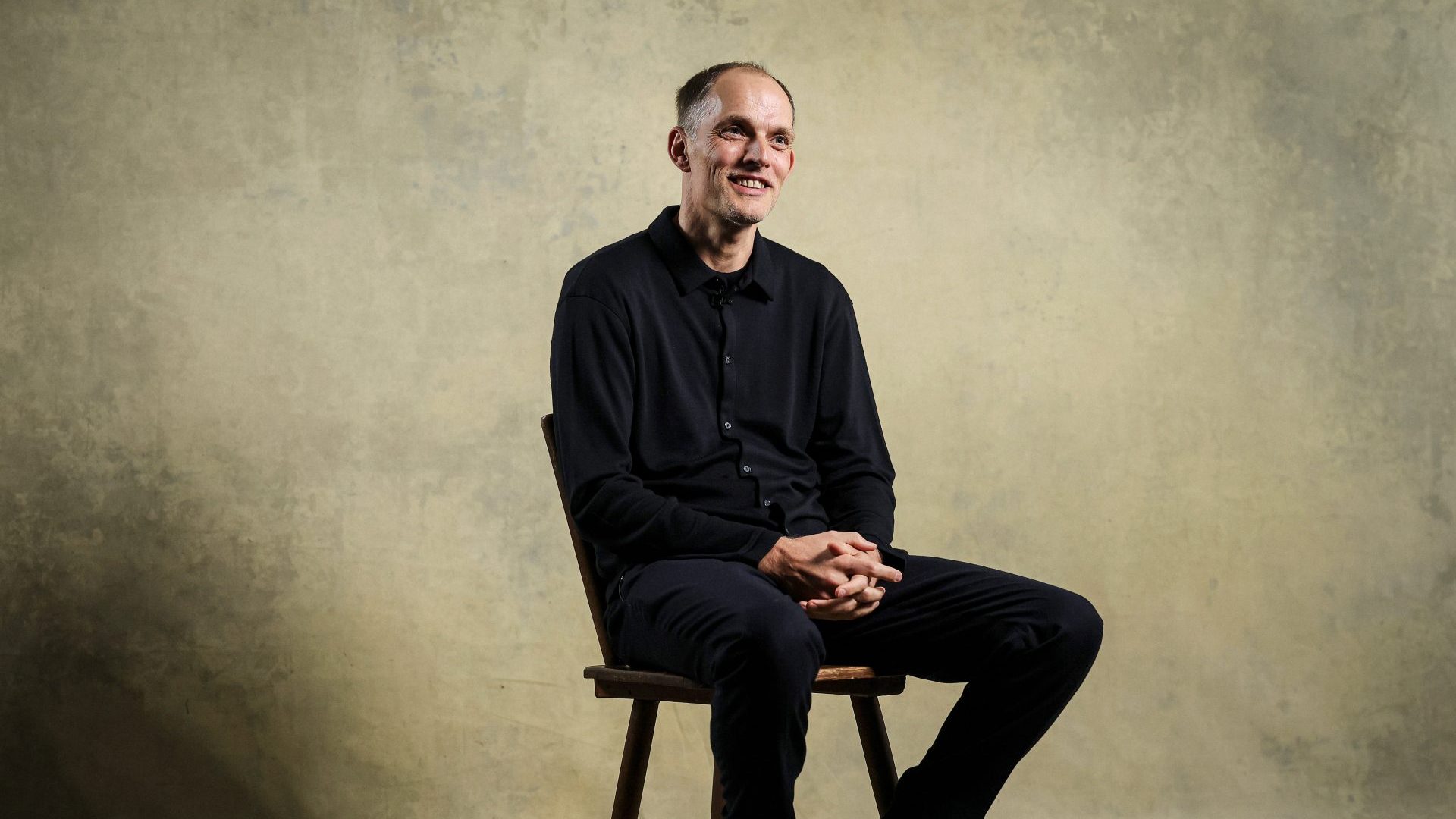
He is, said the club that had just recruited him, “a German with a Brazilian soul”. Well, that’s alright then.
In January 2021, as it announced the appointment of another managerial superstar on its merry-go-round, Chelsea included a series of quotes from those who had worked with Thomas Tuchel. The Brazilian defender Dani Alves, who had played for him at Paris Saint Germain, saw Tuchel as one of his own. Others also spoke of his passion, bordering on hot temper. Almost a Latin.
As is the way of things in the English Premier League, Tuchel lasted a tempestuous 18 months, winning Europe’s top competition, the Champions League, only to fall foul of Chelsea’s new owners. From there it was back to his homeland, to the cauldron of Bayern Munich, where he lasted just over a season.
Then England’s national team came calling. For a German. But not that German whom everyone had taken to their hearts, the one with the foppish hair and toothy grin: Jürgen We-Like-the-Krauts-After-All Klopp.
As the Three Lions embark on yet another emotional roller-coaster, this time in the hostile climes of Trump’s America, they are in the hands of someone who doesn’t do touchy-feely. Tuchel is no Klopp. He is also no Gareth Southgate.
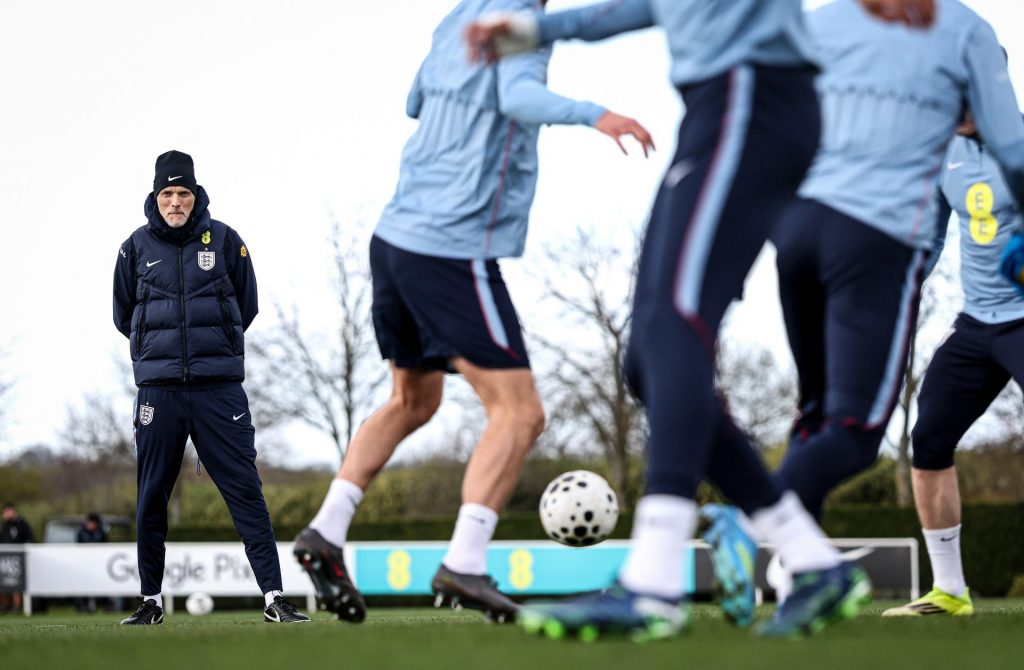
The announcement of England’s new manager in October 2024 (he took up the role three months later), didn’t cause as much of a stir in Germany as might have been expected. That is because Tuchel doesn’t press the emotional buttons in his homeland either.
Tuchel is quite content to be judged – in both countries, anywhere in fact – on one thing alone: results. “He wants to be accepted as a technician, pure and simple,” says Tobias Schächter, a journalist who has co-authored a biography of him, whose English sub-title is ‘Rulebreaker’.
The story is one of dedication, hard work and an obsessive attention to detail. After showing promise in his teens, he made it as a player onto to the lower tiers of domestic football. A knee injury brought his career to a premature end in 1998 at the age of 25, but he had already turned his eye to coaching while studying for a business degree.
After several seasons of training youth teams, his first break was as coach with the small Bavarian outfit, Augsburg. Among the players was Julian Nagelsmann, another injury-prone defender, who is now the Germany manager.
In 2009, Tuchel got his first Bundesliga position, at Mainz, where he followed a certain Klopp. Five largely successful years there led him to one of the big teams, Borussia Dortmund, which had just been run by a certain Klopp.
Still, he had made it to the global elite. He took Borussia to the quarter finals of the Champions League, where they were knocked out by Liverpool, thanks to a certain Klopp.
According to those who have worked with him, Tuchel has tempered his annoyance at comparisons with Klopp, particularly the idea that he is his pupil. It now merely irritates him and both men now get on fine and talk respectfully of each other.
That doesn’t hide their differences, though. Christoph Biermann, one of Germany’s best known football writers, describes Klopp as a “Menschenfänger“– someone who draws people to him. The C word: charisma, or at least one form of it.
Suggested Reading
My mission to meet all the World Cup final scorers
When Liverpool won the Premier League in 2020 for the first time in 30 years, the pandemic and the lockdowns had only just begun, the remaining games were played in empty stadiums, and they were unable to celebrate. But what people remember Klopp saying was that football didn’t matter: “Please look after yourselves and look out for each other. You’ll Never Walk Alone”. After a surly 2025-26 season under the Dutch Arne Slot, how the Scousers miss their adopted German.
Tuchel enjoyed his time in France, at PSG, where he handled the galacticos on and off the pitch, securing two league titles and two domestic cups. According to Biermann, he was happiest at Chelsea, working with a tight-knit management team – until a new set of owners arrived and combustibility returned. Almost all managers nowadays get the chop, and even though Tuchel didn’t last that long at either, both Chelsea and PSG are regarded as hire-and-fire clubs; but his points-per-match ratio was high and his star didn’t wane.
Bayern was, according to Schächter, a mistake. It set back Tuchel’s reputation in Germany. Even though he secured the Bundesliga title in 2023, which the Bavarian outfit regards as its natural right, Tuchel was in regular conflict with the club’s hierarchy, and particularly the former German international Uli Hoeness, who had the nebulous title of honorary president.
Hoeness wanted to discuss tactics with him. Tuchel made it clear that he didn’t want others meddling in his decisions.
Maybe the rhythm of the stop-start of the national game might suit him? Tuchel appears to have developed a good working relationship with the FA. But what matters is what happens from now. Qualifying for the World Cup was seamless, but the opposition was poor. Two recent disappointing friendlies have rekindled English self-doubt.
So, have the love-affair with Klopp and the appointment of Tuchel finally put an end to the English hate-love-hate-envy obsession with the Germans? The answer, as the Germans would say, is jein, yes and no.
For sure, the English have moved on from Piers Morgan’s “Achtung Surrender” of 1996. The 10 German Bombers song may be sung with a little less gusto than before. German managers come and go from all four English divisions, as do Italians, Spaniards, and the odd Englishman. From Ralf Rangnick to Daniel Farke, they haven’t quite left their mark.
As for players, from Jürgen Klinsmann of yesteryear to Kai Havertz of now, they are treated no differently to other foreigners. Mesut Özil appeared to receive no more and no less racism in both countries.
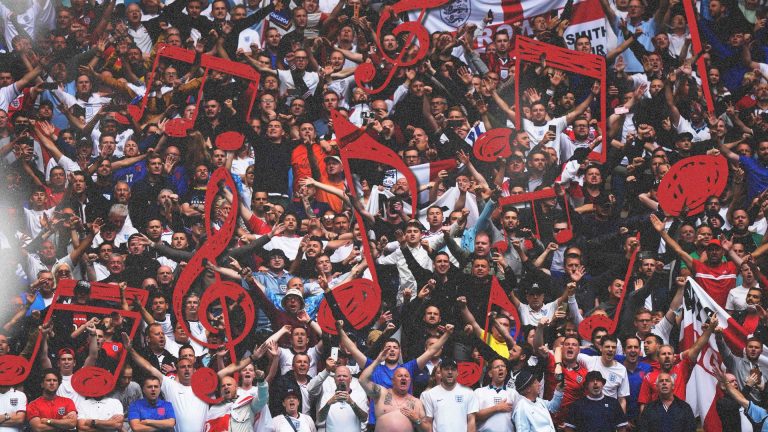

But it doesn’t take much to scratch that itch. When Southampton – whose manager is a young German by the name of Tonda Eckert – were caught red-handed spying on rivals Middlesbrough ahead of a crucial play-off last month, it didn’t take long for the Sun to send in the Spitfires. Its ‘inside’ story of Germany’s ‘crazy hidden spying culture’, in which seemingly all teams seek to benefit from sending interns to others’ grounds to take snaps on their mobiles was endearingly headlined “Germ Warfare’”. It makes you almost nostalgic for the old days.
Suggested Reading

The Argentinian who hated the World Cup
All this will be cast aside if Tuchel delivers. Now that his contract has been extended to the 2028 Euros, which the UK home nations and the Republic Ireland will host, he will have two opportunities to do at least as well as Southgate.
And what of the comparison between the two? It didn’t long for Tuchel to be brutally honest in his assessment.
The shirt, he said, continued to weigh heavily. Watching the last Euros in Germany in 2024 (in which England succumbed to Spain in the final), Tuchel said: “I felt tension and pressure on the shoulders of the players, and they were playing not to lose.”
He could have chosen his words more diplomatically, but that isn’t his way. Southgate has achieved the status of national treasure and criticising him is seen as not-the-done-thing. Yet he was only saying what many were thinking. The manager’s ultra caution was their undoing.
Tuchel used the same approach when announcing his squad for the USA, Mexico and Canada, and the inevitable omission of several well-known players. He didn’t smother them with public (or private) love; he just said he was doing what he had to do, picking the technically strongest group.
Cue fury from some of those rejected. But it would be wrong to say that Tuchel doesn’t engender loyalty. He does, and many players stand by his approach. He is a relentless task master. He is desperate to win and he gets emotional, but in his own way.
Germans have low expectations of Nagelsmann’s team. Some may look vicariously at England, to see how Tuchel fares. As for Klopp, he seems to be enjoying life as head of global soccer at the Red Bull company, with its international network of clubs including RB Leipzig, RB Salzburg, and the New York Red Bulls. Plus, he has his luxury villa on the German island of Mallorca to tend to.
Another big club may beckon for him, if cares to take one. The same goes for another darling of English fans, the departing Manchester City boss, Pep Guardiola.
Tuchel is unlikely to achieve that most-favoured status. Which is why, Schächter suggests, he might turn out to be a smart appointment. “History is not weighing on him. He sees the job as a technical endeavour, though he knows that the English see it as far more than that.”
Might the hard man from Germany manage to end 60 years of hurt? That would be the irony of all ironies.
John Kampfner is the author of the bestseller Why the Germans Do it Better, Notes from a Grown-Up Country. His most recent book is Braver New World (Atlantic)