
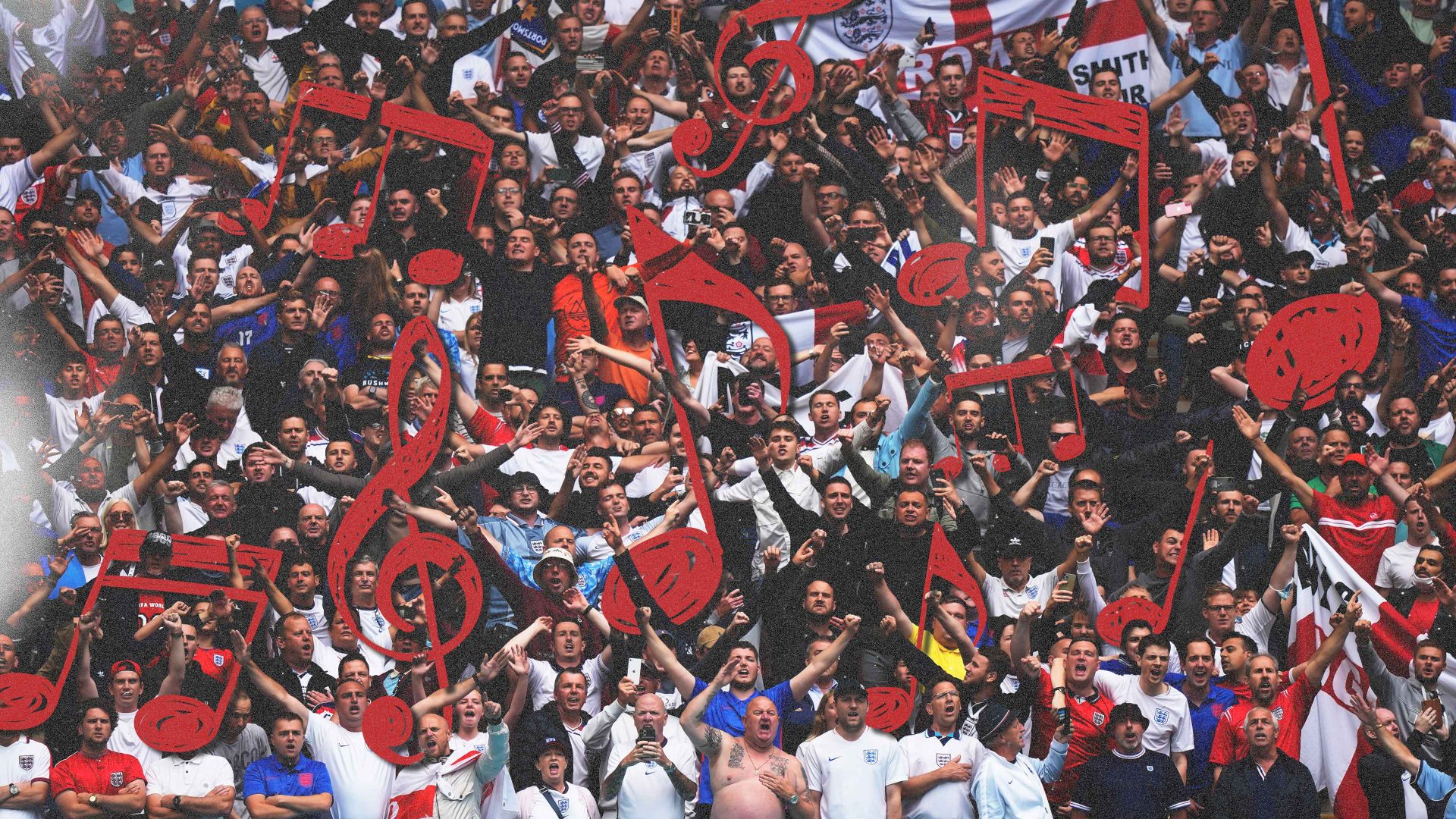
Let me introduce you to the Superman Principle: an essential part of football. Remember the film of 1978? Clark Kent changes into Superman, rescues Lois Lane, catches a falling helicopter with his free hand, and when she asks who he is, he tells her: “A friend.”
What happens next in the movie is essential for big-time football. And nobody knows this. Certainly not FIFA, the sport’s world governing body. The supporters haven’t a clue either.
If you want to follow England during the group stage of the 2026 World Cup finals, it will cost you a minimum of £6,500 on tickets, flights and hotels. When tickets first went on sale for the tournament, a path for England through to the final would have cost you £5,000 in tickets alone: an average £625 a match. It’s a drastic escalation of a long-established policy: milk the supporters because football exists to make money.
Football fans have attacked the pricing at this World Cup on a what-about-the-workers basis: real football fans deserve better: they need to be looked after because they love the game at a deeper level than everyone else.
You can’t expect FIFA to understand this argument. The organisation is run by people who love not football but power and money. To them, supporters are fools who pay to watch football: the more they pay, the better for everybody. A thousand bucks worth of love is 16.6 times better than the love of a fan who pays US$60 – the cheapest tickets available, in minuscule amounts.
FIFA have no idea how football works as a spectacle. Gianni Infantino, the organisation’s deluded boss, should sit down, watch Superman and write down what happens when Superman leaves the fainting Lois on the roof of the Daily Planet building.
Suggested Reading


Trump’s money-grubbing World Cup plans are thrown into reverse
It’s here that the music – which has been thrumming powerfully and insistently in the background – breaks cover, answers Lois’s question for all the world and celebrates the glory, the joy and the wonder of a man who can fly. John Williams’s score announces: POm-papom! SOOO-perman!
Without the music, the hero’s deeds would be nothing more than a fancy special effect: “Gosh, I wonder how they did that!” But with the music you find yourself – almost despite yourself – committed to the story. The poster promised: “You’ll believe a man can fly”. It’s the music that makes this belief possible, the music that permits you to revel in the glorious absurdity of everything that’s happening before you.
The soundtrack to football – as good as anything Williams ever wrote – is composed and performed by loving supporters. It requires a stadium full of true believers: mere spectators don’t work, no matter how much they pay. The soundtrack supplied by true lovers communicates and expands the emotional ebb and flow of the match.
There’s a special sound that crowds make when their team is likely to score at any minute: one full of threat, hunger and eagerness, without the slightest hint of pity. Compare that to another Williams score. If any composer can be said to have created a masterpiece with just two notes, it’s Williams.
It is a minor second, since you ask, the smallest possible interval between two notes – and of course it’s the music from Jaws: music you hear whenever the great white shark is ready to do his worst. Without the music, it’s just a bloody fish.
What sound does a goal make when it’s scored in an empty stadium? Our memories of Covid tell us that, and we remember the synthetic crowd noise they used to fill the sickly void. When a goal is scored in a stadium full of true believers, it sounds as if we’ve all been given a ticket to heaven, business class.
When the pirate ships cross the Caribbean Sea and Captain Jack Sparrow arrives in port, it’s made magnificent by Hans Zimmer’s score, telling us this isn’t just fun, it’s the most fabulous thing that ever happened. The music allows you to hold onto that belief until the credits roll.
Leave a televised football match to make a cup of tea without bothering to press pause: you can tell if the score has changed without needing to look at the screen. You can watch blindfold and know when someone’s about to be sent off: the soundtrack shifts to pure outrage. The parallel is far from exact, but you can compare it to the build-up to the shower scene in Psycho, when the music of Bernard Hermann eventually leads to a frenzy of bloody action and a repeated single chord.
Suggested Reading

My mission to meet all the World Cup final scorers
But neither films nor football are perpetually at maximum intensity. There are transitional bits: stuff they cut from the highlights show. At these times the supporters find comfort and meaning in song: songs that mere spectators don’t even know. Manchester City fans sing Blue Moon; the same song plays a similar role in Breakfast at Tiffany’s.
Other examples: Everybody’s Talkin’ in Midnight Cowboy, Scarborough Fair in The Graduate, Knockin’ on Heaven’s Door in Pat Garrett and Billy the Kid, As Time Goes By in Casablanca: songs that are both incidental and essential to both the narrative and the spectacle. Note that there’s a crucial difference in performance when the song is sung at 0-0 in the first five minutes and at 3-0 in the last five minutes.
You don’t come away from a film saying “great music” any more than you come away from a football match saying “great cheering”. The effect is both subliminal and essential. Think of the Tijuana trumpets of Ennio Morricone’s score to A Fistful of Dollars, as Clint tells the carpenter: “Get three coffins ready.”
All films are collaborations: we talk about actors and directors, while the work of camera operators, sound recordists and electricians is below the threshold of awareness – along with that of the musicians. In the same way we talk about players and managers, but seldom mention physios, groundkeepers, coach-drivers and the contribution the supporters make to the experience of the television audience. And it’s television that brings FIFA their money and their power.
Supporters bring the spectacle to life for distant viewers. They make you believe that it matters: think of Vangelis and Chariots of Fire, Henry Mancini and The Pink Panther, or Anton Karas, the Viennese zither player that the director Carol Reed found in a bar; he got him to write the music for The Third Man.
When a favourite player comes on as sub or scores the crucial goal he’s often greeted with his own song: his leitmotif. One example will suffice: to the tune of Bruce Springsteen’s Dancing in the Dark: “Can’t start a fire/ Without a spark/ Phil Foden on fire/ He’ll play the Germans off the park!” As in a film, you don’t need to be consciously aware of a leitmotif to appreciate it: think of the James Bond theme and you get the idea.
Suggested Reading

I boycotted Eurovision.. now the World Cup is next
I’ve been to many sporting events where cheerleaders implore the paying customers to “make some noise!” That is, help the television company to sell the event. But it’s not just about noise. Silence is also crucial: not just as contrast to the din but an expression of shock, despair or resignation: think of the many silent passages in football matches and in 2001: A Space Odyssey.
These days at football matches you increasingly find noise instead of the soundtrack of supporters: licensed fools with a big drum or a microphone. Their job is to cover up the fact that people who pay a fortune for their seats seldom create a coherent soundtrack.
For that, you need your heartland supporters. They are the million-dollar marquee-name Oscar-winning composers as well as the top-rated global-star performers. When a certain goal is prevented by a glorious last-ditch tackle, a yowl of relief is mingled with a moan of disappointment from opposing supporters: the sound they create between them is essential and can only be done by supporters. Mere spectators can’t begin to match it.
Supporters bring the match alive, not just to the thousands in the stadium but to the millions all over the world. If you want to make money by exploiting the emotions of billions of people all over the world, you need a proper soundtrack. Without one, the action has no meaning.
It’s the sound of supporters that makes football a global spectacle. Football needs the genius of the true believers in the cheap seats: they are football’s John Williams, its Hans Zimmer and its Ennio Morricone. Lose the soundtrack and you lose the film. And with it, the audience.
Ignore the Superman Principle and all you’ve got is 22 men kicking a bladder.
Simon Barnes is the author of How to Fly: Taking Wing with Birds, Bats, Insects and Humans (Bloomsbury)
 Most popular

I went looking for Trump’s America – this is what I found

18 things that will absolutely, definitely happen if Trump gets whopped in the midterms

Emily Maitlis’s diary: Why are we turning away the people who could make Britain richer?


‘The deep state stole my mini-budget’: An exclusive extract from Liz Truss’s new book