
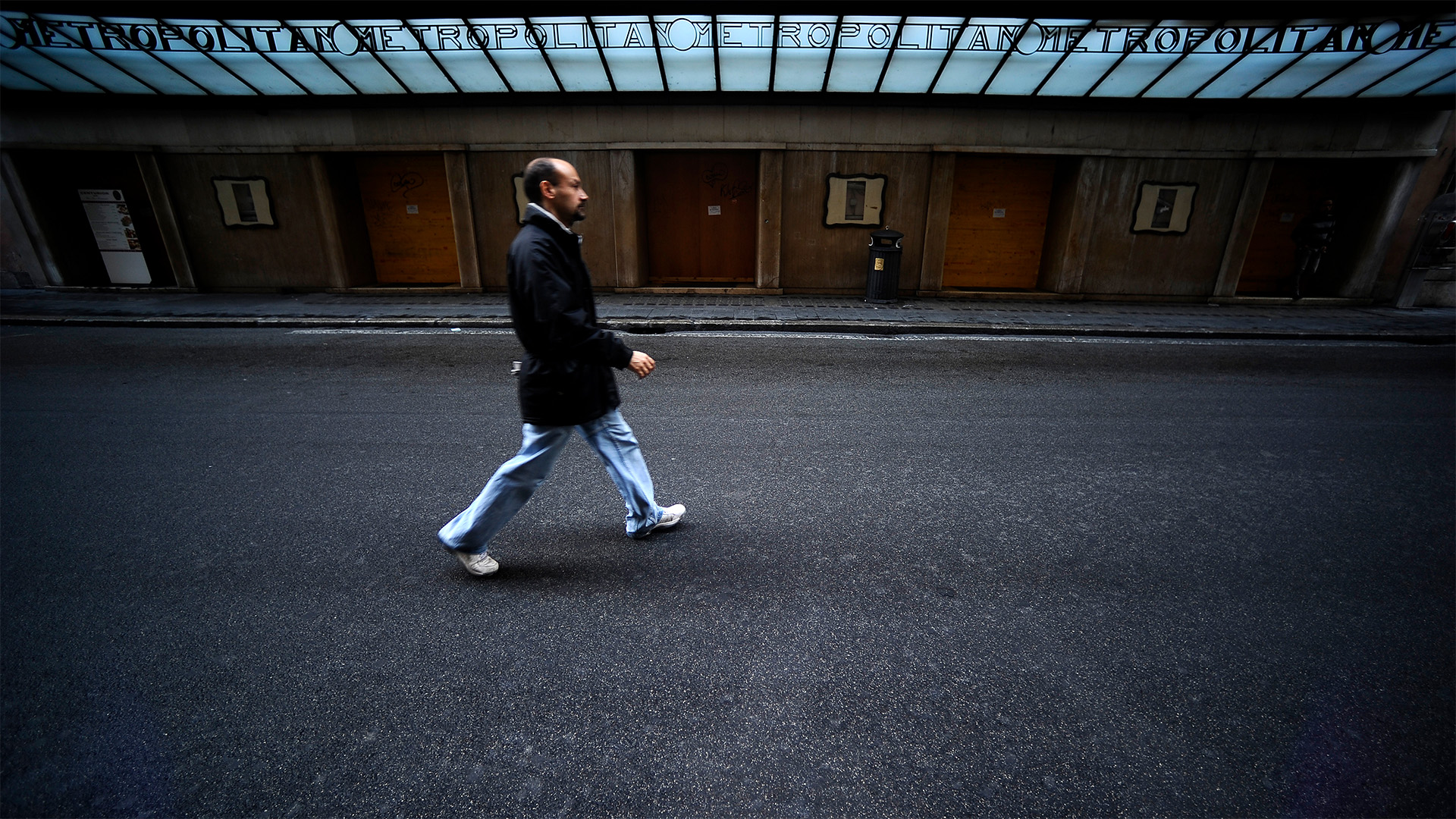
Cinema is dying… is one of those things the French used to say every six months or so, but now it’s universal. We hear it at festivals. It’s AI, streaming, piracy, superhero movies, creative vacuity, exhaustion, the idiotification and atomisation of the audience. The script is overfamiliar, if you can hear it above the wringing of hands. But the truth is cinema isn’t dying: cinemas are.
It’s an important distinction. Cinema is a nebulous abstraction like God or happiness: something we can’t do anything about, not really. An emergent property. But cinemas are actual property as in real buildings, with chairs, bathrooms, projection booths and box offices, they smell of popcorn and feel like velvet. They occupy spaces in our towns and cities, and, alas, they cost money to maintain and occupy real estate which could be converted into shops, Airbnb apartments, car parks.
Take Italy, the country I’ve called home for a quarter of a century. In the 1970s, Italy had over 4000 cinemas served by a domestic film industry which invented entire genres and movements – Neo-Realism, Spaghetti Westerns, Giallos – and created internationally renowned directors and stars – Federico Fellini, Sophia Loren. Pre-pandemic, this number was 3,600. Now that number is down to a thousand, with more cinemas closing every month.
Suggested Reading

The Odyssey and our summer of myth
In Rome, there are 50 shuttered cinemas. Many have been closed for years. Each is in danger of being repurposed.
One of these cinemas is the Metropolitan, the last cinema on the Via del Corso, the main street running from Piazza del Popolo to Piazza Venezia, right through the historical heart of the city. Rome’s municipality has now given the go-ahead to a development which will convert the cinema into a shopping centre. “At this rate, the only part of Via Corso to remain public will be the asphalt you use when crossing the street,” says Valerio Carroci.
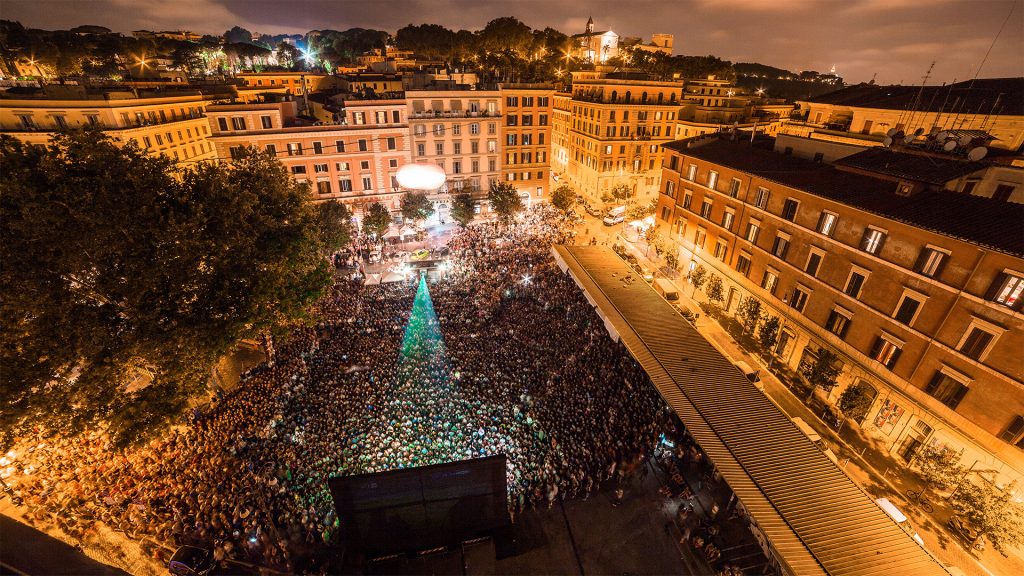
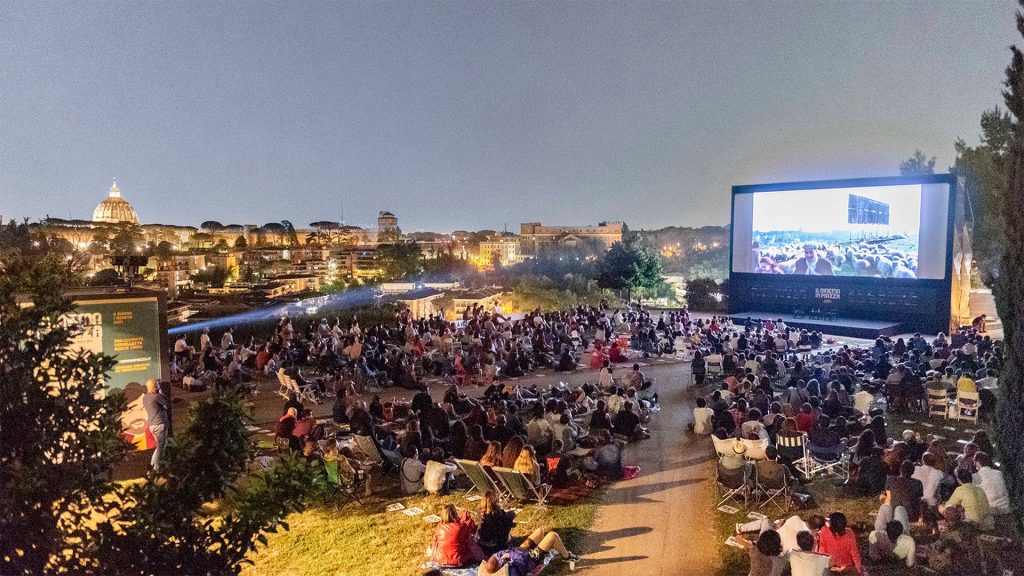
Valerio is the President of the Piccolo America Foundation, a group of activists who ten years ago occupied the Piccolo America Cinema in the Trastevere neighbourhood of the city to protest against gentrification and the lack of public spaces. Following the adage “become the change you want to see,” their movement has grown into an organisation which today runs its own state-of-the-art cinema – Cinema Troisi, with its 24-hour study centre. It also puts on a month-and-a-half-long summer festival of outdoor screenings – Cinema in Piazza – featuring directors and stars introducing their personal favourites in the parks on the periphery of the city.
I went to see Josh O’Connor introduce PierPaolo Pasolini’s Accattone and Sir Ian McKellen sat and watched Jacques Tati’s marvellous M. Hulot’s Holiday with a packed crowd of cine-enthusiasts. Léa Seydoux introduced Louis Malle’s 1963 film The Fire Within, as well as the Italian premiere of her latest film L’Inconnu.
I’ve been reporting on Valerio and the Piccolo America team since a vicious attack on their volunteers by fascists in 2017 brought them to international attention. I adhere to the George Orwell school of politics: “when I see an actual flesh-and-blood worker [cinema volunteer] in conflict with his natural enemy, the policeman [fascist], I do not have to ask myself which side I am on.”
Valerio mobilised the world of film to denounce the attack and Jeremy Irons donned the burgundy-and-gold t-shirt of the volunteers and took the stage the very next night to denounce the thugs.
Piccolo America has managed to run their cinema and festival with money from the region and the city. This has proved precarious in the past when right-leaning politicians have come to power and turned off the money tap. Elected in 2012, the current centre left mayor, Roberto Gaultieri, has had a relatively good relationship with Piccolo America.
However, the redevelopment of the Cinema Metropolitan has caused a dramatic breach. This came when hints were made that permissions for public screenings could be withdrawn and funding cut if Valerio publicly criticised the council’s decision.
In reply, a host of important figures from Italian cinema, including Alba Rohrwacher and Luca Marinelli, have signed an open letter expressing their support for Piccolo America and echoing Valerio’s criticism of the development of Cinema Metropolitan into yet more shops. Valerio has even gone so far as to float the idea of a rival political movement and mayoral candidate to fight specifically against the encroachments of mass tourism and gentrification and to spearhead the reopening of cinemas and other public spaces.
Suggested Reading


Should we relax about phone use at the cinema?
Visiting on a recent weekend, the study area in the Troisi was full of students, taking advantage of the air conditioning. The cinema was showing Radu Jude’s latest film Kontinental ‘25. The free outdoor screenings were packed.
“My philosophy to promote cinema is like a drug dealer,” Valerio says. “The first one is free.”
One kid working at the bar has made his first short film and is working on writing his feature. The programming is ambitious and challenging stuff. It’s only a matter of time before one of the directors showing their film here turns out to have been a patron.
Valerio sees the possibility of opening more cinemas such as the Reale, Roma and even the original America, throughout the neighbourhood: what he calls the Trastevere multiplex. “You’d eat a nice cacio e pepe, buy a ticket from the newsagent and go from one cinema to the next through the narrow Rione.”
We could have that. Or we can just have more shops…
It’s an ambitious dream, but having come so far, Valerio is passionate, combative and ready to take on the old guard. In a word, he’s a Roman.
John Bleasdale’s novel Connery is published by Plumeria
 Most popular

How Trump and the Republicans screwed it all up

Suella Braverman’s book has sold only 106 copies. This is why
Trump’s snuff politics is a new low in American cruelty
I was at Eton with Charles Spencer – this is how it explains his battle with the royals