
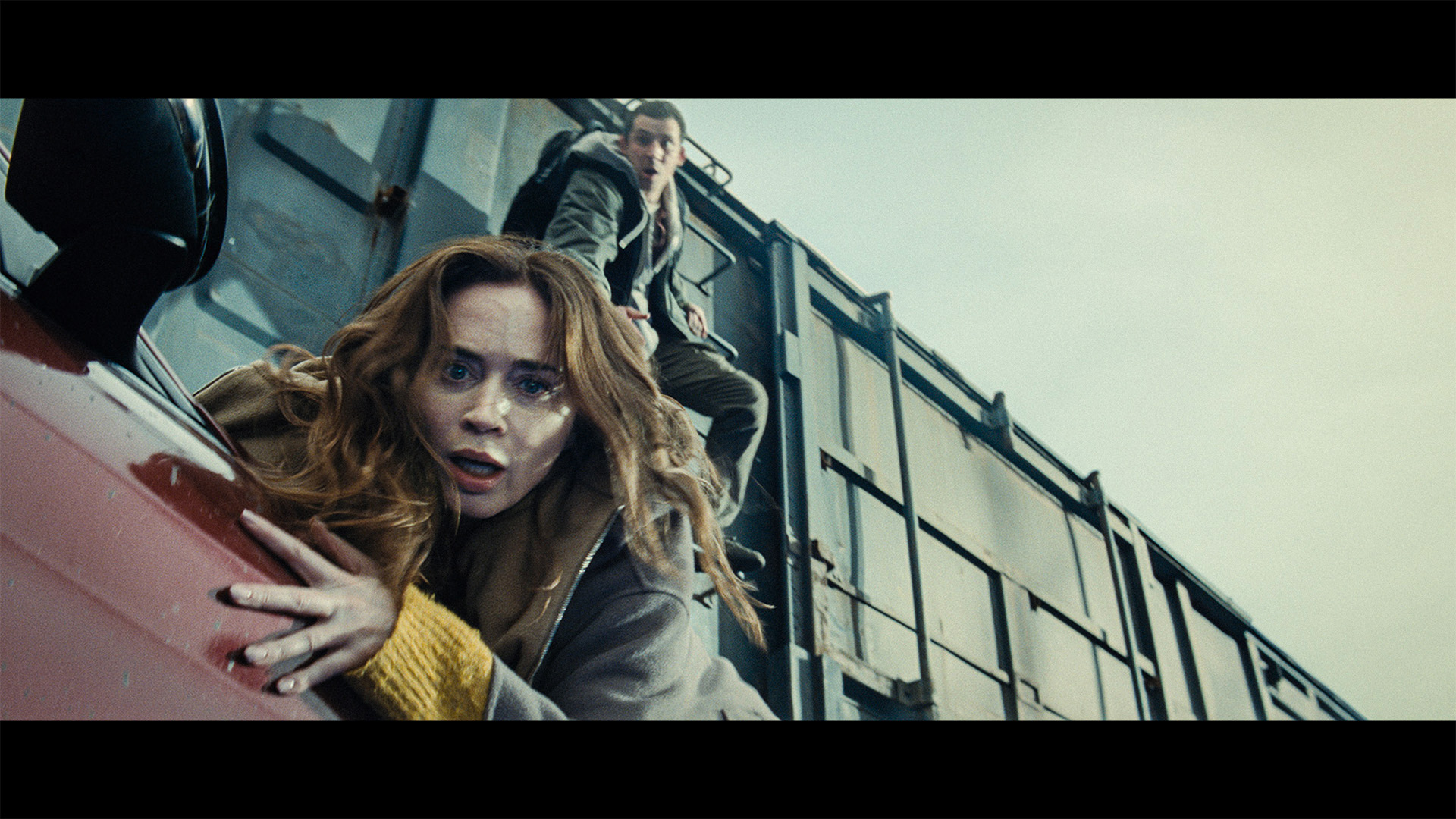
In 1977, Steven Spielberg’s Close Encounters of the Third Kind is released: it’s both part of a wave of interest in the weird and another tsunami in itself.
The same year, science fiction writer Philip K Dick tells a convention in Metz, France that he’s had a post-wisdom-tooth-extraction epiphany: all his novels aren’t really novels, but some divinely inspired revelation of the Vast Active Living Intelligence System, also known as VALIS or God. The assembled fans are nonplussed. They just thought he wrote good books. But believing his own fiction is reality is the most Philip K Dick thing Philip K Dick can do.
Elsewhere, author Eric Von Daniken is Graham Hancocking things up with his alien astronauts and ex-Israeli soldier Yuri Geller bestrides the world, fixing watches remotely while bending forks and spoons like a deity dedicated to the destruction of cutlery. Everyone wants to believe in ESP and telekinesis, dowsing rods and disco.
I’m just a kid, but soon ready to sup from the Holy Grail of Arthur C Clarke’s Mysterious World and collect magazines about everything from Bigfoot and the Bermuda Triangle to Spontaneous Combustion and Nessie. As GK Chesterton almost certainly didn’t say, the trouble with not having God in your life is not that you are left believing in nothing, but that you are left believing in anything.
In 2026, nearly 50 years on, Spielberg’s new film Disclosure Day is released, and it believes in anything: telekinesis, ESP, alien intelligence, UFOs, crop circles, Roswell, Area 51, wide-ranging government conspiracies involving thousands of people who never get drunk and tattle. It is determinedly gullible and willfully stupid. I mean, crop circles?
It’s fascinating just how prattish Disclosure Day is and how compelling, like watching a clown car being expertly Evel Knievelled over seven double-decker buses and into a bucket of knives. The story is by Spielberg – screenplay by David Koepp – and the film is set up as a return to the territory covered by Close Encounters, ET and War of the Worlds.
Suggested Reading
How Trump explains Disclosure Day and America’s new UFO boom
In some ways, it’s Spielberg making a Spielberg fanboy film. Elaborate blocking shots that those YouTube clips spaff over? Check! Lens flare? Check! Everyone paralysed in gawping awe? Check! Check! Check! Aw, mate.
Josh O’Connor and Emily Blunt are the two ordinary schmos who find themselves in the midst of a cat-and-mouse chase with a murky private agency led by a scratchy-bearded Colin Firth, wanting to hide the truth. They are driven by urges they can’t fully explain and guided by Colman Domingo’s tweedy professor – Henry Jones Sr.? – to attempt to disclose the “reality” of Roswell and the UFOs that have been knobbing around the skies with the regularity of Ryanair.
There’s running and jumping, hiding behind flimsy fences and car chases with the bad guys whose superpower consists of parking their fleet of multiple cars willy-nilly at will. Blunt is Spielberg in drag: her secret weapon is to numb everyone into inaction with dewy-eyed sentimentality.
Despite his liberalism, Spielberg has been contaminated by Trump. The film begins with the sort of wrestling bout the president gets a semi while watching, and the aliens – unlike in Close Encounters – are America First, apparently uninterested in the rest of the world. This speaks to the fact that Trump has co-opted the Disclosure Movement as part of his own constituency, releasing many previously classified files, perhaps to distract from the Epstein files, hoping the word “files” will confuse his supporters.
In the 1990s, Scully and Mulder compiled The X Files under the motto “The Truth is Out There.” They were the outcasts of the FBI, subversive, underground. Now Kash Patel is running the bureau, you can imagine the pair of them being given corner offices.
Instead of fringe politics, conspiracy theories are now a central plank of the government’s policy: the refuge of the hyper-rational, unable to accept the role of the coincidental and improbable in life and so willing to build whole superstructures of the insane and impossible with a large dose of self-aggrandisement – I’m the only one who sees it, sheeple! Now the wingnuts are fully mainstream, with fact-checking eviscerated and alternate realities allowed as much validity in the media. The feels trump facts and figures, critical thinking or evidence.
One would think that Spielberg might be more cautious about promoting such blarney, having himself been the target of particularly noxious conspiracies. Google him along with Tom Hanks and the Clintons, and you’ll come across right wing blogs specifically relating to nefarious plots and children. In Disclosure Day, there is a scene of children being abducted by naffly CGI-ed animals that I can’t help but think will be clipped and deconstructed into a confession by the testicle-headed rage-bollocks merchants like Alex Jones.
At his most successful, Spielberg was about destroying homes (Close Encounters, ET, 1941) and boats (Jaws). As he got older, the destruction became widespread, but if anything more gleeful, taking in amusement parks, towns, villages and cities: Jurassic Park, Saving Private Ryan, and War of the Worlds.
One of the slightly queasy elements of Schindler’s List is the virtuosity he displays when filming the sacking of the Warsaw Ghetto. In The Fabelmans, he revealed his own inciting incident was seeing the train crash scene in The Greatest Show on Earth (1952), which he then went home to reenact with his train set and camera. Destruction was trauma but fun.
Suggested Reading


Nicole Kidman is great. But is she any good?
In Disclosure Day, a childhood home is actually rebuilt in what feels like a conscious attempt to repair the homes Richard Dreyfuss and the aliens destroyed in Close Encounters. Instead of the aliens taking us to a Neverland, he now wants them to reform the world.
Credulous chump that he is, Spielberg wants America and the world to be united, and he believes this can be done by us all gazing at our phones while awesome news is relayed via the networks. If only we all had something to gawp at, amazed, we would finally come together, the way the world famously united with the fall of the Twin Towers.
What’s unwittingly terrifying about this at times entertaining and at times dull film is the fascistic insistence that we are all completely passive before superior beings who can’t seem to fly their flying saucers without crashing into something. Even the heroes are nothing more than passive receivers of gifts. One of them describes their experience in the film as being like a passenger; another needs to phone a nun to make a decision, like a Catholic-inspired quiz show contestant.
Being the supreme showman, Spielberg can’t think of us as anything other than spectators and the answer to our problems as spectacle. But awe robs us of our agency, and wanting us all to forget our differences neglects the chance that perhaps having those differences is an important challenge we have to face rather than erase.
Perhaps it’s time to grow up.
Disclosure Day is in cinemas now
 Most popular

My day out with Danny Tommo

I was at Eton with Charles Spencer – this is how it explains his battle with the royals


Emily Maitlis’s diary: Trump doesn’t fear the AI apocalypse – but he’s terrified about the midterms


Memo to Burnham: this is how you beat the populists