Rachel Reeves. David Lammy. Hillary Benn. Peter Kyle. All big – well, biggish – cabinet names sacked by Andy Burnham in his purge of the Starmerites, to acres of press coverage.
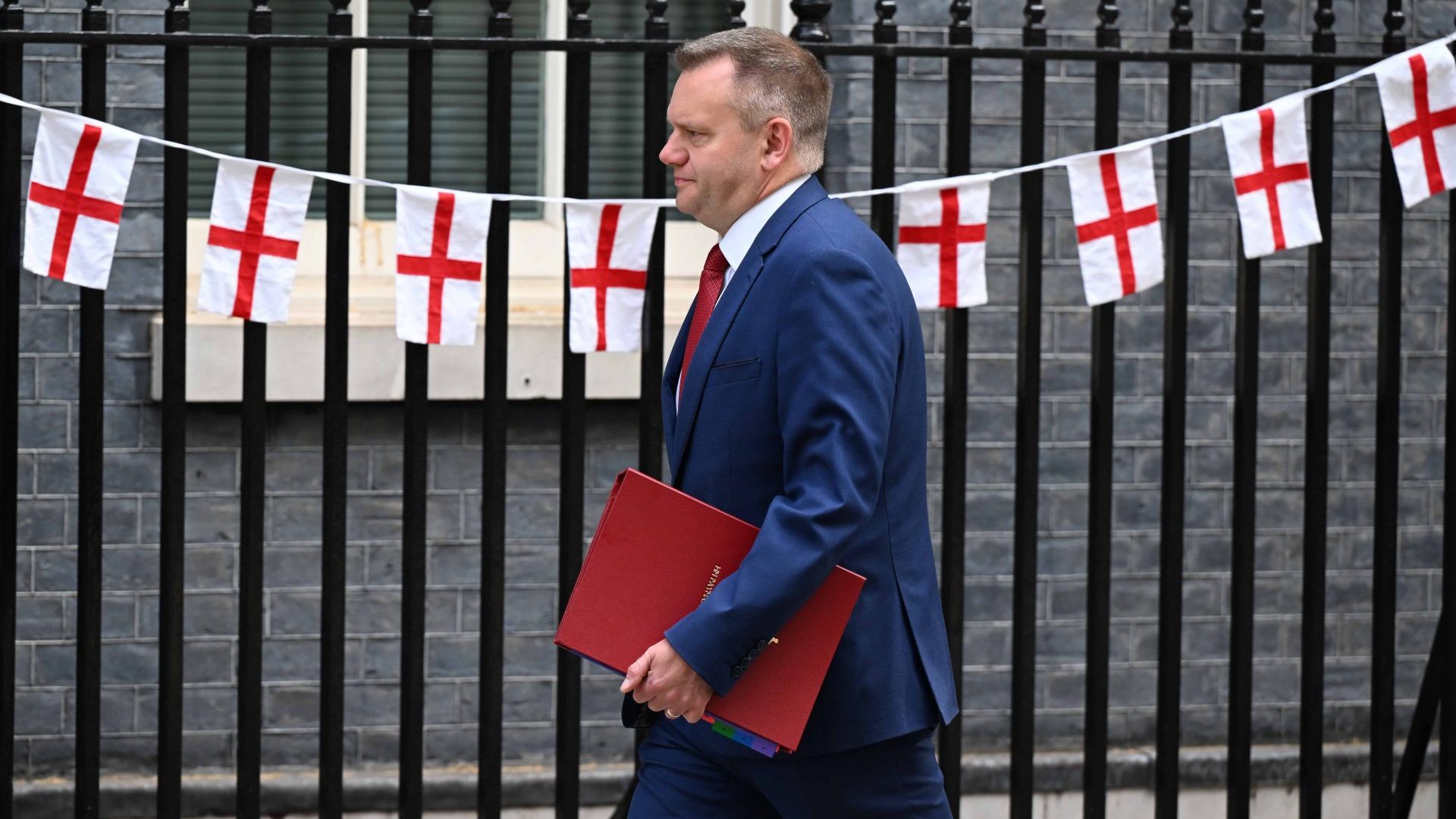
But here’s another one who departed without, it would be fair to say, the majority of the general public even knowing he had been there in the first place, like an Oasis drummer: Nick Thomas-Symonds. Which isn’t to say that his departure doesn’t matter when it comes to the great EU reset.
Thomas-Symonds, the paymaster-general, paid for his loyalty. A genuine Starmer believer, he often gave the impression of believing the boss was this generation’s Harold Wilson, the four-time election-winning Labour leader on whom he literally wrote the book (The Winner – really very good).
But he was also the man who truly put in the hard yards on improving the UK’s relationship with the EU after years of needless antagonism from successive Conservative administrations in his dual role as minister for EU relations. While Starmer glad-handed, it was Thomas-Symonds who got into the weeds of negotiating SPS veterinary agreements, emission trading, joint efforts against human trafficking networks and rejoining Erasmus+.
Indeed, such was the time put in that last December WalesOnline reported how he had “racked up [a] £7k travel bill in one year visiting 11 countries”, which doesn’t seem that much in the grand scheme of attempting to fix the £120 billion cost of Brexit (0.000005833%, actually), but there you go. Maybe they think he should have stuck to Zoom.
And it is testament to the respect garnered in Europe by Thomas-Symonds in his two years in the role that politicians across the continent paid tribute to an outgoing junior minister. EU ambassador to the UK Pedro Serranno praised his “extraordinary work to advance EU-UK relations” and spoke of how his “clear vision of the strategic importance of our partnership helped drive it forward and shape the first tangible achievements”.
Cyprus’s deputy minister for European Affairs Marilena Raouna praised his “commitment and leadership in strengthening the partnership between the European Union and the United Kingdom”, while her Irish equivalent Thomas Bryne spoke of how “in the last two years, we have seen a positive new chapter in the EU-UK relationship developed”.
All of which is not to say Thomas-Symonds was an irreplaceable ministerial genius. But it does bring to mind a column William Hague wrote for the Times ahead of Burnham’s coronation, urging the incoming PM to stick with Yvette Cooper as foreign secretary – not due to any ideological sympathies, but for the sake of at least some consistency.
“It is a job in which it matters greatly if you know the truculent counterpart on the other end of the phone, can recall the UN resolution you worked on last year and have visited the wartorn country that you are discussing,” wrote the man who was David Cameron’s foreign secretary long before David Cameron was Rishi Sunak’s foreign secretary (which sort of makes his point in itself). “Other nations look on with bemusement at the constant churn and in some cases have lost interest in meeting British ministers who turn up for one summit and are never seen again.”

He was talking about the foreign secretary, but it applies equally to the Europe minister’s role. Thomas-Symonds spent two years meeting everyone who mattered in Brussels. Now his successor, Hamish Falconer, will start all over again.
Falconer hardly comes to these things blind: before becoming an MP and Foreign Office minister for the Middle East, Afghanistan and Pakistan, he spent four years at the then international development office and nine at the Foreign Office. But that was as a civil servant behind the scenes, not as the man who will now walk into Brussels meetings as, in effect, its chief negotiator – a role in which relationships matter.
The Independent wrote positively of the appointment this week, noting that “Falconer comes with knowledge from the Foreign Office of the problems caused by the barriers erected by Brexit”, as if anybody who didn’t literally have a balloon for a head wasn’t aware of the problems caused by the barriers erected by Brexit.
All the very best to Mr Falconer. But let’s hope he hits the ground running and builds on the foundations Thomas-Symonds has already laid: after two years, nobody needs a reset of the reset just to show a new sheriff is in town.
 Most popular

Suella Braverman’s book has sold only 106 copies. This is why
The Brexit majority has gone for ever – rejoin now has a majority of 9 million


The mask has slipped – now we can see the real, shameful face of Reform
The riots in France are being stoked by Russia and Iran