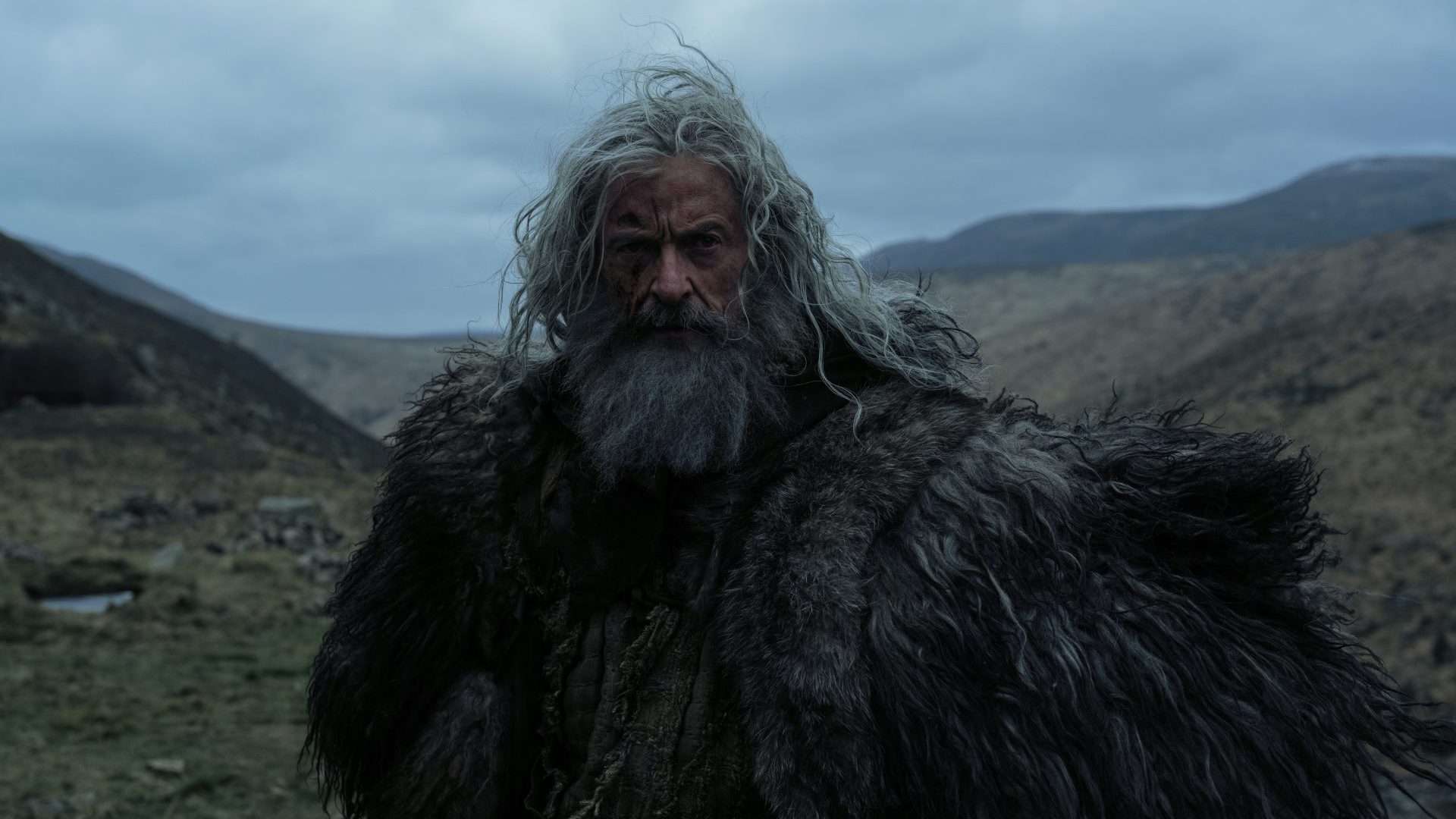

“Sometimes an intermission is part of the music,” Bill Evans’s mother (Laurie Metcalf) tells him. It’s one of the smart ways in which Grant Gee’s Everybody Digs Bill Evans skedaddles away from as many music biopic cliches as it can, so that its evasions become a kind of dance.
Aside from an opening sequence that reproduces the gig where the Bill Evans Trio – the pianist with bassist Scott LaFaro and drummer Paul Motian – record their magnificent, genre-defining live album Sunday at the Village Vanguard, the film is allergic to music. It’s about the vast in between, the everything-else-is-waiting of ordinary life.
Scooting past another cliche, Norwegian actor Anders Danielsen Lie is fantastically unshowy in the role. Skinny as a pool cue, Evans is a man who hesitates before he mumbles, deflecting the most straightforward questions. It’s his music that is almost his unique form of expression. That and smoking cigarettes.
Except for brief flash forwards, the film is shot in black and white. Cinematographer Piers McGrail elicits the colour of ashtrays and smoke, piano keys and heroin. Some shots look like Blue Note album sleeves.
Mark O’Halloran’s adaptation of Owen Martell’s novel takes as its starting point the tragic death of Evans’s bass player. LaFaro died in a car accident 10 days after his most famous gig. Unable to play without his bassist and unwilling to even think about it, Evans stays first with his brother and his family. Harry Evans once had musical dreams of his own, but has settled for teaching music and witnessing his brother’s brilliance.
Suggested Reading

Why does Hollywood keep getting the Beatles wrong?
There are two moments in the film when Evans’s family provides his music with an audience. It is fascinating to see how vitally the music hits them, as if they are receiving a direct communication from him. Again, in the cliched movie, Harry would be Theo to Bill’s Vincent Van Gogh, but here it’s Harry who is troubled with mental illness, which is later diagnosed as schizophrenia.
Christopher Frayling, in his new book The Hollywood History of Art, describes how Hollywood creates a myth of the artist – an enemy to convention, anti-social, betrayed and exploited by a conservative establishment, misunderstood in their time, ostracised by their families, mentally unstable and bohemian in their lifestyles: the garret flat, the mad genius, the temperamental blow-ups, the early death. The irony is that young people watch the films and when they become artists they believe this is how they have to act.
This cliche becomes a template for behaviour. It’s called “enacted biography,” an idea from Ernst Kris and Otto Kurz’s 1934 treatise Legend, Myth and Magic in the Image of the Artist: A Historical Experiment.
What is true of artists is doubly, trebly true of jazz musicians. The legends are there to see in the lives and deaths of Charlie Parker (overdosed at 34) and John Coltrane (liver cancer at 40). Of course, Evans played with Coltrane and Miles Davis on the bestselling jazz album of all time, Kind of Blue, writing the sublime Blue in Green, for which Davis glibly took a sole composition credit.
Suggested Reading

The strange death of sex in the movies
But Evans’s life wasn’t a tragedy. Though tragedy certainly occurred around him, this had little or nothing to do with his jazz. There are no scenes of ignorant record company executives or swindling managers. His brother is sympathetic and supportive, despite Evans sneaking out to score heroin every night and nodding over his mashed potatoes at the dinner table.
When Evans goes to stay with his parents and kick the junk, Bill Pullman and Laurie Metcalf play them as a duet of eccentric normalcy, private jokes and small despair. They vaguely understand his cold turkey as being a flu he picked up from New York, in the same way his father references his brother’s mental illness as him being a bit squirrelly.
Another highlight of the film comes when they sit in the living room and play his new album for the first time. Kurt Vonnegut said he wrote books to impress his family and people he loved, and in later life lamented that everyone he wished to impress seemed to have died on him. Evans gets to impress his family, unequivocally.
The cliche we can’t escape is the heroin, which informs the impressionistic wooziness of the film and its occasional jagged interludes. It’s tempting to follow the estimation of Evans’s friend Gene Lees that Evans’s death at 51 “was the longest suicide in history,” but his brother and girlfriend both actually took their own lives.
For a self-destructive artist, Evans produced an astonishingly large and influential body of work. Personally, I imagine his death was the side-effect of the heroin, but also of the chain-smoking and black-and-white cinematography.
Everybody Digs Bill Evans is released in UK cinemas on September 11