There are, the Stranglers told us, no more heroes. And that seems particularly true if you’re English: where the Celtic nations are festooned with mighty warriors like Finn McCool and Owain Glyndwr and Mel Gibson in that film, England is rather short of legends, unless you count, I dunno, Bobby Moore and Winston Churchill.
The flag of Saint George has become a kind of spiritual used toilet roll in the hands of clowns, while King Arthur and his knights refuse to emerge from Merlin’s cave to save us all, and even Drake’s drum remains unbeaten.
Only one hero remains – and he is surely the most English hero of all. Living in the ancient mists of somewhere far from London, robbing the rich to give to the poor, and surrounded by a jolly band of cut-throats, his name is Andy Burnham – sorry, Robin Hood.
Possibly from the East Midlands, possibly from South Yorkshire, possibly made up completely, Robin Hood is an English hero because he embodies many of the traits that were once considered, and maybe still are, to be essential elements of Englishness: a healthy disrespect for authority, a dislike of unfairness, loyalty to the (true) King, a certain wildness, and a sense of oneness with nature.
If you add a comic villain, a love interest and a rag-bag bunch of supporting characters, you have all the elements of classic British comedy (sometimes I like to imagine a lost film called Carry On Robin, with Jim Dale as Robin Hood, Kenneth Williams as the Sheriff of Nottingham and Barbara Windsor as Maid Marian).
Suggested Reading

Why does Hollywood keep getting the Beatles wrong?
Like Braveheart, like Switzerland’s William Tell and Korea’s Hong Gild-Dong and countless others. Robin Hood fits the image of the legendary national hero – someone who lives outside society despite their possible noble origins, someone who’s a brave warrior, someone who wishes only to restore the old order, and someone who isn’t quite a mythical personage but exists only in songs and stories – and not just songs and stories but television series and movies and games (and even musicals – see Lionel Bart’s famed flop Twang!!)
The story of Robin has been told many times in many formats, from the 1950s TV series with its immortal theme song – “Robin Hood, Robin Hood, riding through the glen! Robin Hood, Robin Hood, and his Merry Men!” – to Mel Brooks’ 1993 movie parody, Robin Hood: Men In Tights. From the 1980s kids’ show Maid Marian and Her Merry Men (“Pancake Day, Pancake Day, it’s P-P-P-P- Pancake Day!”) to the 1980s Terry Gilliam movie Time Bandits, in which Robin is portrayed by John Cleese as a patronising patrician (“And you’re a robber are you? Jolly good!”).
Perhaps most famously of all, he is depicted in the Hollywood blockbuster Robin Hood: Prince of Thieves, in which Alan Rickman performed more outrageous robberies than Robin ever did with his extraordinary scene-stealing as the sheriff of Nottingham (“I’m going to cut your heart out with a spoon!”), and whose signature soundtrack single – Bryan Adams’ Everything I Do (I Do It For You) was number one in charts for seventeen years. And none of this list includes Hood’s appearance in shows as disparate as Doctor Who, Ren and Stimpy, Star Trek: The Next Generation, Shrek…
Most, if not all, of these adaptations work because the story is so well-formed: the framework has been in place for centuries and the characters and plot work together so well. But the most interesting versions take on a darker hue. There’s the brilliant 1976 movie Robin And Marian, with Sean Connery and Audrey Hepburn in the lead roles (and Ronnie Barker as Friar Tuck!), which is set during Robin’s final years: a beautiful story of love, decline and loyalty, it also finds time for Robin to shoot his final arrow. In odder vein is Peter Tinniswood’s novel The Stirk of Stirk, which combines some strikingly offensive attitudes with a dreamlike strangeness.
As with all folk heroes, each era gets the Robin Hood it wants: the Victorians turned Robin into a Walter Scott hero, all scorned heroism and romantic nobility. The TV era saw him as an outdoorsy type, a sexless Errol Flynn type with a sword and a quip. The 1980s gave him big hair and a power ballad: and the 21st century made him gritty.
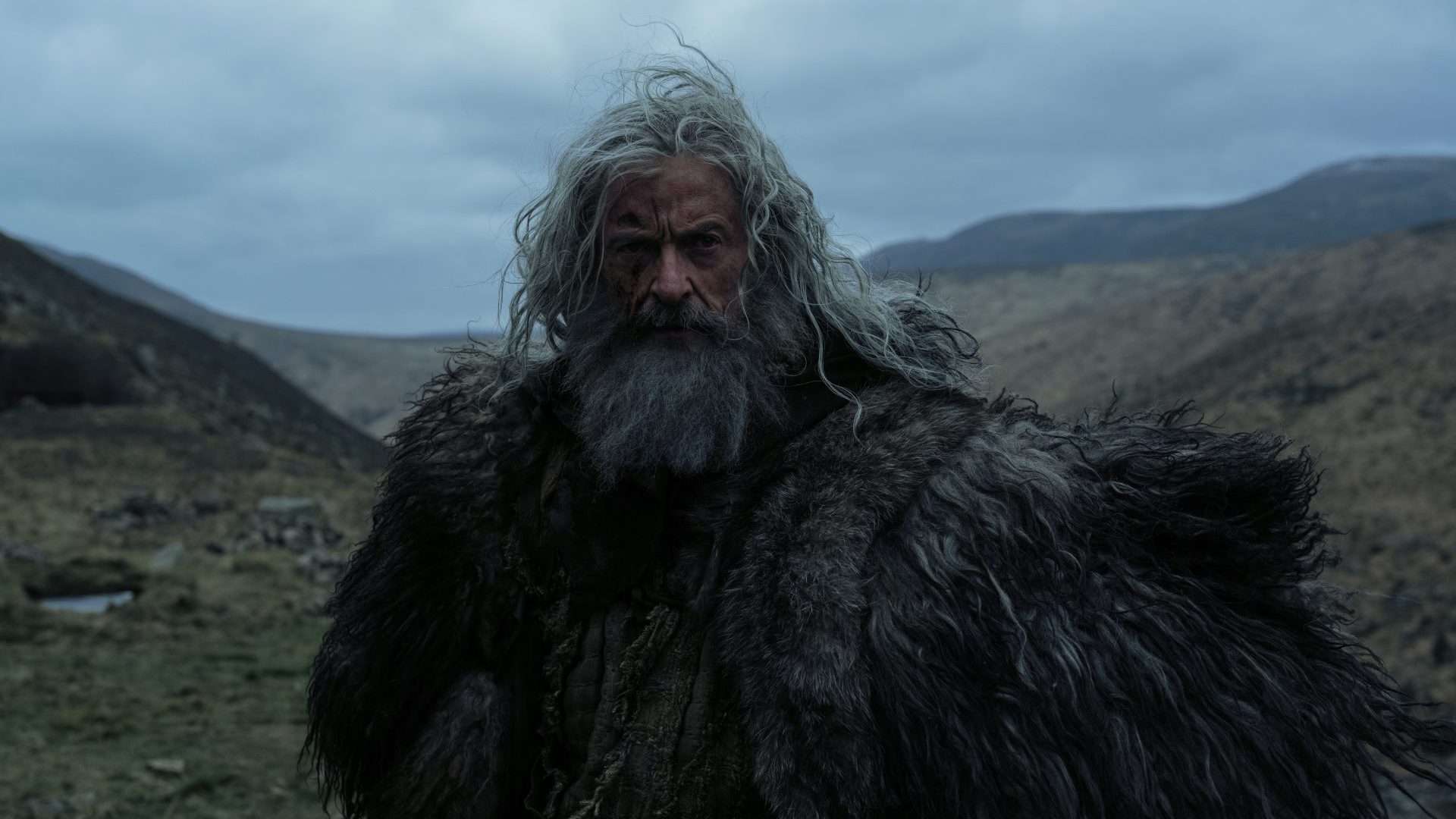
In 2026, we have The Death Of Robin Hood, a movie that, with its on-the-nose slogan HE WAS NO HERO – tells a warts’n’all story of Robin Hood, where the outlaw, played by Hugh Jackman, is little more than an ageing bandit and murderer and the film offers a more realistic take on the near-myth of its main character.
Like 2012’s The Green Knight, The Death Of Robin Hood has its cake and eats it: it purports to demythologise the myth while at the same time feeding from the myth and ultimately reinforcing it: this is not a bad thing, and merely demonstrates that if the story is strong enough, then it will work however it is told, whether that’s straight, inverted or completely flipped over.
And, if the scholars are right, this new retelling may be the most accurate: while evidence for the identity of the real Robin Hood is to say the least skimpy, there are several candidates, all of whom were nothing more than murders and bandits, celebrated even in life by ballad singers and storytellers. To quote the 15th-century writer Walter Bowe (thanks, Wikipedia): “Then arose the famous murderer, Robert Hood, as well as Little John, together with their accomplices from among the disinherited, whom the foolish populace are so inordinately fond of celebrating both in tragedies and comedies, and about whom they are delighted to hear the jesters and minstrels sing above all other ballads.”
Suggested Reading
The strange death of sex in the movies
It would be fascinating to travel in time, Bill and Ted style, and kidnap the real Robin Hood and show him how later centuries perceive him: not as a shit-stained, unshaven forest thug but as a Lincoln Green-wearing, thigh-slapping, lute-encouraging lover of fairness and chivalry.
But then he probably wouldn’t be surprised, what with all those jesters and minstrels and fans amongst the foolish populace: even then, the good folk of Merrie England subscribed to the viewpoint expressed in the 1952 western movie The Man Who Shot Liberty Valance: “When the legend becomes fact, print the legend” – and we have no greater legend than Robin Hood.
The Death of Robin Hood is in cinemas now