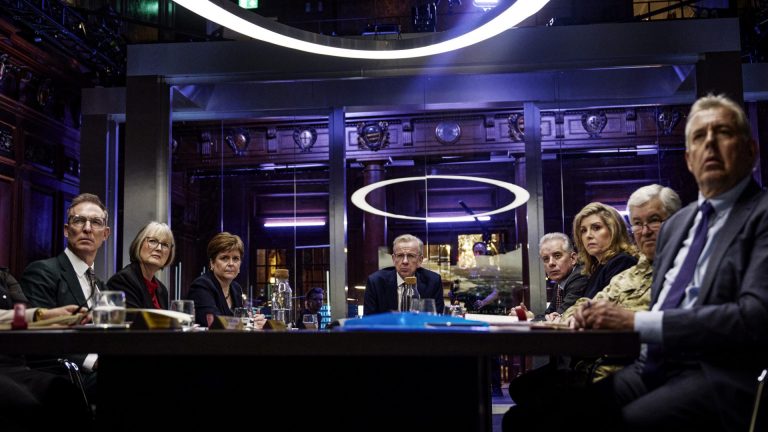

Keir Starmer and his team had been preparing their response to last Thursday’s election results for weeks. That the elections would be disastrous was a given. There was no way of avoiding that. But No 10 knew that any moves against Starmer would be most likely to occur during the fallout from the results, and they let it be known that they were prepared to fight.
But that fight has been underwhelming, to say the least. To the extent that by Monday night, Starmer’s premiership was hanging by a thread, and a group of senior ministers – said to include Shabana Mahmood, Yvette Cooper, John Healey and David Lammy – have rold him the game is up.
On Saturday, the PM had appointed Harriet Harman and Gordon Brown to two newly-created “envoy” roles – a cynic would say “non-jobs”. Sunday was spent in preparation for a much-trailed speech on Monday morning responding to the electoral defeat and making the case that he should stay in office.
No 10 was well aware that Starmer’s brief premiership has been largely defined by botched relaunches. First there were missions, then “first steps” in the manifesto. After a series of fiascos in Labour’s first few months, the missions were sidelined in favour of six “milestones”. Then these narrowed to three “priorities”. The last attempted relaunch, at Labour’s conference last year, promised to take on Reform directly, only for business-as-usual to reassert itself within days.
Suggested Reading
It’s too soon for a leadership challenge to Starmer
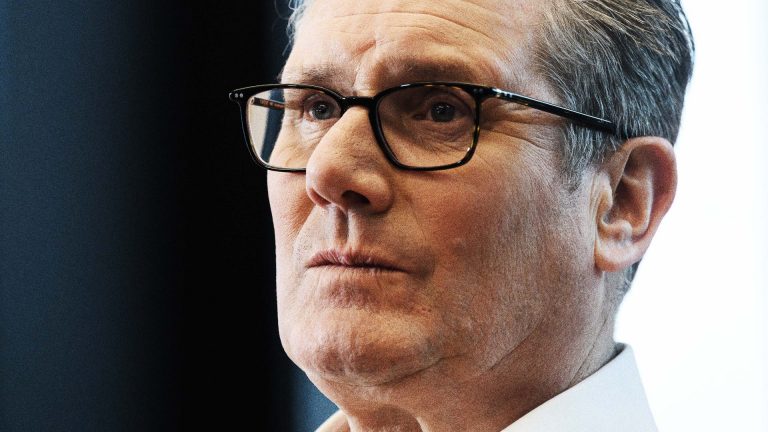
Monday’s speech felt even less substantive than the many relaunches that preceded it. “Incremental change won’t do,” Starmer said, and his team briefed this line ahead of time. He then delivered a dull address that contained no major changes of direction, no new announcements, and barely involved change at all, incremental or otherwise.
Platitudes were not in short supply. The results were “tough” and “very tough”. “That hurts, and it should hurt,” Starmer continued. “I get it. I feel it,” he said, sounding like a Blair tribute act working in a dying seaside town. Starmer listed lots of things for which he took responsibility, culminating in saying he “take[s] responsibility for not walking away”.
What was clearly intended as the passionate speech of Starmer’s political life was delivered with all the verve and pace of the deputy head of HR giving new hires fire safety training for the sixth time this week. “Stories beat spreadsheets,” the prime minister said at one point, having successfully delivered on neither.
Starmer announced a likely renationalisation of British Steel as if it were a new policy, rather than the result of an ongoing and long-running process. He talked about education and skills for young people, an important issue but not one he had anything new to say about.
Suggested Reading
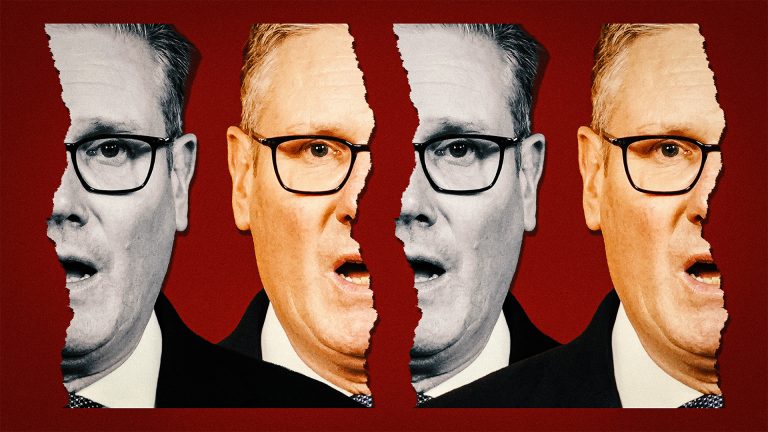
Schrödinger’s PM: Keir Starmer is both politically dead and alive today
Most infuriatingly, he talked about the need for “Britain to be at the heart of Europe” yet again, without anything meaningful to say about it. Such language still enraged Brexiteers, but it does nothing to win over Remainers who have heard him say it before without shifting his policy on the customs union, single market, or rejoining.
As another PM in another era was fond of saying: nothing has changed. Confirmation that Starmer’s speech had done little to calm troubled waters came within hours. At lunchtime on Monday, Angela Rayner said publicly that Andy Burnham should be allowed to stand in a by-election. Shortly afterwards, London mayor Sadiq Khan said the same.
Around half a dozen MPs publicly called for Starmer to go in the first hours after his comeback speech. Among them was Chris Curtis, the pollster turned MP who is the co-chair of the Labour Growth Group – a collection of more than 50 MPs, traditionally seen as amenable to the leadership.
Curtis himself is hardly among the usual suspects lined up against the prime minister – for a long time, he kept a copy of the famous Obama “Hope” poster, redesigned to feature Keir Starmer, visible in the background of his Zoom calls. It no longer hangs anywhere in his home.
By Monday evening, more than 70 MPs hsd called for the PM to go. If Labour’s rulebook worked like the Conservative Party’s, it would likely already be game over for Starmer. During the last government, all that was required to trigger a ballot was that 15% of Conservative MPs privately inform the chair of the 1922 committee that they had lost confidence in their leader (this has since been raised to 33%).
Suggested Reading

What we learned about the 2026 local elections
For Labour, that threshold would currently sit at 61 MPs. Labour’s rulebook, however, is much more generous to its leaders. The only way to trigger a contest is for 20% of sitting MPs to declare support for a named candidate, who must also be an MP – a much more difficult threshold to meet.
The best news for Starmer – the main thing that’s currently keeping him in office – is that even as senior colleagues advise him to set a timetable for stepping down, the efforts of his main rivals so far have been at least as underwhelming as anything he has done. Wes Streeting’s camp seems constantly on the verge of acting, only to pull away from the brink. Rayner seems to have been persuaded not to act herself, instead falling into the Burnham camp. Unless something changes, Labour’s hopes of ousting Starmer are Burnham or bust.
Burnham’s road to power is a long one. First, he has to persuade a Labour MP to resign their seat and create an opportunity for a by-election. Then, he has to pressure Starmer into allowing him to stand in that seat, purely so he can try to take his job. Then, Labour has to win that by-election – and the much larger contest to keep the Manchester mayoralty that it would trigger in turn.
Behind the scenes, the Manchester mayor’s supporters talk about all of that as if it’s a done deal. But in reality, none of it has been done, and none of it is remotely guaranteed. Still, the very possibility of a Burnham coronation has seemed to scare off other challengers – leaving Starmer in place, for the moment at least.
As a result, and somewhat bizarrely, Burnham might be doing more to keep Starmer in power than anyone on the payroll at No 10.
No one in Labour is happy. However miserable and furious Labour MPs are in public, they are far more so behind the scenes. They are all too aware that most of them are set to lose their seats, and resoundingly, at the next general election.
I have yet to speak to a single one who thinks Starmer’s speech on Monday morning accomplished anything useful. But for now, almost all of them are waiting for someone else to wield the axe. What will they do if no one does?
 Most popular


Emily Maitlis’s diary: Trump doesn’t fear the AI apocalypse – but he’s terrified about the midterms
A new film about Elon Musk reveals him as so awful it’s almost tragic. Almost

My day out with Danny Tommo
I was at Eton with Charles Spencer – this is how it explains his battle with the royals