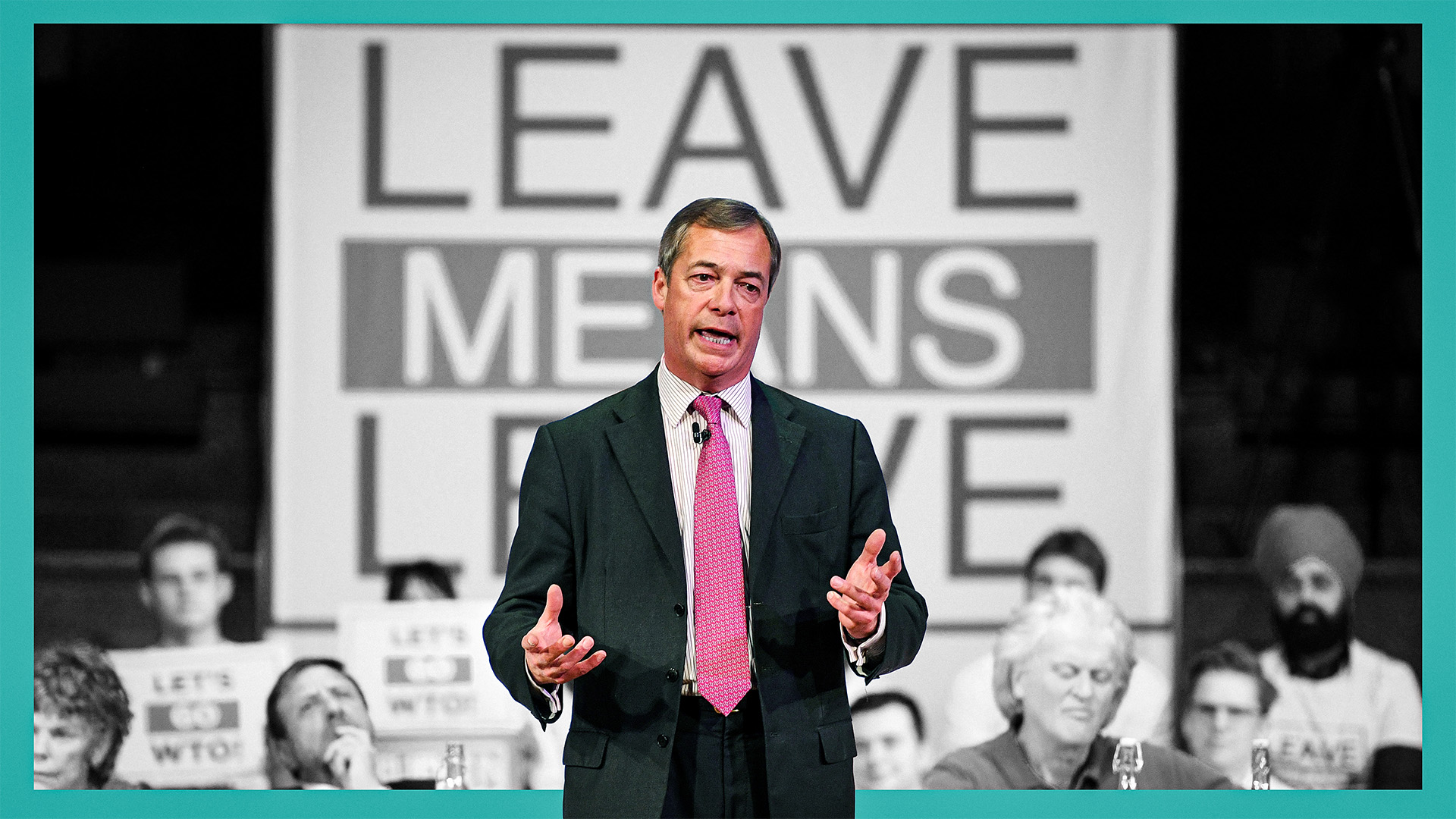
“Forget Brexit,” said… have a guess… no, it couldn’t be, could it… surely the least likely author of such a phrase would be the man who once so loved to be introduced at MAGA events as “all the way from England, Mr Brexit himself”?
But yes indeed, these two words fell from the lips of one Nigel Farage as he was being interviewed on TV in the wake of local election results he was hailing as a historic and seismic shift in British politics.
If I was being generous, I might assume that in the workings of a mind tired after weeks of campaigning, and days of running around trying to avoid being asked about the dodgy donation of £5m from a crypto billionaire, Farage meant “let’s just put Brexit to one side for the moment.” Or, given that he was emphasising the scale of what he was presenting as such a historic and seismic shift, he meant “this is even bigger than Brexit.” Like his old pal Donald, he does love a good superlative.
But no, I think what he actually meant was, er, please, can we just forget about Brexit? Because what he was trying to say was that Brexit was now irrelevant, that there was no part of the country, whether historically true blue or deepest red, Leave or Remain, that was off limits for Reform UK.
Is that true though? Is the reason Farage wants us to “forget Brexit” that despite the widespread media and political omerta on its enormous damage since we finally left the EU, an awful lot of people have not forgotten Brexit, and at the risk of developing Brexit Derangement Syndrome to add to our Trump Derangement Syndrome, some of us never will.
So as the right wing press and the crypto bros excite themselves to breathlessness with the inevitability of a Farage premiership, there is one piece of data from the admittedly dreadful results for the old main parties that is worthy of further examination. It is this… in those council wards where more than 60% voted Leave in the referendum ten years ago, support for Reform was around the 40% mark. Get that nationwide, and Downing Street belongs to Nigel.
However, in wards where the 2016 vote for Leave was below 40%, Reform support last week was often in single figures, and averaged around 10%. That says to me that despite a media desperate to play its part in the inevitability of Reform’s rise, and even despite the millions Reform will have to spend on a general election campaign, doubtless with Trumpian disregard for any rules that may attach to it, there are parts of the country where they have absolutely no chance.
Suggested Reading
How Brexit screwed the economy – a horror story
At the last general election, the overwhelming desire to get the Tories out played a big role in securing Labour’s landslide, and tactical voting played a big role in that, as people worked out how best to secure that goal in their own area. It could be, depending on whether and how Labour improve – or don’t – that the tactical voters, including some who voted Labour in, will be thinking about how to get Labour out.
Equally, it could be that the most powerful driving force among the majority is the desire to stop Reform. We saw a bit of that in Wales, where once the country sensed that it was either Plaid Cymru or Reform who would win, plenty of Labour supporters switched to Plaid to stop Reform.
Of the strategic errors Labour has made, starting with a “Make Brexit Work” approach that was doomed to fail, one has been their own role in allowing the authors of Brexit to escape the political calamity that should have been their due. Yes, David Cameron paid a price and lost the premiership on the back of the referendum, and Boris Johnson is now history. But Mr Brexit himself seems to have got away with it, sufficient for him to utter the words “forget Brexit,” and it doesn’t even merit a follow-up question from journalists who once could talk of little else.
That has to change, and the looming tenth anniversary of the referendum is as good a time as any to start reminding people of the damage Farage has already done.
The New World will be doing its bit. Labour, the Lib Dems, the Greens, the SNP and Plaid need to do the same.
It is 16 years since Gordon Brown left Downing Street after losing the election to the Cameron-Clegg coalition, so it must have felt a little strange to be back, appointed special envoy on global finance as part of Keir Starmer’s attempted fightback.
As when he left in 2010, so on Saturday as he and the PM met outside No 10, he was wearing a dark red tie. What a remarkable memory I have, you might be thinking, that I can remember the colour of his tie from so long ago. Well, the reason is that it was my tie.
Gordon had been trying for five days to see whether a deal could be struck with the Liberal Democrats. On day five, as he prepared to leave the building and head to Buckingham Palace to resign, he suddenly realised his tie was Tory blue.
Suggested Reading
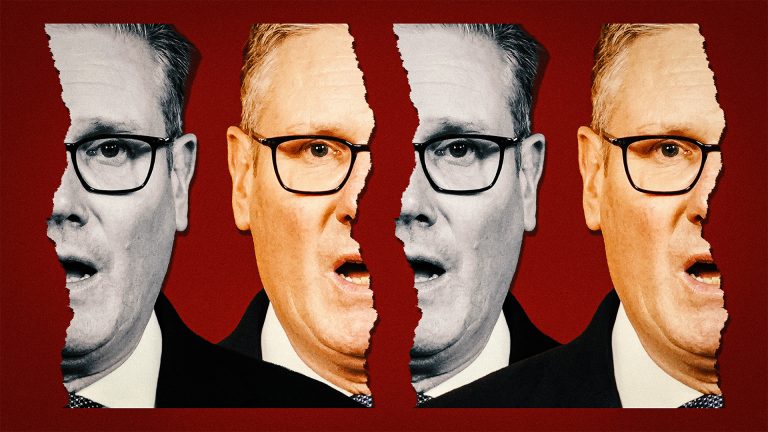

Schrödinger’s PM: Keir Starmer is both politically dead and alive today
He looked around among the group of us gathered in his office, noticed my red tie, and asked to borrow it. It was the last time I saw it, other than on the occasions when TV replays the shots of him leaving with Sarah and their sons.
I don’t think it was the very same tie he wore on Saturday, but I couldn’t guarantee it, and it’s nice to know that some habits endure.
The praise for King Charles’s speeches on his recent state visit to the US keeps coming. Neil Kinnock, a TNW subscriber who most weeks tells me what he thinks of my column, agreed wholeheartedly with my assessment last week that his Congress address would get into any great speech anthology. Neil, surely one of the finest orators of our lifetime, said it was “the brilliant subtlety” that impressed him most.
He had spotted an especially brilliant example of it which had passed me by at the time. “It was the reference, as he presented a ship’s bell to the President at the White House banquet, to “Admiral Trump, your valorous namesake.”
“It was,” texted Neil, “a message that said ‘not all Trumps were cowardly bastards like you’ with stiletto delivery.”
Harry Evans was a journalistic hero who became a friend, and who I suspect is turning in his grave at what the modern media landscape has become. At least his widow, Tina Brown, is continuing to fight for good journalism in the face of the oligarchs and tech bros who have done so much damage to it. So, it would seem, is The Pope, who sent an apostolic blessing to the Truth Tellers conference Tina set up to honour Harry’s memory.
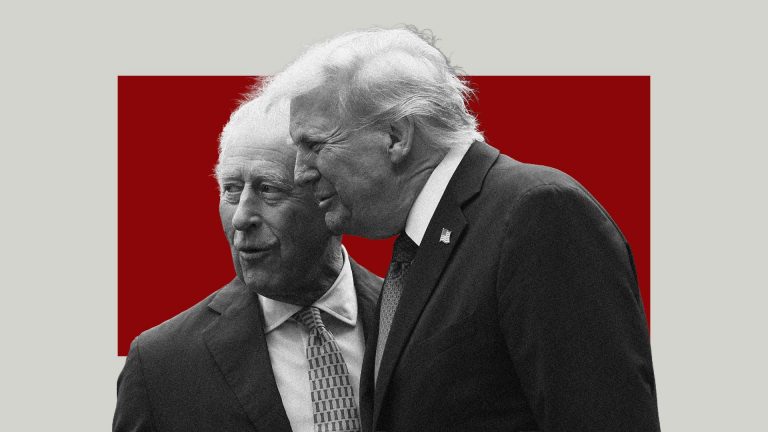

Listening to his message being read out, I wondered which of his fellow Americans he might have had in mind: “One of the most important challenges is to promote communication that can bring us out of the ‘Tower of Babel’ in which we sometimes find ourselves, out of the confusion of loveless languages that are often ideological or partisan. We do not need loud, forceful communication but rather communication that is capable of listening and of gathering the voices of the weak who have no voice.”
King Charles 1 Trump 0.
Pope Leo 1 Trump 0. Again.