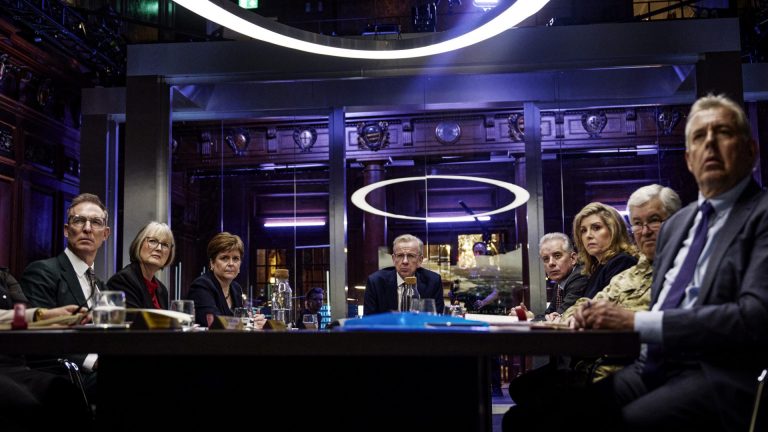
It is usual practice after the results of an election are declared to try to pull them together and explain what they say about the state of the nation. Right now, though, it’s hard to say much more than that our nation’s in a state.
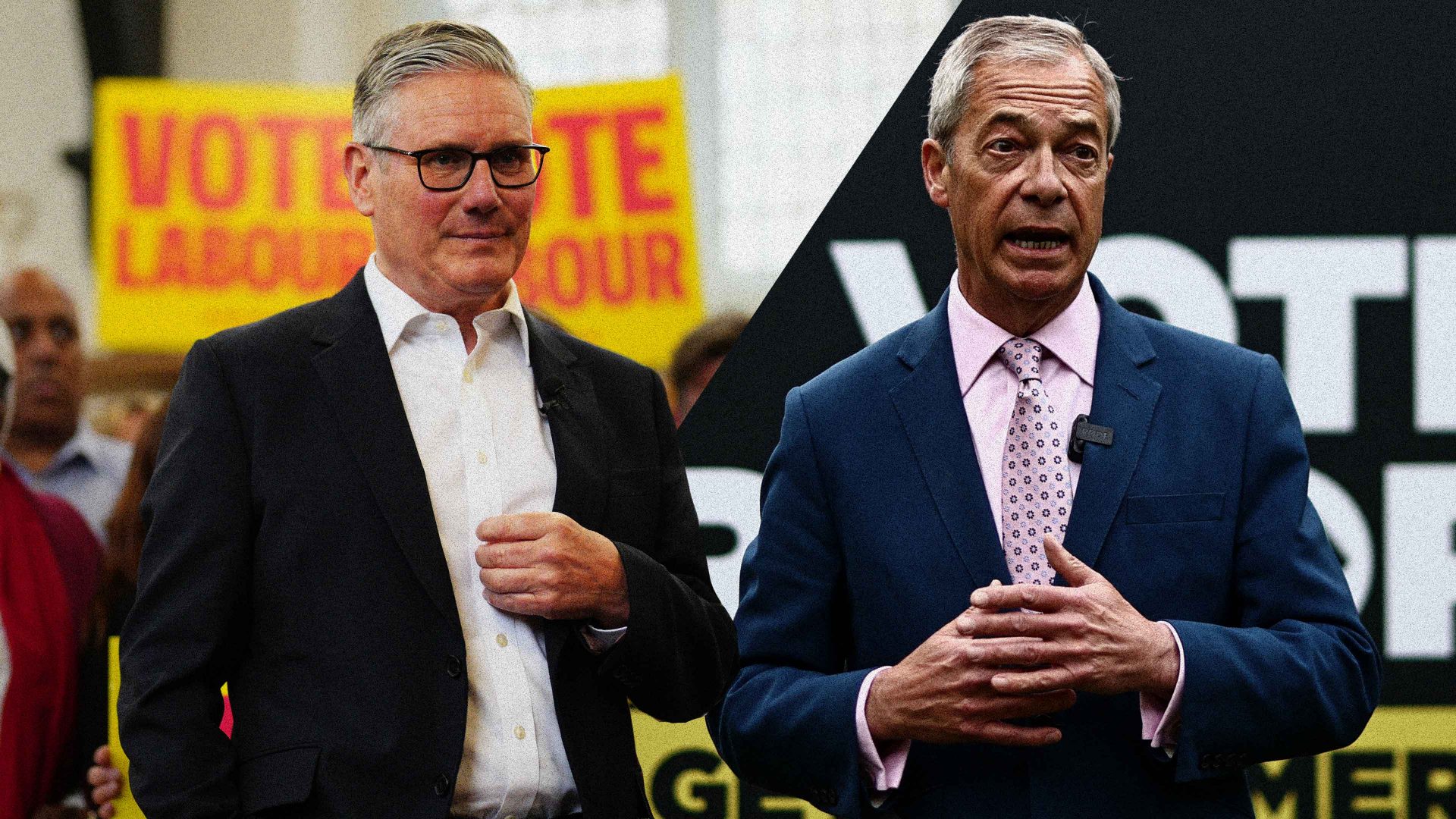
The obvious standout in the results is that they seem to be a triumph for Reform and a disaster for Labour – and while even the most die-hard Kwir Starmer supporter would struggle to deny the latter, the overall picture is more complicated than it might seem. It’s also not quite the triumph that Nigel Farage hoped for, once you dig into the results.
Here’s what the results really tell us, party by party.
Labour
Whether you zoom in or zoom out, these results are catastrophic.
The leader of Camden council, in Keir Starmer’s own constituency, moved to a safer ward in an attempt to hold on to his seat. He failed to do that, losing to the Greens. Eluned Morgan, Labour’s leader in Wales, lost her seat. Labour lost control of the Hackney and Lewisham mayoralties to the Greens.
Disaster after disaster compounded across the country until, at 7pm on Friday night, the Labour Party had lost 1,073 council seats and had lost control of 27 councils. In Wales, the party was reduced from being the largest party into a distant third place. The best you can say for its result in Scotland is that it didn’t have many seats to lose in the first place.
The results are a personal disaster for Starmer and the strategy he has pursued ever since becoming prime minister – of taking left wing voters for granted, and competing to win back voters he and Morgan McSweeney imagined Labour was losing to Reform. The strategy could not have failed more obviously: Labour lost seats in swathes to Reform in areas like West Yorkshire and County Durham, and lost them to the Greens in its inner-city heartlands.
This was an outright rejection of Starmerism, but there was little in the way of silver linings for his rivals: Andy Burnham’s supporters like to point to his personal popularity, but that has done nothing for Labour in Greater Manchester. In Tameside, Labour lost badly to Reform, while inner Manchester saw heavy losses to the Greens, just like everywhere else.
That creates practical problems for any attempt at an Andy Burnham coronation: from where is the “safe seat” he would need to win in a by-election supposed to come? Is there such a thing as a safe seat for Labour any more? And could Labour really face the prospect of losing the Manchester mayoralty in the by-election that a Burnham move for leader would require? It would hardly be a shining start for yet another reset.
In practice, it is not clear whether Labour MPs or ministers have the decisiveness to actually strike, even in the immediate wake of electoral devastation. These results, if mirrored at a general election, would spell out near annihilation for the party. So far, though, almost no Labour figures have said Starmer should actually go.
Instead, they anonymously suggest he might set out a timetable for his departure. Or say that he needs to set out a new strategy, as if he’s never done that before. Or they say that someone – but not them – needs to do something to get him out. In reality, this set of elections is the biggest Labour will face ahead of the next general election: there will be no more Welsh or Scottish elections before all of Britain goes to the polls.
If Labour MPs find an excuse not to act this time, they will always find an excuse. Keir Starmer has faced the biggest test at the ballot box short of a general election, and has utterly failed. If not now, when? The answer is surely never.
Suggested Reading

British politics will only get worse
Reform
Nigel Farage and the Reform Party will surely spend the next few weeks claiming these results are an absolute triumph, and they will have some justification in doing so. As of 7pm on Friday, they had won 1,231 seats and taken control of 10 new councils. Given that they previously had only two council seats in those areas, it is an extraordinary result.
The challenge for Reform is that its triumph is less total than it might wish, and those among its leadership who know how to read the figures are acutely aware of this. Farage had been due to head to Wales on Friday, where Reform had insisted for weeks that it was likely to top the Senedd poll and be the largest party.
In reality, it finished in a distant second place, with 34 Senedd seats versus Plaid Cymru’s 43. Labour has been shattered in its heartland, and the Conservatives bumped to fourth, but Reform won’t run Wales and can’t even claim to have been pushed aside by a coalition of losers. That is a disappointment, if only a minor one.
The bigger concern for Reform in the long term is that momentum is not on its side. These seats were last contested in 2022, when Reform had barely formed. That means all of the comparisons versus then are going to look great.
But what happens when we compare Reform’s performance this year to last year? Using a measure called projected national share – which translates council results into an estimate of a national vote – we can check just that, and the results aren’t good. Last year, Reform’s projected share was 31% of the vote. This year, that has dropped to 27%.
Reform is a threat, and could still form the next government – but its support is dwindling, not growing. It now has control of councils across the country, and voters will expect it to deliver.
It has hundreds of new councillors whose views could be publicised at any time. It faces years more scrutiny of its finances, its alliances, and its leader. Reform will surely be happy this weekend, but unless it can increase its vote share, a Westminster majority is still a distant prospect.
Conservatives
You would be forgiven for thinking that this year’s election results were, somehow, a triumph – or at least respectable – for the Tory Party, especially if you had seen any of its MPs or activists respond to them. The party has won back Westminster council, they note. And hardly a day goes by without a lobby journalist noting what a great job Kemi Badenoch is apparently doing, or how personally popular she is.
The reality is dramatically different. Badenoch’s Conservatives are competing against the most unpopular government in modern political history. More than that, they are competing for council seats last contested in 2022, when the Tories had been in government for 12 years and when they were historically unpopular themselves – this was their year of three prime ministers.
In this position, any opposition leader should be gaining hundreds of new council seats and taking control of many new councillors. Instead, the Conservatives are losing seats across the country – and losing control of councils right in their heartlands. As of 7pm on Friday, the Conservatives had lost 478 seats – almost half of the seats they held – and six councils.
Badenoch is almost certainly safe, not least because her party and its supporters are even more deeply in denial than she is. These are results that would see the Tories lose even more seats at the next general election, even though the last one was a historic disaster.
Labour MPs and commentators are at least aware that their party is in the doldrums. The bizarre aura of denial around the Conservative Party, whose situation is almost certainly worse – it has lost more of its core vote to Reform than Labour has to the Greens – might be enough to finish it off entirely.
Suggested Reading

We need to talk about Zack Polanski
The others
Plaid Cymru can celebrate these results as an unmitigated triumph. It is almost impossible to win an outright majority in Wales’s electoral system, and Plaid has fallen slightly short of that goal – it will need Labour’s support on major votes to govern. That will be a fascinating flip of the traditional power relationship between the two.
Plaid made some ambitious spending promises during the election, and will now have to deliver on those promises – but it has won, decisively, for the first time in Wales.
The SNP will be content with its result, but probably more quietly so. The party likes to claim that Holyrood elections serve as a basis to ask for new independence referenda – saying that if it gets an overall majority, that is a mandate for a new vote (logic other parties reject).
It has fallen short of that goal, though John Swinney may try to claim there is a pro-independence majority in the Scottish Parliament, with the Scottish Greens. In practice, the SNP’s share of the vote fell back, but thanks to the six-way vote split in Scotland, this barely affected the number of seats it won or held. Scotland won’t change much in the short run.
The Liberal Democrats might reasonably feel like they’ve been left out of the narrative in this election, but the honest reason is that they’ve not done well enough for their performance to be a shock, nor badly enough for it to be a problem – this is a pretty decent set of results.
They have gained a modest number of councillors and won control of Portsmouth. They gained a seat in the Senedd, and they’ve done okay in the Scottish Parliament. Solid but not spectacular progress has become something of a watchword for the Lib Dems under Ed Davey, and that’s what they’ve delivered here.
Finally, the Green Party had a decent set of results to celebrate in England and Wales. Zack Polanski has picked up around 250 new council seats, almost all at Labour’s expense – but that figure belies how many votes the Greens have taken from the governing party: that vote split between the two has worked to Reform’s advantage outside of inner cities.
The Greens are a particular threat to Labour in London and its inner-city core. Despite endless protestations otherwise, Labour’s core vote in 2024 was students, young professionals, and ethnic minority voters, and the Greens are doing well among all of those groups.
Its victories are not on the scale of Reform’s, but the Greens can honestly say momentum is still on their side. The party will be particularly pleased to have picked up its first-ever directly elected mayors, in Hackney and Lewisham.
The electoral system
As the dust settles, there will surely be another question hanging over UK politics. Many of these results were outright weird, with votes split in five, six, or seven different directions, meaning that many winners did so on unusually low vote shares – and with huge volatility versus last time.
The First Past the Post electoral system was not designed for this, and is creaking under the strain. Labour probably has little interest in changing the system in the short run, as it has more immediate – and existential – concerns, and it has no mandate from its manifesto to change the voting system.
But whether or not Keir Starmer tackles it, the drumbeat for electoral reform will surely only get louder. Our politics will only get stranger and more volatile until it is heeded.
 Most popular


Emily Maitlis’s diary: Trump doesn’t fear the AI apocalypse – but he’s terrified about the midterms
A new film about Elon Musk reveals him as so awful it’s almost tragic. Almost


My day out with Danny Tommo
I was at Eton with Charles Spencer – this is how it explains his battle with the royals