
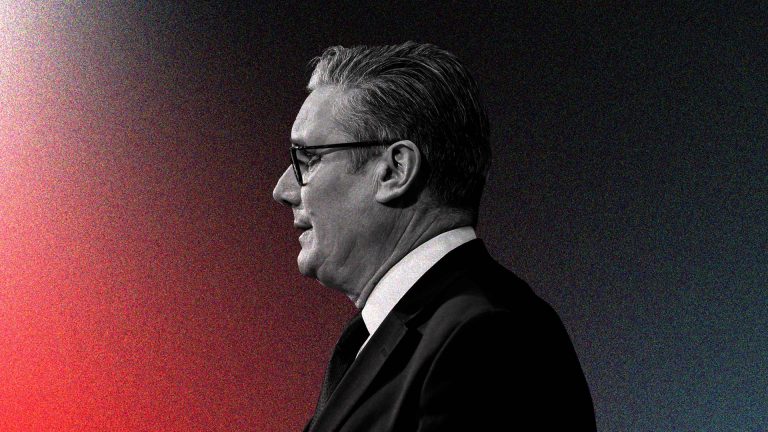
In prestige television dramas, political leaders are brought down by elaborate plots, slickly executed. The reality of Keir Starmer’s political downfall – which by Monday evening was looking inevitable to everyone except Starmer himself – looks quite different.
Inevitably, Starmer had faced calls to step down over the weekend, in the wake of disastrous election results. But no one in his cabinet, and few MPs outside of his known critics, had stepped up to act.
Most seemed to be holding their fire, waiting either for one of the likely leadership contenders to make a move, or else for No 10’s promised response to the dire results. At 10am on Monday, that response came – a tepid speech in which the prime minister said “incremental change is not enough”, going on to announce no major changes whatsoever.
In the hours that followed the speech, a trickle of MPs calling on Starmer to go turned into a flood – and three Parliamentary Private Secretaries (the lowest rung of the ministerial ladder) coordinated their resignations, too. By 5pm, around 55 Labour MPs – including some previously staunch loyalists – had publicly said Starmer should go. By 10pm, more than 70 names were on the list, and by Tuesday morning, it had hit 80.
Crucially on Monday night, Starmer began receiving visits from his Cabinet colleagues, reportedly including Shabana Mahmood, Yvette Cooper and David Lammy, telling him it was time to plan for an “orderly” exit.
On Tuesday morning’s media round, even chief secretary to the prime minister Darren Jones refused to say Starmer would still be prime minister in a year’s time. Miatta Fahnbulleh, who had responsibility for devolution, faith and communities, became the first minister to resign.
This is last-days-of-government stuff, even if Starmer’s closest circle is still trying to claim otherwise: “No 10 sources” told the media on Tuesday morning that the prime minister was “digging in”.
The prime minister himself told Cabinet: “I take responsibility for these election results and I take responsibility for delivering the change we promised. The past 48 hours have been destabilising for government and that has a real economic cost for our country and for families.
“The Labour Party has a process for challenging a leader and that has not been triggered. The country expects us to get on with governing. That is what I am doing and what we must do as a Cabinet.”
Suggested Reading

A prime minister on the brink
The problem is that everyone else believes the end of Starmer’s premiership is inevitable. The mechanics of how that happens, though, could be crucial in determining who takes the reins.
Political parties write their own rulebooks, and it’s these internal rules – rather than parliamentary procedure – that determine who leads their party. Under the last Conservative government, if 15% of MPs wrote a letter saying they had lost confidence in their leader, a contest would be triggered. Starmer crossed that threshold yesterday, when 61 of his MPs publicly called for him to resign.
However, Labour’s rules on triggering a formal challenge work differently. In Labour’s rulebook, 20% of sitting MPs have to endorse a different candidate for leader – it is not enough for them to say the prime minister should go.
Once they have done that, the remaining MPs are able to nominate their own candidates for leader, but the incumbent is automatically on the ballot, meaning Starmer could, if he so wished, fight on to retain the premiership. More than 20% of Starmer’s MPs have publicly called on him to go. Getting enough to unite to trigger a ballot, though, is a more complicated task.
Andy Burnham makes the process of ousting Starmer even more complex. It has been an open secret for months that the Manchester mayor would like to challenge for the leadership, despite not being in parliament. Burnham’s supporters present him as the obvious unity candidate, and point to his approval ratings, which are much better than most of his rivals (supporters of those rivals note they would likely fall if he returned to parliament).
But however much Burnham’s camp presents a return to parliament as a mere formality, in reality it is anything but. To become leader, Burnham would need Starmer to announce he was resigning soon, but not immediately, and for the NEC to allow him to stand in a by-election. He would also need to persuade a Labour MP to resign their seat, and then win the subsequent contest.
Then, once Burnham had been elected as an MP, he could be a candidate in a leadership election. The process essentially requires Starmer to be a willing participant in a Burnham coronation, and for the current PM and his remaining supporters to work to prevent any other candidate pulling the trigger in the meantime.
Suggested Reading

British politics will only get worse
Amazingly, some Labour MPs appear not to have checked their rulebooks until Monday – and some seem very angry at what they have found. Catherine West, who threatened to launch a stalking horse leadership challenge, admitted she hadn’t checked the rules before she announced her candidacy.
Some Burnham-supporting backbenchers appeared to have only checked the rules on Monday. If Starmer doesn’t voluntarily resign, and a challenge is launched to replace him, then Burnham will not be on that ballot. Some have tried to threaten that such a contest would not be ‘legitimate’, and that they would act to topple whoever won it.
These threats would likely be empty: Labour MPs might have convinced themselves that the chaos of launching a coup against Starmer is necessary. Two in a year, they recognise, is excessive.
The result is chaos in the Parliamentary Labour Party. There is no obvious successor, and a large contingent of Labour MPs who want the prime minister gone don’t want to use the one process that exists to remove him. Keir Starmer seems, so far, unwilling to participate in his own political demise.
A lack of planning has been the cause of the downfall of Keir Starmer’s premiership. So far, that characteristic seems to be shared with Starmer’s internal rivals.
Nonetheless, it still seems like the question has changed radically in the last 24 hours. The remaining question is how the Starmer premiership ends – not whether or not it will.
 Most popular

Churchill, the Beatles, St George: All the English heroes who aren’t actually English
The New World at 500: Independence isn’t our marketing slogan. It’s our business model
The problem is they just don’t care about us any more
Sorry Nigel, but the polls show you’ve had it