
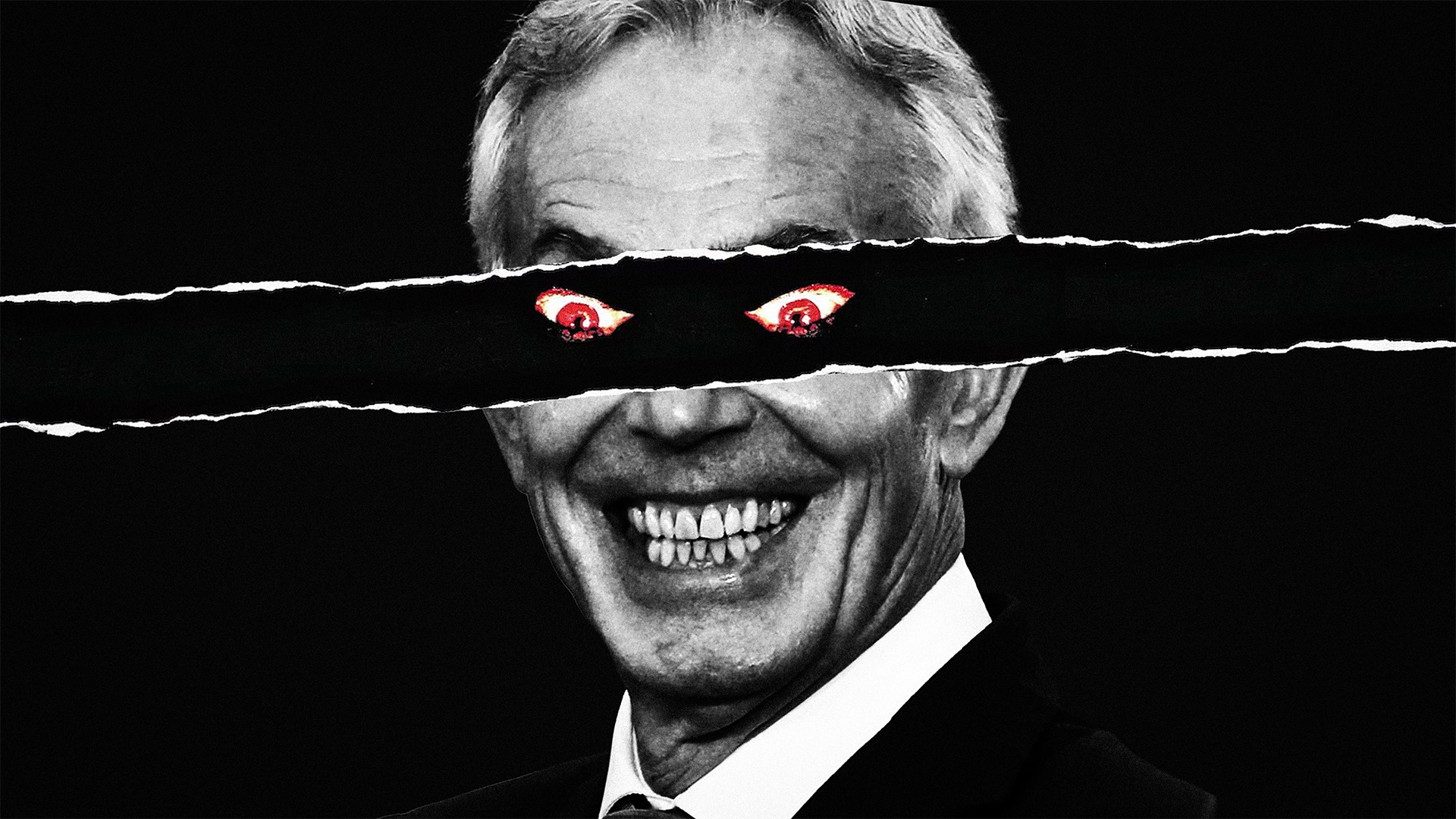
It is almost obligatory in the British media to refer to any political intervention by a former prime minister as “rare”. Once, this was actually true: when Tony Blair took power in 1997, he had only four living predecessors, only one of whom was from his own party – and Jim Callaghan almost never commented on Blair’s performance as PM.
Things are different now. Keir Starmer has eight living predecessors, many of whom never shut up. Liz Truss’s premiership was shorter than most summer internships, but she uses her platform as a “former prime minister” to expound fringe views to a tiny audience.
Boris Johnson has a weekly newspaper column. Gordon Brown, until he was recently given a role by Starmer, seemed to have volunteered himself as an investigative reporter for the New Statesman, aggressively prosecuting the case against Peter Mandelson – a man Brown himself appointed as first secretary of state.
And Tony Blair himself, of course, runs a huge global think tank, and uses that platform to comment on UK and global politics almost relentlessly. Against that backdrop, a new 5,000+ word essay from Blair on the state of politics looks less like a rare intervention than a relentless interruption.
Still, just because Blair is talking all the time does not on its own mean he has nothing to say. As Blair often reminds any interlocutor who will listen, he is the only Labour prime minister to serve two full (and successive) terms, and he also won a large enough majority in a third general election for a Labour government to last out a third full term, even if Blair himself wasn’t at the helm for all of it. He was the future once.
It is fair to say Blair is scathing about the performance of the Labour government, though he is equally withering about potential successors. He accurately diagnoses many of the problems of the Starmer administration, though not in any way that a dozen or more commentators haven’t done many times already.
His particular spin on things is a call for a “radical centre” to actually tackle the problems of society. This will sound fine to some, so far as it goes, though any longtime observer of British politics will note that it’s more-or-less exactly what Blair, Brown and Cameron all claimed to be doing during their premierships – is it really radical when it’s what successive governments claimed to be doing for 18 years or more?
It is only when you look at the individual components that the wheels truly come off the wagon. Blair attacks “net zero” targets and calls for more North Sea oil and gas exploration, in the name of energy security.
Suggested Reading

Britain isn’t the country you think it is
This is not a difficult or radical idea: it is the relentless soundbite of every right wing party in the UK right now. It is also one that almost anyone with even basic knowledge of energy markets admits is nonsense. Even if vast new viable oil and gas reserves were found in a field believed to have peaked long ago, it would be sold on global energy markets.
That means it wouldn’t result in lower prices for UK consumers. The structural problem in the UK energy market is that gas is the only alternative when solar and wind power are unavailable. Simply making more gas available does nothing to change that. Blair is offering a soundbite that is currently fashionable in technocratic circles – not a solution.
Much of the rest of Blair’s essay is similarly lazy and incurious. He repeats the platitude that taxes were raised to pay for welfare, buying into a narrative frame that taxes on regular Brits are too high – at a time when direct taxes on workers are the lowest they have been for decades.
He calls for lower taxes and lower spending, the exact opposite of his own record in government, without any reflection on that or admission of fault on his own part. Indeed, at no stage in this (or any other intervention) has Blair ever reconsidered his own time in government, or acknowledged any mistakes.
Most predictably of all, Blair devotes huge swathes of his essay to AI and its potential to transform the world, echoing the relentless AI boosterism of his think tank. Blair has little interesting to say on this front: his understanding of AI is superficial at best, and he seems to absorb the boosterish vibes of the ultra-rich tech leaders with whom he socialises without making much effort to actually understand the technology itself.
Blair makes himself incredibly easy to ignore on the subject, however, by a claim that fails to pass the laugh test. His think tank has received more than £250 million in funding from Larry Ellison, the billionaire boss of the big tech company Oracle.
On Wednesday morning, he claimed on the Today programme that this funding had done absolutely nothing to shape his views on AI. He might even believe this is true, but almost no one else will.
Love Blair or loathe him, his reputation was always that of a consummate public communicator. He has evidently lost his touch on this front: any comms staffer worth their salt could have told him that answer wouldn’t wash.
Suggested Reading

Inside the EU’s crisis war room
Even a claim that of course funding from big tech to research AI would influence his views – just because of what he learned during it – might have given him some credibility. Claiming to be the one man immune to financial or social pressure will convince no one except himself.
Ultimately, Blair has landed himself in exactly the same trap he accuses the Labour Party – and British politics in general – of falling into. Blair suggests British politicians are ducking the tough choices and just telling voters what they want to hear. Instead of leading their constituents, they are appeasing them.
He might well be right. But Blair has failed to spot that he’s doing the exact same thing.
He has used 5,700 words to tell the ultra-rich donors upon whom both his think tank and his gilded social life rely exactly what they want to hear. There are comfortable platitudes loaded upon platitudes: much of it grossly unpopular with the British public, but none of it even slightly challenging to Blair’s own constituency.
Because he’s criticised a current Labour government, Blair has at least managed to get blanket coverage for his latest remarks. Perhaps that will be enough for him, and he can be happy with that.
But surely, over time, the bar will rise – and Blair will have to find something meaningful to say before he makes an intervention. That would, at least, deserve the description of being “rare”.
 Most popular


My truly deranged encounter with Trump apologist Kellyanne Conway

The moral depravity of Robert Jenrick

Is this the real reason Trump keeps falling asleep in public?

Suella Braverman’s book has sold only 106 copies. This is why