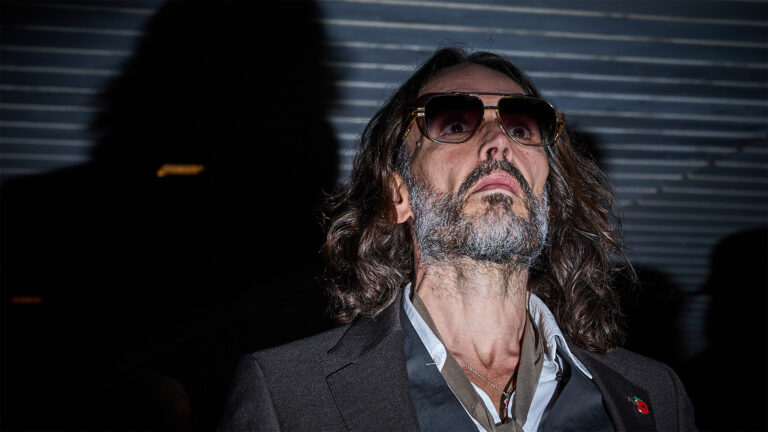
It’s sunny in the beer garden of Chesterfield’s Gasoline American Bar, where the chatter of magpies mingles with the sound of country rock guitar. A few weeks ago, James Holmes’s membership of Restore Britain, the UK’s newest far-right party, was cancelled due to allegations of “intimidating behaviour” towards another member. It doesn’t dull his support of the party’s leader, Rupert Lowe.
“He’s a grand fella,” Holmes says. He describes the MP for Great Yarmouth as “a decent, principled man.” He mentions Lowe’s credentials as a business-owner and grandfather.
Holmes is in his fifties – a successful businessman himself with a partner and three young children. Politically, he “held his nose” to support Reform UK for many years, but grew more disaffected after Nigel Farage ruled out mass deportations.
In 2024, Reform’s deputy leader Richard Tice disavowed supporters of the far-right activist Tommy Robinson, who is currently facing up to ten years in prison for harassment. Holmes was disgusted. “Even if you don’t support him,” he says of Robinson, “these people are the bread and butter of the country.”
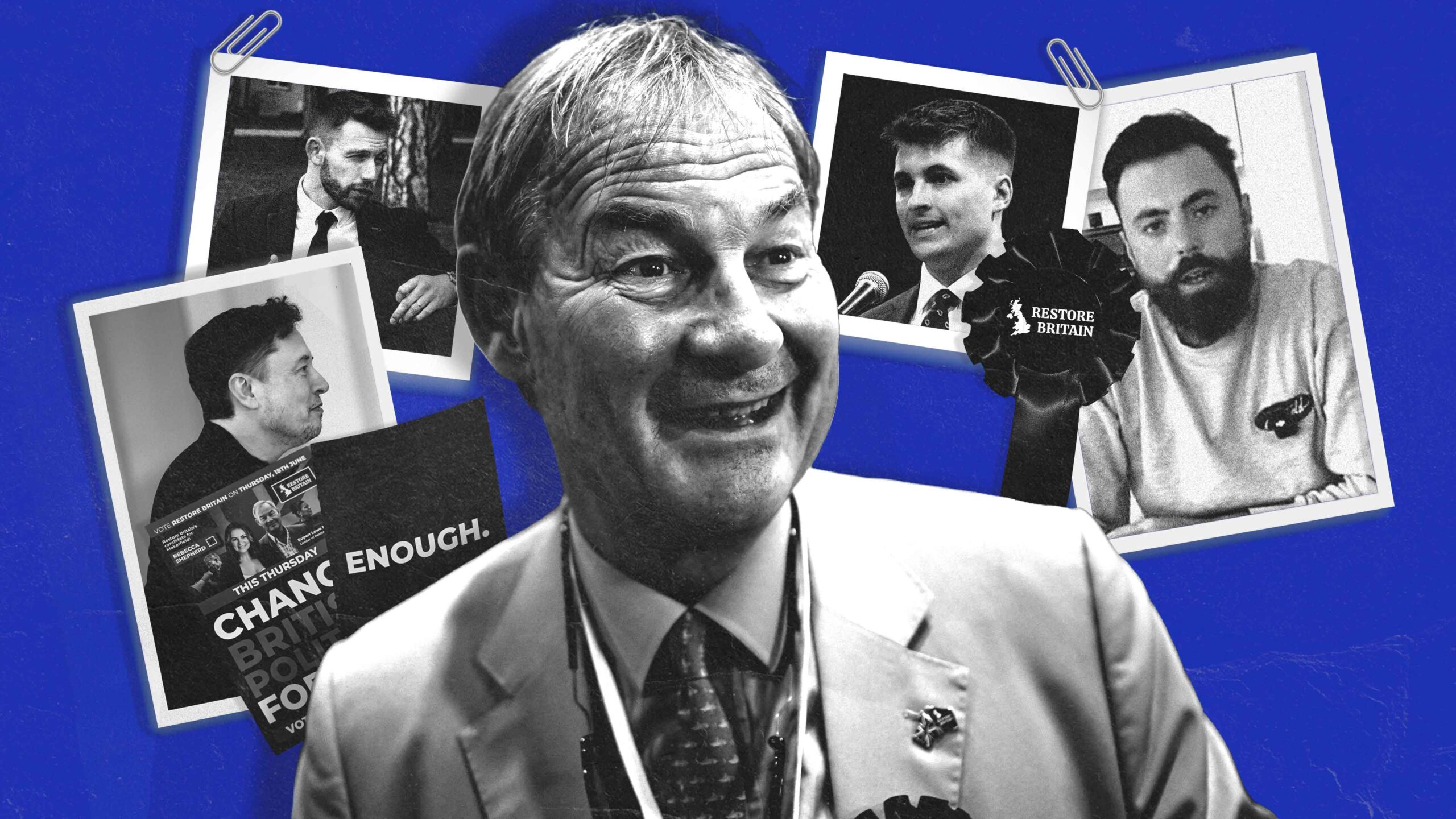
Holmes is just one of the people we spoke to over the course of several weeks as part of our investigation into Restore Britain. In that time, we met and interviewed current and former party members, former candidates, and insiders close to Lowe himself.
What we found is a party built around a single man, whose principal political selling points are his willingness to consort with extremists, like Robinson, and the support he has attracted from Elon Musk. In June, a YouGov poll found 37% of Restore’s support stemmed directly from Lowe’s leadership. At a branch meeting, an elderly woman summed up her views: “He’s the only honest politician left”.
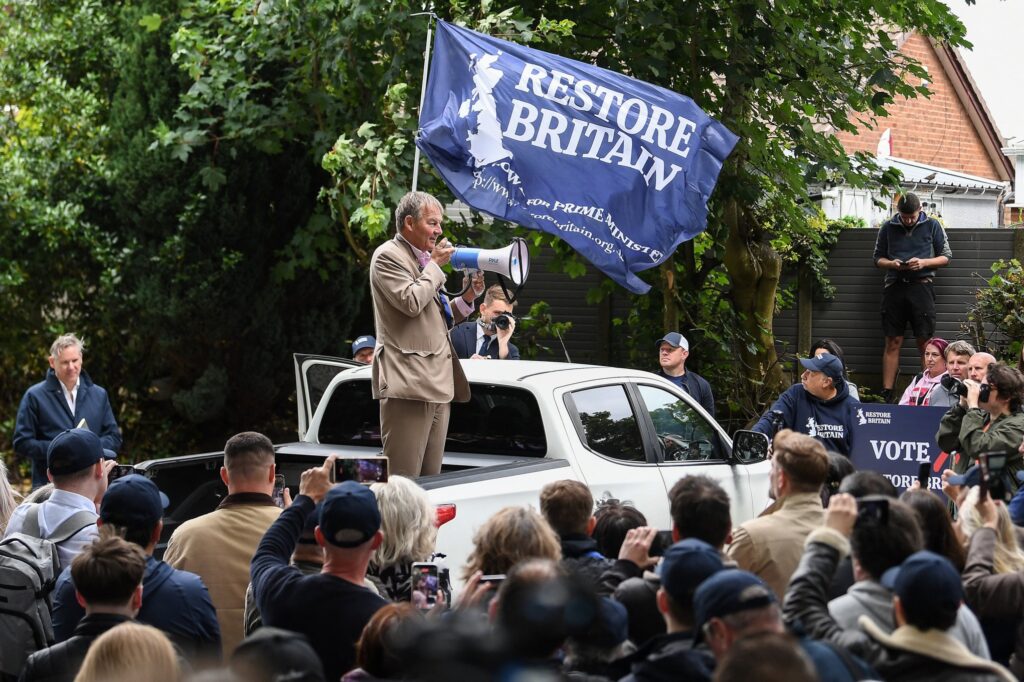
A Eurosceptic Thatcherite who left the Tories over the Maastricht Treaty in 1993, Lowe returned to politics in 2019 as a Brexit Party MEP. He followed Farage to Reform and became MP for Great Yarmouth in 2024. The following year, he was suspended on allegations of bullying. “Whether he was bitter or not,” Holmes says, Lowe had been made a “black sheep.”
Shortly after his suspension, Lowe gave a speech at a right-wing think tank, the New Culture Forum. Four young men approached him: Charlie Downes, Harrison Pitt, Conor Tomlinson, and Lewis Brackpool. They pitched the idea of Restore Britain.
Suggested Reading
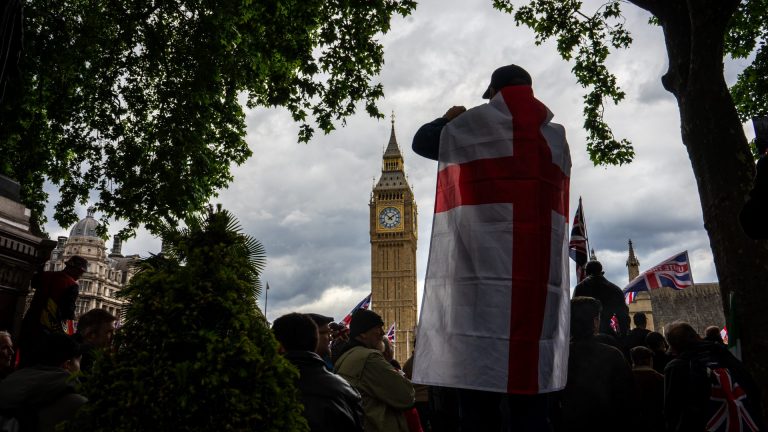

Tommy Robinson’s pointless, confused, US-funded march
“If you think about it,” says Holmes, “that’s immediately got to be appealing for Rupert. Suddenly he’s got this group of young lads who are going ‘well, we’ll get around you’.” Restore launched in June 2025, initially as a pressure group. Downes, Pitt, and Brackpool joined as consultants.
During this time, Lowe was approached by Ben Habib, another ex-Reformer and founder of the now-disbanded Advance UK, a party backed by Elon Musk. But Musk’s eye had already been caught by Lowe as early as January 2025, when he re-tweeted a post suggesting Lowe should become leader of Reform: “I have not met Rupert Lowe, but his statements online that I have read so far make a lot of sense,” he said.
Both Lowe and Musk have been openly supportive of Robinson. But Farage had always made clear that Robinson was too extreme and that Reform would not deal with him.
Habib said he invited Lowe to dinner to convince him to lead Advance. “We more or less agreed terms,” he said. “Then I put it all in writing to him the next day. And he never responded, not meaningfully.”
He said Restore’s young staffers have an unusual hold on Lowe. “They’re a bunch of young guys who have self-confidence way beyond their brains and experience,” said Habib. “They have somehow got a circle around Rupert. They seem to be directing him.”
All under 35, Downes, Pitt, and Brackpool have limited political credentials. Now Restore’s campaigns director, Downes, 25, first entered politics when he ran the London Mayoral campaign for Andreas Michli, a north London gym owner who was fined £9,000 for refusing to close his sites during the pandemic.
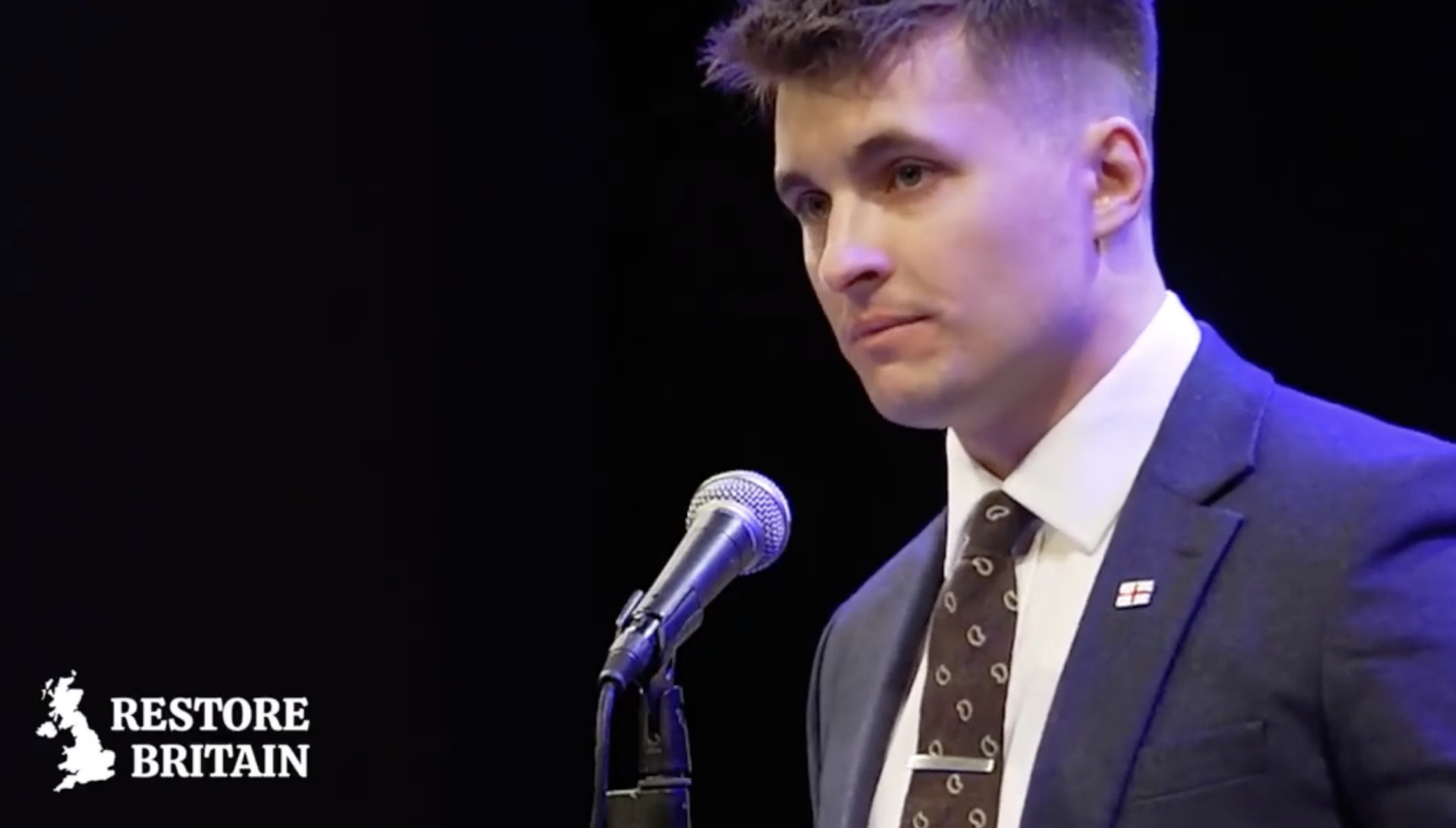
Before joining Restore, Downes also worked at the Centre for Migration Control and a Reform-linked public affairs agency, moonlighting on GB News and TalkTV while writing across right wing titles. Both Brackpool and Pitt have built their own platforms as journalists and political commentators.
Unlike the street activists of the BNP or EDL, these men appear to have developed their politics almost entirely online. Downes has 117,000 followers on X, which is more than the home secretary, Shabana Mahmood. Pitt is Restore’s head of policy, and has 33,400 followers. Brackpool, head of investigations, has more followers than the chancellor, John Healey. A later addition, 21-year-old Montgomery Toms, has 421,000 Instagram followers, more than Kemi Badenoch.
Suggested Reading


The dangerous rise of Restore
“These are the ethnat boys,” said an ex-party insider. “They do a lot of the policy and a lot of the writing and a lot of the media stuff.” Ethnat – or ethnonationalist – describes someone who believes citizenship is determined by lineage. Downes has said publicly that he believes British identity is defined by “ancestry and Christian faith”.
These young men are the vanguard of Britain’s new Christian right. “There’s a lot of this wooden-crosses-round-necks going on,” said one insider. “A lot of crossing themselves before they eat.” They also promote rigid gender roles. A source recalled Toms bemoaning his inability to find a “decent wife”. A popular view within the party is that women should stay in the kitchen.
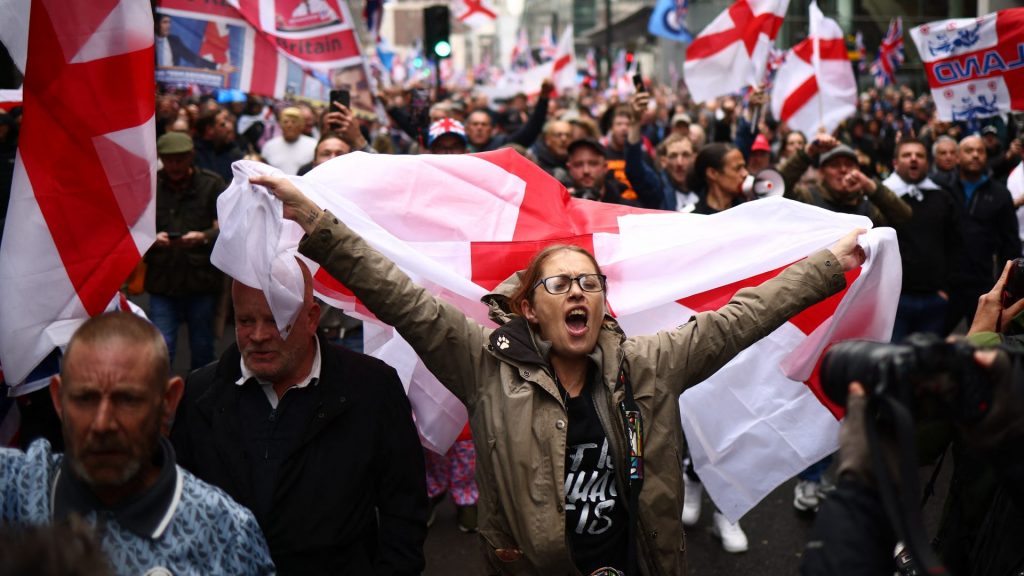
Meanwhile, in September, Downes was accused of anti-Semitism when he responded to a video by Nigel Farage declaring he “could not be bought”, with a photo of Farage at the launch of The Reform Jewish Alliance.
In person, Downes is described as humourless and cold, while Pitt is remembered by one source as “a bit of a prick” who quotes Greek philosophy over lunch. Toms is considered more personable, a quality he brings to vox pop debates conducted with Freedom Watch GB, an organisation he says he founded to combat “authoritarianism, centralisation, and undemocratic government overreach”. One of the ways he hopes to achieve this is by fostering a “monocultural society”.
At times, Downes’s commentary has veered into authoritarianism. In October, he responded to anti-Restore protests during the Holborn and St Pancras by-election: “When we win, we are going to utterly crush these people,” he wrote. “I am not interested in their “right to protest” or whatever else. They hate us, they are enemies of European civilisation, they will be destroyed.”
One ex-Restore source said Downes’s online footprint helped him win policy arguments: “[He is] shaping the way the party is going and he’s got this massive following behind him, of which the party is wary.” Other Restore leaders were “scared of upsetting this cohort” they said.
The growing power of Restore’s youth wing does not appear to worry Lowe, according to his old friend, Paul Constantine: “I’ve tried to make points to him recently, about these ethnats and the way they’re behaving,” he said. “And he’d just come back and say, look, Paul, you’re talking palpable nonsense.” Lowe supports them, he said, because their inflammatory posts raise Restore’s profile: “They’re getting the brand out there and that’s all he’s worried about.”
In July, the Electoral Calculus estimated Restore could cost Reform as many as 70 seats in a general election by splitting the right-wing vote. Several sources said Lowe is motivated, at least in part, by settling old scores with Farage. “It’s all about Nigel,” one said. They described how internal meetings gave frequent updates on Farage’s movements. “It’s like Rupert’s fixation.”
Day-to-day, Lowe has little involvement in Restore. Party management and communications – including Lowe’s personal social media – is delegated to Lowe’s parliamentary chief of staff, Alistair Harrison. “[Lowe’s] happy to just hand the tiller over to Alistair Harrison and, basically, let him get on with it,” one ex-Restore source said.
In its early days, Restore’s posts promoting mass deportations were matched by those showing Lowe visiting churches and defending in parliament parents who take their children on term-time holidays. In recent weeks, Lowe’s account has dialled up the rhetoric. It has called immigrants who commit crimes “dangerous third world scumbags”, insisted citizenship granted to “Boriswave” immigrants be revoked, and suggested the government should apologise to Britons for slavery. “To any jumped-up Caribbean or African,” it added, “you can piss off.”
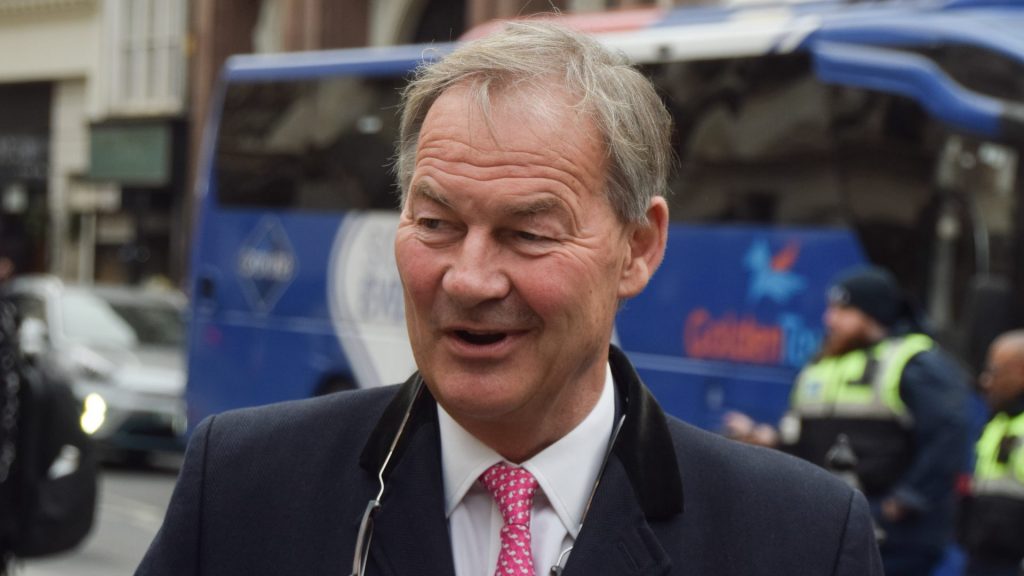
Much of Lowe’s and Restore’s newer output is youth-centric. In 48 hours in early November, posts addressed the “outrageous” student loan system, conscription, a lack of jobs for young people, and boosted the profile of two twenty-something far-right campaigners.
According to the FT, Lowe’s social media footprint outstrips all but three world leaders’. Around 43% of all views on his X profile came from posts that Musk had engaged with. This support has not been granted to Restore’s young influencers, who nevertheless continue to grow their number of followers.
Suggested Reading

Rupert Lowe is coming for your parents – and he’ll get them on Facebook
Downes, the most prominent of these, was announced as Restore’s 2029 parliamentary candidate for Sittingbourne and Sheppey, in Kent, a county with more Restore councillors than any other part of the UK.
“It’s a two-finger salute to the so-called establishment,” said Tim Bale, professor of Politics at Queen Mary University, “and a sure fire signal to potential supporters that Restore isn’t going to compromise and give in to pressure to tone down its message.”
Back in the bar, Holmes recalls Downes’s strategising. “He went: ‘We’re positioning so then we can come out stronger’. Something like that.” He took a sip of his shandy. “If those four guys had gone out on their own and hadn’t got an MP,” he says, “you’d never have heard of them now.”
At 69, it is unclear how much longer Lowe will lead the party. Restore sits at 3-8% in the latest polls. It could well damage Reform’s performance in 2029, but Lowe’s lasting legacy may be to have launched the careers of a handful of young men with vast social media followings and extreme political views. Restore is unlikely to win parliamentary seats outside Great Yarmouth. For Downes, and others like him, this may not matter.
 Most popular


16 things that will definitely now happen on the British right
Johnny Depp’s Ebenezer uncancellation is the worst kind of Christmas present

The dangerous myth of ‘neutral’ technology

Why does everyone hate Laura Kuenssberg?