
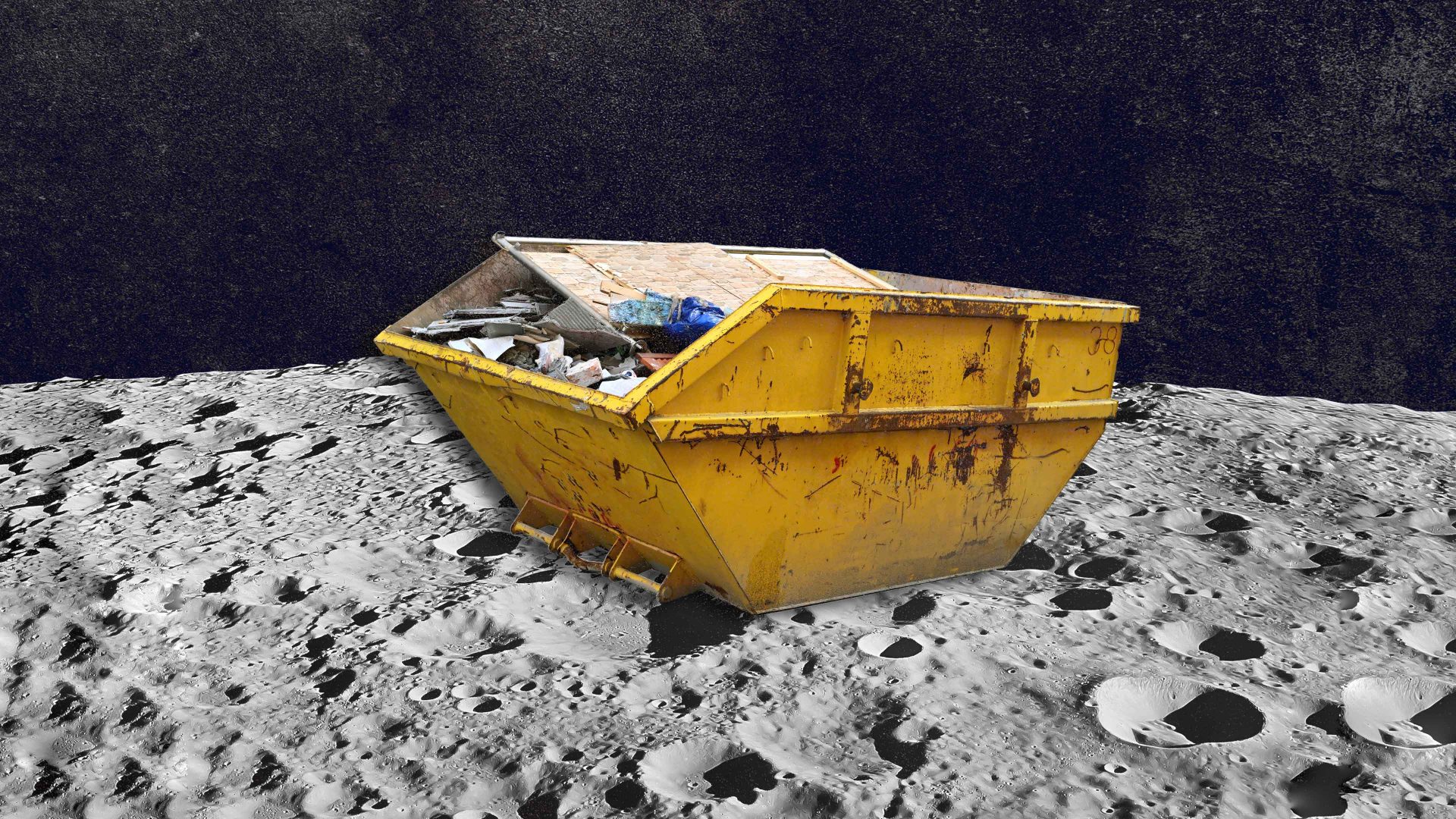
When the discarded upper stage of a Falcon 9 rocket launched by Elon Musk’s SpaceX careered into the Moon’s surface on Wednesday, it became clear that the celestial body, having withstood 4.5 billion years of meteor impacts, sonnets and the occasional flag-raising service, was encountering the one force in the universe that it is ill-equipped to withstand – venture capital.
Amid the sort of attention-seeking of which Fathers4Justice campaigners can only dream, Musk, Jeff Bezos and Richard Branson are spearheading attempts to stretch our terrestrial horizons beyond their manifest inadequacies.
In the old days, Victorian industrialists occupied themselves by building follies. Today’s Hearsts and Hugheses, who seem to have mistaken Bond villainy for career guidance, attempt to colonise the firmament instead. Earthly objects have been hitting the Moon since 1962, and 11 probes have been deliberately crashed into it since 1993, but Musk’s unintentional impact seems to be ushering in a new era of cosmic littering.
Who can blame the billionaires? Having apparently run out of problems to solve on our own planet – like ensuring plastic avocado slicers get delivered before you regret having bought them, proving that unlimited wealth can’t buy comic timing, or making other UK rail franchises look competent – the self-appointed talismen of human endeavour have turned their attention to the heavens. And they’re leaving a mess behind.
When ten mattresses appear overnight in a lay-by on the Barnet stretch of the North Circular, we call it fly-tipping. When 4000kg of aluminium-lithium alloy crashes into the Sea of Tranquility, it becomes “legacy hardware awaiting future monetisation.”
So, the difference between a council fine and a billionaire keynote speech at Davos is altitude.
Whereas the aristocrats of old once built fake castle ruins or three-hundred-foot pineapples to demonstrate their importance, today’s billionaires construct launchpads called Starbase. Both expect us to take them seriously. But tellingly, while they’ve swapped turrets for thrusters, the motivation remains the same – the widest possible demonstration of a profound absence of inner peace.
And that is fine, because this is the future.

In the minds of men who continue to try to impress people who stopped replying to their messages a decade ago, each discarded component is ambition, every abandoned lander a stepping stone to destiny. By which logic, the pile of tyres that appeared in the car park of your local beauty spot on Thursday night is not fly-tipping. It is a transport innovation hub awaiting investment.
Such cosmic escapism is particularly poignant when record-breaking heatwaves are turning terrestrial pastures into combustible fields of tinder and privatised water companies gently suggest that washing your car is a thought crime, while just a few thousand miles beyond our blistered heads, billionaires are burning through liquid oxygen quicker than taxpayer subsidies.
The celestial land grab is not without irony. The billionaires have annexed all the resources of a planet with which they’ve grown bored and for decades have treated as disposable. While governments argue over how slowly they can transition away from fossil fuels and ordinary people are reminded to put their washed processed ham packets into the correct colour-coded bin, the wealthiest among us are preparing escape routes from a crisis they have spent years minimising.
Hence, the ultimate expression of individual responsibility (and the first rule of F4J, probably) is this: when the crisis you’ve created becomes unbearable, leave.
While the rest of us diligently separate our waste and recurrently buy reusable shopping bags because we keep forgetting to bring them to the shop, in a luxury control room at Starbase in Boca Chica another rocket is preparing to hoist several thousand more tonnes of “he’s in his leather jacket phase” into the sky – powered by enough fuel to make a medium sized African republic wonder where all its emissions just went.
And therein lies the tragedy of a species capable of landing machines on other worlds yet incapable of cherishing the one beneath its feet. It’s as if some histrionic teen is emerging from a rancid bedroom piled high with filthy laundry, mouldy food containers and unidentified stains, to grandly announce they’re moving out/buying Twitter.
As late-stage capitalism metamorphoses into space-age capitalism, do not be surprised to find the companies that leave their detritus on the Moon winning government contracts to clear said hardware, and then issue press releases claiming they are “disrupting the waste-management sector.”
First, you create the problem. Then you monetise the solution. That’s how we ended up here.
Eventually, if humanity plays its part, we will see a white van pull up in the Copernicus crater, from which a man in high-vis steps out, scratches his head, and says:
“Yeah, I can take it mate, but it’s mixed waste, so I’ll have to charge you extra for the tonnage.”
For more world exclusives from Henry Morris, read his Substack
 Most popular


Emily Maitlis’s diary: As I was saying to George Clooney just the other day…
A new film about Elon Musk reveals him as so awful it’s almost tragic. Almost

The strange case of the Lib Dem writer who fell for Farage
The right wing media hounded Jason Arday and ignored James Orr. It’s obvious why