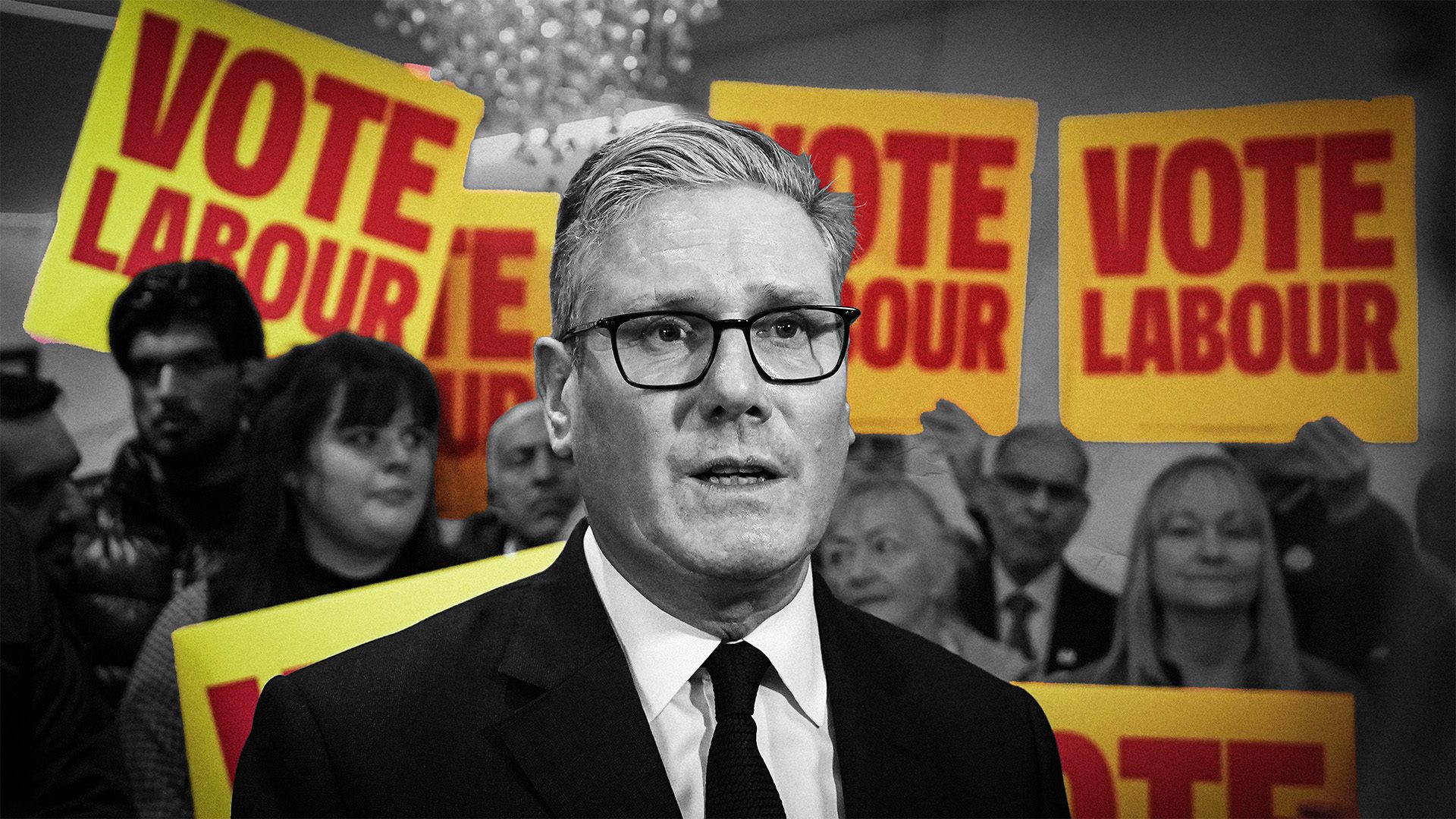
Perhaps Keir Starmer, now said to be ready to resign after contemplating Andy Burnham’s runaway victory in Makerfield, might reflect on something he said to me a week before he was elected Labour leader, in an interview for this publication.
Talking about the reasons for Labour’s defeat under Jeremy Corbyn in 2019, Starmer told me: “Issue number one was the leadership of the Labour Party. Whether that’s fair or unfair is secondary.” Now, the leadership is again the first issue that stops people voting Labour.
He added, in affectionate sympathy with Corbyn: “Vilification of the Labour leader always goes on. Every Labour leader gets it. I think perhaps Jeremy got it worse than other recent Labour leaders, but everyone gets it.”
That March 2020 interview told me more about the man, his strengths and his weaknesses, than I realised at the time. It came about in an odd way which I have not felt at liberty to reveal before.
Starmer was refusing interviews. But Morgan McSweeney, then running his leadership campaign, had given me a story which he wanted to see on Labour List website. It concerned an alleged plot by Corbyn-appointed Labour Party officials to let the Rebecca Long-Bailey campaign have access to membership records before the Starmer campaign, thereby giving her an unfair advantage.
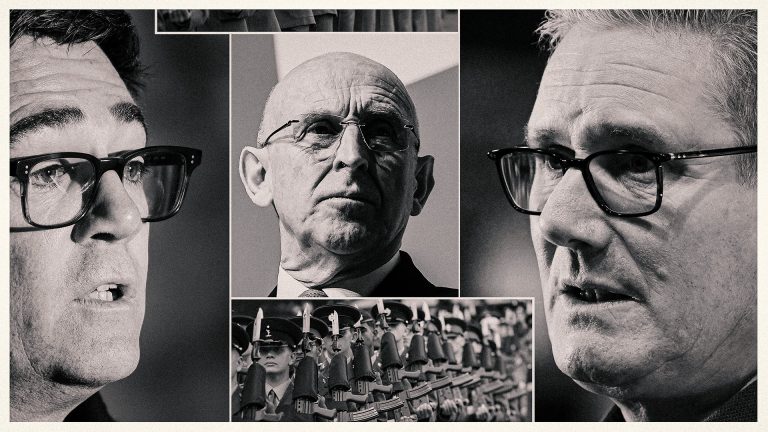
McSweeney briefed me non-attributably. The next day, he phoned me to say things had changed, and the story couldn’t run. I thought at the time that Starmer found out what he was doing and honourably put a stop to it.
They gave me an interview, I think, by way of apology. In the interview, Starmer came across as a much more radical figure than we have seen since. He was a passionate supporter of comprehensive schools, which he said his children would attend (and they do).
He sounded really pleased to be asked about his role in the battle between the print unions and Rupert Murdoch’s News International in 1986. “It was the days, as you saw at Wapping, when police would charge at the crowd to disperse them, and there’d be all sorts of disputes as to who did what and when and so on,” he said.
“So a group of lawyers who were on the left in politics developed the idea that we ought to have a group of people on the picket line, observing what was going on and helping the trade unions to get the full version of what happened out there. At what point did the police charge the crowd, was it in response to something or was it not, matters like that.”
When police horses charged the picket line, “I distinctly remember the whole phalanx of horses coming at us at speed. There wasn’t really anywhere to run. There was a roadway, it was quite a confined space. It was frightening.”
He and his fellow leftie lawyers, as the Daily Mail would call them, then supported other unions on strike – Starmer mentioned the P&O dispute in Dover, where strikers’ families “were getting into real problems with benefits and feeding their children.”
I asked what he was most proud of in his life, and he launched into a passionate account of how he had helped save people from the death penalty in the Caribbean, Nigeria, Uganda, Jamaica, Mauritius. He told me in detail about the history of capital punishment in those countries, and how the British and French had brought it there.
I wish people who saw the stick of wood who is, for the moment, their Labour prime minister could have seen him so animated. He remembered every detail, cared about every one of those poor creatures on death row in dank prisons.
Suggested Listening
Game on… Burnham wins; now get on with it Labour
“You should write a book about it,” he told me. One for lawyers, I suggested. “No, for historians. There’s a really, really interesting book to be written about this. I keep saying this to people. About the death penalty and the way colonial rules operated.”
I had limited time and tried to move him on, and so did his press officer. It took a while. I asked about anti-Semitism, and I got the stick of wood back. He acted grave and passionate, and he is not a talented actor.
“This is a matter of leadership,” he said, speaking slowly, firmly, and decisively, with a conscious attempt at gravitas. “I would want a report about disciplinary cases on my desk every week.”
I left thinking he might be a great Labour prime minister, perhaps even a Clem Attlee figure, and that’s what I told readers of what was then called The New European. Then I watched as he allowed Peter Mandelson to vet Labour’s candidates for the general election, needlessly handing the Chingford and Woodford Green constituency to the Tories because Faiza Shaheen – the sort of fluent and passionate young politician whom Labour needs – did not meet Mandelson’s standards of ideological purity.
I watched him unnecessarily provoke war with the party’s left, take fright every time he did something a little radical, reward loyalty not talent in his cabinet appointments, fire Sue Gray to make more room for Morgan McSweeney, push aside a respected and accomplished diplomat in Washington to make room for Mandelson, and all the rest. I have seen the stick of wood night after night on television.
I think now that Starmer is the best sort of radical lawyer, with few political skills, who subcontracted his political thinking to the Mandelson clique. And they have destroyed him.
Francis Beckett’s books include Tony Blair in Peace and War (2005) and Clem Atlee (2007)
 Most popular

Emily Maitlis’s diary: Trump doesn’t fear the AI apocalypse – but he’s terrified about the midterms

The decline of the Daily Mail
If Shabana Mahmood is tough, why is she so slow to crack down on Danny Tommo and the far right?

What the rich and powerful are really saying about AI