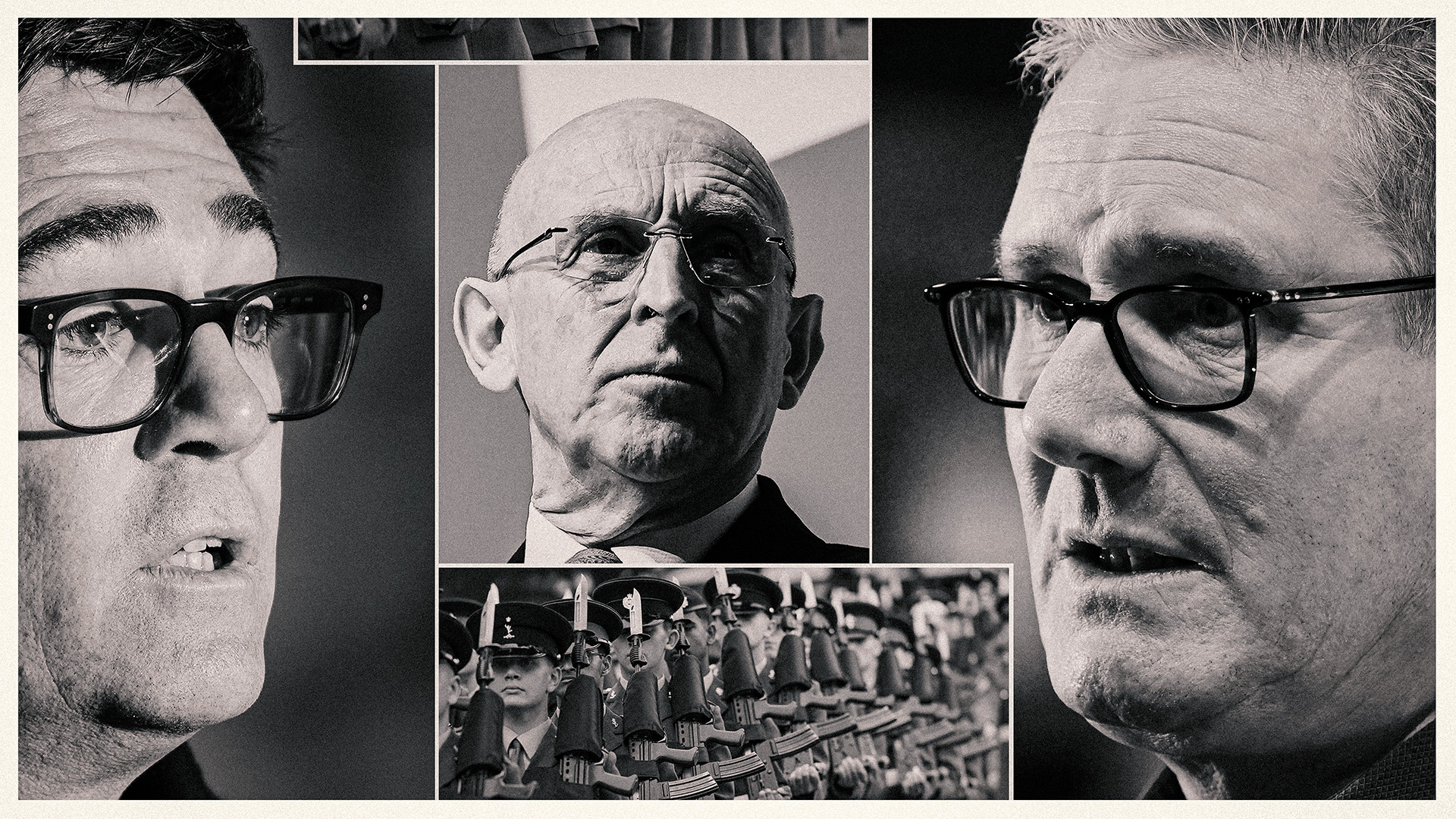
John Healey’s resignation as defence secretary is like none other in the modern political era. Cabinet ministers resign amid scandal with depressing regularity. They get reshuffled. On rare occasions, they resign over a point of principle. John Healey, though, has gone further: he has accused Keir Starmer of outright negligence when it comes to the defence of the realm.
“I am being forced to make decisions that would reduce the readiness of our Forces and increase the risk to personnel on operations, and could make the country less safe,” he wrote in his resignation letter. The words might be polite, but their meaning – from a loyal minister known as a safe pair of hands, rather than a political plotter – is devastating.
No defence secretary has resigned saying the prime minister is risking the security of the nation. It is 40 years since Michael Heseltine famously stormed out of cabinet, resigning as defence secretary as he did so. But that was a row over whether a European or an American consortium should take over an ailing UK defence business. It was not about the defence of the realm itself.
In normal circumstances, this is the kind of resignation that brings down governments, or at least brings down prime ministers. But in reality, most people in Westminster believe Keir Starmer’s premiership is already effectively over, and have essentially been counting the days until Andy Burnham takes over. Against that bizarre backdrop, the consequences of Healey’s shock resignation become much harder to predict.
Before getting into the politics, though, it is worth getting into the issue over which Healey resigned: the Defence Investment Plan. The world feels like an increasingly scary place at the moment and European countries have been working to invest in their militaries as a result.
Under Donald Trump’s presidency, the US has insisted that its European allies spend more on defence instead of getting a “free ride” out of the American armed forces and military spending. Nato leaders agreed to increase their defence spending to at least 3% of GDP.
The last UK government committed to do this by 2030, but when Labour came in, that commitment was downgraded to an aspiration, to be achieved by the next of the parliament. Given the US has become an unreliable ally, Russia has invaded Ukraine, and Trump has turned the Middle East into a powder keg, there is a widespread consensus that defence modernisation and investment are essential.
Suggested Reading

How the world recoiled in horror from Brexit
This was the Labour government’s own conclusion. It undertook a Strategic Defence Review that concluded substantial investment was needed, and the Defence Investment Plan was supposed to outline this – except it kept getting delayed. It was going to be published last summer, then in the autumn, then winter, and so on.
Inevitably, these delays led to leaks about the cause of the hold-up, which turned out to be arguments between the Ministry of Defence and the Treasury over the level of spending. Because the government has promised not to raise income tax, national insurance or VAT, and has announced major investment plans in transport and elsewhere, there is not much money left for defence.
According to reports, Healey was offered a settlement this week that amounted to less than half of what the MoD regards as the minimum level required to maintain Britain’s current capabilities. As Healey noted in his resignation letter, the plans would mean UK defence spending would hit just 2.68% by 2030.
Keir Starmer has held numerous defence summits with other foreign leaders, spoken about the range of threats facing the country, and personally spoken of the need to hit the 3% target – so to get called out so publicly by his own defence secretary for doing nothing to tackle those problems is a devastating blow.
It speaks to the deep-rooted problems of the Starmer premiership. If the MoD and Treasury are in deadlock, it is Number 10’s responsibility to settle the dispute, rather than to leave the two of them to work it through by themselves.
The Treasury pushback on defence spending was partly grounded in the legitimate view that the MoD has a terrible track record overseeing major public investment projects – but mostly it was because the money simply wasn’t there, due to rules set out by Number 10.
Keir Starmer had been giving speeches insisting the UK needed a modernised military, and needed to spend more on it, while doing absolutely nothing to actually make that happen. This is a frustration mirrored across the government – meaning that this resignation could have started a process to topple the PM, if one wasn’t already underway.
All of that makes the consequences of Healey’s resignation difficult to predict. The safest thing to say is that this resignation makes Starmer’s political situation look even more terminal. The official Number 10 line has been that Starmer would fight any challenge to his premiership, including from Andy Burnham, though few actually believe this would be the case.
Suggested Reading
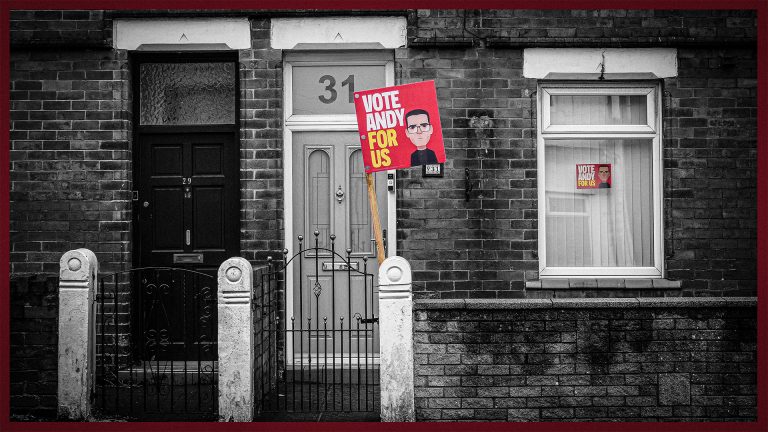

In Makerfield the Burnham tragedy is already taking shape
The idea of Starmer actually trying to fight off a Burnham challenge has become even more far-fetched in the wake of Healey’s resignation. He simply would not win, and so why draw it out?
Healey’s resignation is also inevitably damaging to Rachel Reeves’s campaign to stay on as chancellor should Burnham become prime minister – something she had been quietly lobbying for over the last few weeks. While it is ultimately Number 10’s fault that money was not found for defence, the blowup has happened because of the Treasury, and under Reeves’s watch. Her remaining reputation as a safe pair of hands, politically, is now tarnished.
The unpredictability, though, comes about because Andy Burnham has to win the Makerfield by-election if he wants to be prime minister. Until this week, he appeared to have a comfortable lead in the polls, bucking the national trend against Labour.
The combination of riots in Belfast reigniting the issue of immigration and crime, alongside a blow-up in Westminster over defence, is a politically toxic one for Burnham’s campaign. These are two incredibly damaging issues for Labour. If Reform manages to seize the moment and campaign on them effectively in Makerfield, the result could be much closer than anyone expected. How Burnham responds to both crises might decide whether he ever occupies Number 10.
Political careers are fragile things, and can be made or destroyed by factors entirely outside of anyone’s control. John Healey’s resignation has come at a difficult moment for Starmer, but a hellacious one for Burnham. Its shockwaves could reverberate for some time yet.
 Most popular

His dad tried to overthrow Putin – now Pavel Prigozhin runs an African country
Liz Truss’s new mini-book is every bit as bad as her mini-budget
I was at Eton with Charles Spencer – this is how it explains his battle with the royals

18 things that will absolutely, definitely happen if Trump gets whopped in the midterms