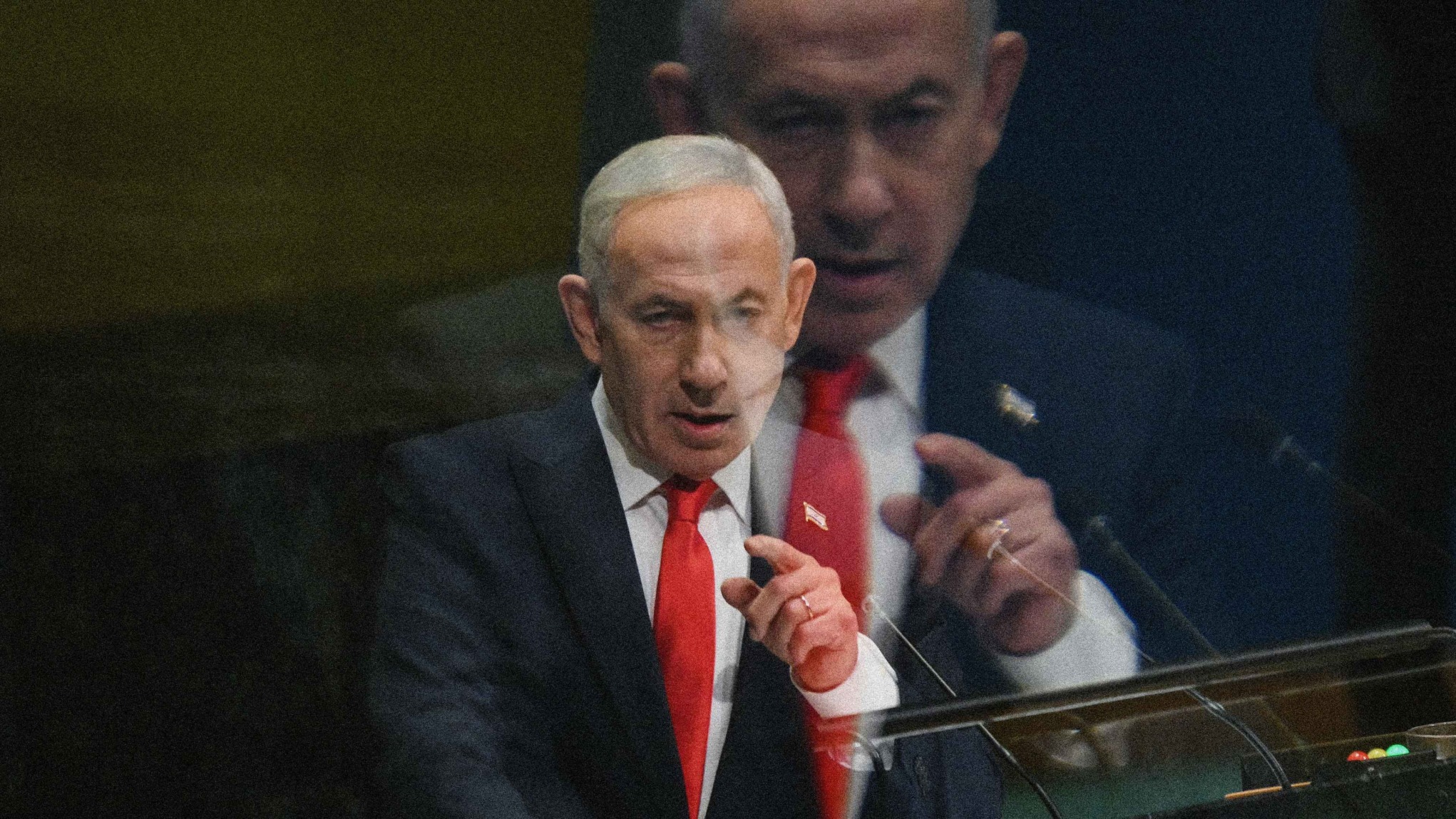
Those who hoped Israel’s voters would chase Benjamin Netanyahu from power and into public disgrace have been disappointed – for now.
The prime minister, blamed by many across the country and the world for security failings ahead of the October 7 attacks and the brutality of his response to them in Gaza, is still in office and once again fighting for his political life after an inconclusive general election.
Netanyahu lost his parliamentary majority, with his right wing bloc likely to secure 56 seats in the 120-strong Knesset, down from 64 last time. Both he and his main rival, former IDF chief of staff Gadi Eisenkot, have pledged to form a government; yet neither can do so with a coalition built solely from the Jewish parties they were both campaigning for.
While Netanyahu’s bloc of right wing parties appears from the still-incomplete vote count to have done somewhat better than polls suggested, he is still well short of the 61 votes needed to command a Knesset majority.
Suggested Reading

Why Netanyahu hates the most powerful film of the year
The bloc headed by Eisenkot was on course to gain 48 seats, with around 65 per cent of ballot boxes counted, a disappointment after exit polls that had predicted them winning 52 or 53.
As expected, Netanyahu’s Likud has emerged as the largest single party with 27 seats compared to 21 for the new party Yashar, headed by Eisenkot. But perhaps the most striking result is the significant increase in Knesset seats held by the potentially pivotal Arab parties – 16 compared with just 10 in the previous 2022 election.
This matters because it underlines that a decisive majority of Israeli citizens – Jewish and Arab together — have voted to oust Netanyahu from power. This will significantly increase the pressure on Eisenkot to reach an unprecedented accord with the Arab parties in the coalition horsetrading that will take place in the days and perhaps weeks ahead.
So far, three out of the four parties in Eisenkot’s opposition bloc – including the two right wing ones headed by Avigdor Liberman and ex-PM Naftali Bennett have set their face against forming a coalition with the Arab parties representing Palestinians who are Israeli citizens. Only Yair Golan, who heads the centre left Democrats – who appear to have won nine seats – has said he is open to joining forces with them.
Suggested Reading
Supporting Netanyahu has damaged America
Yet if Eisenkot was prepared to do it, he could bring Ra’am, the Palestinian party headed by Mansour Abbas – which appears to have secured four Knesset seats into a potential coalition. The calls from Israeli liberals to do just that have been strengthened after the decision by the Jewish politician Yoav Segalovitz, a former police chief, to join Abbas’s party.
Eisenkot could also try to reach an accord with the other Arab parties to enter into a “confidence and supply” arrangement to keep him in power, as Yitzhak Rabin did in the early 1990s.
However, this is only one option for the jockeying that will now take place. Another – much less congenial to the Israeli centre left – is that Eisenkot will try to form some kind of “unity government” with Likud.
And for now, Benjamin Netanyahu can once again wait and plot in the safety of power. He is likely to delay things and agitate for a new election. The key question now is whether Eisenkot is bold enough to take the gamble that would kick him out.
 Most popular


Liz Truss’s new mini-book is every bit as bad as her mini-budget

His dad tried to overthrow Putin – now Pavel Prigozhin runs an African country

I was at Eton with Charles Spencer – this is how it explains his battle with the royals


Forget the Terminator – the age of AI weaponry is already here