
The stage was set for another Pedro Sánchez special. Spain’s beleaguered prime minister saw an opportunity to call a snap election and engineer another campaign miracle. And then 69 people were killed when two trains collided in Toledo.
For Sánchez’s Socialists, already trailing in the polls, it probably ended any chance of victory on November 29. The eight years of Sánchez’s rule have verged on perma-crisis, buffeted by wars and natural disasters.
Early in his premiership, the Covid pandemic struck and a volcano erupted on the Canary Islands. Russia invaded Ukraine, triggering an energy crisis, and Hamas’s attack on Israel on October 7 pushed Spain’s foreign policy into the spotlight, angering Washington.
One of Sánchez’s advisers and a former transport minister were sentenced for pandemic-era corruption. Sánchez’s wife was investigated for influence peddling. His brother was convicted of administrative misconduct and his attorney general sentenced for leaking confidential information. Sánchez supporters called it right wing lawfare, and some evidence for that is emerging. But the critics said there’s no smoke without fire. The damage was done.
Flash flooding killed more than 200 people in Valencia. A blackout left Spain at a standstill. There were wildfires and race riots and housing and anti-tourism protests. In January, 46 people were killed in another train crash in Córdoba, and in July 70,000 migrants rushed the border at Ceuta, the Spanish-controlled enclave in north Africa, adding to the sense of a government losing control.
Suggested Reading
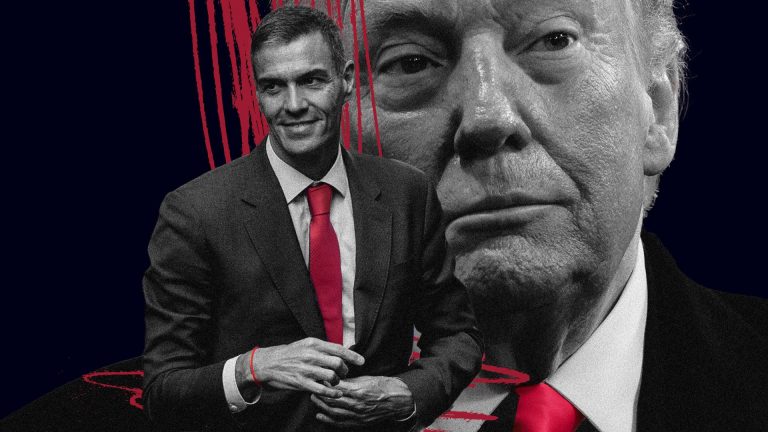

Pedro Sánchez is outclassing Trump with the president’s own tactics
The ripple effects of Trumpian volatility have also damaged Sánchez, but squabbling among Spain’s far left parties made re-election unlikely, and after the 2023 snap election victory his government was propped up by regional and separatist parties. But signing a deal with partners who wanted to secede from Spain came at huge cost – his government failed to pass a budget for three years and reforms were blocked.
Despite it all, Spain’s economy grew three times faster than the eurozone average. Pensions were put up, the minimum wage rose. But the corruption cases made many people question his judgement, and the government is regarded as having mishandled the Ceuta crisis.
The housing market is a mess – rents have soared 80% in a decade and when 87-year-old Maricarmen Abascal was evicted from her apartment in Madrid over a rent disagreement, Sánchez saw a window to mobilise left wing demonstrators and campaign on social issues, distracting from the crises. The Toledo train crash closed it.
But now the Spanish right’s rabid anti-Sanchismo has left it with little bandwidth for anything beyond the Sánchez show. He has dominated Spain to such an extent that the underlying structural problems of housing, demographic decline, immigration tensions, public health and pensions became secondary to all the scandals and crises. If Sánchez has spent his time reacting rather than governing, the opposition has spent its time reacting to him, rather than preparing to govern.
For many on the right, the ills of Spanish society are all down to Sanchismo and the sole objective is to defeat it. But then what?
Polls suggest that to win power, the centre right Partido Popular (PP) must to form a coalition with far right Vox. But so far there’s been little coherent plan from the PP besides beating Sánchez. Vox, however, is clear about what it wants: re-emigration and citizenship crackdowns.
Suggested Reading

The eviction that could sway a general election
So then comes the uncertainty of what the anti-Sanchista right, and therefore Spain, will stand for in a post-Sánchez world. Cutting taxes and public spending, predictably – the PP is already talking about “sacrifices”. But what will it do in times of inflation and housing market overheating, of war and natural disasters, of migration and energy crises, the unrelenting churn of events in an era where history is speeding up? The PP too will be distracted, blindsided, held responsible for events beyond its control – and they won’t have Sánchez to blame any more.
Sánchez, after all, will probably be beaten on November 29 not due to policy mistakes or even corruption cases, but finished off by the cumulative weight of multi-crises killing his momentum. There will be no campaign miracle this time.
 Most popular


Emily Maitlis’s diary: The Democrat who’d rather see Trump win if it means El-Sayed losing

It might not look like it, but a motoring miracle has now happened


What happens to Trump if he loses the midterms?


How Abdul El-Sayed became the man who can break Trump