On the same day that Wall Street investors were salivating over the prospect of getting a slice of Elon Musk’s SpaceX IPO, Musk himself was telling his 240 million followers on X, his social media platform, that he had no regrets about his incendiary role in the Belfast riots with a series of racist rants. He raged that Keir Starmer “hates white people” and that “murderous migrants beheading innocent people in their home town is what’s making people angry, not social media.”
This is the bizarre split-screen world in which two Musks seem independently to exist, the genius change agent in one and the agent of a white master race in the other. As the markets move like a herd infected with a severe outbreak of promethean delirium, no heed is paid to the kind of mind that is really orchestrating this show. In a trick of mutual immunity, you can follow one without being bothered by the other.
In fact, in Musk, we’re watching the return of a species that played a dark role as American capitalism took its form: the malignant genius.
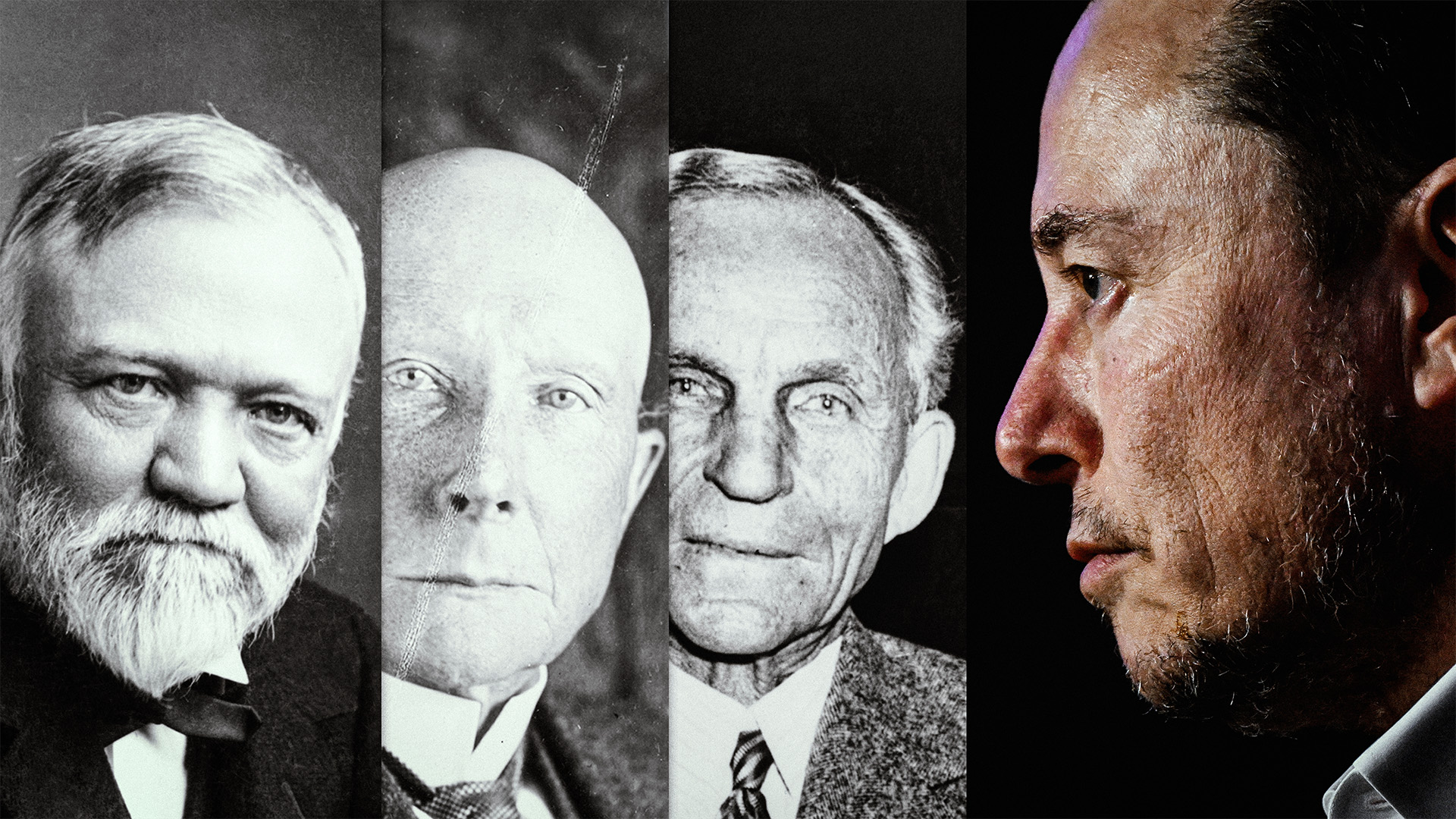
The model was set by three men who transformed whole industries: Andrew Carnegie with steel, John D Rockefeller with oil and Henry Ford with the mass-produced car.
Carnegie’s steel mills were truly satanic for the workers: 12-hour shifts 364 days a year, low pay and dangerous practices. It was said that men who toiled there reached old age at 40.
Suggested Reading

Ebola, USAID and how Musk’s spending cuts will kill millions
He was a ruthless union-buster. In 1892, armed Pinkerton agents were turned on protesting workers, several were killed and many injured. Carnegie’s innovation was to control the steel market from raw material to the final product, known thereafter in management lingo as vertical integration, a doctrine basic to all monopolists, including Rockefeller – and Musk.
Rockefeller created Standard Oil, the first truly global corporation which ended up accounting for 84 per cent of all petroleum products sold in America. Through a network of 41 separate businesses, Rockefeller ran a ruthless cartel that drove out of business scores of smaller producers.
Ford’s novel idea was the transforming economics of the production line and the notion that his workers should be paid enough for them to afford the cars they built. But that came with a cost: they served as repetitive human cogs in the production line (memorably satirised by Charlie Chaplin in Modern Times) and Ford imposed an intrusive paternalism that insisted on surveilling his workers’ lives to ensure “clean living.”
He also had a deep-seated antisemitism that led to a mutual admiration relationship with Hitler. The Nazis imbibed Ford’s industrial efficiency, and Ford saw Nazi Germany as a model state.
Later in their lives, all three men resorted to establishing philanthropic foundations in the hope that money-washing would detach their reputations from the iniquity of how their fortunes were made. In this, at least, they differed from Musk, who has so far shown no interest in philanthropy.
Otherwise there are some striking similarities in Musk’s game plan for SpaceX. Early this year, as he outlined the IPO, he said the company would “create the most ambitious, vertically integrated innovation engine on (and off) Earth.” Musk has always been well aware of his power to mesmerise bankers and major investors with talk of asteroid mining or colonising Mars, which he did in the lavish IPO prospectus, but this was a distraction. His real target was far closer, Low Earth Orbit, LEO, just a few hundred miles above Earth.
Suggested Reading
The insane assumption behind the value of Musk’s loss-making SpaceX
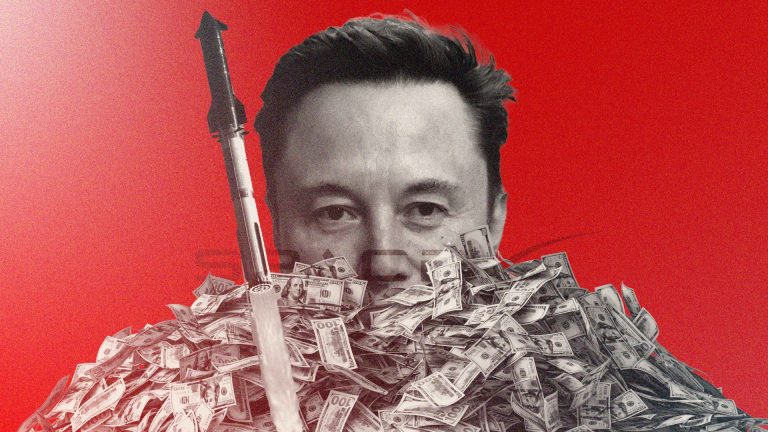
SpaceX had already – with few people noticing – achieved a monopoly in LEO equal to Rockefeller’s of the oil market, delivering more than eighty per cent of the satellite launches directed there. Around 10,000 of those satellites form his Starlink network, supplying broadband access across the world, a business with more than ten million customers that produced $4.4bn in operating profit last year.
Musk transformed the rocket launch business in little more than a decade, leaving behind on the launch pad companies like Boeing and Lockheed Martin, notorious for their budget overruns and missed deadlines. Last year his Falcon9 rockets made an astonishing 165 launches into LEO, turning what was once a white-knuckle experience into routine and costing around 85 per cent less than competitors.
This mastery, however, reflects a mature technology. To get anywhere near justifying the boggling $2tn value placed on SpaceX on the IPO’s opening day (a year earlier the value was $500bn), Musk will have to show equal mastery of a new generation of rocket and satellite technology that is far more daunting than a step change. The IPO seems based much more on blind faith than any assurance that Musk can once more defy gravity in a spectacular way.
And now, again, America faces a malignant genius problem. Musk’s real genius lies not in any deep gift for arcane engineering but in an uncanny instinct for recruiting the best engineers and riding with the mistakes as coolly as he dances with the successes.
He’s now the world’s first trillionaire and, like the world’s first billionaire, Rockefeller, he demonstrates that those who can move the world into a new age can also have demons that pair that genius with a callous disregard for human values. He displayed that with open relish, brandishing a chainsaw to execute Donald Trump’s orders to decimate some of the US government’s most valuable and humane services, most tragically USAID, which provided resources to counter the effects of wars, disease and famine on populations across the world, notably in Africa.
Bill Gates described the result as “the world’s richest man killing the world’s poorest children.” Researchers at Boston University have converted that into actual numbers.
They calculated that by February of this year, more than 800,000 people, including more than 500,000 children, had already died worldwide, as a result of the disappearance of USAID. And Musk’s actions also mindlessly destroyed the carefully layered defences against Ebola in Africa.
In what kind of society would all of this not be considered a crime against humanity? (That’s a question that doesn’t bother Wall Street.) Bearing in mind the rabid racism displayed by Musk’s comments on the Belfast riots, it seems that, to him, the worth of a life can simply be determined by the colour of the victim’s skin. Down to Earth, that’s who he is.
Clive Irving writes for Vanity Fair and the Daily Beast. A former managing editor of the Sunday Times, he is the author of The Last Queen, about Elizabeth II
 Most popular
I was at Eton with Charles Spencer – this is how it explains his battle with the royals
Emily Maitlis’s diary: My deep dive into Jeffrey Epstein’s hidden empire – and the network that let him get away with it
The Greens’ foolish anti-Zionism vote is a disaster for Zack Polanski
Putin’s wartime economy is heading for catastrophe