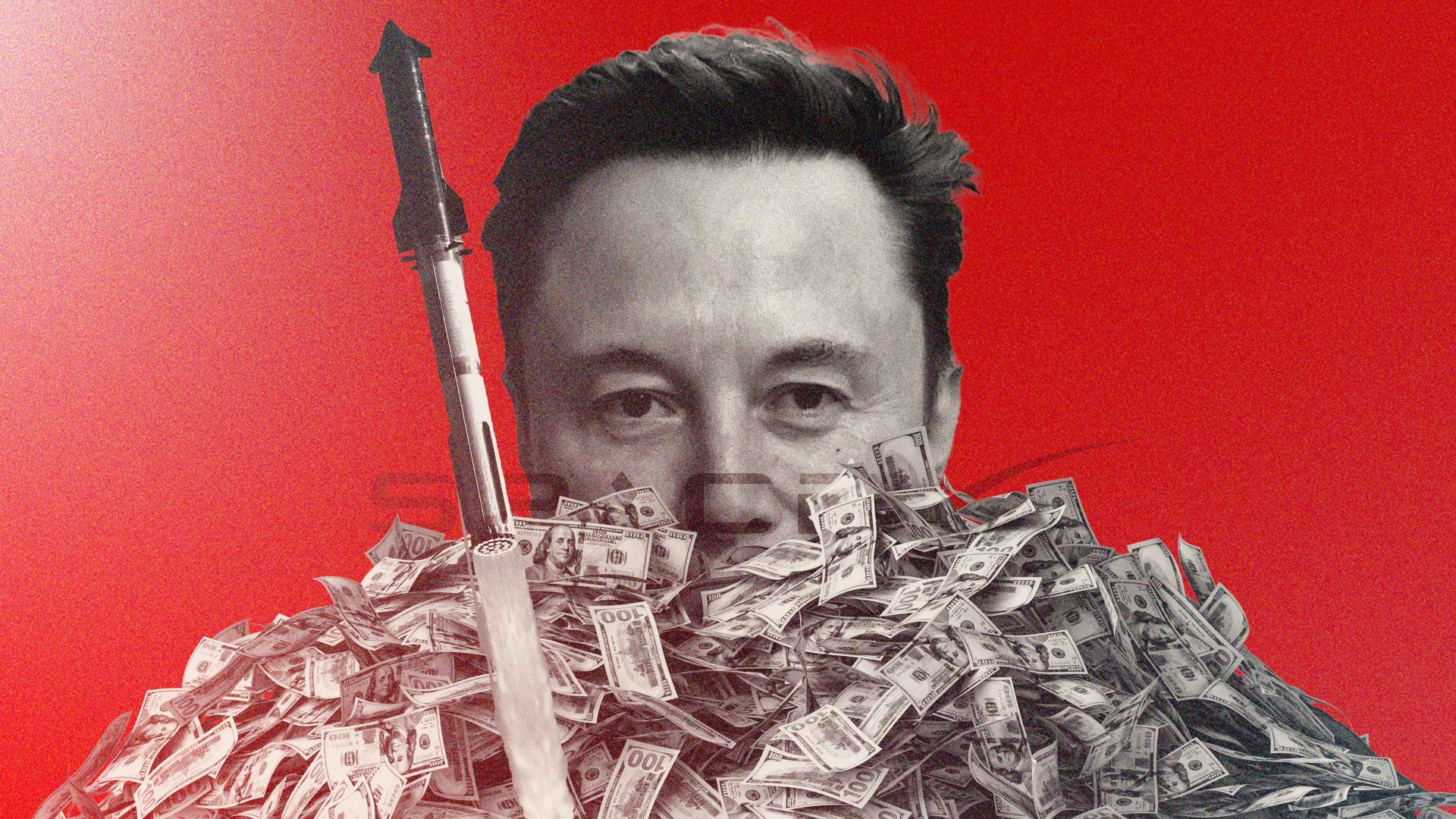
SpaceX is an unusual business. In actuality, it is several businesses all bundled together. The most visible parts are the reusable rockets which are now heading into space around three times a week and have transformed the economics of putting things into orbit.
Alongside that are: the Starlink satellites which beam the internet down across the earth; Elon Musk’s AI venture xAI, best known for its Grok model; and finally X, the social media network previously known as Twitter. How much is this grab-bag of parts worth? The best answer to that question is “whatever people are prepared to pay”. And almost unbelievably, that could well be around $1.75 trillion dollars.
The initial public offering (IPO) of SpaceX on the stock market will raise around $75bn dollars, easily smashing the record IPO of the oil giant Saudi Aramco which raised a, by comparison, pitiful $29bn back in 2019. Of course, $75bn is well short of the much-touted figure of $1.75 trillion, but that is because only just over 4% of the firm is on sale to investors – the remaining 96% will be retained by insiders and primarily Musk himself.
Still, if investors are prepared to say that 4% or so of the firm is indeed worth $75bn, then the implied overall valuation of $1.75 trillion would make Elon Musk the world’s first trillionaire.
Suggested Reading


Ebola, USAID and how Musk’s spending cuts will kill millions
Those sorts of numbers sound almost as crazy as SpaceX’s proposed plan to build a million-person city on Mars. A valuation of $1.75 trillion makes it the seventh most valuable company on the planet. And yet last year, it made a loss of around $5bn on total sales of just $18.9bn.
In order to value the company at around 100 times its annual revenue, some rather “brave” assumptions have to be made. The space launch and communications business – an area where SpaceX has shown genuine innovation – are not the key here. Even the most optimistic analysts do not see those components being worth more than around $300bn.
Instead, the key to the growth story is AI. SpaceX reckons that the global addressable market for AI services – of which it hopes to capture a large share – will be more than $25 trillion, or around as large as the entire existing economy of the United States.
But why might investors be prepared to buy into such wildly optimistic projections? There are several factors at work. There is still something of a speculative mania when it comes to AI and AI-adjacent businesses. Plenty of buyers don’t believe the numbers for one moment and have no intention of holding the stock for very long, but they expect the price to keep on rising for a while yet. Such expectations can be self-fulfilling.
Then there are the true believers. Musk is, to put it politely, a polarising figure. His open backing of far-right politicians across Europe and his efforts at DOGE in the first year of the Trump administration have repelled many, but there is a solid core of retail investors who still believe he has a Midas touch. Such investors have driven Tesla’s stock price to a level completely out of touch with the company’s actual earnings. Around 25% of the SpaceX IPO was reserved for retail investors – as opposed to institutions – against a normal level of 5-10% in large IPOs.
Suggested Reading

Elon Musk’s next plan: to become a space invader
There are also some shenanigans at play. Nasdaq, the stock exchange where SpaceX is listed, have – rather conveniently for Musk – tweaked their rules on how they compile stock indices. Whereas previously a stock had to trade for a year before being included in an index, now it can now be added in just 15 trading days.
The end result of this, and a few other technical, minor sounding rules changes is that SpaceX is likely to be included in Nasdaq Composite index by July. This means that passive investors with funds tracking this particular index will be forced to snap up some of the newly listed shares. MSCI and FTSE have followed suit and also announced that SpaceX will be fast tracked into their own indices.
Whether or not he hits his $75bn target, SpaceX’s listing is a mega-payday for Elon Musk. But it is not the only mega-IPO planned for this year. Both Anthropic and OpenAI are set for their own share listings, while both Alphabet (the parent of Google) and Meta (the parent of Facebook) are mooting tapping investors for large sums in the months ahead. The risk for markets is that gorging on oversized AI-flavoured offerings now will lead to some indigestion later.
 Most popular

His dad tried to overthrow Putin – now Pavel Prigozhin runs an African country


Liz Truss’s new mini-book is every bit as bad as her mini-budget

I was at Eton with Charles Spencer – this is how it explains his battle with the royals

18 things that will absolutely, definitely happen if Trump gets whopped in the midterms