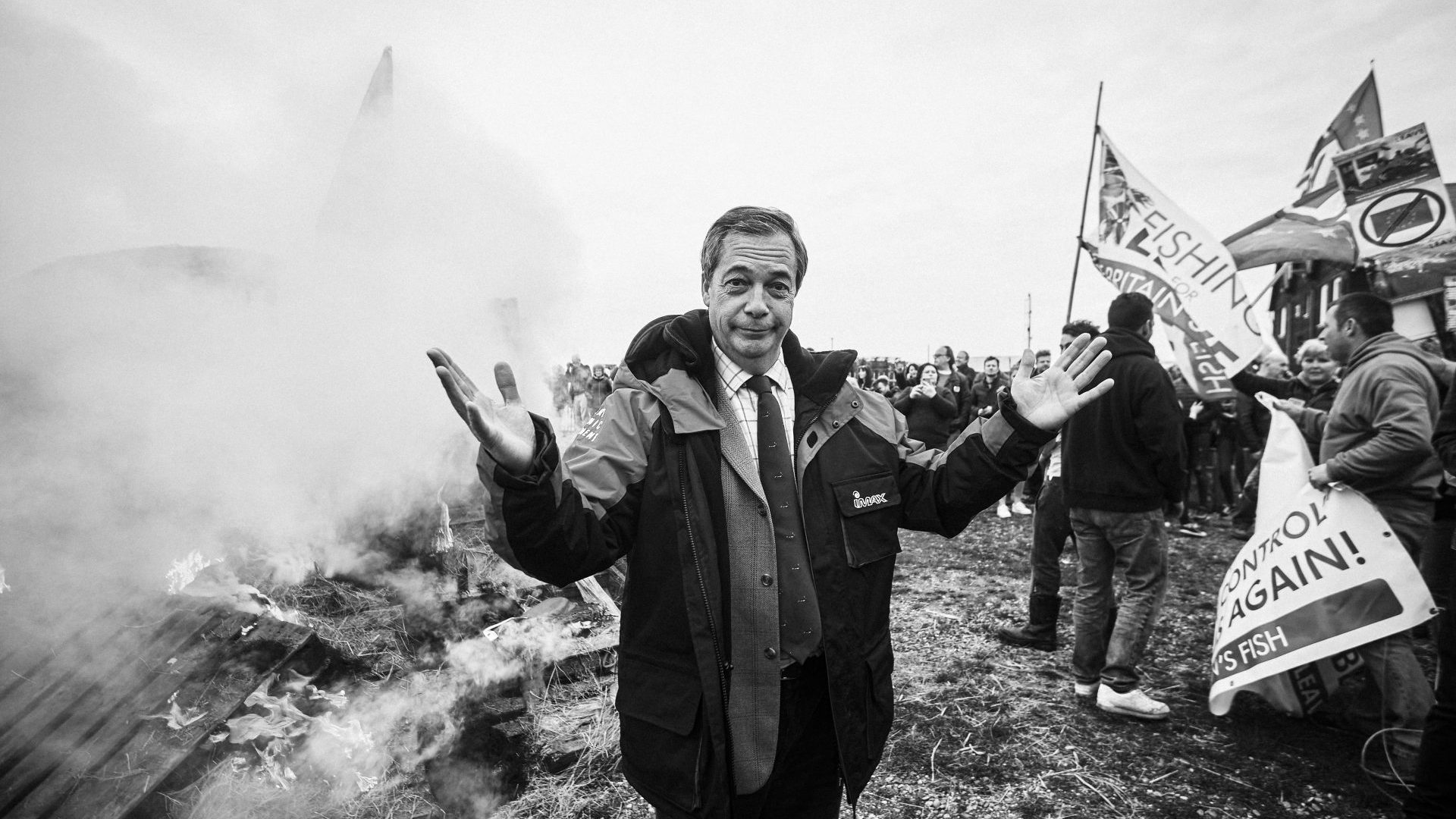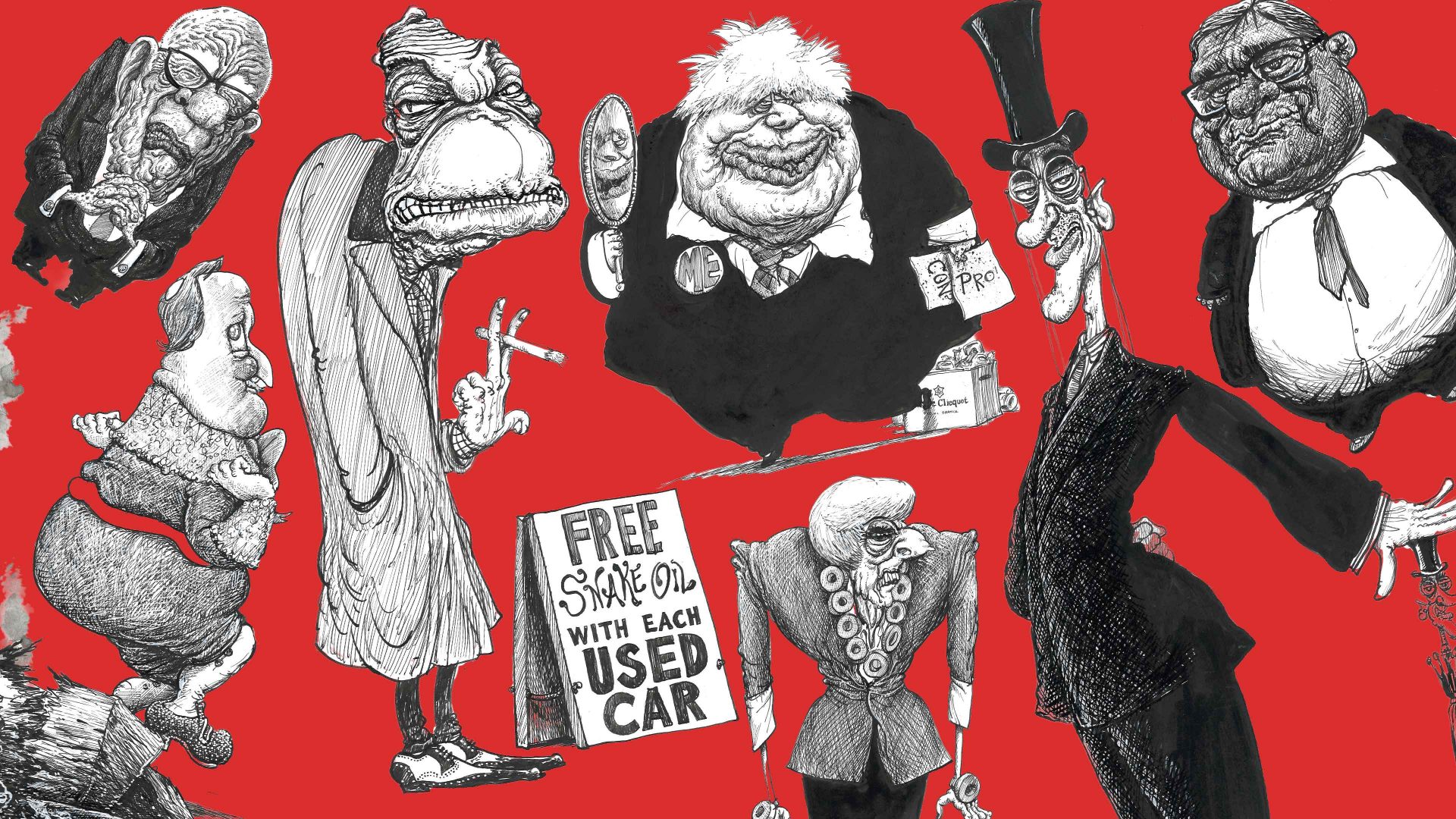

Click on the area you’d like to read more about
Cars
Chemicals
The City
Culture
Defence
Farming and Fishing
Fashion
Global Britain
Haulage
Immigration
Investment
Living & working in the EU
Lost opportunities for a better deal
The NHS
Northern Ireland
Productivity
Regulations
Reputation
The Reset
Science and tech
Scotland
Services
Skills shortages
Sport
Tourism
Trade
Travel
Universities
Wales
Waste
The cost of joining again
1. Brexit is the gift that keeps on taking. The cost of it continues to grow. The first estimates from the Office for Budget Responsibility (OBR), the independent public body funded by the UK Treasury that provides economic analysis of public finances, were that lost trade and productivity after leaving the European Union would cost the UK a permanent loss of 4% of our gross domestic product (GDP) – the monetary value of all goods and services produced inside a country’s borders per year.
In 2023, the economist John Springford calculated that the real hit to GDP was 5%. Now, the latest work by a US-based economic research organisation, the National Bureau of Economic Research (NBER) – which the government believes is a better barometer than the OBR numbers – says that leaving the EU has cost us 6%-8% of our economy. The NBER says investment is 12%-18% lower, employment 3%-4% weaker and productivity down by 3%-4% on what it would have been if we had stayed in. The additional damage, they say, reflects “the unexpectedly protracted nature of the Brexit process, which created uncertainty lasting nearly five years, rather than resolving quickly.”
2. To put that lost 6%-8% into context, we spend 11% of GDP on the NHS, and 2.5% on defence. Without Brexit, we could have afforded to double defence spending and increase health spending by 50% and not have to raise taxes by a single penny.
3. Brexit has made Britain the sick man of Europe once again. In the late 1950s and early ’60s, the country was ailing – the late US secretary of state Dean Acheson famously said in 1962, “Great Britain has lost an empire and has not yet found a role.” As productivity and growth fell below our European neighbours, the UK was desperate to join Belgium, France, Germany, Italy, Luxembourg and the Netherlands in their fledgling common market, but were blocked by Charles de Gaulle.
We tried to set up our own version, which failed, then went into slow decline – in 1950 per capita GDP in the UK was roughly 30% higher than the EU-6 average; by 1973 it had fallen to 10% below the EU-6 average. The decline was reversed when we finally joined on January 1, 1973. By 2015 we were ahead of France, Belgium, Italy and Germany, and neck and neck with the Netherlands. But now, although we are still ahead of France and Italy, our GDP per capita is more than £2,000 lower than Germany’s, and below that of Luxembourg, the Netherlands and Belgium, too.
4. A huge part of the cost of Brexit to the British economy is down to our exit from the European Union’s single market. It is arguably the EU’s finest creation, and the irony is that this was a policy development pushed for by Conservative prime minister Margaret Thatcher, who later became an outspoken Eurosceptic. The single market created a single trading bloc of almost 500 million people, and access to these much larger markets for goods, services and capital boosted per capita wealth in the EU’s core countries by 4.7% (around €3,600). This is what Britain turned its back on.
5. Leaving the single market has created trade friction for Britain’s importers and exporters. In addition, customs checks and added paperwork have led to costly delays. The number of customs declarations on goods moving between the UK and the EU now stands at 39.2m a year; HMRC itself calculated in 2019 that those forms alone would cost British businesses £7.5bn a year to fill in. Larger companies have been able to deal with this by creating new positions or departments to negotiate the minefield, or by shifting elements of production to parts of the EU itself. But smaller organisations have had to step back from doing business in the EU, and some have even gone to the wall.
6 . The lost growth that Brexit has forced on the UK would have created extra tax receipts for the chancellor of £90bn a year. It is no coincidence that both Tory and Labour governments have had to increase taxation since 2016. If the cake is smaller, to have the same money to fund essential services, you have to take a bigger slice.
7. Brexit was sold on the promise of stopping immigration, but all it has done is slash immigration from Europe and replace it with even more immigration from elsewhere. Meanwhile, whole swathes of UK industry have struggled to attract skilled workers. By 2023, we had lost 330,000 Europeans because of Brexit, and now the building industry has 140,000 vacancies and hospitality 132,000 vacancies. Farmers are spending a fortune bringing in seasonal workers to pick their crops, and UK employers are spending even less on training. It is the worst possible outcome.
‘With the possible exception of the now booming red tape sector, there is no part of the British economy that has not felt the negative effects of leaving the EU’
8. The leaders of all the EU member states plus Canada, Australia, New Zealand and Japan warned us about leaving the EU; US president Barack Obama went further, saying we would be at the back of the queue for any future trade deal with the US. But our diminished status in the world has been far more humiliating than we might have thought. We have huge tariffs on our trade with America, we have no influence on EU decisions, and have been frozen out of the European defence fund. We are out in the cold. We do not even have the heft that the EU’s size gives it in standing up to Donald Trump’s recklessness and the venality of America’s tech giants.
9. The decision Britain took on June 23, 2016 has caused lasting damage. It will go on causing damage. Now, with polls showing that the country has buyer’s remorse, the idea of returning to the EU seems more likely than at any time in the last, lost decade. But if we do, things will be different. Britain had the best possible deal of any country in the EU – all the opt-outs we wanted, huge budget rebates. We were allowed to stay out of the euro and Schengen zones, although perhaps we should have joined them, too. Even if Britain does join again, we will never be able to return with anything like the same sweetheart deal.
10. With the possible exception of the now booming red tape sector, there is no part of the British economy that has not felt the negative effects of leaving the EU. In the rest of this book, we will show the impact of the damage done to every sector, in alphabetical order – and meet some of the people who are to blame.
Cars
11. Brexit wasn’t supposed to damage the UK car industry. Remember Brexiteer (and future Brexit secretary) David Davis promising before the referendum: “Within minutes of a vote for Brexit, the CEOs of Mercedes, BMW, VW and Audi will be knocking down chancellor Merkel’s door demanding that there be no barriers to German access to the British market”? Of course, that didn’t happen. Like so many other parts of British manufacturing, the automotive sector has been hit by red tape and increased costs. UK car production has fallen by well over half since the 2016 Brexit referendum, dropping from 1.72m cars in 2016 to 717,371 in 2025, a 73-year low. Leaving the European Union did not stop the closure of Ford’s engine plant in Bridgend in 2020, Honda’s car factory in Swindon in 2021, and Vauxhall’s Luton base in 2025, the last of which cost the local economy £300m a year. “Obviously, Brexit had a big impact”, said Santiago Arieu of data analysts Fitch Solutions. “It created uncertainty and complicated future visibility.”
12. The latest business survey from the Society of Motor Manufacturers and Traders (SMMT) trade body spells out the damage from Brexit. It states that “bilateral UK-EU automotive trade has generally underperformed compared with trade with the rest of the world,” that “new tariff and non-tariff barriers with the sector’s closest and largest partner have greatly contributed to the current trends” and that “Brexit-related disruption was evident well ahead of the UK’s formal withdrawal… domestic vehicle production started declining immediately after the referendum results in 2016, years before suffering the impacts of Brexit implementation and of multiple global crises.” Meanwhile, “the uncertainty surrounding the outcome of negotiations led manufacturers to put on hold billions in new investment until the announcement of the deal” and “the aftermath of the TCA implementation was nothing short of traumatic, with businesses facing unprecedented disruption overnight.”
13. Now Brexit is about to land another huge blow on the UK’s struggling car industry. As the world moves to electric vehicles (EVs), the UK is hamstrung by new EU regulations on the rules of origin for British-built vehicles. From January 1 next year, 55% of a vehicle’s value and 70% of its battery pack and battery cell must originate from either the UK or EU to dodge extra tariffs. We do not make our own batteries for EVs and import most of them from south-east Asia, but they make up such a large part of the cost of an EV that we will fail to meet EU rules about how much of the vehicle has to be made in the UK. That means UK EVs exported to the EU after January 1, 2027 will face tariffs of between 10% and 22% if exported to the continent, making them all uncompetitive. This is a huge problem – the UK exports 80% of the cars it makes, with well over half of those exports going to the EU.
14. In 2023, China’s BYD, the world’s largest seller of electric and hybrid cars, said it would not consider building its first European car factory in the UK because of the impact of Brexit. Rather, the firm, which is targeting sales of about 800,000 cars a year in Europe by 2030, shortlisted locations in France, Germany, Hungary, Poland and Spain. “As an investor we want a country to be stable,” Michael Shu, BYD’s European president, told the Financial Times. “To open a factory is a decision for decades. Without Brexit, maybe. But after Brexit, we don’t understand what happened.”
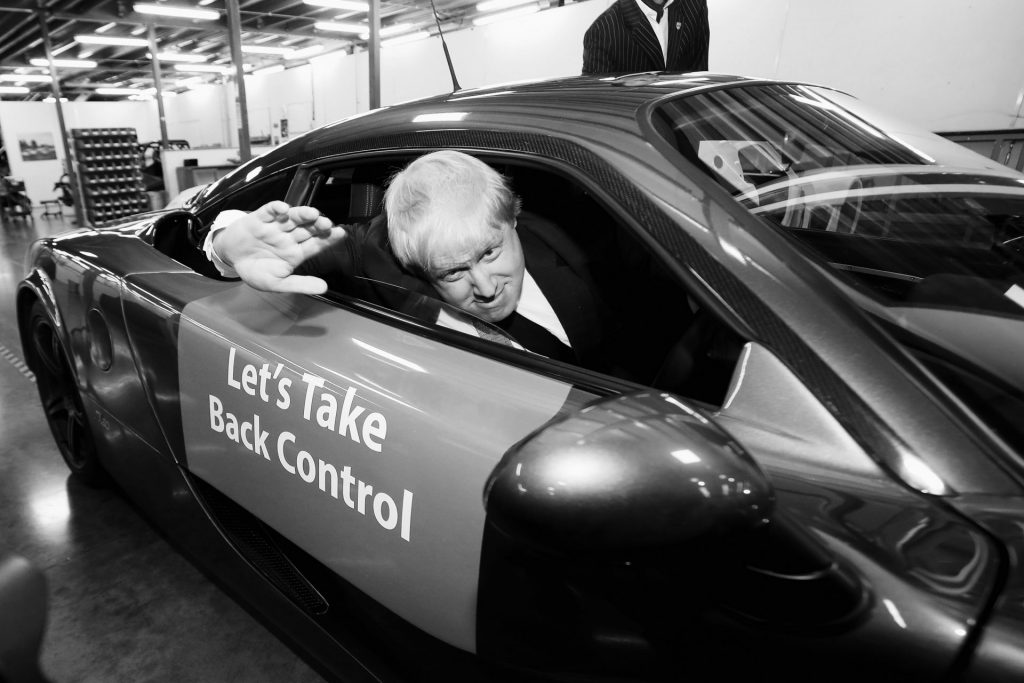
15. Similarly, Stellantis, the car world’s biggest brand group, issued a series of warnings throughout 2023 and 2024, arguing that post-Brexit “rules of origin” and domestic EV sales mandates made UK manufacturing “unsustainable”. These warnings culminated in the closure of Vauxhall Luton in 2025.
16. The EU’s new “Made in Europe” industrial strategy is another potential nightmare for the car industry. The policy requires EU-made products to be prioritised during public procurement. The UK is desperately trying to negotiate an exemption, but if we were in the EU, or even the single market or the European Economic Area (EEA) with the EU27 and Iceland, Liechtenstein and Norway, this would not even be an issue. Nissan has warned that if the UK does not win full access to the Made in Europe scheme, it may be forced to close its car plant in Sunderland, which employs 6,000 people.
17. Brexit has even affected the second-hand car market. Before leaving the EU, used cars could move relatively freely between Britain and Europe. But now, exporters and dealers have faced extra customs declarations, VAT complications and certification requirements, making cross-border trade slower and more expensive. Smaller dealers in particular have struggled to deal with the extra bureaucracy, which has in turn reduced the competitiveness of UK vehicle trading businesses in Europe. The average price of second-hand cars in the UK rose by 30% between 2020 and 2022.
Chemicals
18. Before Brexit, the UK’s chemicals industries spent a small fortune adapting to the EU’s Reach scheme, (Registration, Evaluation, Authorisation, and Restriction of Chemicals). This is a multinational plan to protect health and the environment while making it easier and cheaper for companies to do business together by testing and registering every chemical they use. Brexit supporters claimed, ridiculously, that leaving Reach would boost British industry by lifting red tape and regulatory burdens off its shoulders.
The only possible benefit the chemical industry could have gained from leaving the EU’s regulatory orbit was to use more dangerous chemicals for longer, yet no product produced this way could possibly be sold in the EU. After the referendum, British industry begged to be allowed to stay in the system. But instead of negotiating to pay for access, the British government set up its own testing and registration regime, UK Reach. All chemical companies must now comply with British red tape, which merely duplicates EU red tape. This has more than doubled the cost of compliance, and according to the Department for Environment Food and Rural Affairs (Defra) has cost the industry £2bn.
19. The chemicals industry is also being hit by what it calls an “unfavourable” immigration policy (thanks again Brexit), which has created what the industry calls a “conundrum of workforce-related issues” and cumulatively poses a threat of “steady decline”. Steve Elliott, chief executive of the Chemical Industries Association, said in his association’s latest survey that chemical production in the UK has declined by 40% since 2021 and that there is probably worse to come. Since the industry accounts for 1.2% of the UK’s GDP and for 15% of all UK manufactured exports, this is a disaster.
The City
20. The City of London is still the financial capital of Europe; it is just too large for even Brexit to remove it as the continent’s rival to New York. But that doesn’t mean it hasn’t been hurt, and will continue to hurt. Since the referendum, thousands of City jobs have moved to Frankfurt, Milan and Amsterdam, and almost £1tn of assets have gone with them.
21. The French multinational bank and financial services company Société Générale was among the first to move; in 2018 it told 400 staff that if they wanted to keep their jobs they would have to move to Paris. Since then, hundreds of firms have had no choice but to switch part of their business to the continent if they want to continue trading there. In 2024, the Lord Mayor of London called Brexit a “disaster” that had cost the City 40,000 jobs.
22. The winners have been Milan, Frankfurt, Paris and Amsterdam. In fact, Amsterdam overtook London as Europe’s largest trading centre within weeks of Brexit taking effect. The City of London is lucky that no one rival financial centre in the EU is large enough to attract all the business that it lost – that would have created a real rival in terms of economies of scale and pure heft. But the expansion of continental financial centres and the networks they are creating has come at a cost to us. Rob Rooney, former head of Morgan Stanley in London, told the Guardian last year: “It has been at London’s expense. There is no question about that.”
23. The City is one of the few parts of the UK economy that is large enough to compete with the EU. It has retained 90% of the euro clearing business it had before Brexit, and the EU has failed to set up a rival network that could repatriate this work – basically, acting as a middleman between the buyer and seller of financial contracts tied to the underlying value of the currency – to one of its rival centres. But this still depends on the EU continuing to permit London to keep the business. So far, the EU has extended deadlines to end euro clearing in London three times. One day it may not renew that permission and there will be nothing the City can do about it.
24. The City is also slipping in terms of market share and productivity. As this government’s own report into the future of financial services found, “UK financial services exports fell as a proportion of the global total from over 21% in 2010 to 15% in 2023”. Much of that was down to the ripples of the credit crunch, but the UK economy is uniquely dependent on financial services industries, so losing market share is a big problem. Brexit will not help win that back, and is actually making things worse.
25. The latest blow is the EU’s Capital Requirements Directive VI. This starts in 2027 and will limit the ability of banks based outside the EU to provide banking services to EU customers, making it far more difficult to do that from London. The likely result will be that UK-based banks will have to move money and more people to their subsidiaries in the EU and cut jobs in London. It seems if you want to do business inside the EU, it helps to be in the EU – who knew?
26. Despite all this, during the Brexit process financial services attracted much less public discourse than fishing, which in 2021 made up 0.03% of the British economy and directly employed around 11,000 people (the Financial Times pointed out back in 2018 that fishing made a smaller economic contribution to UK GDP than the Harrods department store). Perhaps this was because fishing was seen as a “real job done by real people”, rather than by City boys and girls. Speaking to the then New European in 2023, Christopher Hayward, then in effect the leader of the City of London Corporation, said: “Well, let me assure you there are real people doing real jobs in the City of London. I don’t want to comment on any individual sector. You’re quite right, there was much more of a focus on goods, there was much more of a focus on agriculture, much more of a focus on fishing. You’re right. And I don’t think the financial services sector had a big enough recognition in the Brexit debate. That’s not that we didn’t put the case – we did put the case, very strongly. But… there seemed to be more interest in some of these other areas. You know, I’m not in government, I can’t speak for why the government reached the decision they did. We are where we are.”
Culture
27. One sector that has been particularly hurt by post-Brexit rules is the entertainment industry, where concert, music and drama tours in Europe have become increasingly difficult and expensive to organise. A 2024 report by the Musicians’ Union found 75% of its members reporting a decline in bookings in the EU since Brexit, and 79% saying they were unable to make up for the loss of work elsewhere. This is devastating when musicians are increasingly dependent on touring – with concert tickets and merchandise sales – instead of revenue from the sale of physical and digital music itself.
28. New rules on transporting goods across Europe mean that major orchestras, theatre companies and stadium bands – which may require several lorries – now face severe restrictions. All the transport cannot come from the UK and visit a dozen European venues without returning to the UK several times.
29 . Artists must comply with length-of-stay requirements, obtaining visas that give them a right to work in the EU, and must fill in detailed carnets, showing every piece of equipment they take out of the UK and that they are returning with. At a government hearing last year, David Martin of the Featured Artists Coalition, a trade body representing music artists, outlined how difficult this was for small bands. He said: “Europe is our nearest neighbour, it’s our largest market by far… Ed O’Brien from Radiohead (said), ‘We would jump in a van as Radiohead, drive into Europe, drive around and play 11am slots at festivals, and that’s what made us Radiohead.’ That’s really difficult now.”
30. The think tank UK in a Changing Europe (UKICE) reported: “Membership of the single market and customs union allowed UK bands to tour the EU freely – no visas, customs checks, or merchandise taxes. UK membership after 1973 had removed the obstacles and work permit requirements encountered, for example, by the Beatles.” Now, it says, Brexit has “made touring financially and logistically complex – especially for young musicians.” The number of UK artists being booked for European festivals has fallen by nearly a third.
31. British songwriters are also being hit, with their works no longer being performed by UK artists at gigs in EU countries. PRS for Music, which protects copyright holders, says its members’ claims resulting from songs played at small- and medium-sized concerts and festivals in Europe have declined by 27%.
32. Small wonder that in 2021, Sir Elton John called the government “philistines”, accusing them of failing to understand Brexit’s damage to the music industry. “It’s like a nightmare,” he said. “To young people just starting a career, it’s crucifying.” According to UKICE, since Brexit “87% of musicians report losing money touring in Europe, with average EU tour earnings down 45%. For 59% of UK musicians, touring in the EU is no longer viable.”
33. According to a joint survey by the Musicians’ Union and the Incorporated Society of Musicians, 42% of musicians said they were considering moving to Europe in order to continue working, while one in five were considering leaving the profession altogether because of post-Brexit touring costs and bureaucracy. One musician said “we see no way to recover our pre-Brexit working schedule”.
34. In 2021 the cellist Sheku Kanneh-Mason, who performed at the wedding of Prince Harry and Meghan Markle, revealed that he had applied for an additional passport to cope with the new post-Brexit world of visas and international work permits. When the Home Office accidentally cancelled his passport, he was left unable to fulfil contracted performances abroad. He was one of 110 musicians, including Sir Elton John and Liam Gallagher, who signed an open letter to the government demanding visa-free touring in the European Union.

35. Television, film and animation have also been hit by Brexit. UKICE says: “The biggest loss has been access to EU funding, especially Creative Europe, which awarded £77.5m to 376 UK organisations between 2014 and 2018 and supported the distribution of 190 UK films.”
36. The government has also failed to replace EU funding for the arts in Britain more generally. In 2019, UK projects got on average £243,000 in EU support, but the Arts Council replacement fund contributes just £5,000 apiece in its place. UKICE found that Brexit has cost the UK’s creative sector £159m in lost funding.
37. All this has several knock-on effects for artists. One is the further negative impact on the mental health of people who cannot usually rely on the same regular income as the rest of us and are already facing disruption from cultural and technological changes, including
the growing threat of AI.
38. Brexit is also making it harder for working-class people to break into the creative industries. Joff Oddie of the band Wolf Alice told a parliamentary committee last year that the loss of European touring meant “one of the things we risk is that music becomes a middle- and upper-class sport”. He added: “We’re already seeing that representation decline. There are all kinds of statistics showing that’s gone down over the last 15-20 years – especially for people outside the south-east of England. It’s costly to build a career, and to build a career you need to go on the road.”
39. Brexit has had a depressing effect on the UK’s ability to cooperate with and share European cultural and artistic talents and to promote the UK’s media, museums, galleries, film-making and music across Europe. What Sir Elton John has called “a sort of soft diplomacy”. Exactly the kind of gentle influence we have much more need of, post-Brexit.
Defence
40. Brexit should not really have had an effect on Britain’s defence industries because the EU did not have a major military role. Yet as times have changed, so has the reality. Vladimir Putin’s war in Ukraine and the undermining of Nato by Donald Trump have meant that European defence is now a major issue. Britain may have disastrously run-down armed forces, caused by 14 years of Tory mismanagement, but the UK still has a large defence and aerospace sector. It is one that is now being squeezed out of the European market because of Brexit.
41. Had we still been in the EU, the UK defence industry would have been able to capitalise on increased spending by its continental allies in light of Putin’s threat and Trump’s withdrawal. Last year, it hoped to be part of a €150bn Security Action for Europe (SAFE) scheme, which would have allowed British firms to cooperate with EU partners and compete for their share of the money. But the UK baulked at the entry cost of around £2bn and so was excluded, leaving UK firms only able to provide up to 35% of any project. Hopefully future talks will reverse this disaster for the UK’s defence industries, but the UK government will have to swallow its pride and find the money necessary to join.
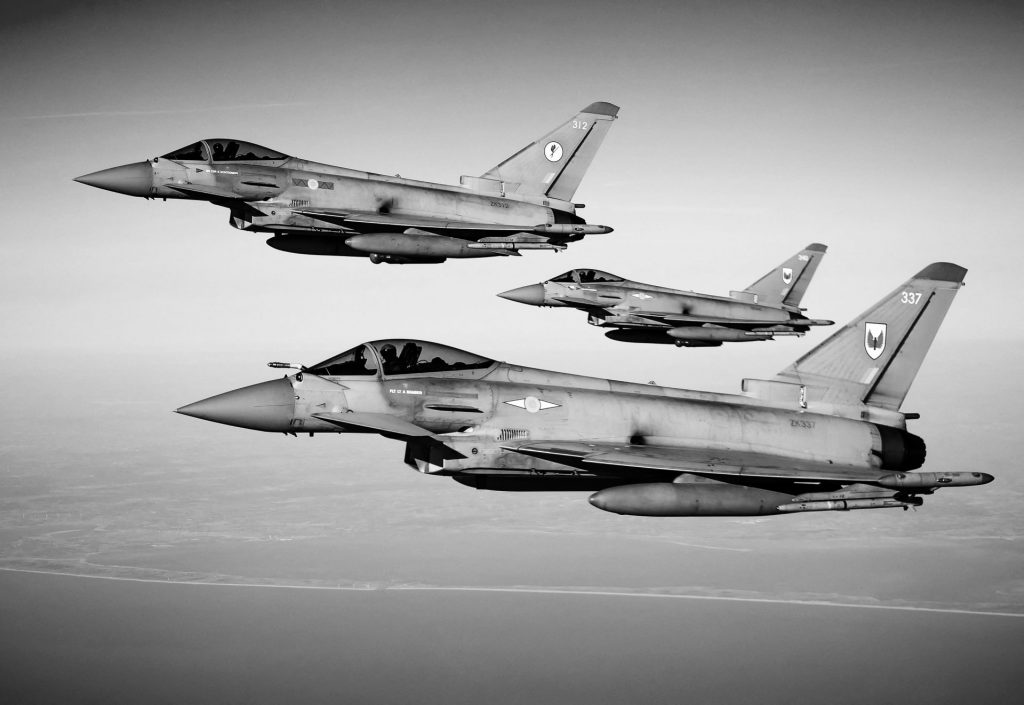
42. A similar situation has emerged with the Permanent Structured Cooperation in Defence (Pesco) project, designed to improve military mobility and coordination across Europe. Liz Truss attempted to sign Britain up for this, but Spain vetoed our membership over issues with the Gibraltar border. Maybe the new border deal with Spain will help, but then if we were in the EU, Spain could never have blocked us in the first place.
43. Having spent some £1.2bn developing and building the EU’s Galileo satellite system, the UK failed to negotiate post-Brexit membership. We no longer build or help maintain the European alternative to the American GPS system, nor do we have access to its most secure elements. All the work on Galileo is now done by EU firms in the EU. In 2021 the European Commission awarded contracts worth £1.3bn to build the latest Galileo satellites. Surrey Satellite Technology, a Guildford-based company that helped to build all the previous Galileo satellites, was excluded from even bidding, as was BAE Systems. The work instead went to Germany and Italy. Meanwhile, two Galileo security monitoring centres based in Swanwick were forced to relocate to Spain at the cost of 100 jobs.
44. How did the UK respond to this? Boris Johnson and Dominic Cummings (who else?) backed a ridiculous attempt to build a third global navigation satellite system. The idea was met with derision and has never come to anything, even though the government wasted almost £400m on buying a stake in the bankrupt and unsuitable satellite operator OneWeb. Probably it is just as well the plan to replace Galileo got no further, as it could have cost more than £5bn and several decades to build and a fortune to run and maintain – all of it funded by British taxpayers rather than being split among 27 countries across Europe.
45. The government has also conceded that, despite security concerns about China, the fragile post-Brexit economy means Britain must “sometimes be involved” with countries whose values “may not completely align with ours”. Then Foreign Office minister Catherine West told the Commons last year: “Unfortunately, because of our rather exposed position, post-Brexit we do have to be outwardly looking in our economy. If we want our residents and our constituents to get away from food banks, we need to have more import-export… and we need to be very pragmatic on the question of having an economic relationship with the fourth biggest trading partner that we have.”
46. In 2018 Airbus chief executive Tom Enders warned that Brexit threatened Britain’s status as “a leader in aerospace”, adding: “Please don’t listen to the Brexiteers’ madness.”
47. Brexit has also frozen Britain out of one of Europe’s most important future defence and technology projects: IRIS², the EU’s new satellite communications network, which was intended to rival Elon Musk’s Starlink. The programme will eventually provide encrypted communications for governments, militaries and emergency services across Europe. Yet despite Britain possessing one of Europe’s strongest satellite industries, the UK was excluded from the project’s core secure and military functions because, after Brexit, it became a “third country”. The logic from Brussels was brutally simple: IRIS² was designed around the idea of “strategic autonomy”, as Europe no longer wanted to depend on outside powers for critical infrastructure. Just as Britain was shut out of the secure military element of the Galileo satellite programme despite having helped to build it, the EU decided that sensitive communications systems could not rely on non-member states. British firms were therefore locked out of some of the programme’s most valuable contracts and technological development. Which leaves Britain in an awkward position. Instead of helping to shape Europe’s next-generation communications network from inside the room, the UK now risks depending on American commercial systems or attempting to build expensive alternatives alone.
Suggested Reading


Let’s make Farage wear Brexit like a badge of shame
Farming and Fishing
48. Much of British business was opposed to the idea of Brexit. But some of the loudest support for the idea of leaving the EU came from the farming and fishing industries, which said they were being held back by its Common Agricultural and Fisheries policies. The Brexiteers promised them more money and the same access to the EU, and have delivered neither. Instead, farmers and fishers have faced more expensive red tape, more trade delays and a smaller pool of workers, thus increasing costs. Farming has been hit by the end of stable EU subsidies; fishing has been disappointed by a smaller-than-expected increase in fishing quotas – limits on the tonnage of fish species that can be caught.
49. Cutting food industries off from their biggest market was never going to be a good idea. About half of UK food and drink exports go to the EU, and almost a quarter of EU agrifood exports come into Britain. Brexit has made the cost of that business higher.
50. The National Farmers’ Union, using HMRC’s own data, has found that exports of British farm products to the EU have fallen by 40% since Brexit. The EU, it seems, is not quite so desperate for our food as we thought and instead insisted that if the UK was not in the Common Agricultural Policy (CAP) it would have to pass numerous tests and fill in endless forms for the right to sell in their markets. So much for boasts from the Brexiteers about “seamless access”.
51. The UK government was so ill-prepared that it waived most of the checks on imports from the EU, and postponed their introduction several times. Meanwhile, those pesky, inefficient Eurocrats introduced the full raft of checks and rules on UK imports to the EU on day one. These can cover every single shipment, for instance of live animals. The costs of export health certificates are eye-watering, for meat, fish and dairy there is £200 in veterinary fees. Certificates for plant products are £25, plus the inspection fee of over £100. Border control fees range from £10 for low-risk products to £1,000+ for products like cheese or fish. Grouping smaller consignments in one truck is a nightmare as everything needs its own paperwork and the whole load can be delayed by a check on just one product. Plus, the paperwork is fearsome and expensive for firms, so much so that many smaller companies have just stopped bothering to export.
‘Boris Johnson promised farmers he could ‘100% guarantee’ the same level of subsidies after Brexit. In total, UK farm subsidies have fallen on average by 20% since 2015’
52. As an example of this, just a single product made it through post-Brexit customs checks to pick up an honour at the 2024 World Cheese Awards, held in Portugal. Britain is normally well represented, but in 2024 just one British cheese made it to the awards list, a Gruyère from Castelli in Sevenoaks. Around 250 cheeses, from around 60 other producers, did not make it to the judging in Viseu at all, because they got stuck at customs. John Farrand, the Guild of Fine Food’s co-owner, told the Observer that the disastrous hold-up “would not have been a thing” had the UK not left the EU. James Grant, an awards judge and co-founder of the Real Cheese Project, called it “really devastating” for those who missed out, telling the paper “if we’d had a winner at these awards, it would have changed lives overnight.”
53. The Labour government has finally managed to negotiate an end to the SPS tests and fees at its borders as part of its “reset” negotiations. They should save farmers and food companies a small fortune but NFU president Tom Bradshaw warns: “Simply reducing friction doesn’t mean we are going to get the EU market back again. There aren’t empty spaces on the shelves with a label saying, ‘waiting for British products’.”
54. Subsidies are another kick in the teeth for farmers. Boris Johnson – a shameless liar – promised them he could “100% guarantee” that the same levels of subsidies they received under CAP would continue or even rise after Brexit. He wasn’t alone though; George Eustice, the Tory minister responsible at the time, said: “The UK government will continue to give farmers and the environment as much support – or perhaps even more – as they get now.” Yet Brexit led to a complete change in the subsidy regime, with money now funnelled via several complicated schemes rewarding improvements to the land and the environment. The results have been deeply damaging: in 2019 UK farmers received £4.7bn in CAP funding (that was 63% of English farmers’ income) but total funding has now fallen to £3.7bn a year. Altogether, farm subsidies have decreased on average by 20% in real terms since 2015, with upland farmers suffering the biggest hit.
55. What could make the post-Brexit outlook even gloomier for farmers? How about seeing your government sell you down the river with cack-handed trade deals with Australia and New Zealand that give their much larger, more efficient farms an edge. Even Eustice (remember him?) told the Commons that the Aussie deal was “not actually a very good deal for the UK”. Within a few years Britain’s farmers will find that they are facing intense competition, with the beef, sheep and dairy sectors in particular facing a disastrous flood of cheap imports. So farmers did win from us leaving the EU – it’s just that the victorious farmers in question are in Australia and New Zealand.
56. “Farmers’ anger grows as Australian beef floods into Britain”, ran a headline in the Daily Telegraph in December 2025 as it emerged that imports from the country rose by more than 80% in the first nine months of 2025, following the implementation of the trade deal between the two countries. But one paper had pooh-poohed claims it would flood the country with cheap imports relentlessly, running such headlines as “Australia trade agreement expected to offer numerous opportunities to British exporters”, “Don’t be fooled by Remainers, the Australia trade deal is better than anything we had in the EU”, “Having signed the trade deal with Australia, Global Britain is just getting started” and “Naysayers of post-Brexit trade deals are missing the point”. That paper, of course, was the Daily Telegraph.
57. Even Vote Leave campaign co-leader and former environment secretary Michael Gove, now editor of the Spectator, admitted last year: “I think we negotiated poorly with Australia, and New Zealand, but particularly with Australia in defence of our farmers. In the anxiety to secure trade deals, we did not think about the long term. Brexit was not principally about trade, and I think it was a mistake for people to regard Brexit’s success on the basis of the number of trade deals that we could stack up… I felt that we were too anxious as a government to secure those deals in order to show that Brexit was working.”
58. Since Brexit, fruit and veg farmers have struggled to find enough people to pick their produce – work that UK citizens seem very reluctant to do. In 2022, an estimated £60m worth of crops was left to rot in the fields for lack of labour, which traditionally came from Europe. The government at the time only allowed 30,000 seasonal workers into the UK, 50% fewer than necessary. Now the limit is 45,000, but the application fee (which farmers usually have to pay) is £430.
59. Meanwhile, Brexiteers still continue to trumpet the possibility of a trade deal with the US that would encompass food, something sources close to vice-president JD Vance have suggested could come at the price of Britain agreeing to repeal hate speech laws protecting LGBT+ groups and other minorities. This would almost certainly include a demand for the UK to accept imports of chlorinated chicken and hormone-treated beef, both currently banned here and in the EU. Reform’s Nigel Farage has said that we should accept “US agricultural products to be sold in Britain”, adding “there’s been some concern about chlorine-treated chicken, but there is an answer to that, which is to label things, let consumers decide.”
60. Brexit has been just as painful for fishing, which was promised much and has been delivered little. Fishing and fish farms account for just 0.03% of the British economy, 70% of which is in Scotland. That didn’t stop Paul Lines, chairman of the Lowestoft Fish Market alliance, saying that after Brexit it had the potential to grow to 3.5% of British GDP, creating thousands of jobs in coastal communities. To put that in context, the whole car industry is just 0.9% of the British economy. It need hardly be said that this 116 times increase in the economic importance of fishing has not happened. In fact, the industry continues to shrink in total numbers and as a percentage of the British economy. Fish exports to the EU, our largest market, are down 29% by volume and 10% by value since Brexit; exports to the rest of the world have fallen, too.
61. Boris Johnson once promised that, after Brexit, all fish caught in British waters would be exclusively for our fishermen. Even when he signed the EU-UK Trade and Cooperation Agreement (TCA), he boasted that we would now “be able to catch and eat quite prodigious quantities of extra fish”. But in fact, the British quota went up by only 10%. Jim Portus, a former fishing inspector who became chief executive of the South Western Fish Producer Organisation, delayed his retirement in anticipation of going out with a great deal for his members, but told the Guardian in 2020: “I thought we were going to get a wonderful victory, but many of the promises that were made have not been delivered. I’m at the end of my working life but he made promises directly to fishermen and I am very disappointed for them. We should be planning for a resurgence instead of being sold down the river again.”
62 . Red tape has been a crippling blow for fishers. As Andy Dixon, owner of 55 Fisheries in North Shields which specialises in langoustines, told me in 2025, Brexit “has been a bit of a disaster” and “has cost us dear”. Form-filling alone costs Dixon an extra £25,000 a year, but that is only the half of it. He has to have his catch tested by a vet here, exactly labelled, shipped to France, rechecked and only then can they head to market. He told me: “We never had this before Brexit – a misspelling, the wrong Latin name, even not having a plural ‘s’ on a label can stop a whole truck.” It is hardly surprising that his continental rivals are getting their cheaper, fresher langoustines to market days before he can. The UK’s Brexit reset with the EU is supposed to remove the need for such tests, form-filling and delays but it is not yet in place and will involve us abiding by EU rules. But the industry is worried that a reset will mean giving EU boats more access to UK waters.
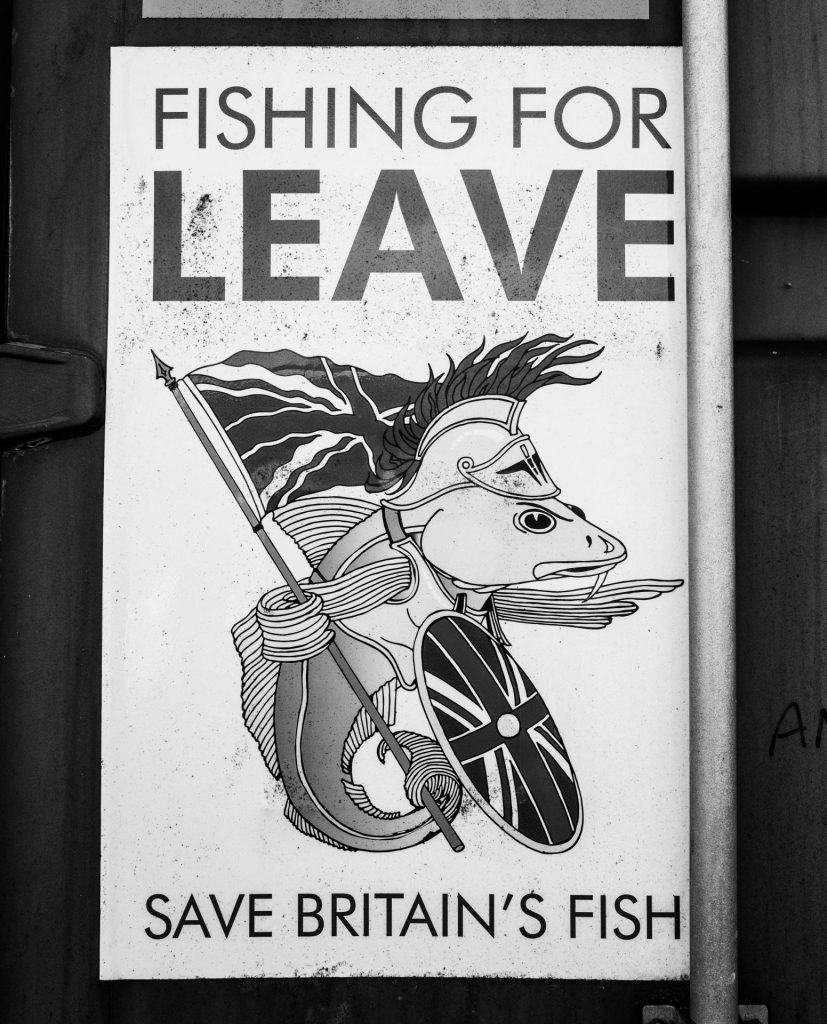
63. An essential flaw in the Brexiteer argument on fishing – and one that has proved costly for Britain – is that because of different tastes, we export 70% of the fish we catch here and import 80% of the fish we eat here. British waters are full of mackerel, herring and shellfish, but UK consumers want cod, salmon and haddock. Jennifer Robson, head of economics at Seafish, the industry’s trade body, explained in their latest report “the majority of seafood consumed domestically is imported, with the value of these imports nearly 4.5 times greater than the value of seafood landed in the UK.” Making that two-way trade more difficult was always going to be damaging, and fish exports to the EU have fallen 29% since Brexit.
64. Leaving the EU has hurt Britain’s fish-processing plants too. Some UK boats now get around Brexit red tape by landing directly on the continent, up 17%, and many foreign boats no longer land their catches in the UK either, down 60% between 2019 and 2023.
Fashion
65. The fashion industry warned before the referendum that it would be hard hit by Brexit, and so it has proved. Since 2020, exports of clothes to the EU have collapsed, from a peak of £526m worth of exports in October 2020, to £139m in January 2026, a drop of 73%. Industry body the UK Fashion and Textile Association (UKFT) says many companies, frightened off by red tape and the increased price of returns, have just stopped selling to consumers in Europe.
66. Bigger firms now have warehouses on the continent because their clients, including large stores in France and Spain, will only take goods shipped from the EU. English designer Katharine Hamnett moved part of her operation to Treviso, Italy in 2016, saying: “we are not going to be stuck [in the UK] like everyone else.”
67. Some smaller firms used to import from cheaper production countries like Vietnam and Bangladesh and then just re-ship to customers in Europe. They are more likely to ship directly to the EU now. There’s a knock-on effect for British jobs in storage, warehousing and transport.
68. Now, things may get even worse for the fashion industry – and pretty much every other UK sector that sells online into the EU too. From July 2026, the EU will abolish a scheme under which some shipments, normally small packages worth less than €150, were exempt from customs duty. Now every item (and many packages include several) will face a €3 charge; delivery companies are also likely to add a handling charge to cover their extra admin costs. The move is designed to stop cheaper imports undercutting European producers, and the British Chambers of Commerce says it will significantly impact low-value e-commerce shipments from Great Britain. Many companies have based their entire business model on cheap exports by mail to the EU.
69. Like so many other sectors, fashion is being hit by the absence of talented staff who used to come from EU countries. It should be obvious why workers from countries like France and Italy are prized by the industry. A report for the Fashion Roundtable think tank said: “Fashion businesses – especially those reliant on international talent for design, marketing, manufacturing, and retail – are facing significant staffing shortages.”
70. In contrast, our European rivals are bolstering their own fashion industries rather than damaging them. The Italian government is acting aggressively to pull in top fashion talent to Milan with a new €250m funding package. Italy also has a new flat-rate tax for non-doms, and digital nomad visas to attract top talent.
Global Britain
71. One of the major arguments for Brexit was the ability it would give Britain to negotiate our own trade deals with the rest of the world. This was supposed to be a huge advantage, but it has turned to ashes in the mouths of the Brexiteers. It was always going to be impossible to offset the damage caused by Brexit by negotiating other trade deals – the EU was and still is our largest trading partner by far and the deal we enjoyed while a member was so favourable.
72. Let’s remind ourselves once again of the GDP impact of Brexit – a loss at best of 4% and at worst (and most realistically) of 8%. The post-Brexit trade deals with Australia and New Zealand are estimated to add just 0.11% GDP (just over £3bn annually) by 2035. That’s a mere 0.08% for Australia and 0.03% for New Zealand.
73. Then there is the fact that the trade deals negotiated by the Tory governments after Brexit were often awful. The ones with Australia and New Zealand were so bad that local TV stations ran stories asking why the UK would agree to such disadvantageous terms. It is claimed that the Australia deal ended up that way because the Aussies managed to get Boris Johnson to make a major concession over a boozy dinner. His negotiators are said to have turned up to talks to find their own boss had given away their negotiating position. The deal left British farmers furious as it granted unfettered access to the UK market for beef and sheep 15 years after it was signed, in 2021, and lifted all restrictions on dairy and sugar imports after six and eight years respectively. The EU has since signed its own trade deal with Australia, which makes you wonder what the point of leaving was.
74. The government recently completed a free trade deal with India, which it says will boost UK GDP by 0.13%. Compared with the damage from Brexit, that is minuscule. In any case, Sophie Hale, principal economist at the Resolution Foundation, calculates that it will take 10 to 15 years for the full effects of the deal to be felt. So don’t hold your breath for that 0.13%.
75. Then there is the much heralded Trans-Pacific trade deal (CPTPP), signed in 2023. You know, the one that binds us tightly to some of the most dynamic and fast-growing countries on the other side of the world. Kemi Badenoch, who signed the deal as the then trade secretary, put the added growth created by this magical deal as 0.06% of GDP, by 2040 – basically a rounding error.
76. What about one of the bright shining lies of Brexit, the promise of a trade deal with the US? Brexiteers witter on endlessly about how the US is our largest foreign market, conveniently forgetting that it adds up to only around a third of our trade with Europe. No trade deal was signed in Trump’s first term, but Brexiteers could blame that on a hostile Congress. Hopes that Trump 2.0 would come to their aid were dashed last year when he slapped a 10% tariff on UK imports into the US. Perhaps more damaging is the fact that the president changes his mind on trade and tariffs almost every week, and no one can plan anything with any confidence. His tariff tantrums have cut UK growth by around 0.5% this year, wiping out any possible gains from the New Zealand, Australian, Indian and Trans-Pacific trade deals many, many times over and in one fell swoop.
77. As the Brexit referendum campaign started in earnest, many Leavers were convinced not only that Britain should leave the EU, but that it would be such a rip-roaring success that other European nations, seeing this new, gilded Singapore-on-Thames across the Channel, would be queuing up to do likewise. Most infamously Daniel Hannan, former MEP and now Conservative peer, penned an essay of what post-Brexit life would be like come June 2025. He imagined Britain leading the world, as it did during the Industrial Revolution. Denmark, Ireland and the Netherlands would be the first to join us on the life rafts, he claimed. And all this would help Global Britain forge new alliances with other countries freed from the yoke of EU control.
78. Needless to say, none of this has happened. Support for EU membership in Denmark has only grown since Brexit, particularly following Russia’s invasion of Ukraine. The most recent poll in Ireland shows support is at an eye-watering 86%. In the Netherlands last year it was a comparatively low 78%. As Emmanuel Macron said in a speech at the Sorbonne in 2024: “Brexit was an explosion, the negative effects of which are that no one now dares to suggest leaving either the EU or the euro.” The idea that Britain would benefit from a collapsing EU is dead; Britain itself has offered the best possible example of why you should not collapse the EU.
79. Now another potential member, one that has had a tortured time over whether it wants to join the bloc or not, could be fast-tracked. Iceland is currently weighing a vote on restarting membership talks as early as this year, its current timeline being sped up by US tariffs on the country and threats to annex Greenland by the Trump administration.
80. And one of the main reasons for Iceland’s current non-membership of the European Union has quietly lost its saliency. The importance of the fishing industry to Iceland’s economy and the perception that EU membership, and in particular its Common Fisheries Policy, would have an adverse effect on its fishing industry, became less of an issue once Britain left.
Haulage
81. When we were in the EU, a haulage firm from Birmingham could move goods from Barcelona to Berlin with no problem at all, and a company from Toulouse could ship goods from Towcester to Tunbridge Wells just as easily. That all ended with Brexit. Now a British company can drive from Cardiff to Copenhagen so long as it has all the paperwork and checks necessary to enter the EU, but it can only do two other jobs in the EU in the next seven days (deliver from Copenhagen to Calais, say). After that it has to return home and start again. Previously you could deliver one load and then pick up other jobs while abroad, spreading the cost and making better use of your expensive lorries. That is why so many British firms have now built warehouses in the EU, costing the UK storage-industry jobs and profits.
82. British lorry and coach drivers who specialise in working on the continent also now fall foul of the 90/180 rules of the Schengen area. They can only stay for 90 days in every 180 without going to the bother and expense of getting a visa. Meanwhile, many foreign truckers cannot be bothered to pick up a return load to take back to the EU – the cost, bother and red tape is too much for them. So they cover their costs by charging more to import goods to the UK.
83. The EU’s new Entry/Exit System (EES), which requires biometric information from travellers entering the Schengen area, will also have an impact on haulage as it is rolled out. Toby Ovens, managing director of Broughton Transport, which handles the export of food to the EU, said: “I’ve got no doubt that it will cause carnage. It’s going to make our job 10 times harder, and the reality is we’re going to have to potentially focus on employing European drivers working for a British company over employing British drivers to get ourselves out of that hole, which goes completely against the grain… I’ll probably move the whole of the European side of the business to operating from Belgium, which will obviously mean a significant loss of tax income for the [British] government.”
Immigration
84. One of the recurring themes of the Leave campaign was that Brexit would control immigration. The referendum debate was muddied by lies about immigrants flooding the NHS, or millions of Turks waiting to move here the second the country joined the EU, something that was never going to happen. Immigration remains a contentious subject in the UK, but there is a strong case that overall it is a big positive – inward migration fills our skills shortages, helps growth and will be increasingly important as older people live longer while the birth rate slows. Some disagree about this, saying that inward migration puts a strain on services and infrastructure that can’t fully be measured. But what no one can deny is that, post-Brexit, net migration soared and the number of asylum seekers arriving on small boats has exploded too.
85. What Brexit actually did was not reduce immigration but change where immigrants came from. The Centre for European Reform found that while the number of EU-born workers in Britain fell sharply after Brexit, the number of non-EU workers rose even faster. In fact, the think tank estimates that Brexit left Britain with roughly 200,000 more foreign-born workers than it would otherwise have had. The promise to “take back control” ended up producing the exact opposite result from the one many voters expected.
86. Pre-Brexit, net migration peaked at 321,000 in 2016. By 2023 the figure was 944,000, so the numbers had virtually trebled. Some of the influx was down to those fleeing Ukraine and Hong Kong, but there was a Brexit effect too – universities had to recruit lots more global foreign students to replace those lost from the EU, while the social care sector brought in large numbers of non-European workers to a sector notorious for its working conditions and low pay.
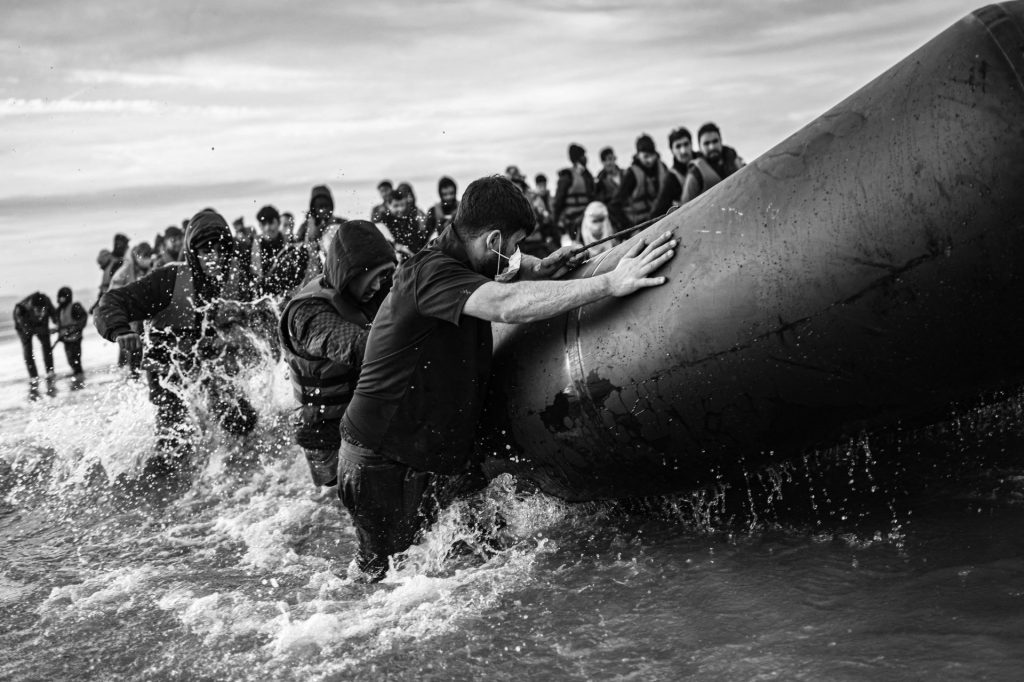
87. The Conservatives subsequently reversed many of those policies and toughened the requirements for bringing family members to the UK. Yet in 2025, 670,000 non-EU immigrants still arrived in the UK, far more than arrived before Brexit.
88. The Labour government has continued this crackdown on new arrivals even though it talks constantly about the need for higher growth. This, in my view, is a mistake – for all Nigel Farage’s rabble rousing about immigrants living off benefits, queue-jumping and swamping the NHS, the fact is that immigrants are more likely to work and earn more than native citizens. The Office for Budget Responsibility calculates that a migrant on average wages pays £500,000 more in tax over their lifetime than they get in benefits. They have more children, but they go on to earn more than other workers and therefore they are net contributors to the state and to the economy. In fact the OBR now says that attempts to bring down immigration are likely to reduce the UK growth rate by about 1.5% by 2028-29.
Suggested Reading
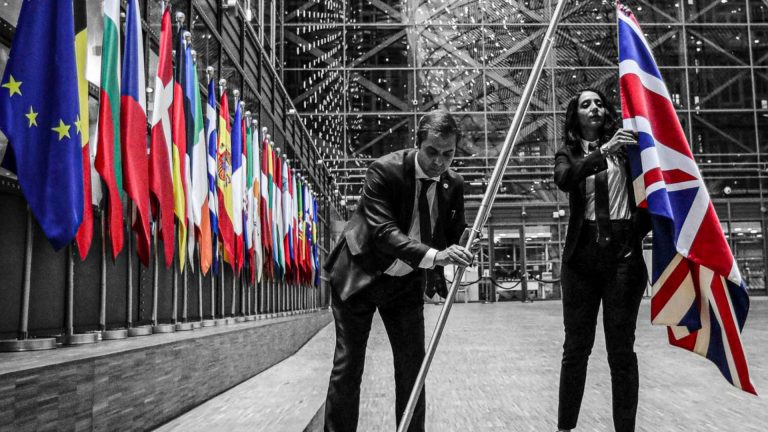
The Brexit experiment failed – now the EU needs Britain back
89. Meanwhile the number of asylum seekers reaching the UK’s shores, many risking their lives in small boats in the Channel, soared after Brexit. It doubled between 2021 and 2024 when 100,000 sought refuge here, the highest level since records began in 1979. One reason for this surge is that post-Brexit the UK can no longer return asylum seekers back to the EU country where they first arrived – we refused to extend the “Dublin Regulation” that made this possible when we were in the EU. This decision to not cooperate with the EU was a purely political one which has meant that far from “winning back control of our borders”, we lost more control of them.
90. In a leaked recording obtained by Sky News in May 2025, shadow cabinet member Chris Philp was heard belatedly lamenting that the UK’s exit from the Dublin agreement meant the UK “can’t any longer rely on sending people back to the place where they first claimed asylum”. Appearing to suggest Boris Johnson’s government was caught out by the fact that leaving the EU meant no longer being a part of its asylum agreement, he went on: “When we did check it out… [we] found that about half the people crossing the Channel had claimed asylum previously elsewhere in Europe.”
Awkwardly for Philp, he couldn’t claim complete ignorance of the Dublin rules, given that as immigration minister in 2020, he was arguing that, actually, leaving the agreement would make it easier for the country to deport those with no right to be here. In August that year, he said: “The Dublin regulations do have a number of constraints in them, which makes returning people who should be returned a little bit harder than we would like. Of course, come 1st of January, we’ll be outside of those Dublin regulations and the United Kingdom can take a fresh approach.”
91. After Brexit the UK also lost access to Eurodac, a large-scale database that contains the fingerprints of all those who apply for asylum in the EU27. This would have allowed Britain to quickly remove any new arrivals who had already had an asylum claim rejected by an EU country.
92. One of the least discussed consequences of Brexit was what happened to the millions of EU citizens already living legally in Britain. Before Brexit they had automatic rights to live and work here under free movement. Afterwards, they were required to apply to the government’s new “EU Settlement Scheme” or risk losing those rights entirely. For many, this was straightforward, but vulnerable groups often struggled badly with the process.
Campaigners warned that Britain was in danger of creating a new “Windrush-style” scandal in which lawful residents could suddenly find themselves unable to prove their immigration status. The problem was made worse by the government’s decision to abolish physical proof of residency and move to a fully digital system instead. There were repeated reports of Europeans being wrongly denied jobs, or being unable to purchase homes because employers and mortgage lenders could not navigate the online checks properly or because technical glitches had wiped their status.
Investment
93. The UK’s economy is dependent on foreign firms coming here to do business. But immediately after the referendum, Foreign Direct Investment (FDI) in the UK fell off a cliff. FDI into the UK in 2018 was worth £49.3bn; in 2017 it had been £80.6bn.
94. Some said this was a knee-jerk reaction while foreign firms tried to work out what was happening, but the trend continued. The National Institute of Economic and Social Research (NIESR) reported that FDI had dropped by 37% between 2016 and 2022 as multinational companies simply relocated operations to the EU to preserve access to the single market.
95. The hit has gone on. EY, the accounting services company previously branded as Ernst & Young, found that FDI projects in the UK had fallen from 1,138 in 2016 to 853 in 2024, a terrifying long-term trend. Our market share of European FDI from other parts of the world has also fallen from 20% in 2015 to under 16% in 2024.
96. When you add in investment by British firms, the picture doesn’t look much better. Overall business investment in the UK is down by 12-18%, if compared with the pre-Brexit trend. And that’s despite massive new tax incentives from successive governments to boost the figure. UK business investment is much lower than in America, France or Germany.
97. Lack of foreign investment has dangerous knock-on effects for productivity. The Office for National Statistics says that while foreign-owned firms account for only around 1.5% of UK businesses, they employ roughly one fifth of the workforce, and spend much more on research and development than British firms and are much more efficient. Firms with inward FDI are 74% more productive than UK firms because they invest more, bring their latest technology, are better at training and far better at management. And their influence stretches into their supply chain, improving the productivity of UK companies that supply them.
Living & working in the EU
98. For many of the approximately 1.2 million Brits who moved to work or live in the EU before the referendum, the result was a bitter blow – not least because those who had been abroad for 15 years or more were refused a vote. Their worries were not assuaged by Boris Johnson’s claim in 2016: “British people will still be able to go and work in the EU; to live; to travel; to study; to buy homes and to settle down.” Everyone knew that Johnson was telling only half the truth (not bad, for him). These things would still be possible, but you would no longer have the automatic right to them – in fact, you would now have to jump through hoops for them.
99. Working in Europe has become more complex. Since Britons can now only stay in the EU without having to apply for a visa for 90 days in any 180-day period, UK expats now need to apply for a visa and/or residence permit. The process is different in each country, as is the availability of work visas. Many of the UK’s professional qualifications are now no longer recognised by the EU’s member states, making the dream of working abroad much more difficult to attain.
100. Clarissa Killwick is one of around 26,000 Brits living in Italy. She was lucky as she moved there before Brexit, but even so the red tape is a nightmare. Of residency permits, she says, “while it is not mandatory for Brits in Italy to have one, it pretty much is if you want to leave your house!” The process is time-consuming and expensive, too: “For a family of three, the document costs came to about €190. Immigration offices are increasingly overwhelmed, and some people are now experiencing extreme difficulty getting appointments, waiting many months for them and waiting several hours when they get there.”
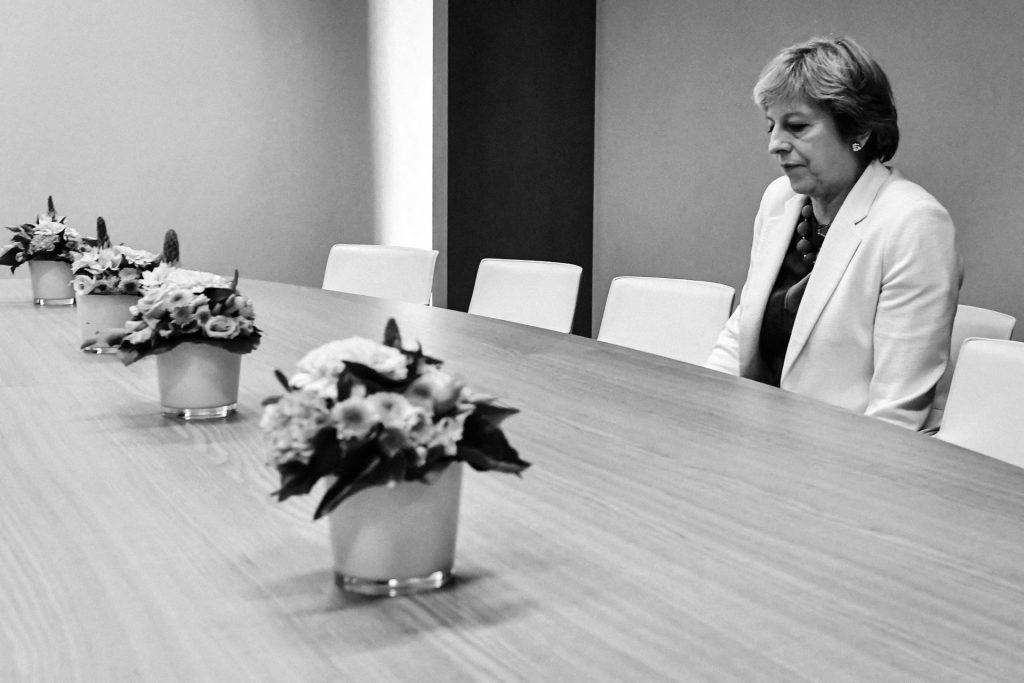
101. Clarissa now campaigns for the rights of British people in Europe and collects horror stories about people who have “been denied access to state healthcare, made to pay for it when they shouldn’t, been barred from applying for a job, been told their residency will be cancelled, been incorrectly processed at borders.” When crossing these, she says: “I am used to carrying my residency card everywhere but when I travel, I also carry printed pages from the border guard’s handbook, just in case.”
102. Imagine you want to move to Spain or France – to work, or to enjoy your retirement. That used to be easy. Now it is most certainly not. To live in Spain, you have to be able to show that you are either earning money or have at least £2,000 a month coming into your account, plus an additional £500 a month for each member of your family. For a family of four, that means £42,000 a year. You will have to change your driving licence, and you will have to have comprehensive medical insurance and a criminal record check. Retirees may be able to apply for free healthcare, with costs covered by the UK. But to qualify, couples need an income of up to €38,000 per year, and they cannot work for pay while they are in Spain. Things are similar in France; you will have to prove you have enough money to live on, you will have to take out health insurance and you will have to apply for a renewable residence permit costing €225 per year.
103. The dream of buying a holiday home in Spain may soon be denied to those who cannot afford to pay double for the privilege. Spanish prime minister Pedro Sánchez is proposing to impose a 100% tax on property bought by buyers from non-EU countries. The government in Madrid is upset that British and American buyers are driving up property prices so much that locals are forced out of the market.
Sánchez said: “In 2023 alone, non-residents from outside the European Union bought 27,000 houses and flats. Not to live in them, but mainly to speculate. To make money out of them. Something that, in the context of the shortages we are experiencing, we cannot afford.” Spain, of course, cannot impose this tax on other EU member states or their population, as that would break EU rules about freedom of movement and the single market. But the UK is no longer in the latter and so can be targeted.
Lost opportunities for a better deal
104. The Brexit campaign claimed that we could have all the benefits of being a member of the EU and none of the costs, which was obviously a lie. But they also suggested, at various times, that we would stay in the single market, be like Norway or even, according to Boris Johnson, “continue to be able to live, work, and study in the EU” with little difference to the way things were before. All of that was achievable, none actually came to pass.
105. The problems started when Theresa May managed to get herself elected Tory leader. A Remain supporter viewed with suspicion by Brexiteers, she tried to suck up to them by declaring her red lines – an end to free movement, leaving the single market and the customs union and an end to any jurisdiction of the European Court of Justice. With one completely unnecessary speech, the PM ensured that the UK’s exit from the EU was going to be much harder than necessary.
106. Before the negotiations even began, the UK had painted itself into a very small corner, with no mandate because the red lines were not what people voted for, and no room to negotiate. As EU chief negotiator Michel Barnier pointed out, May’s red lines meant that the best the UK could hope for was a trade deal like the one offered to Canada. Months of painful talks followed, and Canada was what we ended up with.
107. After failing to get a deal acceptable to her own Brexit-supporting cabinet ministers or backbenchers, May was replaced by Boris Johnson in 2019. He then achieved the nearly impossible feat of being an even worse negotiator than his predecessor. In promising to “get Brexit done” by January 31, 2020, he placed a self-imposed deadline on the talks, which gave Brussels immense power. He then presented his backbenchers with a so-called “oven-ready” deal that May had rejected as unacceptable. In short, he blocked May’s deal to get the top job, and then ended up with an even worse one.
The NHS
108. During the referendum campaign, the Leave side claimed that after Brexit the NHS would be far better because it wouldn’t be overwhelmed by all those queue-jumping immigrants. In fact, the NHS was at the time being kept going by large numbers of immigrant workers. Meanwhile, healthy young European immigrants used it far less than locals and were net contributors to national insurance and tax, so not a burden on any part of the state let alone the NHS, where many worked in the first place.
109. The referendum showed the rest of Europe they were not welcome and the number of new doctors and nurses coming from the EU slowed to almost zero immediately. The recruitment of dentists entered a prolonged slowdown.
110. “Brexit has been delivered… and there is now more than £350m extra a week for our NHS… promise made, promise delivered,” said Michael Gove at the Conservative conference in October 2023. As for the £350m extra a week for the NHS, forget it. The NHS budget has increased but that has nothing to do with leaving the EU. In fact, the economic damage from leaving has meant extra money for health has had to come from higher taxes and borrowing, or from squeezing other spending. Any increase in the NHS budget has been barely able to keep pace with a growing and ageing population, and the country is investing far less than others.
111. The only solution to a shortage of doctors and nurses was to massively increase immigration from Africa and Asia. By 2021, a majority of new doctors came from outside Europe. The number of non-EU doctors rose from 72,000 to 112,000 in six years, nurses from 67,000 to 124,000. This was probably not what the Leave campaign’s backers hoped for. According to the King’s Fund, nearly one in five NHS staff in England now report a non-British nationality, up from roughly one in eight before Brexit.
112. No replacement source of specialist doctors has been found outside Europe, and as a result the NHS has been left short of heart and lung surgeons, anaesthetists and psychiatrists.
113. The situation was even worse in the notoriously badly paid care sector, where successive governments have had to waive visa requirements on skills and pay to keep attracting foreign, non-EU workers.
114. In the care sector, many small firms just cannot deal with the red tape. Asif Yusuf of Live-in Care Friends told researchers for FLEX (Focus on Labour Exploitation), a charity, in late 2024: “Lots of homecare providers are quite small. They are small community-based providers that might only work with maybe 15 or 20 families… So it’s just not worth their while jumping through all the bureaucracy and the hoops.” Costly red tape, visa fees, huge costs, plus increasingly high wage levels for skilled workers and a series of government-enforced quotas for everyone else, have made recruitment all but impossible for many.
115. The UK is now much more prone to medicine shortages than before the referendum. In order to maintain supply, the Department of Health and Social Care has had to agree to pay higher than the previous going rate for 100 drugs per month. Before 2016 it averaged paying over the odds for only 20 drugs per month.
116. Brexit did not allow for the fast tracking of anti-Covid drugs in the UK. In fact, by 2023, nine of the last 20 drugs approved by the EU had yet to reach the UK market. In a similar timeframe, there were no clear recent examples of faster UK approval. Research tracking total innovative approvals also shows the UK lagging behind the EU and US.
117. A report, Nothing Should Stand in the Way, published last year by Cancer Research UK, detailed how the manner in which Britain left the European Union has done just that – stood in the way of the best possible cancer research and care for UK patients. Importing new cancer drugs now costs almost four times as much. For some trials, shipping costs have increased tenfold. Meanwhile, access to European funds and talent has dried up for UK-based cancer research labs.
118. Before Brexit, the UK was fully integrated into a system of pan-European clinical trials, allowing hospitals to take part in large, multinational studies with minimal bureaucracy. Since leaving the EU, the UK is no longer part of the same regulatory framework, meaning trials now require separate approvals, added paperwork, and additional cost. As a result, pharmaceutical companies are increasingly choosing to run trials within the EU instead, meaning the UK’s share of global clinical trials has declined, and with it, access for NHS patients to experimental treatments.
119. Work by the University of Surrey has found that in the three years after 2016, Brexit caused 1,485 additional deaths per year due to EU nurses leaving the UK. As Giuseppe Moscelli, professor of economics and lead investigator of the study, puts it: “Brexit has had real life-or-death consequences for patients in our hospitals. The evidence we’ve gathered shows that the loss of more experienced or skilled nurses has led to a measurable decline in care quality.”
120. Before Brexit, all legitimate sites selling prescription medicine were monitored and publicly listed. There is no longer a trusted way for patients to distinguish between a regulated pharmacy and an illegal operation – because a lot of the rules we used for years, around the supply of medicine and the identification of fake medicine, were introduced by the European Union. Britain was part of the EU’s Falsified Medicines Directive (FMD), a continent-wide system designed to stop fake drugs entering the legal supply chain. Pharmacists could scan a barcode on every pack of prescription medicine and instantly check it against a live European database to confirm it was genuine, untampered with and had not already been dispensed elsewhere. It was one of those effective bits of European cooperation most people never noticed – until we left, and it disappeared. During the Brexit transition period, Great Britain was cut off from the system overnight. The barcodes often still appear on medicine boxes because manufacturers use the same packaging across Europe, but in Britain they no longer connect to the central verification hub. The Royal Pharmaceutical Society warned in 2026 that Britain now has a significant blind spot in its medicines supply chain because there is no equivalent UK-wide replacement. Northern Ireland briefly remained aligned with the EU system under special post-Brexit arrangements, but even that is now being phased out. Olivier Picard, chair of the National Pharmacy Association, said last year: “We’re seeing people get incorrect or swapped medication. Some are injecting pure insulin thinking it’s a slimming drug and ending up in ambulances with life-threatening reactions.”
Suggested Reading
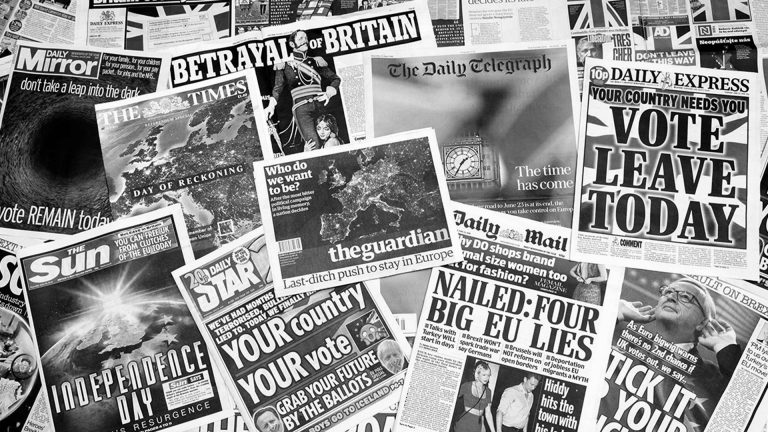
Meet the media Brexit cheerleaders who can’t admit they got it wrong
121. Recruiting very large numbers of doctors, nurses and other health professionals from developing countries will also have had a negative effect on the level of care available in those nations, which can ill-afford to train medical staff at huge expense and then see them leave to prop up Britain’s NHS. The Nuffield Trust think tank found that “since the end of the transitional period, recruitment from World Health Organization-designated ‘red list’ countries has expanded rapidly. This suggests an increase in active recruitment drives, raising ethical questions and opening the system to abuse.” The WHO Red List consists of 55 countries with “critical health workforce shortages”, including Nigeria, Ghana and Pakistan. In short, the effect of post-Brexit NHS recruitment means worse healthcare in many developing countries, and therefore more deaths in them.
Northern Ireland
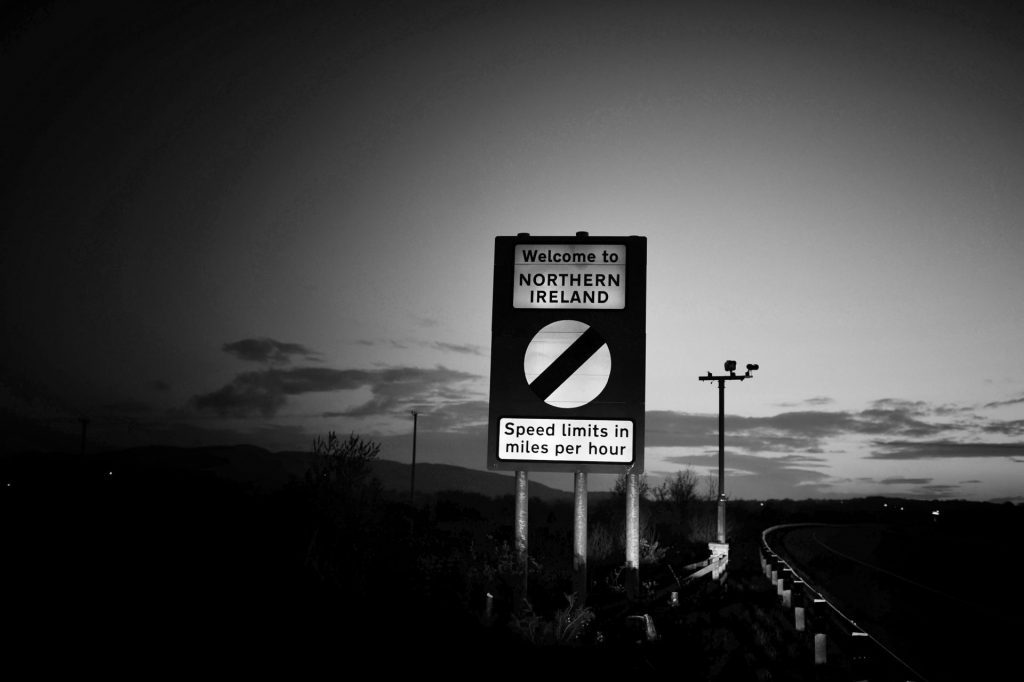
122. On June 23, 2016, the Remain vote in Northern Ireland was 56%. But like Scotland and London (both 62% Remain), those who wanted to stay in the EU were disappointed. Their worst fears – that Brexit would rekindle political tensions and reopen old disagreements over the country’s border with Ireland – have been realised.
123. Under the Good Friday Agreement of 1998 that brought an official end to the Troubles, the two countries on the island of Ireland shared an “invisible” border, with no passport or customs checks. This was jeopardised by Brexit, since the NI/Republic border in effect became one between the UK and the EU. A solution was needed that would not destroy free movement of people on the island while recognising EU fears about cheap goods flooding in unchecked from mainland Britain to continental Europe. Painful negotiation and political wrangling followed, leaving the people of Northern Ireland in the balance.
124. When Boris Johnson replaced Theresa May, his deal with the EU left Northern Ireland in its single market under what was known as the Northern Ireland Protocol. There really was no other way of maintaining peace in Ireland and keeping the border seamless. But this was achieved in effect by putting a trade border between NI and the rest of the UK in the Irish Sea, with all the attendant red tape, form-filling and inspections.
Ironically this left loyalist parties like the Democratic Unionists (DUP) fuming over a deal that it said isolated Northern Ireland from the rest of the mother country, making it more part of the EU than Great Britain. They felt personally betrayed by Johnson who, while negotiating, had told NI business leaders that if there was any border paperwork ahead they could “throw it in the bin”. Johnson also promised the hardcore Brexiteer European Research Group that the protocol would be changed later, and tried to give his ministers the power to undermine the protocol by breaking international law in a “specific and limited way”. This stupid move was eventually dropped but meant Brussels never trusted him again.
125. Rising political tensions over Brexit can be partly blamed for street riots in NI in 2021, and for the suspension of the Northern Ireland Assembly at Stormont between February 2022 and February 2024. When Rishi Sunak became prime minister, he tried to smooth things over with the Windsor Framework, an attempt to reduce border checks, which was agreed with the EU. Sunak then gave the game away by describing Northern Ireland as now having the “best of both worlds” – being outside the EU but inside its single market. This was something that the whole of the UK might have liked to have.
126. The upside of these clumsy arrangements has been that Northern Ireland has been relatively unscathed by Brexit economically. A 2024 University of Bath research paper called Levelling up by levelling down: the economic and political costs of Brexit says: “Our estimates suggest that Northern Ireland has to date not been adversely affected by Brexit. This is not surprising, given that Northern Ireland – unlike the rest of the UK – effectively continues to be part of the EU customs union.” The relative success of Northern Ireland, then, only shows how much better the UK as a whole could be doing if we had stayed in the EU.
127. The report’s authors (Eleonora Alabrese, Jacob Edenhofer, Thiemo Fetzer and Shizhuo Wang) failed to find any downside to the local NI economy, while “Scotland and Wales, by 2022, experienced a notably higher economic cost of Brexit (-8.7 and -8.3 percentage points) compared with England (-6.5 percentage points).” That means Northern Ireland is a perfect example of where the rest of the country might now be if not for the burden of Brexit – up to 8.7% wealthier.
128. Northern Ireland’s Brexit gain has come at the expense of the rest of the UK. Connor Martin, founder of the JAQ Group, a fragrance company based in Randalstown, told the daily News Letter: “We can fulfil EU orders more swiftly and cost-effectively than UK mainland-based competitors who face customs hurdles. In the past year, our export sales to the EU and US have surged +760% YoY”.
InterTradeIreland, established under the Good Friday Agreement to increase economic cooperation on the island of Ireland, says cross-border trade with the EU has soared since Brexit, from €3.5bn in 2016 to €17bn now, an increase of 385% at a time when UK goods trade with the EU generally is still below pre-Brexit levels. A survey by Strategic Banking Corporation of Ireland found that almost two-thirds of small and medium-sized Irish companies have reduced or completely stopped using British suppliers, and more than one third no longer bother selling their products in Great Britain at all.
129. Covid-19 arrived just as Britain grappled with its official exit from the European Union. As it dealt devastating blows to the health and wealth of the country, it was then cynically used by Brexiteers to distract from the damage that leaving was simultaneously doing to the UK economy and to our handling of the pandemic, and to make false claims about the vaccine.
130. Boris Johnson and his government claimed that the UK got a Covid vaccine faster because we had left the EU. Yet it made not one second’s difference to the timing of its approval. Britain could still have approved the vaccine under EU law – individual countries are allowed to use an emergency procedure that lets them distribute a vaccine for temporary use in their domestic market.
131. More than that, when the vaccine was approved, Britain was in a post-Brexit transition period and therefore still subject to EU rules. In December 2020, Dr June Raine, of the UK’s Medicines and Healthcare products Regulatory Agency (MHRA), said: “We have been able to authorise the supply of this vaccine using provisions under European law, which exist until January 1.”
132. Nor was the vaccine a triumph for British medical research over the lethargic EU juggernaut. In fact the Pfizer-BioNTech vaccine was developed in Germany, by scientists of Turkish origin, tested in the US, Brazil, Argentina and South Africa and manufactured in Belgium.
133. The UK’s Covid toll of 3,404 deaths for every million people was worse than the EU average (2,831) and also worse than Italy (3,329), France (2,616), Spain (2,548) and Germany (2,080). Those four countries did not have their top government ministers and top civil servants focused on leaving the EU (and preparations for a possible no-deal Brexit) in the run-up to the pandemic. Sixteen separate pandemic preparation projects were “stopped” or reduced because of Brexit fallout.
134. Since Britain was in the transition period at the start of the pandemic, it was still eligible to join early rounds of an EU scheme to bulk-buy masks, gowns and gloves. It chose not to participate, preferring to go it alone. The VIP-lane scandal was part of the result.
135. The UK’s economic hit from Covid was also larger than that of most of our rivals; according to work by the OBR, only Spain did worse. The UK was easily beaten by the performances of Italy, France, Belgium, Canada, Germany, the Netherlands, Japan and the US. It is hard to avoid the obvious conclusion that Covid and Brexit were a double whammy for the British economy.
136. Recovery rates of GDP growth post-Covid lend weight to the theory. The UK’s GDP growth compared to pre-Covid levels was the third worst in the G7; only Japan and Germany – hit by its own structural problems – did worse. Since Q4 of 2019, the UK economy has grown by 6%, France by 6%, Italy by 7.3%, and Canada and the US by even more. Even the eurozone has outperformed the UK with growth of 7%, amazing considering limping Germany is its largest economy.
Productivity
137. The American economist Paul Krugman once wrote: “Productivity isn’t everything, but, in the long run, it is almost everything. A country’s ability to improve its standard of living over time depends almost entirely on its ability to raise its output per worker.” The UK has long had a problem with its productivity levels; we produce less with the same resources than our economic rivals France, Germany and America. We are 20% less productive than France and Germany, and 40% behind America. But Brexit is making the problem far worse.
138. Almost every negative Brexit impact listed on these pages is a drag on productivity and therefore economic growth. University research, trade flows, investment, logistics, red tape, inflation, trade deals and dozens of other problems small and large hit productivity.
139. Trade, both imports and exports, is also essential to productivity. Having to compete with EU imports with no barriers to their entry to the UK made British firms improve or die. Trying to export to the EU and take on German, French or Italian rivals had the same effect. Immigration of skilled workers filled gaps in the UK workforce and improved productivity; so did access to a larger market that allowed economies of scale, and standard rules and regulations across Europe created a level playing field, boosting trade and sales, and productivity.
140. Low productivity means low growth. An 8% drop in potential growth means that Brexit is costing the Treasury up to £90bn a year in lost taxes, which does not even include the higher spending necessary since Brexit. A hit of 8% to the economy means that on average Brexit has cost every family more than £5,000 a year.
141. The UK only spends £60bn a year on defence and is struggling to increase that amount. Without Brexit we could double defence spending and still have room for tax cuts. Or we could reduce government borrowing by 60% overnight, or cut income tax by 15%.
142. The lie on the side of the bus which said we were sending £350m a week or £18bn a year to the EU (actually it was much less) now sounds like an advert for a very good deal indeed. It also means that the £350m a week can’t have gone to the NHS, because we have lost five times that amount in lower tax receipts.
Regulations
143. “By wresting back democratic control over how our laws are made, we can cut unnecessary regulation.” Dominic Raab (remember him?) said that in 2016. The UK was supposed to leave the EU mired in bureaucracy while we broke free with light-touch rules. That would mean few protections for the environment or workers, but no one would care because our low-tax, free-market economics would soon make Britain the envy of the world. Guess what? It didn’t happen. But why?
144. For the simple reason that the UK needs to sell into the EU’s single market – it is our largest customer by far. And to sell in the EU you have to follow the EU rules which have unified its economies by abolishing dozens of individual countries’ standards and regulations and replacing them all with one EU-wide system. To sign a trade deal with the EU, we had to agree to a “level playing field” provision, meaning we are not allowed to cut our rules, standards and safeguards below a level acceptable to the EU in order to gain a competitive advantage. Singapore-on-Thames died the second the ink was dry on that treaty.
145. The cold light of reality didn’t stop Jacob Rees-Mogg, then the minister for Brexit opportunities (stop laughing at the back) asking readers of the Sun to nominate EU red tape they would like to see the end of, writing: “I implore you all to write to me with the regulations you want abolished – those which make life harder for small businesses, which shut out competition or simply increase the cost of operating”. Rees-Mogg was swiftly told that fulfilling his ambitions would have required employing an extra 400 civil servants in the Department for Business and Trade alone, just to find out what laws there were out there that might be changed. Other departments would have needed even more. In the end, he resigned and the purge of EU rules went with him.
146. The dream of weaker regulation and lower standards also came up against the fact that much of British industry has worked with the EU system for decades and did not want the expense or bother of changing. Few seemed to fancy having to run two separate production lines; one to make products that are compatible with EU rules and one for lower UK standards.
147. Still, the Tory government went ahead and tried to replace the CE mark on all British-made products. CE stands for Conformité Européenne, and appears on everything from your electric toothbrush to your microwave, TV and lawnmower. It shows that the product has been independently tested and conforms to the EU’s vigorous and rigorous standards regime. The Tories tried to create a rival scheme called the UKCA. The theory was that the new tests would be pro-British business, lighter, more flexible and cheaper. What’s not to like? But the fact was the UK industry hated the idea, because the UKCA mark would never have been accepted in the EU, its largest export market by far, and it would cost a fortune to introduce, as all the tests on every single product, component and ingredient would have to be done again.
148. Eventually the Tory government backed down and quietly allowed British industry to keep the CE mark if they wanted. It then shamelessly claimed: “This comes as part of a wider package of smarter regulations designed to ease business burdens and help grow the economy by cutting barriers and red tape.” For a Brexit government to say that Brexit was damaging the economy was quite an admission.
149. One of the new Labour government’s first actions was the very boringly named Product Safety and Metrology Bill. This gave the government the powers to ensure “that the law can be updated to recognise new or updated EU product regulations, including the CE marking”. Now Labour is planning to align UK regulations with EU ones, without even a vote in parliament. It has taken 10 years to realise we could never escape the power of the EU’s single market, but at least now we are being realistic. Having cost British industry years of doubt, confusion and immense expense, it all turned out to be a complete waste of time and effort.
Reputation
150. Brexit has not just damaged the UK’s economy; it has damaged its reputation and its place in the world, too. Billionaire businessman and former New York mayor Michael Bloomberg hit the nail on the head last year when he called Brexit “the single stupidest thing a country has ever done”. International trade expert Adam Posen, head of the Washington-based Peterson Institute and once a member of the Bank of England’s monetary policy committee, called Brexit a rare instance of a country “waging a trade war on itself”. Which gives you some idea of how dumb the rest of the world thinks we have been.
151. Of course, Britain’s reputation in Europe has been damaged, perhaps irreparably. The UK is no longer at the table when the EU makes decisions that it would previously have taken a leading role in shaping and supporting. In return, the UK could muster 26 other countries to support a common position. With its highly regarded diplomatic skills, experienced negotiators and heavyweight ambassadors, the UK with the EU behind it was well respected and listened to. Now we cannot even get in the EU defence fund, when Canada can. As the former foreign secretary David Miliband wrote in an article for the Observer, Brexit has weakened the UK’s international power and influence to such an extent that we need to rebuild our foreign policy relationship with Brussels, or more pithily, “We need to be at the table, not on the menu.”
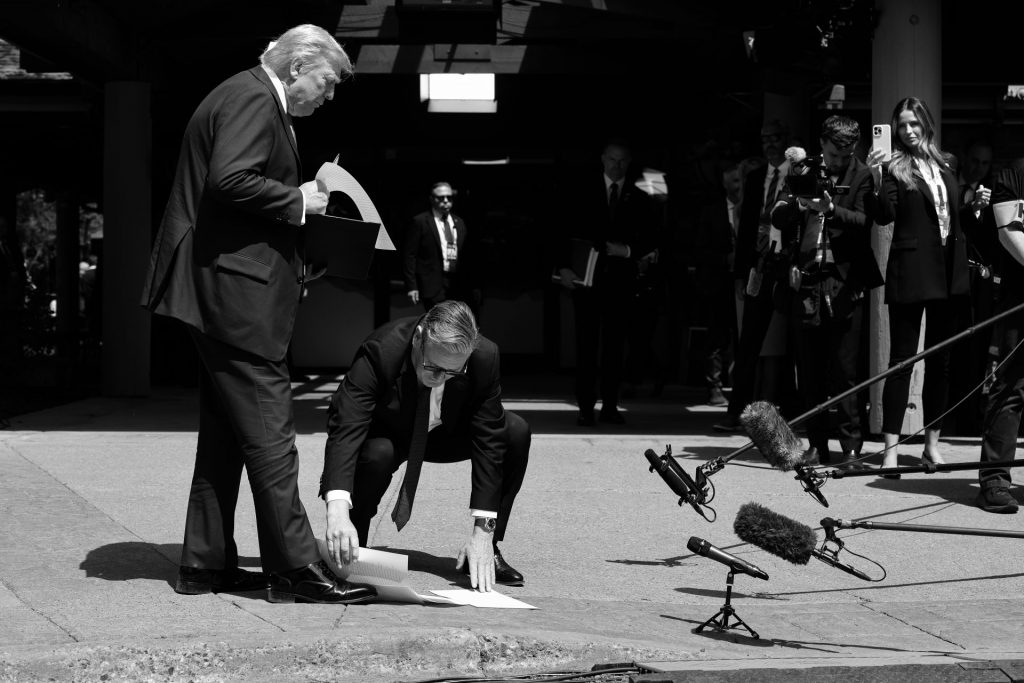
152. The special relationship has become less special for Britain since Brexit. Donald Trump’s ambassador in London, Warren Stephens, recently warned against the UK getting too close to the EU again, telling a Chambers of Commerce conference in London that pursuing closer ties with the European Union would “not be viewed favourably” in the White House. Why we would listen to him or the White House when they have rewarded Brexit with a 10% tariff barrier on our exports, insulted our war dead and undermined Ukraine, it is hard to imagine. But it shows that the UK is now considered a plaything for the American right. No one would have dared or bothered to threaten us like that when we were a member of the EU.
153. Before Trump, a more realistic appraisal from Joe Biden was that Brexit’s threat to the sanctity of the Good Friday Agreement was unacceptable to his White House. His secretary of state, Antony Blinken, went further and described Brexit as a “total mess”, comparing it to “the dog that caught the car and the car goes into reverse and runs over the dog.”
154. As for the Leave campaign’s dream of a new, reinvigorated Commonwealth with Brexit Britain at its helm, this was little more than an imperial fantasy. The fact that the political leaders of Canada, New Zealand and Australia, among others, all told us we would be better not leaving the EU tells you pretty much everything, while not a single Commonwealth nation is in the top 10 of UK trade partners. The Commonwealth is struggling to keep the Commonwealth Games going, let alone relaunch the British empire. The Commonwealth’s total budget including development funding is in the low tens of millions, while the EU has a foreign budget of €110bn over just five years, mainly spent on economic development and other aid.
155. Brexiteer dreams of a CANZUK alliance between the UK, Canada, Australia and New Zealand have similarly come to nought. The idea that this would create an economic superpower was always bizarre, given the first three members of CANZUK amount to less than 1% of the world’s population, with which the UK does just 3.5% of its trade, and its members would be divided by both the Atlantic and the Pacific. That didn’t stop Kemi Badenoch giving it her wholehearted support, claiming that “Our four nations have shared strengths in goods, services, and defence. By working more closely together, we can combine these collective strengths to boost our economic growth and our national security.” It was left to Kevin Rudd, the former Australian PM, to say that CANZUK would not “come within a bull’s roar of Britain’s adjacent market of 450 million Europeans” before, in his beautifully Aussie way, describing the idea as “bollocks”.
The reset
156. Attempts to ameliorate the worst effects of Brexit have been weak and half-hearted. Labour’s so-called Brexit reset means well but is going to make virtually no difference. Even the government’s own calculation shows that the few things it has negotiated with the EU – like rejoining the Erasmus+ student exchange programme and removing food and agriculture tests – will add just 0.3% to UK GDP over five years. That is barely noticeable against the most recent estimates that Brexit has cost 8% of the UK’s GDP. You would need 26 resets to fill the gap.
157. The most heralded part of the reset is a deal on sanitary and phytosanitary (SPS) standards for food and agricultural products, which should help to smooth the export of such products to the EU. It will help reverse the collapse in food exports to the EU, which the Food & Drink Federation says have fallen by a third since 2019. Together with an agreement on the energy market, the SPS deal is calculated to save £8.9bn in red tape by 2040.
158. But even the SPS deal is not without controversy. Part of the price of agreeing it is an extension of EU fishing rights in UK waters. It is another Brexit kick in the teeth for the British fishers, who believed leaving the EU would solve all their problems.
159. The rest of the reset involves rejoining Erasmus+ (ludicrously attacked by the right wing press as an attempt by Brussels to “brainwash” our youth), loosening entry checks at EU ports and airports and a potential deal on carbon pricing, which would stop British exports facing tariffs. But that is about as far as the “reset” goes. Little surprise, then, that the Commons Foreign Affairs Committee found that “the government’s reset is languishing, suffering from a lack of direction, definition and drive”. And that “it feels as though we are on a journey with no clear destination.”
Science & tech
160. The UK has many economic weaknesses, but its science base is one of its strengths. Many industries benefit directly and indirectly from the excellent research and knowledge base in our universities, companies and other bodies. But that science base is not indestructible and is to a large extent dependent on government support and international cooperation. Once again the Leave campaign just bulldozed through the worries of the science community by claiming, “If we vote Leave, we will be able to increase funding to science and still save billions”. This was always a lie. Brexit has cost us a small fortune, damaged our ability to fund scientific research and bulldozed strong bonds of cooperation across Europe.
161. Pre-Brexit, the UK was bad at funding its science base but rather good at winning EU money to pay for research, and attracting foreign researchers to the UK. British universities relied on the EU for 11% of their research funds, and for elite institutions like Manchester University and Oxford the figure was much higher. Which was why everyone in the UK science sector was delighted when Boris Johnson’s Brexit deal turned out to include provisions for the UK to stay in Horizon, the EU’s scientific research fund that doled out these payments. But then in January 2021, Johnson threatened to tear up UK/EU agreements on the future of Northern Ireland, and Brussels reacted by blocking payments to UK scientists.
162. Instead of apologising, the UK threatened to act tough. Liz Truss said she would take the EU to court and even tried to set up a rival science fund called Pioneer using the money that the government would have sent to the Horizon scheme. Rishi Sunak seemed to have broken the Horizon logjam by backing down and signing the Windsor Framework, which guaranteed the UK would keep its word on NI, only for the British government to start haggling on how much money it owed Horizon. A deal was not completed until January 2024, after three wasted years.
163. Professor Bart De Strooper from the UK Dementia Research Institute at UCL was in no mood to cheer. He told the Guardian: “There is little reason for celebration for something that should have happened years ago. For the past few years we have faced complete uncertainty about what is happening in key research areas. Britain used to dominate the Horizon programme, and it will take a long time to get back to such a position.”
164. Evidence to support that fear comes from the Scientists for EU campaign, which found that after 2016, the value of grants the UK won from Horizon fell by some £1.5bn compared with the trend before the Brexit vote. Not only that, but having consistently tied in first place with Germany for the number and size of grant awards, by 2020 the UK had fallen to fifth place behind Germany, France, Spain and Italy, and only just ahead of the Netherlands.
165. The UK is now struggling to attract and retain the best researchers from around the world. Brexit has also reduced the number of EU students at British universities by at least 50%, while many UK researchers have been pushed into the arms of Chinese universities, which are well funded and (many Brexit backers would claim) suspiciously keen to pick our brains. Sir Iain Duncan Smith, a huge Brexit fan, claimed China “sees the university system as a vulnerable strand of British intelligence”.
166. If you think this is all a minor problem for eggheads in the groves of academe, please read the report from Cancer Research UK last year that found “Brexit and uncertainty about the future UK-EU relationship have had a significant negative impact on UK-EU collaboration in recent years,” and that “the challenges currently being faced are having a direct negative impact on people affected by cancer”. It seems that Brexit has killed more cancer patients – not something you saw on the side of that bus.
167. One of the more ignored but increasingly significant consequences of Brexit surrounds how the protection of our personal data is regulated. This has the potential to affect the seamless flow of data between the businesses, organisations and governments in the UK and the EU. Though the UK has largely retained EU-style General Data Protection Regulation (GDPR) rules, it is now legally classified as a “third country”. While the two sides eventually agreed a temporary “data adequacy” decision in 2021, allowing personal data to continue flowing freely, this arrangement is not guaranteed in the long term. The European Commission has warned that the agreement can be scrapped if UK data protection laws diverge too far from the EU framework, and it already contains a “sunset clause” requiring renewal after four years.
168. Why does all this matter? Because modern trade is heavily dependent on data movement. If the current agreement broke down, firms wanting to transfer personal data from and to the EU would face significant compliance costs and legal uncertainty. And because a 2020 ruling by the Court of Justice of the EU invalidated an agreement on data privacy between the EU and the US on the grounds that US surveillance laws undermined European privacy protections. If the EU were to determine that UK intelligence services have too much access to personal data, then our adequacy agreement could also be challenged in court.
169. This is particularly relevant to the AI market, whose systems depend on uninterrupted, cross-border data flows and long-term regulatory certainty for their infrastructure and model training. When a country like the UK sits on a conditional arrangement, it runs a higher risk of sudden change, and that kind of uncertainty raises costs and discourages investment.
Scotland
170. Scotland voted by 62%-38% to Remain, but got shafted by Brexit anyway. Its Office of the Chief Economic Adviser says Brexit trade barriers alone have damaged the national economy by £4bn per year. Changes to investment levels, productivity and immigration have cost it more.
171. Scottish exports are estimated to be 7.2% or £3bn lower per year compared with a model in which the country had continued its EU membership, with the biggest hit being to the chemical and pharmaceutical sectors, followed by computing and electronics. The agriculture and food sector has lost some £827m.
172. Scotland and Wales, both more dependent than England on their agricultural sectors, will suffer disproportionately from the trade deals negotiated with Australia and New Zealand. Those countries’ massive farms can produce beef, lamb and dairy products at a lower cost than our farms – 10-30% cheaper, according to the Scottish government. Their products will be arriving tariff-free in increasing amounts over coming years.
173. There has also been a damaging impact on Scotland’s shellfish industry, particularly for producers of live molluscs such as mussels and oysters. When the UK left the EU, it became a “third country”, meaning exports of these shellfish from anything other than the cleanest waters (or without prior purification) were in effect banned from entering the EU, a restriction that did not apply before. This was hugely significant as the industry is heavily export-dependent: around 60-80% of UK shellfish is normally sold abroad, largely to EU markets. UK shellfish exports to the EU fell by 92% between December 2020 and January 2021.
‘Scotland voted 62%-38% to Remain, but got shafted by Brexit anyway. Trade barriers alone have damaged its economy by £4bn per year’
174. Scotland has lost out on vital EU funding for infrastructure projects and the arts. The government put the shortfall in replacement EU funding promised by Brexit-supporting London governments at £337m over three years.
175. Despite all the complications of a hard border between England and Scotland, the SNP is still standing on a platform of rejoining the EU after Scotland gains its independence. So much for Brexit strengthening the union. Rejoining the EU was supported by 73% of Scottish voters in a recent opinion poll.
Services
176. Around 80% of the British economy is not made up of farming, fishing, mining or even manufacturing, it consists of services. Everything from architecture, accounting, and auditing, to advice on how best to run a zoo and everything in between. It is what the UK is now best at – we are the second largest exporter of services in the world, after the US. The EU is our largest export market by far. But while Brexit was supposed to boost services, allowing us to roam the world free from the constraints of Brussels, selling our expertise globally, the reality has been starker.
177. As recent research by the LSE has found, “Since Brexit, UK services exports have grown more slowly than both global services exports and those of comparable economies.” The research reveals that “UK exports to the EU in Brexit-affected services have declined by 15.8% relative to other bilateral trade flows.”
178. Crucially, this loss in EU market share has not been replaced by increased share in markets outside the EU – so much for Global Britain. Basically, Brexit has hit our most successful industry hard, costing us a small fortune in lost business that has not been replaced by new markets elsewhere. But why is this happening? The answer, as with manufacturing, is that services are an integral part of the EU’s single market. Lose membership of that and doing business across the EU becomes more difficult and, in some cases, impossible.
179. To give just two examples, there are numerous German restrictions on the ownership of legal firms. It refuses to admit anyone from outside Switzerland or the EEA to the German bar. In France, professional biologists have to be citizens of the EEA. The list is almost endless, and each example is another part of a huge European services sector that is now closed to UK firms unless they spend time and money getting around them, for instance by hiring only local staff rather than UK citizens.
180. The trade deal that the Johnson government negotiated leaves the services sector handicapped by problems like residency requirements, licensing restrictions, and the lack of mutual recognition of professional qualifications. The British Chambers of Commerce, in a 2024 survey of its members, found that the biggest post-Brexit barriers are customs procedures and limits on the movement of people, problems that affect SMEs “disproportionally”.
181. In many areas the UK has also lost “passporting rights”, where every country in the EU recognises and accepts the standards of regulation in every other country as equivalent to their own. Since UK regulation is no longer accepted across the EU, firms have had to get round the problem by having separately licensed entities in every country where they want to do business. Not impossible, just expensive and time-consuming – and before Brexit, totally unnecessary.
182. The sector has also been hit by the different travel requirements post-Brexit, with UK business travellers having to comply with the different regulatory regimes of each member state. These cover things like what business activities you can carry out and how long you can stay in each country. They vary considerably.
183. Also, Brexit ended the automatic mutual recognition of most professional qualifications; they now must be negotiated sector-by-sector. The government wants to renegotiate this aspect of Brexit to “help open up markets for UK service exports”. But the European Commission has not committed itself to that because the UK has its own visa restrictions on EU workers. Talks continue.
Skills shortages
184. Brexit almost immediately led to a shortfall in the UK’s labour force as we slammed the door in the face of all those Polish plumbers and Belgian baristas. Even before we officially left the EU, the effects were obvious – there was a decline of 30% in EU-born construction workers between 2019 and 2020. By 2023 we had lost 330,000 people, mainly low-skilled Europeans eager to do the jobs Britons don’t fancy – because of Brexit.
185. Now the construction industry, which is supposed to be leading a building boom, finds there are 140,000 job vacancies with no one to fill them. The hospitality industry has 132,000 vacancies, with pubs, bars, restaurants and cafes closing all the time. Transport and warehousing lost 8% of their workforce, retail 3% and construction 2%.
186. New regulation means the minimum salary requirement for a skilled work visa is increasing from £26,000 to £38,700, rendering junior and some mid-level jobs in the hospitality trade unworkable. As Josh Barrie wrote in 2024: “It is well-known that too few Britons see hospitality as a long-term career. On the continent, in the likes of France and Italy in particular, cooking and front-of-house jobs are lauded, celebrated and revered. Here, a stigma sticks, one that leads far too many to view pulling pints or serving risotto as a stop-gap sort of job for students and the like. A broader change in mindset would be welcome.”
187. Farms that used to rely on EU workers coming here freely to pick their crops now have to apply for UK seasonal worker visas for their labourers, many of whom come from developing countries. The visa costs alone are £340 per worker.
188. Brexit has also created acute shortages in sectors that rely on highly specialised, often short-supply skills – areas that are far harder to fill domestically. The UK’s food-processing industry, for example, has reported persistent gaps in skilled butchery roles, with the British Meat Processors Association industry body warning of a shortage of around 15,000 workers in the years immediately after Brexit.
189. These became so severe that by 2021 and early 2022 more than 35,000 healthy pigs were destroyed and disposed of on British farms because there were not enough butchers and abattoir workers to process them. Abattoir capacity fell by as much as 25%, creating a huge backlog of animals trapped on farms. As the delays mounted, many animals became too large for standard supermarket specifications and commercially unsellable. Farmers were left with soaring feed and energy bills while perfectly healthy livestock could not enter the food chain. Because many of the pigs had to be culled on farms rather than in approved slaughterhouses, the meat often could not legally be sold for human consumption. The Environment, Food and Rural Affairs (Efra) Committee later identified the pig cull as one of the clearest examples of Brexit-related labour shortages colliding with Britain’s food supply chain.
190. If you think the answer is for UK firms to spend more on training, you may be right – but the opposite is happening. In 2024, UK employers spent £50bn on training, compared with £65bn in 2011. Which is why the UK is so dependent on skilled workers from abroad, and many of those skilled workers are European. Even after Brexit, 13% of all factory machine operators, 10% of all science, engineering and technology jobs and 8% of all construction positions are filled by EU immigrants. Meanwhile, non-EU immigration has soared since Brexit. So much for EU citizens squeezing Brits out of work; they have just been replaced with immigrants from elsewhere. Some 22% of care workers, 21% of health workers and 16% of cleaners are non-EU immigrants.
Sport
191. Brexit has made it harder for British clubs to recruit players from EU countries. In the country’s national obsession, football, this means that clubs are now banned from bringing in European players under the age of 18. Others must qualify for a visa under what are known as Governing Body Endorsements (GBE) and, for English clubs only, Elite Significant Contributions (ESC). These are based on how many appearances players have made for club and country. Some consider this a good thing as it offers more opportunities for British talent. But for smaller clubs it has removed a way to improve quickly while adding extra layers of cost that bigger outfits barely notice.
192. Brexit has not just hit the ability of EU sportspeople to get work permits to play for British teams, but also left UK coaches unable to take opportunities abroad.
193. In 2024 Andy Mangan, a coach at League One Stockport County, was approached by Spanish giants Real Madrid to join their coaching staff. Mangan was apparently highly recommended to the manager, Carlo Ancelotti, by his son, Davide, with whom the Englishman did his coaching course. Mangan had signed a contract, started to learn Spanish and travelled to Madrid to start looking at potential schools for his children. And then… Brexit intervened. Mangan was denied a visa. There’s a happy ending: Mangan is now an opposition analyst for the Brazilian national team. But what an opportunity to have missed.

194. Jude Bellingham, himself a Real Madrid player, and Conor Gallagher, when signing for capital rivals Atlético Madrid, applied for and received Irish passports in order to bypass rules that limit La Liga teams to a total of five non-EU players in their squad and three on match days. And in 2024 the former England international Steven Caulker was forced to resign from his role as player-manager at FC Málaga City after running out of patience with a lengthy wait for a visa.
195. Sports stars are also not immune to the travel difficulties experienced by other UK citizens as a result of Brexit. After waiting two-and-a-half hours at passport control upon arrival for the 2026 Belgian Darts Open, world number 13 Chris “Hollywood” Dobey said: “I think we shouldn’t have left the EU, I think that’s the big problem. It’s the same for most of the British lads.”
Tourism
196. Brexit has made life more difficult for the British tourist industry. While there are mixed messages on overall visitor numbers since the UK officially left the EU – the Covid years were a write-off, 2023 was a bad year and 2024 better – there can be no doubt that a combination of tougher border rules and a lack of foreign workers for Britain’s hospitality sector have been deeply challenging.
197. School trips to the UK have been devastated by Brexit. Since we officially left the EU, its citizens now need a passport to enter when they used to need just an identity card, and a combination of cost and extra time spent at borders has made British visits less attractive.
198. In 2025, the UK only managed to attract 76% of the number of students who arrived in 2019. The biggest drop has come in students from Italy and Spain, the big winners at our expense are Ireland and Malta. Clarissa Killwick, an English teacher living in Italy, told me: “School trips to the UK were hugely popular, but they are much more difficult now because of the passport and visa requirements. Knowing how much Italians love the UK, this seems a tragedy to me, and impacts UK businesses.”
199. In addition to having to use separate immigration queues at borders, EU visitors to the UK now need an electronic travel authorisation (ETA). It costs £10 and is to be increased to £16. As the International Air Transport Association puts it, “It makes no sense to discourage visitors with high costs even before they set foot in the country.”
200. Up to 120,000 EU staff left the British tourism and hospitality industries after Brexit, so the sector is now trying to cope with huge staff shortages, especially in rural areas. The Office for National Statistics (ONS) has found the industry is short of – you guessed it – 120,000 workers.
Suggested Reading
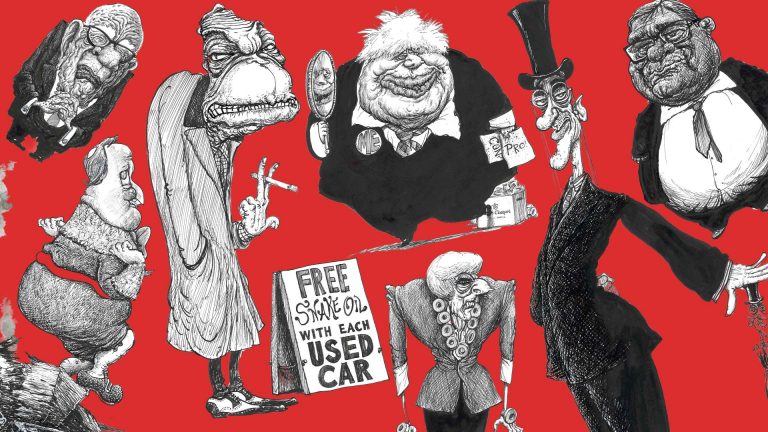

The 13 people most to blame for Brexit
201. For instance, in the Scottish Highlands and Islands, staff shortages have been reported by 45% of tourism businesses, due to the loss of freedom of movement. Travel and tourism is the third largest employee in the UK and contributes £93bn to the economy. But ambitious expansion plans are unlikely to be successful as the UK is now more difficult to visit, more expensive, and short of workers.
202. One of the biggest hits to the tourism industry was actually a pre-Brexit problem that leaving the EU has just made worse. The fact that foreign visitors to the Schengen area only need one visa to visit numerous countries makes it an attractive option for, say, Chinese tourists. But if they want to come to the UK too, they need another visa, costing another £135 – plus they have to go through our customs and border controls. So, they stay on the continent and spend all their money there. Research by tourism shopping tax refund company Global Blue finds only 42% of Chinese tourists visiting Europe are planning to come to the UK too, down from 70% in 2019.
203. The last Tory government compounded this problem by ending tax-free shopping for foreign tourists in 2021. Why come to the UK to shop when it is VAT-free in the rest of Europe? Meanwhile, UK/EU visitors have increased their tax-free shopping in the EU by 30%.
Trade
204. During the referendum campaign, Michael Gove said: “There is a free trade zone stretching from Iceland to Turkey that all European nations have access to… after we vote to leave we will remain in this zone. By being part of that free trade zone we would have full access to the European market but we would be free from EU regulation.” It is interesting that Mr Gove used such vague and ambiguous terms, because what people thought they would get and what was negotiated bear no resemblance. The reality is that the UK’s trading relationship with the EU is much worse than it was. Borders have been erected, red tape introduced, checks enforced and charged for, and as previous chapters have demonstrated, a whole host of barriers and problems have been placed in the way of cross-border trade. We also have to obey EU regulation to the letter if we want to sell there, and have found changing our own regulations to be pointless and worthless.
205. The EU was and remains the largest export market for the UK and it is also the largest source of imports. But the trade data shows that Brexit has damaged that trade and reduced it significantly. Analysis by Aston University revealed “a 27% drop in UK exports to and a 32% reduction in imports from the EU, and a 33% decline in the range of goods the UK trades with the EU.” While the UK Trade Policy Observatory says: “Our estimates suggest that the TCA [Trade and Cooperation Agreement] has reduced UK exports to the EU by 15% and imports by 32%.”
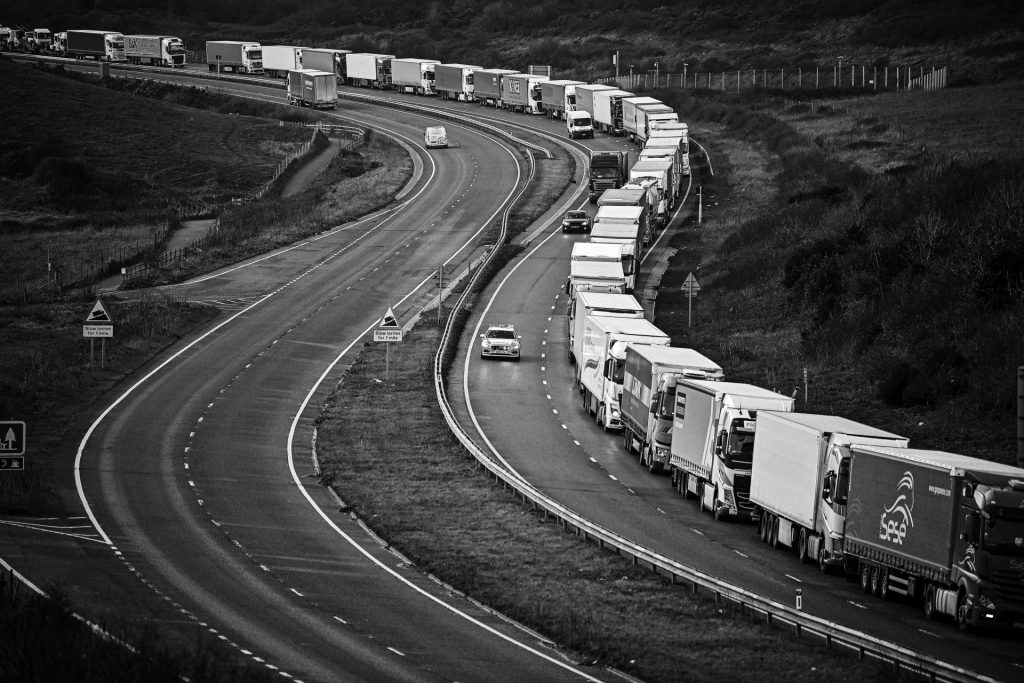
206. Trade with other areas of the world has failed to fill the gap. As the Centre for Economic Performance (CEP) makes clear: “New trade agreements with third countries cannot compensate for the reduced access to the EU’s single market. ‘Global Britain’ as a strategy for international trade is a fantasy.” One of the principal reasons for that is the “gravity” model of international trade, which shows that countries all do much more trade with their nearest neighbours than with countries further away. Getting a trade deal with New Zealand is therefore nice, but nothing like as important as one with Belgium.
207. Marks & Spencer chairman (and former Tory MP) Archie Norman said in 2024: “In Ireland, our food business there is good business, but we don’t make much money out of it because of the border controls. It’s not just the 700 pages of text, we have to keep all the documentation that goes with our wagons into the Republic of Ireland for six years in a warehouse. So we rented a warehouse to store these bits of paper that nobody looked at in the first place. I mean, you wouldn’t believe it, but it is quite extraordinary.”
208. It has been even worse for smaller firms, many of which took one look at the problems Brexit imposed and decided the game was no longer worth the candle. The CEP estimates that exports by smaller firms have fallen by 30% and “perhaps around 20,000 have stopped exporting goods to the EU entirely under the TCA.” Lower trade volumes was one of the principal reasons that the OBR put the damage from Brexit at up to 4% of GDP, an estimate that has now been doubled by other studies.
209. In 2023 Cluny Lace, a Derbyshire firm that had been making high-quality lace for 250 years, as used on the Princess of Wales’s wedding dress and for clothes worn by Jennifer Lopez and Pamela Anderson, was hit with a £10,000 demand for import duties as a result of post-Brexit rules. “We have spent more than 200 years building our business, fought for 30 years against the global textile trend of moving to the Far East, and have now been killed off by our own side in a couple of years,” said its managing director, Charles Mason. “We all lose.”
210. In 2024 the flower wholesaler Tom Brown Wholesale said new post-Brexit border checks cost the business between £200,000 and £225,000 a year. Co-owner John Davidson said at the time that the extra bureaucracy was hitting smaller firms the hardest when importing fresh goods through EU customs.
211. And nowhere is freshness more vital than when importing seafood: in 2021, Scottish shellfish exporter Angelbond said a truck carrying langoustines took 48 hours to reach France after Brexit delays, ruining the freshness of the produce. Owner Ronald Scordia said: “We lost a lot of money.”
212. There was one positive, though, in 2024: Boris Johnson’s appalling book Unleashed went on sale late in continental Europe because shipments were delayed by red tape that didn’t exist before we left the EU. A staffer at Waterstones’ central Brussels branch told Politico: “It didn’t arrive and it’s because of Brexit. It’s ironic.”
Travel
213. Before Brexit, travel in and out of the EU was easy. UK travellers could use the EU lanes and e-gates at airports, passports did not need to be stamped and you were highly unlikely to face a grilling from border guards. Now all that has gone, and Britons are treated as “third-country nationals”. We need to use non-EU lanes, can’t use EU e-gates, must have our passports stamped and often are asked about where we’re staying. There is a suggestion that queue times have increased by a minimum of 20 minutes.
214. You can no longer just visit the EU whenever you want. You can stay in the Schengen area for only a total of 90 days within any 180-day period. Brits travelling into the Schengen zone must have a passport issued within the last 10 years, and it must be valid for at least three months after your planned departure date. By contrast, EU nationals crossing internal borders within the Schengen area usually don’t have to show a passport at all – although you are obliged to carry one, or a national identity card.
215. The EU’s Entry/Exit System (EES) started on October 12, 2025. It requires biometric information from travellers entering the Schengen area (the EU countries minus Ireland and Cyprus, but plus Iceland, Liechtenstein, Norway and Switzerland). So you need to supply a photograph and fingerprints. Its introduction proved to be a mess, with long queues at some airports and British families reporting missed flights home from Paris, Milan and Tenerife because of large queues and defective or inactive terminals where the biometric information can be registered. Michael O’Leary, the opinionated chief executive of Europe’s biggest airline, Ryanair, has called the EES “a shitshow and a shambles”, and a punishment for Brexit.
216. At the time of writing – April 2026 – EES had yet to be introduced at Dover, our largest port, because the French were not yet ready. That’s despite a £40m spend on Dover preparing for the new tests.
217. Eurostar has had to buy 49 EES terminals for St Pancras, at a cost of £8.5m, and Eurotunnel has installed more than 100 terminals and new border facilities at a cost of £70m.
218. In February 2025 Andrew Pierce, the Daily Mail columnist and GB News host formerly known as “Tory Boy” on Good Morning Britain’s political slot, posted on X: “1 hour & 50 minutes from arriving Madrid Airport to getting into seat on @Iberia plane. Appalling service”. Since Pierce was a keen Brexiteer and had posted in January 2018: “When we leave EU next year free movement of people should end at the same time”, the responses were not kind. The best was a poem that read: “Roses are red, Your passport is blue, Now stand over there, In that very long queue”.
219. More is to come with the EU’s ETIAS system being introduced. This is a new visa-waiver system similar to the US’s ESTA scheme, and could start at the end of 2026. It will mean British citizens will have to register online before travelling to mainland Europe. The cost will be £20 per application, renewable every three years.
220. Want to take your dog, cat or even ferret to the EU? Get out the credit card. Thanks to Brexit and our botched exit deal, every animal now requires a health certificate, average cost £230, and you need to pay again before you come back from the EU, for a worming tablet and a vet’s signature, average cost £50. The AHC is good for just one visit to the EU. Want to come back for the day and then return to France? That will be another £230. Everywhere else including lucky old Northern Ireland still uses EU pet passports, but England, Scotland and Wales left that scheme after Brexit. The reset is supposed to solve this expensive farce, but for now it goes on.
221. The UK leg of the Orient Express, the setting for Agatha Christie’s famous novel, scrapped its British leg in 2024 – and the culprit was Brexit. Travellers on the Venice Simplon-Orient-Express (VSOE) had previously been able to depart London’s Victoria station for Folkestone on a British Pullman service, boarding a coach to cross to France and joining a train in Calais. But in 2024 Belmond, which operates the route, said it was “adjusting operations” due to “enhanced border and passport controls”.
Universities
222. Brexit, and tougher rules imposed on Europeans wanting to study in the UK, has meant a massive reduction in the number of students from the EU coming to UK universities. Within two years of ending free movement, the number of EU students at UK universities fell by 51%. Postgraduate student numbers from the EU also fell by 43%, many of whom would have stayed in the UK and taken highly paid and productive jobs. Taken together, these were a big blow for unis that had come to depend on a steady flow of young Europeans.
223. Universities coped by pulling in far more foreign students from outside Europe – 430,000 in 2022-23 alone – who were willing to pay higher tuition fees, but who boosted the immigration figures. Now, in a panic, the government has restricted the ability of foreign students to bring family members with them, cut the time they will be able to stay in the UK after graduation, imposed higher English-language standards on students and is, from 2028, adding a levy of £925 per student. It’s going to make attracting foreign students even harder for Britain’s university sector. How long will it be before some unis fail?
224. Brexit has also had a devastating effect on the world-beating UK research system, much of which is based at universities. The EU used to be a vast source of talent for the UK to pull from, but now, as a report from Cancer Research UK puts it: “The UK’s upfront immigration costs now vastly exceed other leading research nations, so the UK is struggling to compete. EU countries can more easily attract talent from the EU due to free movement, and from non-EU countries due to their relatively low visa costs.”
225. Because of a stand-off with the EU over Boris Johnson’s lies about Northern Ireland, UK universities were frozen out of Horizon, a multibillion-pound European research fund that is also open to countries like Canada and New Zealand. Britain was historically the second most successful bidder for funds from Horizon’s £80bn annual budget, getting more back than it paid in. Now back in, we have dropped to being the fifth most successful country in the programme and are playing catch-up.

226. A similar situation occurred with the UK leaving the Erasmus+ scheme after Brexit. This allowed almost 10,000 students a year to study in another EU country. Now we are to rejoin in 2027 at a cost of £570m a year. But during our exile, up to 70,000 students lost a valuable chance to study and learn abroad.
227. And not only this, but now degrees from British universities are technically worth less: previously, UK graduates – such as lawyers and doctors – could rely on EU-wide systems that allowed them to work across member states with minimal additional barriers. But since leaving, the automatic recognition of these British qualifications has ended, meaning graduates must now apply country by country and, in some cases, retrain or sit further exams. As highlighted by the Law Society of England and Wales in May 2025, there is now in effect no overarching system in place between the UK and EU. As a result, career pathways that once extended across Europe have become more limited, with UK graduates facing greater cost and uncertainty when trying to use their qualifications abroad.
228. And the replacement for Erasmus very much fell short of meeting the needs of students studying abroad. The UK’s Turing Scheme was designed to provide similar opportunities, but in practice it introduced new financial instability. In one reported case, a UCL student on a year abroad was left £2,000 in debt after delays to their Turing payments, forcing them to cover essential living costs without the promised support – a clear shift from the more reliable funding structure under Erasmus.
Wales
229. Wales was slightly more enthusiastic about Brexit than the whole UK – 52.5% voted Leave, compared with 51.9% across all four nations. It’s sadly ironic, then, that it should be feeling its negative effects more than the UK as a whole. Last year, the Welsh government’s cabinet secretary told the Senedd that “the Welsh economy has been disproportionately impacted by Brexit because it’s more reliant on exporting to the EU compared to the UK as a whole.” The EU accounts for 58% of Welsh goods exports, compared with 48% of UK goods exports.
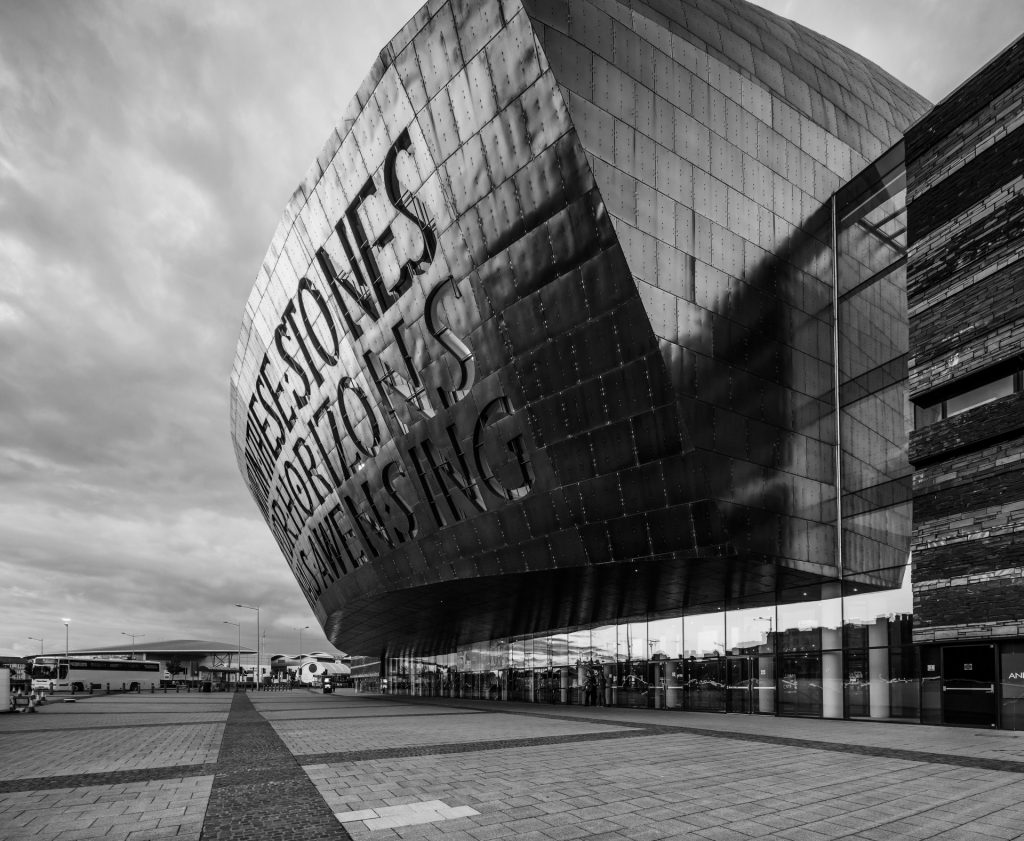
230. Wales was also misled by Brexit promises of more regional funding than even the EU had provided to what is one of Europe’s poorest regions. But Tory governments failed to keep those promises. By 2022 the Welsh government put the shortfall in funding at £772m and an additional £243m in lost agricultural support. In all, Wales has suffered more than £1bn in lost support.
231. There is another Brexit hit coming for Wales. Like Scotland, its large farming sector faces stiff competition from Australian and New Zealand megafarms importing cheap lamb and other meat to the UK, but quotas are in place, above which a tariff is paid. The quotas are gradually increasing, and by 2038 the tariffs will have been lifted completely.
‘Wales was slightly more enthusiastic about Brexit than the whole UK. And it is feeling its negative effects more’
232. Brexit has also had an impact on Wales through the disruption of its role as a key transport land bridge between Ireland and mainland Europe, centred on the Port of Holyhead. Pre-Brexit, this route allowed Irish goods to travel quickly via Wales and across Britain into the EU. However, new customs checks and regulatory barriers made this route less attractive. Evidence from the Irish Maritime Development Office shows that traffic using the UK land bridge fell sharply after Brexit, with the share of Irish roll-on/roll-off freight going via Britain dropping from 84% to 67%, while direct Ireland to EU routes expanded significantly.
Suggested Reading

Ten years of Brexit: The lessons of a low, dishonest decade
At the same time, the number of Irish trucks using the land bridge fell by 50% in early 2021, as companies sought to avoid delays and uncertainty. This had clear consequences for Welsh ports: lorry traffic remains on average around 20% lower than pre-Brexit levels (2019), despite partial recovery in recent years. The overall volume of freight through Welsh ports has also declined, falling to 46m tonnes in 2024, down from 53m tonnes in 2019.
Waste
233. Brexit was supposed to eliminate government waste and make Britain more efficient. Instead, billions have been squandered – to build new infrastructure, and in pursuit of various vainglorious schemes.
234. The May administration, which was apparently contemplating a no-deal Brexit, spent £2.1bn on just that contingency. When they must have known the threat of leaving without a deal was an idle one, because the EU knew even the UK’s most ultra Brexiteers were not dumb enough to actually do such a thing. Nevertheless, vast amounts of money and time were expended on preparing for the possibility, covering borders, data protection, energy and the environment; various different industry and service sectors, public services; security; Northern Ireland and devolved administrations.
235. The government’s own Operation Yellowhammer report on fallout from a no-deal Brexit suggested “there would be significant disruption at the border, logjams disrupting the fuel supply and reductions in the supply of fresh food. Medical supplies would also be vulnerable.” It also warned of the possible closure of two oil refineries, job losses, strike action and protests. There would also be long delays at the Spain-Gibraltar border. Hardly surprising then that the armed forces were obliged to waste money planning to deploy 3,500 soldiers on the streets to help prevent Brexit chaos.
236. With a deal done, Britain then spent £100m on a “Get ready for Brexit” advertising campaign, reminding people after four years of unending media coverage of Brexit that Brexit was a thing.
237. Attempts to create a “frictionless” border with the EU by designing and building a massive computerised digital system had to be abandoned after IBM and Deloitte had spent £110m failing to get it off the ground. In order to comply with EU regulations, the last Tory governments spent billions building inspection and testing facilities at the UK’s borders that will be rendered useless by the Brexit reset deal.
238. Individual ports and companies spent even more. Northern Ireland alone spent £200m on border posts between it and the rest of the UK. Poole spent £32.3m, Portsmouth International Port spent £23m. Dover’s sites, which could not be fitted into the harbour area and are therefore on highly expensive land in the Kent countryside, cost £200m.
239. According to a National Audit Office report, the government had already spent £2.6bn of the planned £4.7bn budget for post-Brexit border systems by the end of 2024. Nearly all of it has been wasted and could have been avoided if the Johnson government had negotiated a sanitary and phytosanitary (SPS) deal in the first place.
240. More widely, the government had to repatriate all the work done on its behalf in Brussels and at other EU agencies. The efficiencies of a single group of civil servants managing the policies of 27 countries were lost. So, for instance, the UK’s Department for Business and Trade employs 2,000 specialist trade negotiators – all post-Brexit hires, while the European Commission has 550 covering 26 countries.
241. The Department for Environment, Food and Rural Affairs (Defra) now has 5,800 staff in the UK, although it is aiming to bring that number down in coming years. It had to staff up massively to organise farming subsidies, work that was previously carried out in Brussels. By contrast, the EU Commission for Agriculture employs 867 “Eurocrats”.
242. The UK government also had to bear the huge cost of managing the settled status scheme to allow EU citizens already here to stay. The task is now overseen by a new quango, the Independent Monitoring Authority on the Citizens’ Rights Agreements. There are absolutely no financial benefits.
243. Nor is there any benefit from having to process the millions of new visa applications from non-EU immigrants now coming to the country to fill the jobs previously done by EU citizens.
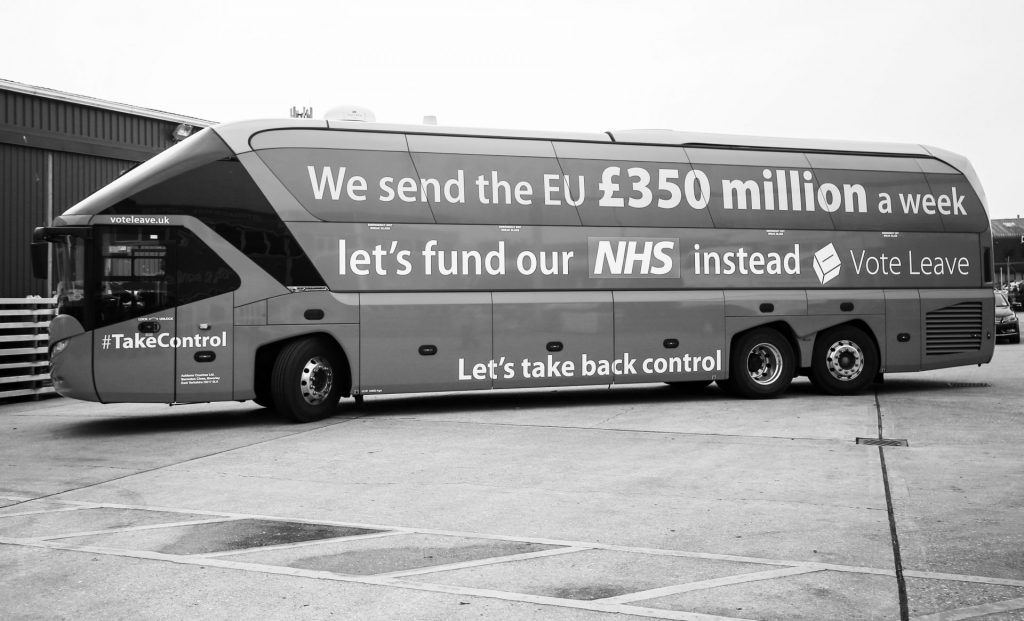
244. Taken together, all this means the civil service now employs 520,000 people, up from 385,000 in 2016. That is a 35% rise, and it now employs more people than it did before the austerity culls that began after 2010.
And finally… the cost of joining again
245. The way out of all the madness is to join either the EU’s single market or the EU itself. But neither is simple, politically or economically.
246. Joining the single market would not require another vote first, although Brexiteers and the right wing media would scream for one. A confirmatory vote would have to be offered at some stage – and the total cost of conducting the 2016 referendum was just over £129m.
247. If we rejoined the single market without full EU membership, we would have no say in new rules. Today, this is good enough for the likes of Norway and Iceland. Switzerland has its own deal that is almost as good as single-market membership, and accepts the costs because they are outweighed by the benefits.
248. Membership of the single market involves adhering to EU regulation on products and services, and allowing the free movement of people, products, services and capital. The UK would have to pay hundreds of millions of pounds a year to join – perhaps even billions – but less than full membership would cost. The benefits for the economy would be obvious: the multibillion-pound costs of border controls, delays, form-filling and red tape would disappear overnight, and British industry would boom. The decline in foreign direct investment would end almost overnight, helping British productivity and growth, meaning more jobs, more pay and more tax receipts for the government. And being part of the second largest economy in the world would help us stand up to threats like Trump and Russia much more easily.
249. What about fully joining the EU? Again, it would be a game-changer, but we should be realistic. For a start, there is the so-called “Farage clause”. Even during the recent reset talks, the EU has been deeply concerned about the dangers of making a deal which Nigel Farage, one of his successors or even a Tory PM would tear up the second they got into power. Talks on joining the EU would be even more difficult if the pernicious threat of the UK leaving again were to hang over them. The EU would want guarantees, and compensation if it happened.
250. The UK would have to be brutally realistic about what rejoining means. The EU’s starting position would be that we had to sign up to all the things for which we previously had opt-outs: Schengen, monetary union, full cooperation on justice and home affairs. There would be no more rebates. It would all be worth it, but this is fuel for the “stay out” camp in a future referendum.
251. We would have to commit to joining the euro. This is, however, not much of a threat, as the EU has never forced countries to actually honour the commitment.
252. The UK would have to give up all the trade deals it has negotiated since Brexit. This is not much of a barrier either, though – the new trade deals are in most cases just “rollovers” of EU ones, any bespoke deals are economically insignificant, and in several cases the EU has also negotiated new trade deals with the countries concerned, including Australia and India.
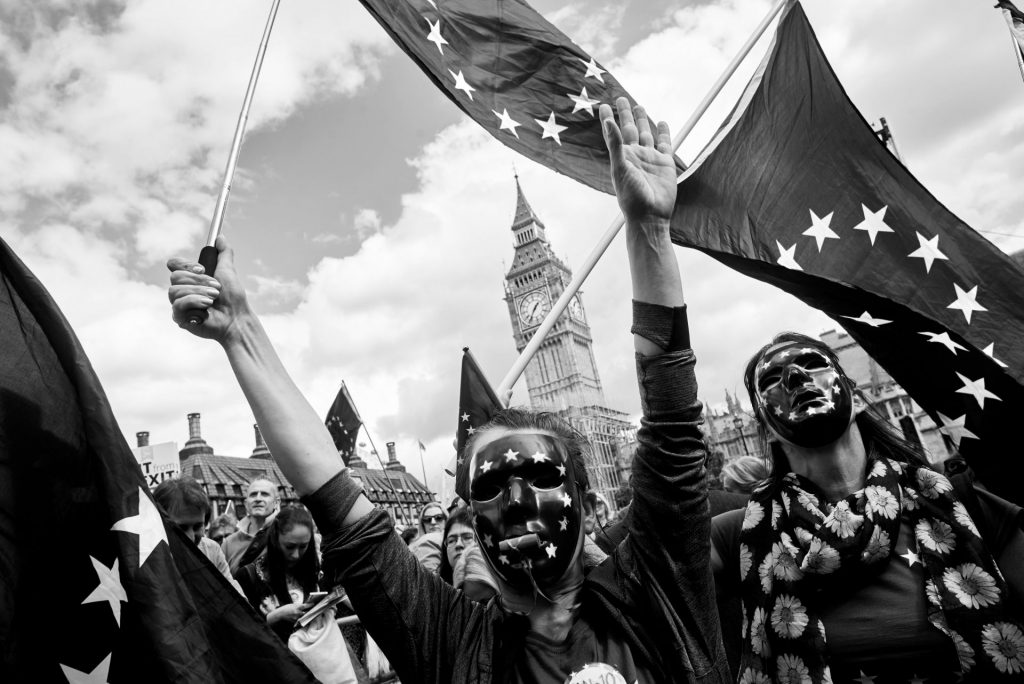
253. Membership would, of course, mean a return of the four freedoms. Freedom to move goods, capital and services would not really be a problem and in fact a great boost to the UK’s economy. But freedom of movement would be very controversial.
254. The UK may not be welcomed back with open arms, and each and every member of the EU has an absolute veto on the entry of new members.
255. The whole episode has also cost the EU a small fortune, dented its growth and occupied years of costly talks. Letting the UK back in also means article 50 of the Lisbon Treaty, allowing us to leave, would be available to us again. The UK could negotiate for years to rejoin and then immediately leave if Brexiteers formed a new government. Knowing this, it would take an awful lot of new goodwill to welcome us back.
256. It should not be a surprise that politicians are beginning to catch up with the public’s anti-Brexit mood: without it the chancellor would have had £90bn a year in extra tax receipts, and as a result, both Tory and Labour governments have had to raise taxation since 2016. If the cake is smaller, you have to take a bigger slice to fund essential services. But, as we have seen, joining the EU again faces an almost insurmountable double hurdle. It is hard to finish any book on a negative note, and I hope to be proved spectacularly wrong. But as I tally up the massive, crippling and rising costs of Brexit, I fear they will be with us for some time