As people digest the news that Nvidia founder and CEO Jensen Huang, perhaps the world’s most important businessman, had an affair with a Chinese spy, thoughts turn to the impact of that revelation, its consequences and the security of the Trump-era US.
His paramour, Alice Huang ran a business that appeared to exist mostly for the purpose of shipping $4bn-worth of Nvidia chips to China. The US government had supposedly prohibited the exporting of that technology with China.
One wonders how much of China’s dramatic leap forwards in AI has been thanks to its access to these key Nvidia products. It seems reasonable to assume that Alice’s access to Jensen made it easier for her company Megaspeed to buy this sought-after tech.
But in some senses, this might prove to be the least important aspect of her alleged spying. Like any business, Nvidia exists to sell its products, some of which are subject to export restrictions by the US government. It’s not uncommon for states to attempt to acquire restricted technologies, using underhand means such as front companies with no apparent connection to the real buyer.
Suggested Reading
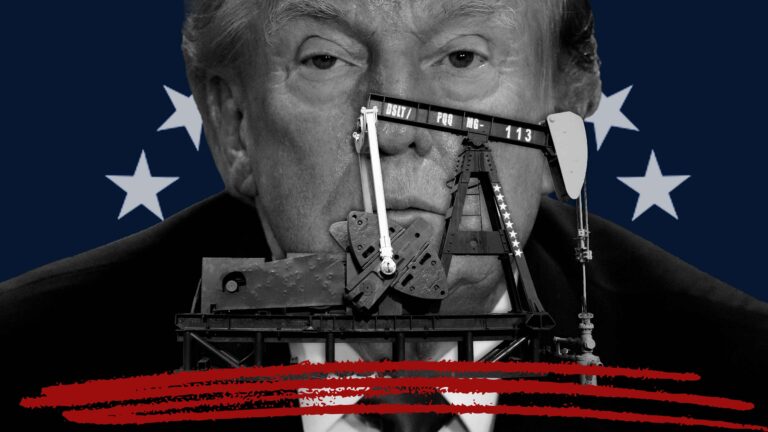
How Trump stole Venezuela’s oil money
If this were the only thing to have happened here, the reaction would be far more muted. What makes this such an important story are all the other things that Alice might have been able to learn from Jensen.
Jensen Huang was a lot more than just a very successful businessman. He was one of the best-connected people in America and at the heart of Donald Trump’s approach to AI. Nvidia has played a central role in the effervescent performance of the US stock market and in the wider AI boom that has kept America’s economy afloat.
So it’s not surprising that Trump took a liking to Jensen, who was invited to attend various summits and state visits, including Trump’s visit to the UK in September 2025.
A month later, Jensen made a $25m donation towards the construction of Trump’s White House ballroom. He was also consistently lobbying Trump to reduce restrictions on the exports of his chips to China. In May, Trump flew to China with a gaggle of tech CEOs, but, having been briefed on possible security risks around Jensen and China, he didn’t take the Nvidia chief.
At least that was the original plan. At some point en route the decision was taken by Trump to include Jensen, in spite of the warnings. Air Force One made an unscheduled landing in Alaska to collect him before the flight across the Pacific.
Suggested Reading
Trump was only the warm-up guy for America’s new right
Jensen Huang’s company was helping to prop up the US economy. But Huang himself was helping to prop up Trump: aside from the donation for the ballroom, Trump himself was an enthusiastic investor in Nvidia. According to the Washington Post, Trump’s personal investment in the stock may have been worth as much as $62m. Perhaps the ultimate example of insider trading is when the CEO is a close friend and you regulate his industry.
Trump’s fabulous corruption, something I wrote about recently in The New World in the context of Venezuela’s oil money, is a key part of the story. Trump isn’t just friends with Jensen Huang because of the potentially systemic importance of AI to the US economy. He’s friends with Huang because he is personally making a lot of money from AI.
And this brings us to the core issue – the degree to which the Trump administration makes spying on it so easy. According to an official CIA analysis which is on the public record, “when asked the question ‘Why do people spy?’ the average case officer would respond with four words: ‘Money, Ideology, Compromise, and Ego’ – MICE.”
Of course, a fusion of these factors will usually be present. Jensen Huang was clearly compromised by his extramarital affair and his ego may have been burnished by the attentions of an attractive younger woman. But we must assume he was also happy for $4bn of his chips to be sold to Megaspeed.
Suggested Reading
Donald Trump’s disappointing far east threesome
Whether there was an ideological component to any of this is harder to fathom: it seems unlikely that Jensen would have an ideological affinity for the People’s Republic of China. He may not have needed one to motivate him to share secrets with Alice.
But let’s think beyond Jensen Huang. If you’re looking for the driving forces of the Trump administration, then “money, ideology, compromise and ego” might be a pretty good summary. Trump himself seems to be driven by three of these: money, a desire to avoid political or financial compromise, and an extraordinary ego. It’s hard to discern an ideology, except perhaps the ideology that – where possible – Trump must always benefit personally from any US government activity.
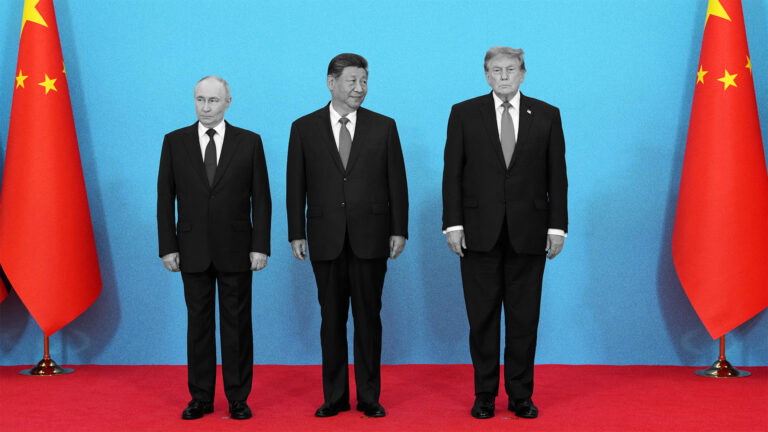
But it’s very clear that Trump is easily manipulated and there is plenty of evidence that he might have been compromised by the Russians (I wrote about this here). As many have asked, if Trump were a Russian asset, would he behave any differently? At a recent meeting between Trump, Putin and Xi, Trump called Putin his “friend”.
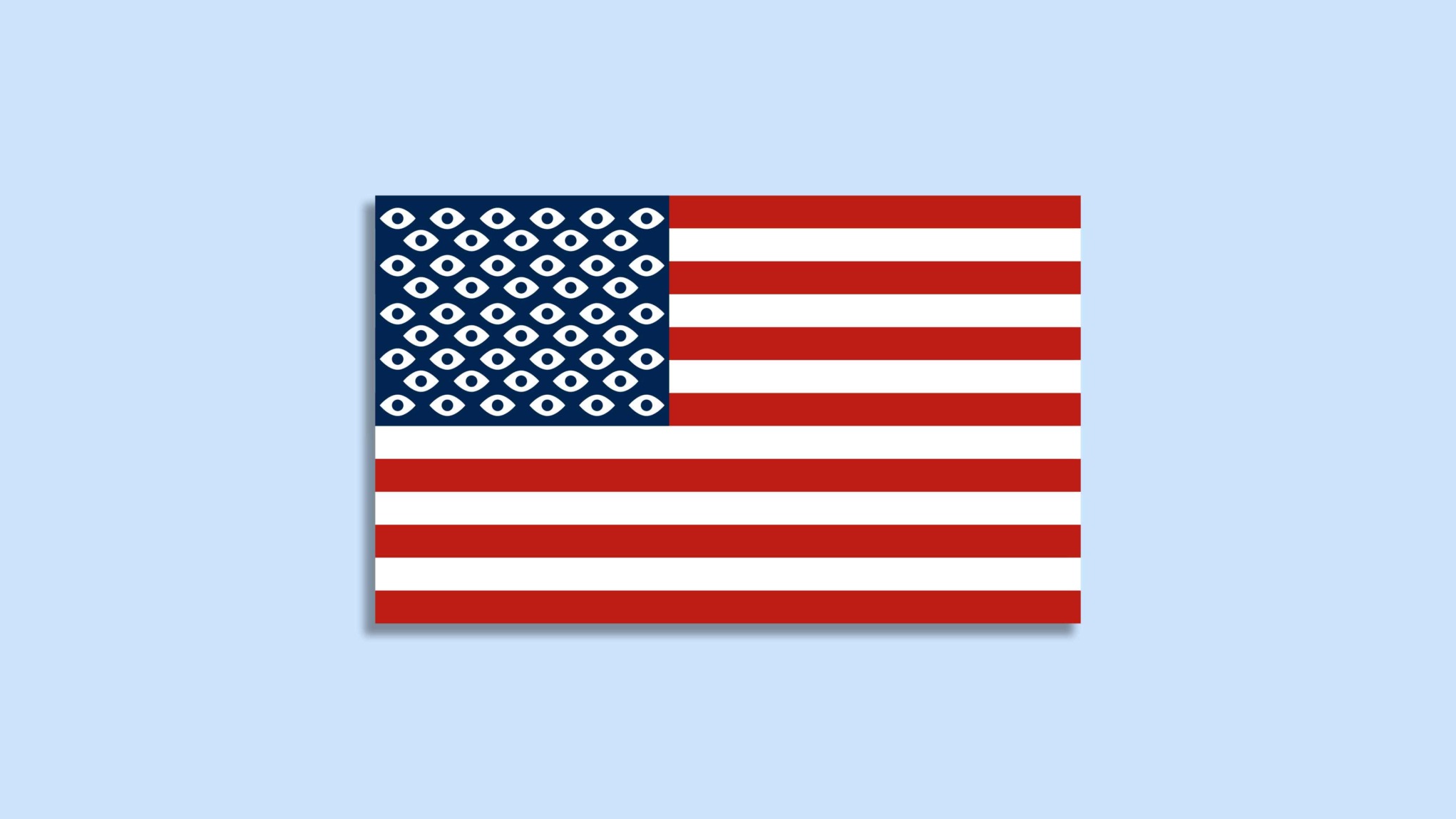
If we start to apply this framework more widely to members of the Trump administration, it’s easy to imagine the combinations of the four MICE factors applying readily to most of its senior figures. Which means that spying on America’s government may be distressingly easy. It is a chaotic regime, replete with corruption, which makes recruitment easy.
But more than that, it’s an environment in which those seen as close to Trump can operate with impunity. Trump’s border czar Tom Homan accepted a bag containing $50,000 in cash from undercover FBI agents he believed to be businessmen seeking lucrative government contracts. Trump’s department of justice dropped its investigation into him. Those loyal to Trump are protected.
At the same time as this, Trump has made it far harder for spies to be discovered. He has taken numerous steps to ensure that his administration is not subjected to the sort of independent scrutiny and internal security that has been standard in previous years.
Early in his presidency he sacked most of the inspectors general covering national security departments. FBI director Kash Patel fired many of the team dedicated to tracking foreign spies operating on US soil, which directly undermined the US ability to prevent espionage. Other teams working on foreign malign influence operations, election and cyber security have all been jettisoned.
If your job is to recruit sources inside Trump’s orbit, as long as you have money to spend, this is probably not a demanding task and your chances of being found out are minimal. One of the principles of intelligence is not being reliant on single sources. It would be foolish to imagine that Alice Huang was the only Chinese asset working on acquiring American AI technology.
How many Russian, Iranian, or even British spies might be taking advantage of the moral chaos of Trump’s America? We shall probably never find out, but it seems very likely that Washington DC is currently the espionage capital of the world.
 Most popular
I read David Walliams’s autobiography – and one revelation in it could spell trouble

The Join campaign starts here. And it’s all about the future


You Can See Everything is the most elaborate con since Elizabeth Holmes herself
Burnham’s new EU deal has left Farage trapped and humiliated