In the heat of the Hungarian election, vice president JD Vance landed at Budapest airport with an honour guard. He was driven to Buda Castle for talks with Viktor Orbán, the prime minister of Hungary. Vance then held a press conference, where he introduced Orbán as “one of the only true statesmen in Europe.” Orbán’s leadership, Vance said, “can provide a model to the continent.”
The cherry on the cake came later that same evening, when Trump phoned in to a stadium rally in Budapest. He told the crowd, “I love Hungary, and I love Viktor. He’s a fantastic man. I’m with him all the way.” The crowd was wearing red MAGA hats. Five days later, Orbán’s Fidesz party was annihilated.
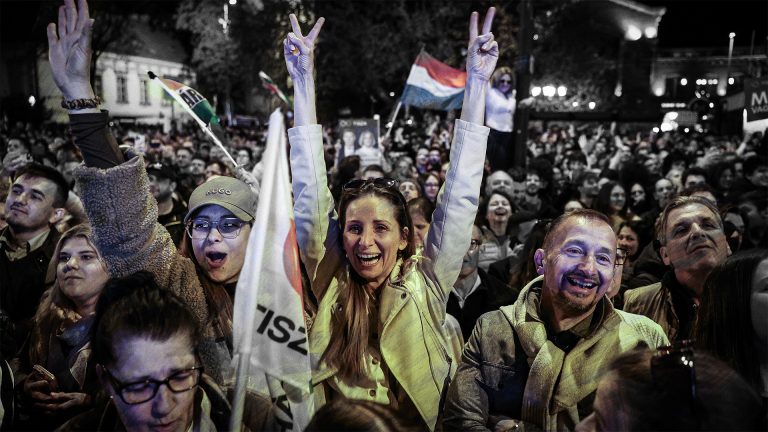
The opposition leader Péter Magyar won a two-thirds majority. Enough to undo everything Orbán had built. This is what brittleness looks like.
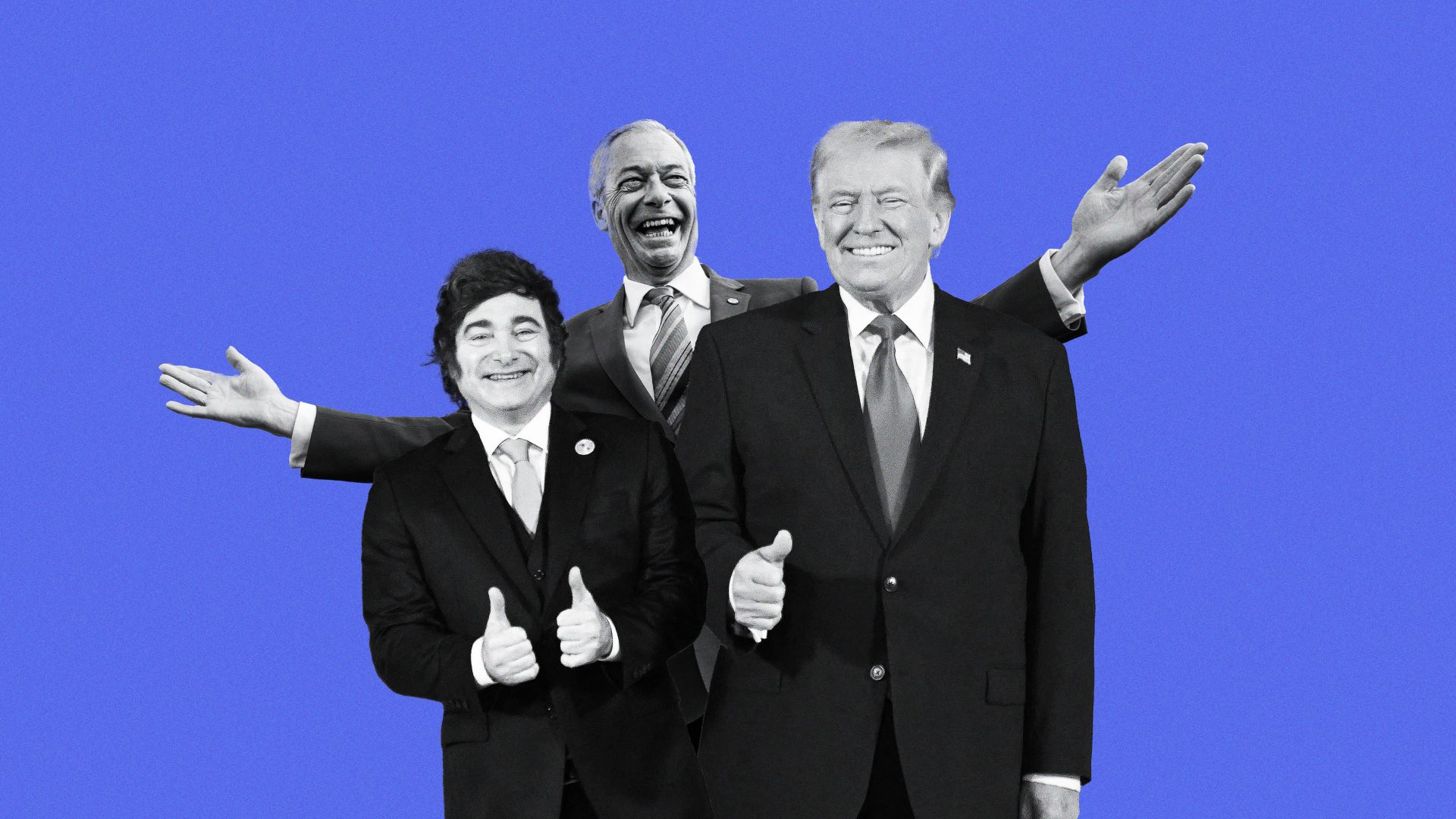
Populism now governs the US and Italy, sits in coalition across Finland, the Netherlands and Austria, and is pounding at the door in Britain, Germany and France. The model is everywhere. It does not work.
Orbán staked his rule on raising the Hungarian birth rate. Tax breaks for mothers, subsidised mortgages, a Ministry for Family Affairs. By 2025, the birth rate had fallen to 1.31, which was among the lowest in Europe. By the April vote, Hungary was the poorest country in the EU and was rated the most corrupt. The model populist regime had failed on the metrics chosen by its own architects.
Coalition governments containing populist parties are statistically far more likely to collapse early than those without, and a 2025 study identified three structural features that tend to be the problem.


The first was the populist claim to represent the will of the people. Not some of the people – all of them. The second was hostility to established institutions. That includes courts, civil service, regulators, the press, central banks. The populist doesn’t want to reform them. He wants to remove them.
The third was the promise of simple answers to complex problems. The populist doesn’t offer policy proposals, but a vague project of national restoration. Make things great again.
Orbán was right-wing, Chávez was left-wing, Erdoğan religious, Trump secular. But the mechanism of populist failure is constant. Each of the three features removes a way that a political system can bend under pressure. Without them, populism is brittle. When reality intrudes, as it must, populism shatters.
First, take the populist claim to represent the will of the people. On 12 April 2026, Donald Trump posted an AI-generated image of himself on his Truth Social account. He was wearing a white robe and a red sash, his hand glowing on the forehead of a bedridden man. This was the now notorious moment when Trump depicted himself as Christ.
Even Trump’s own evangelical base gagged. Conservative commentators called it blasphemy. Trump deleted the post and told reporters he thought the image had in fact showed him as a doctor.
Every populist does their own version of the “Trump as Christ” image. Whether it’s Putin shirtless on horseback, or Modi’s stage-managed yoga, the strongman is not asking voters to assess his policies. He is asking them to recognise his dominating nature.
Which is why the populist cannot admit defeat. Putin needed to conquer Kyiv in three days. Four years later, he holds a fifth of Ukraine, has lost his Black Sea Fleet’s home port to drones, and presides over a hollowing economy.
Trump promised no more foreign wars. He started one against Iran in February that is still not resolved. The Strait of Hormuz is shut, Iran shows no sign of agreeing to any of his demands, and Trump is now desperately looking for a way out that doesn’t look like capitulation. When reality applies pressure, there’s nowhere for the populist to hide.
Suggested Reading

How to put the wind back in Britain’s sails
Second, hostility to established institutions means dismissing anyone with independent authority. And replacing them with loyalists.
Istvan Tiborcz is one of the wealthiest men in Hungary. He owns a private equity fund, hotels, agricultural businesses. His fortune was built on state contracts and state-backed financing. Sixteen years ago, he was just Viktor Orbán’s son-in-law.
Jared Kushner’s private equity firm, Affinity Partners, was founded six months after he left the White House at the end of his father-in-law Donald Trump’s first term. Within months, it received $2bn from Saudi Arabia’s Public Investment Fund, chaired by Mohammed bin Salman.
The Saudis’ own screening panel warned the proposal was “unsatisfactory in all respects.” Three years later, Affinity has collected $157m in fees from foreign governments. It has returned no profit to investors.
Populism cannot tolerate independent competence because, unlike son-in-laws, it is not under the leader’s control.
In Hungary, the consequences of this family cartel approach to politics are measurable. Companies controlled by Orbán allies came to account for roughly one fifth of the economy. Productivity growth collapsed to 0.2% after 2020. The European Union began freezing development funds to Hungary in 2022, citing systemic corruption. Unemployment hit a ten-year high. The only thing that mattered in Hungarian business – getting along with Orbán.
Project 2025, Trump’s governing manual, was directly influenced by Orbanism. Inspectors general were removed, generals fired, independent agencies were brought under direct White House control.
Thirdly, the populist promise of simple answers to complex problems works, right up until the complexity of real world events arrives.
Javier Milei is the international right’s libertarian poster boy. Sworn in on a chainsaw and declared by Trump to be his favourite president, the Argentinian leader announced that there was a simple way to cure inflation: cut government to the bone; burn the central bank; and dollarise the economy. The answer was so simple it could have fitted onto a baseball cap.
For a while, it worked. Monthly inflation fell from 13% to under 2%. Tens of thousands of public sector jobs were cut. Then last September, panicking investors began to dump the peso. Argentina’s central bank tried to defend the currency, but soon ran out of dollars. The country faced default.
Trump’s Treasury bailed Milei out with a bung of $20bn. And so Argentina, the most ideologically anti-state government in the western hemisphere, was kept solvent by a massive US public sector handout.
But then Milei lifted export taxes on Argentine grain and American farmers complained. Within days, the treasury secretary Scott Bessent phoned Buenos Aires and the taxes went back on. The free-market president had reversed his own free-market policy on instructions from a foreign government. Why? To preserve a bailout that contradicted the entire pitch on which he was elected.
Suggested Reading
Will Reform take the unions off Labour?
When the answer fails, the populist survives by pretending that the failure is really a success. But some failures are too hard to avoid.
The Office for Budget Responsibility estimates that Brexit has reduced British GDP by around 4%. That’s two to three times greater than the economic impact of Covid-19. Studies from the US put the estimate of the economic damage at twice that amount.
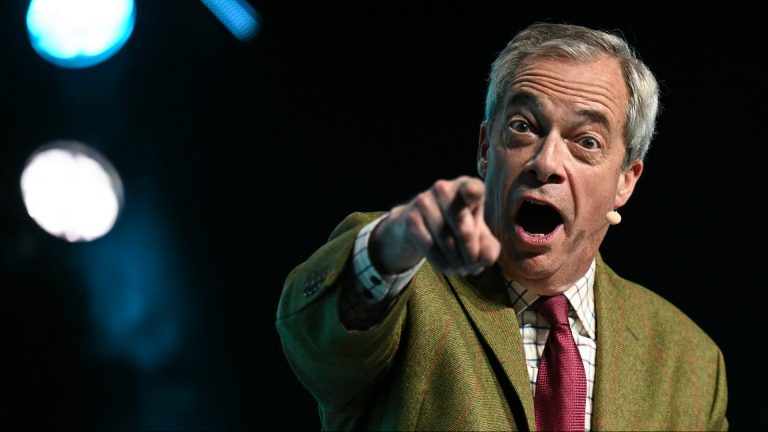
But the architect of the project, Nigel Farage, has never recanted. Instead, he leads in the polls. Reform UK is plausibly the largest party of the next parliament and he said of Donald Trump: “We speak the same language.”
Same language. Same model. Same brittleness.
Hungary needed 16 years to discover that a corrupt, captured state simply doesn’t work. The US is discovering that the politics of the strongman produces unwinnable wars and a president who compares himself to Jesus. Argentina is being kept solvent by Trump’s hand-outs.
Britain has already conducted a populist experiment in the form of Brexit. Now, the architect of that colossal failure is offering to govern the UK saying this time he will get it right.
There’s no need to run that experiment again.
 Most popular
My truly deranged encounter with Trump apologist Kellyanne Conway

The moral depravity of Robert Jenrick

Is this the real reason Trump keeps falling asleep in public?

Suella Braverman’s book has sold only 106 copies. This is why