It was the first state visit by a US president to China in almost a decade, with a host of thorny foreign policy issues on the table. But listening to key Democratic figures on the day of Donald Trump’s departure, and overseas entanglements were not top of their minds.
Instead, they seized on a remark Trump made to reporters before boarding Marine One on the first leg of his journey to Beijing, when he said he didn’t “care about Americans’ financial situations” when weighing any deal to end the war against Iran.
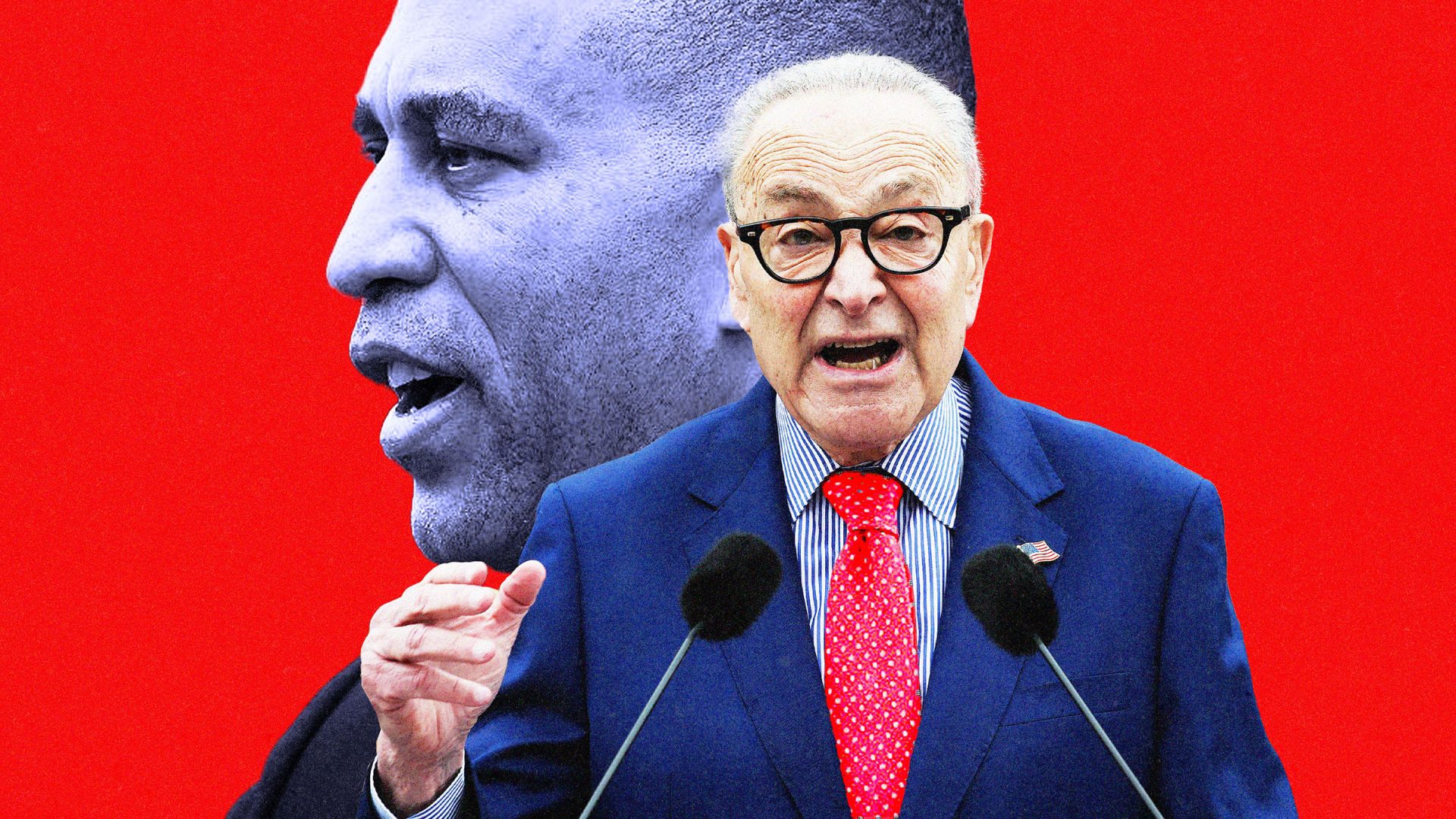
“The economy is a disaster, and we know why,” thundered house minority leader Hakeem Jeffries at a press conference soon after. “It’s because Donald Trump and Republicans don’t give a damn about the personal finances of the American people,”
Senate minority leader Chuck Schumer was equally outraged, saying the comments “make America’s blood boil”.
And so the debate dominating US news channels on the first day of the trip was not about the future direction of US-China relations, but an escalating tit-for-tat about whether Democrats or Republicans cared more about Americans’ wallets.
While the Democratic Party has traditionally been the internationalist force in US politics, foreign policy in America has gone through the looking glass, with the left looking increasingly insular while president Trump unexpectedly embraces a global role.
So it’s unsurprising that the Democrats leapt on Trump’s clumsy comment. The mid-term elections in November are crucial for their future, potentially handing them control of the Senate and the House of Representatives, and all polls show the economy is the top issue, even as the war rages in Iran and geo-political tensions rise.
Suggested Reading
India’s lessons for the world on defence, trade – and Trump
“By far and away, the upcoming midterms are the affordability election,” said Andrew Koneschusky, a former press secretary for Chuck Schumer and now a strategist and founder of Beltway Advisors consultancy.
“To the extent Democrats are talking about the war, I would suggest they talk about the war in the frame that voters think about it, which is as a domestic economic issue, rather than a moral conversation about whether we should have gone into this conflict in the first place.”
It can be surprising to the outside observer how nakedly US foreign policy is seen in terms of the nation’s self-interest. It has always been this way – for both parties – but Trump is the president who has been most brazen about his “America First” outlook.
Which is why some of his core supporters are dealing with cognitive dissonance after his military action in Venezuela and Iran. That is why, unexpectedly, some of the most vocal anti-war activists are not on the liberal left, but populists from the core of the MAGA movement. And the critic garnering the most column inches for their opposition to Israeli policy is not a progressive Democratic member on the left, but the conservative talk show host Tucker Carlson.
With the right appropriating many of their causes, Democrats are struggling to find a coherent vision for foreign policy, as they head towards the midterms later this year, and the coming presidential election of 2028.
“The Democrats, they only have three messages… the first is ‘hate Trump’, the second is ‘hate Trump’, and the third is ‘hate Israel’,” said Ford O’Connell, a Republican strategist who has worked with Trump. “In all honesty, they don’t really have a foreign policy.”
It’s certainly rare to hear a Democrat offering a vigorous defence of America’s role as a moral beacon nowadays, and even rarer to hear them praising the transatlantic alliance with the passion of Barack Obama, or Joe Biden.
Suggested Reading
The US economy cannot escape the Iran war, no matter what Trump says
This lack of focus on global issues has left blind spots for the party’s most visible figures. The progressive left’s standard bearer, New York Congresswoman Alexandria Ocasio-Cortez, showed a very shaky grasp of both geography and historical US foreign policy at an appearance at the Munich Security Conference in February.
Gavin Newsom, the California governor and frontrunner for a Democratic presidential bid, has a much more comprehensive grasp on foreign policy, and visited Xi Jinping in China in 2023. But the aim there was to promote trade and investment that would benefit California, rather than to press the Chinese premier on thorny issues.
The party is also deeply divided over Israel. An older generation of Democrats remain staunchly pro-Israel, putting them at odds with the growing millennial and Gen-X faction. This has created a foreign policy chasm at the heart of the party.
Even efforts to unite are doing the exact opposite. Biden’s former National security advisor Jake Sullivan has been involved in reconvening an action group founded in 2018 to help formulate a coherent Democratic foreign policy.
Given that he was the right hand man when Biden presided over foreign policy disasters including the chaotic withdrawal from Afghanistan, unquestioning support of Israel’s assault on Gaza, and the mishandling of the Russian invasion of Ukraine, many are questioning whether Sullivan and his cohort are the right people to be moving the party forward.
As one Democrat told the Puck news website, “They’re all cancelled and they don’t realise it,”
But the Democratic Party must get its foreign policy act together. The Iran war has provided them with a golden opportunity, with the latest polls showing that 64% of Americans – including, crucially, 73% of independents – think going to war with Iran was a bad idea.
While prominent voices on the right may also rage against it, it is one of their own who started the war, so there is plenty of space for the Democrats to own the issue.
And for all Trump’s (factually dubious) claims of brokering peace in eight wars and hanging out in rose gardens with Xi Jinping, he has been a disaster for US soft power.
Suggested Reading

Can the US hold together as a country?
He has alienated and insulted America’s closest allies, dismantled the Voice of America media network which promoted the country’s interests abroad, and slashed US humanitarian aid overseas. His lack of friends on the world stage was apparent when he failed to convince any allies to back his Iran campaign.
No one is looking for a return to the finger-wagging foreign policy of previous Democratic administrations, and for now it makes sense for the Democrats to highlight the economic cost of the Iran War. But there are potential pitfalls to taking such a narrow view.
“If this conflict ends, let’s say in the summer or before Labor Day and gas prices start to drop to where they were pre-conflict levels, the Democrats are going to have a hard time tying that to affordability,” said O’Connell.
But if they get their messaging right, there is room for them to tell a bigger story about why they are the party to reconnect the US with the rest of the world.
“Just because the burning issue right now in our politics is the affordability crisis, which is exacerbated by some of the foreign policy decisions of the current administration, it doesn’t mean that foreign policy writ large isn’t important,” said Koneschusky. “I think it’s a matter of prioritisation and sequencing, it’s not an either/or in the grand scheme of things.”