In 2018, I was on a reporting trip to holy Ayodhya in Uttar Pradesh for a story about the construction of a temple. The site had previously been occupied by a mosque, which had been destroyed during protests in 1992. The site had been a matter of dispute between Hindus and Muslims for some time. Though built in the sixteenth century, the mosque was located on the site regarded by Hindus as the birthplace of Rama, the principal deity.
There was an eerie calm about the place. I can vividly recall the brief conversation with an 81-year-old, heavily bearded Hindu man. “Modiji is an incarnation. I will see the Ram Mandir in my lifetime, thanks to Modiji,” he said, pointing to his coloured forehead.
The conversation took place before the Supreme Court’s final verdict in 2019, which permitted the construction of a massive temple for Lord Ram on the site where the mosque once stood.
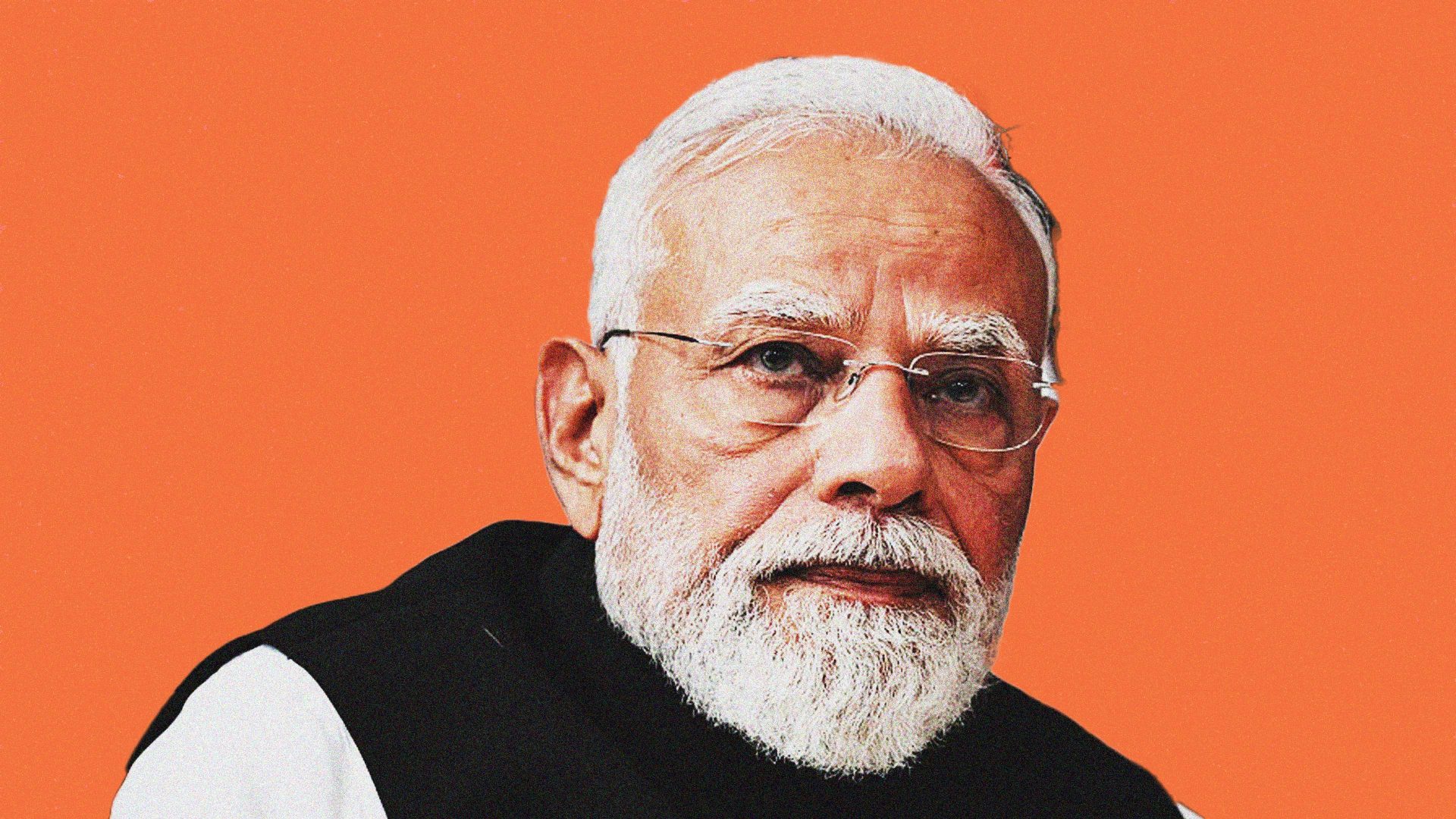
Cut to several years later in 2023. I was speaking to a teashop owner at the southern edge of the country in the small town of Rameshwaram, thousands of miles away from Ayodhya. What the 40-something told me somewhat echoed the 81-year-old’s comments. “Whatever you say regarding Modiji, he’s a clean man. He doesn’t have a family, and he is incorruptible.” Midiji is Narendra Modi, prime minister of India.
A few weeks ago, following the election results of multiple key states, a startup founder in the tech city of Bengaluru told me a mellowed version of the earlier perspectives. “I’m sure Modi or the BJP [Bharatiya Janata Party] has its flaws. But, if not him, then who else? There’s absolutely no pan-India alternative to Modi.”
This is not hyperbole. They consistently translate into votes on the ballots. This is why Modi’s party, the BJP, has engulfed Indian politics with its kraken-like tentacles, barring a few honourable exceptions of the southern states. The latest round of state elections has only reinforced Modi’s grip.
Under his leadership, the BJP has successfully positioned itself as the default governing framework of modern India. Its message is no longer confined to Hindu voters alone. It reeks of a deadly cocktail of nationalism, welfare, infrastructure projects, aspirational growth, military assertiveness, Hindu civilisational pride and political stability.
Suggested Reading
Pakistan’s solar miracle – how the hell did they do it?
The BJP’s historic victory in West Bengal, a state once considered ideologically immune to Hindu nationalist politics, was not just another electoral win. It was a symbolic conquest. For decades, Bengal prided itself on its unique political culture shaped by leftist ideas, literary nationalism, and Bengali intellectualism.
The state had long resisted the saffron tide that swept across large parts of northern and western India. At these elections, that resistance cracked.
For 35 consecutive years, Bengal was ruled by the political left until it changed hands to the administration led by Mamata Banerjee, a centre-leftist who took over as the state’s chief minister in 2011. Following a 15-year ironclad regime, Bengal is now firmly in the hands of the political right.
The gradual political conquest of Bengal is the story of the entire nation as the dark shadow of the political right has eclipsed all else.
The BJP’s rise in Bengal was years in the making, but the scale of the breakthrough stunned everyone. The party’s campaign fused welfare politics with muscular nationalism, anti-corruption rhetoric, religious consolidation, and relentless organisation. There were also strong elements of both anti-Muslim and anti-immigration rhetoric.
The campaign weaponised local anger against Banerjee’s party, the Trinamool Congress, which had become increasingly subject to corruption allegations and accusations of political violence.
The BJP’s campaign did not confine itself simply to issues of governance – identity, and demographic anxiety also became central themes. BJP leaders repeatedly spoke of “infiltrators”, who they claimed were crossing the border from Bangladesh, and also alleged that the Banerjee administration encouraged these immigrants. The language was sharp and polarising. It was deeply effective with large numbers of Hindu voters.
The worry is that, as political resistance to Modi falters in places such as West Bengal, India moves further towards a new political reality in which there are parties and elections – but only one party ever wins. India faces the possibility of democratic backsliding, of weakening federalism, and of authoritarianism through democracy.
But anti-Modi critics inevitably collide with the infuriating political fact about Modi – he keeps winning elections. Sometimes the margins are narrow. Oftentimes, they are huge. He has built a political machine that dismantles political opponents and ends political careers. The BJP and its allies now govern the overwhelming majority of Indian states.
To put Modi’s dominance into numbers, the BJP-led alliance now rules over more than 75% of India’s population. Of the 4,126 state assembly seats, over 2,250 legislators are Modi’s men. This number is steadily rising in every election. In a multi-party political system like India with muscular regional parties, these figures are unprecedented and unimaginable. Until now.
Part of that success stems from something the anti-BJP forces struggle to grasp, which is that for millions of Indians, Modi is no longer just a politician. He is a political emotion. Part administrator, part nationalist symbol, and aspirational figure.
Unlike the many Indian leaders who are shaped by dynastic politics, Modi’s carefully cultivated image as a self-made outsider resonates powerfully across class lines. His personal story – tea seller to prime minister – is embedded in the BJP’s political mythology. The opposition lacks any figure with a comparable national profile.
Suggested Reading
India’s lessons for the world on defence, trade – and Trump
Indian National Congress, once the natural party of government, is exhausted and fragmented. Regional forces that once acted as powerful federal counterweights are gone. Banerjee’s Trinamool Congress has suffered its devastating blow in Bengal. The left has now effectively vanished from Indian politics after losing its final stronghold of Kerala.
In the state of Tamil Nadu, the actor-politician Vijay’s rapid rise through the Tamilaga Vettri Kazhagam party has disrupted the traditional Dravidian order. This has effectively broken apart another anti-BJP political structure, to Modi’s benefit.
Political researchers like Christopher Jaffrelot have argued over the years that the BJP’s dominance lies not simply in ideology but in its ability to create a highly disciplined electoral machine stitching together nationalism, welfare delivery, religious identity, and grassroots organisation into an integrated political whole.
That machinery now stretches across much of India’s map. What was once dismissed as a “Hindi-belt party” has transformed into a genuinely pan-Indian political force with influence stretching from Gujarat to Assam and now deep into eastern India.
Still, India’s political story is not simple. The BJP’s dominance coexists with rising economic anxiety. Youth unemployment remains stubbornly high. Inflation continues to hurt households. Fuel-price sensitivity has become toxic. Widening inequality and job insecurity looms large over impressive GDP numbers. Indians admire Modi while simultaneously frustrated with the economic pressures.
That contradiction surfaced repeatedly during conversations I’ve had over the past few years. Cab drivers praise the infrastructure but complain about rising prices. Small business owners admire India’s global standing but worry about slowing demand. Young professionals celebrate the nation’s digital transformation but worry about employment uncertainties.
Yet for many voters, the opposition still fails the most basic political test: credibility. None of them can stand up to Modi – it’s all about him. The BJP is more dependent on Modi than Modi is dependent on the BJP.
To supporters, Modi represents order, decisiveness, self-reliance, and national confidence. For the critics, he symbolises the dangerous concentration of power, majoritarianism, and weakening institutions. Both perceptions coexist within the Indian citizenry.
Perhaps the clearest sign of India’s transformation is not electoral arithmetic but psychological change. The BJP’s rise has altered the political imagination of the country itself. A decade ago, the idea of the BJP ruling Bengal seemed implausible. Today, it governs most of India either directly or through allies.
Southern states, economically stronger than the northern provinces, resist complete BJP consolidation. But, economic distress can quickly alter the political mood. India’s electorate has repeatedly shown that it can embrace leaders one minute, and abruptly turn against them the next.
However, for now, Modi – or Modiji – remains unmatched. The question repeatedly heard across Indian towns and cities is brutally simple. If not Modi, then who?
 Most popular

I was at Eton with Charles Spencer – this is how it explains his battle with the royals

Emily Maitlis’s diary: My deep dive into Jeffrey Epstein’s hidden empire – and the network that let him get away with it


The linguistic logic behind dropped syllables
Putin’s wartime economy is heading for catastrophe