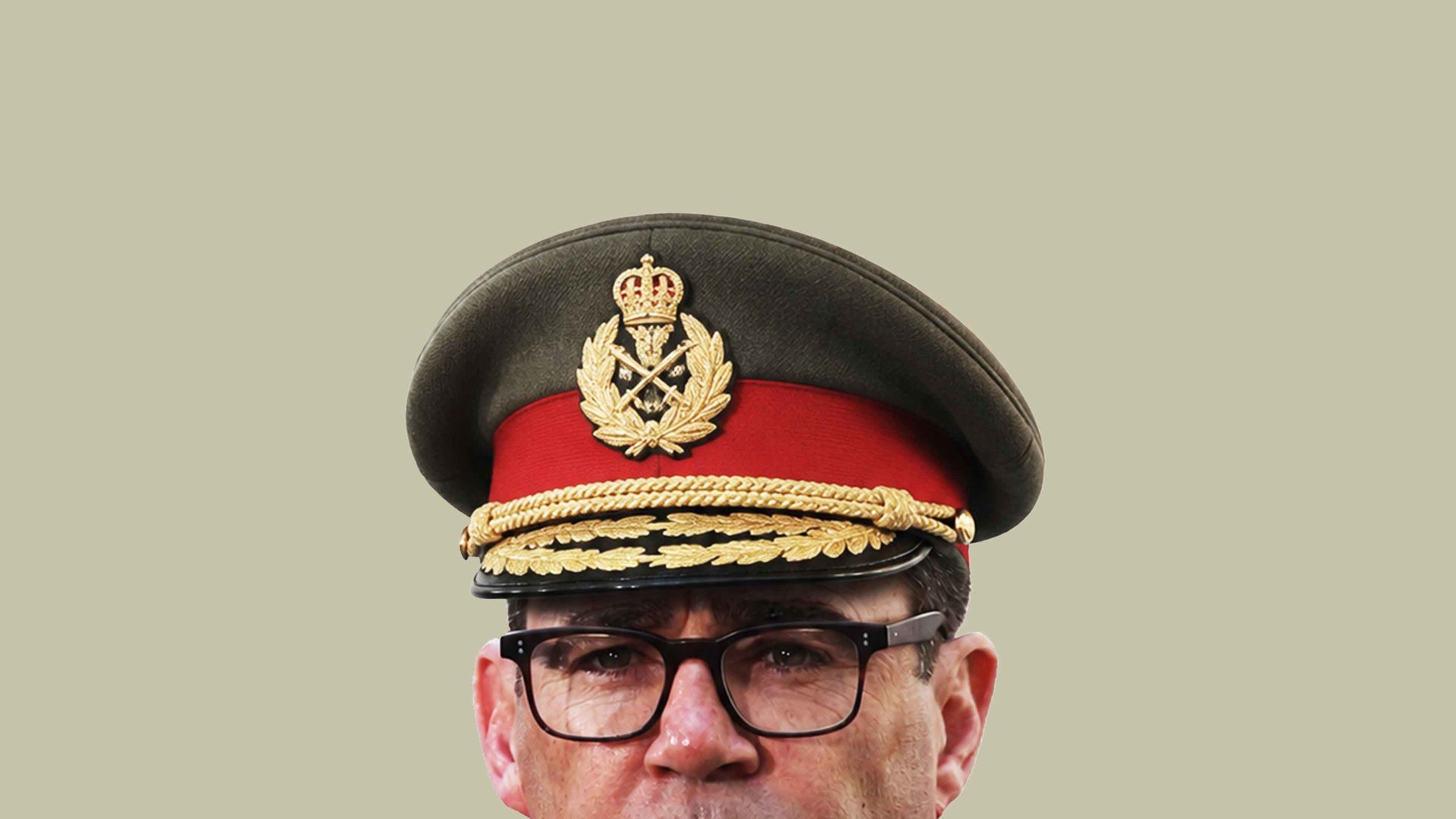
When Andy Burnham declared that “the cavalry is coming” to their rescue a few days ago, it was not obvious what he expected the average pub landlord to do with hundreds of sweaty horses.
These military metaphors, both mixed and outdated, still abound in politics, where leaders are either “holed up in the bunker” or commanding “massed ranks” of MPs to “fire broadsides”. None of which should be confused with the “foot soldiers” on the electoral “battleground” where endless “fresh offensives” or “rearguard actions” are fought and on which the new prime minister so recently launched his recent “blitz” of policy announcements.
But the martial comparison most used about him in the past fortnight is that of having the quality so prized by Napoleon Bonaparte: that of being a “lucky general”. This is because, while some of the small-but-meaningful lead Labour has established in the polls can be attributed to the new prime minister’s political skills or personal charisma, much of it has nothing to do with him.
His arrival in Downing Street has coincided with a sharp decline in support for Reform and the Greens, who are now causing as much harm to themselves as they have done to the traditional parties over the past couple of years. Reform’s undeclared gifts and donations are shaping up to be a proper scandal from which its leader has vainly sought to distract attention by resigning his seat and fighting a by-election.
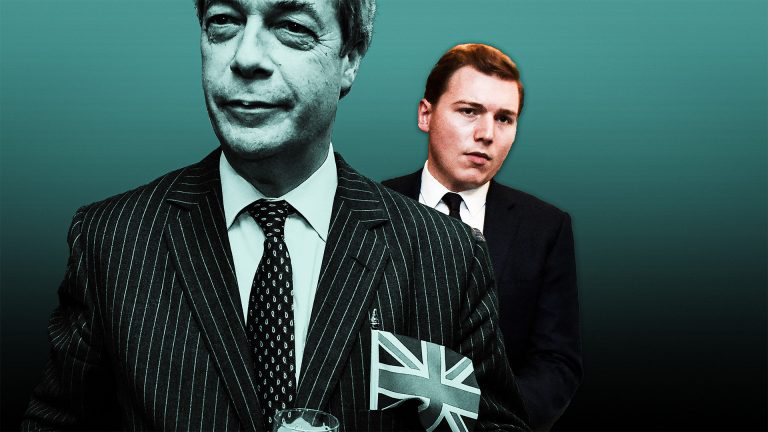
Nigel Farage, surrounded by ex-Tory cabinet ministers who defected to his team, increasingly resembles the establishment his party professes to despise as he obsesses over why people are so mean to him or whines about the indignity of facing off against what he calls the “joke” candidate of Count Binface in Clacton.

The threat from the Greens is also beginning to wilt after a series of heated rows over the unpleasant material that Zack Polanski keeps reposting on social media. It’s not great for him when supporters, with the kind of concerned expressions parents might wear for a difficult teenage son, ask if their leader should be allowed to spend so much time playing with his own phone.
Even Donald Trump, the source of economic and security shocks that probably wreaked more damage on Britain’s Labour government than Farage and Polanski combined, has begun to look like a diminished figure. Republicans are heading towards midterm Congressional elections in the knowledge that the deep unpopularity of this 80-year-old president will probably mean they lose control of the House of Representatives and possibly the Senate too.
Whereas Peter Mandelson was appointed US ambassador on the grounds that he might be suited to the greed and vanity of Trump’s Washington, Burnham has the advantage of no longer having to bend his knee quite so low as his predecessor once did.
Yet it is often forgotten these days that Keir Starmer was once widely regarded as “lucky” too. Before the last general election, there was a lot of commentary about how he had been blessed by a series of imploding and incompetent Tory opponents.
Back then, the rise of Reform was regarded by some as another piece of good fortune because Farage’s party split the right and allowed Labour to win far more seats than its share of the vote deserved. Those assumptions, however, did not last long once Starmer entered Downing Street.
The lesson here is not just that every gambler ends up on a “cold streak” eventually or even the risk of hubris: it’s also about how what might now be seen as lucky can turn out to have unforeseen – and unfortunate – consequences. Indeed, if the challenge from Reform and the Greens continues to weaken, while America moves past its “Peak Trump” moment, the political landscape surrounding Burnham can change just as rapidly as it did two years ago.
Suggested Reading

Want to know Burnham’s EU policy? Watch Ed Miliband
Instead of a bewildering five- or even six-party contest, fuelled by the populist energy that has characterised so much of global politics in recent years, Burnham may yet be facing a much more conventional fight against Kemi Badenoch’s Conservatives. The Tories were second in four-fifths of Labour’s 100 most marginal seats in England at the last election and, with recent polls showing the two parties are already climbing back up to a combined share of the vote of just under 50%, it is a fair bet they will dominate parliament again after the next.
In such circumstances, Burnham could end up not so much a lucky general as one in danger of “fighting the last war”. The new PM’s self-consciously working-class persona and left-leaning economic policies may well be the best answer to the threat posed by Reform in “red wall” seats and the Greens in urban areas. But there is a case to be made that this is ill-suited to a contest against a revitalised Conservative Party.
To stretch the analogy a little further, Burnham could be compared to a general preparing for jungle battle or to fight street-by-street against “insurgents” – only to find himself in trench warfare without enough artillery and tanks.
Some of Starmer’s much-criticised old team whisper the unfashionable view that he, together with Rachel Reeves, had built a solid platform for victory with their rigid fiscal prudence and incremental improvements in public services which made “the next election Andy’s to lose”. But cabinet ministers sacked in the reshuffle privately warn the party’s chances could be undermined by uncosted spending promises or new taxes or borrowing for improved social care and more council houses. “Our reputation for economic competence was hard-earned over the past six years,” says one. “It can be thrown away in a matter of weeks if we’re not careful.”
Savings from any welfare reforms are unlikely to materialise until after the election, and then there is also the need for an escalating defence budget where military matters are no longer merely metaphors. Inflation is set to increase further as a result of the Iran war by the time of the Budget this autumn and next year’s statutory review of government spending already threatens to be brutal.
Those who steered Labour to victory in the last election worry that not enough is being done to remind voters of the Tories’ record of mismanaging the nation’s finances, in the way Starmer and Reeves initially tried to do in their first months before they were drowned out by the clamour around Reform’s ascent in the polls.
Of course, the threat posed by the Tories can be overstated, and no one really thinks that Reform or the Greens has disappeared. Rob Ford, a polling expert based at Manchester University, points out that while the “six-month trend” shows both Labour and the Conservatives doing better, the “two-year trend” shows them continuing to shed millions of votes to both the left and the right in recent elections compared with their position in 2024.
One Labour strategist suggests we may not be heading back to two-party politics but a “two-plus-three-halves” system in which Labour will continue to be challenged by Reform in the red wall and the Greens in big cities, while the Tories try to stop votes leaching to Reform or the Liberal Democrats in the “blue wall”. The situation is even more complicated in Scotland and Wales, where the SNP and Plaid Cymru respectively are currently leading the polls.
As such, a different critique of Burnham is emerging on the party’s progressive left, where there are already some concerns that he is too focused on winning back Reform voters in northern constituencies like his own in Makerfield – rather than those who drifted off to the Greens, the Lib Dems and the nationalist parties in Scotland and Wales. For instance, there is bemusement over the new prime minister’s virtual silence about reversing the economic cost of Brexit at a time when a majority of the public and four-fifths of Labour’s voters want to rejoin the European Union.
And there was also some soft-voiced dismay last week, when the heatwave and forest fires raging across the continent were leading the news, that Downing Street was busy signalling its desire to do more drilling for oil and gas in the North Sea.
Suggested Reading


Who the hell thought Make Tax Digital was a good idea?
Stan Greenberg, who has been running surveys for UCL’s Policy Lab in recent months, says Labour’s increase in the polls has come almost entirely from the left rather than Reform, and there are opportunities to consolidate these into further gains “if voters hear a progressive agenda”.
The veteran US political consultant says support for further action on climate change in his poll last month was at its “highest level yet” and there is also strong public backing for policies such as taxes on tech giants and social media firms, as well as distancing the British government from Trump.
Although small boat crossings still feature high on a list of voters’ concerns, the hardline stance against immigration adopted by home secretary Shabana Mahmood will only make the UK’s finances even more fragile. The current assumption from the Office for Budget Responsibility is that net immigration will be 235,000 this year, a figure which significantly exceeds most other forecasts. If this is cut to a more realistic level, the economist Jonathan Portes has estimated that it would reduce tax revenues after five years by £8bn annually. And Burnham could pay for a lot more cavalry to ride to the rescue of a lot more pubs with that sort of money.
The consensus is that Starmer was unwilling or unable to articulate a grand vision of where he wanted to lead the country, but it’s not clear – yet – how Burnham will approach towering geopolitical challenges like Brexit, climate, AI, migration or relations with the US and China. The good “vibes” of his recent policy blitz – powered through better communications, storytelling and deft use of social media – will undoubtedly boost the troops’ morale for a bit.
As a Cambridge University English graduate, Burnham knows there’s nothing wrong with a metaphor. But they don’t win wars on their own.
Tom Baldwin is the author of Keir Starmer: The Biography