On the morning of Bank Holiday Monday, August 30, 1976, the Daily Mirror carried a picture of a London bobby dancing with a smiling local woman at the Notting Hill Carnival the previous afternoon.
“The laughing policeman got quite carried away by the infectious rhythm of a Caribbean steel band as he proceeded along Portobello Road,” it reported.
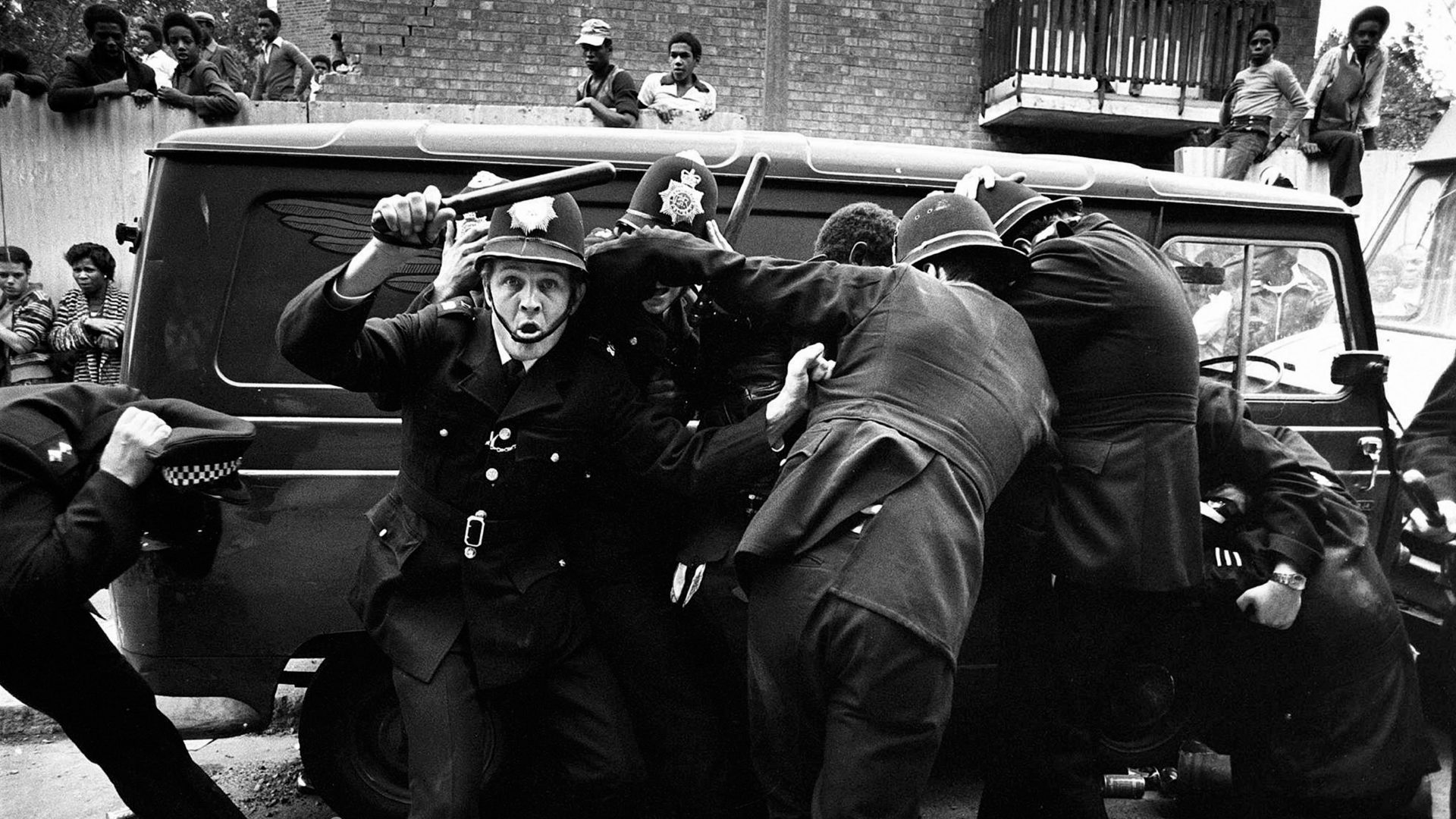
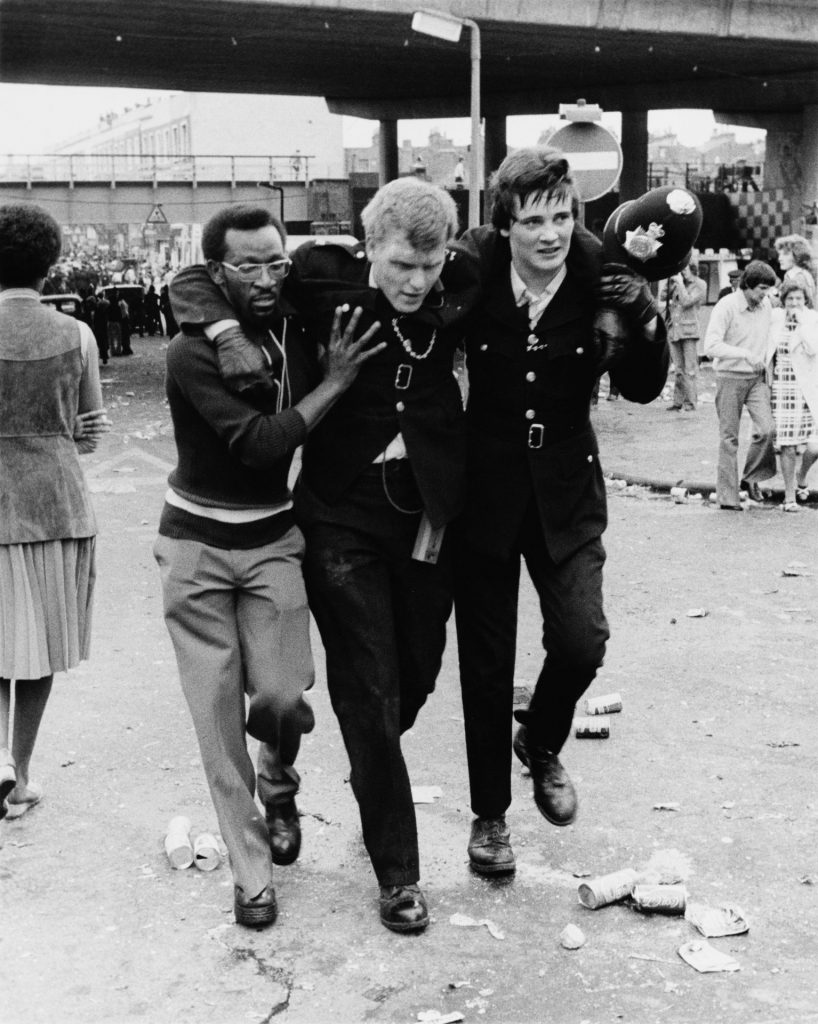
All of which was a far cry from the scenes captured by photographers during the third and final day of the street festival as it developed into a full-blown riot.
The following day’s front pages displayed very different images of the police in action: blood-covered faces, bricks and bottles thrown, truncheons drawn, dustbin lids used as shields, and the injured and arrested being carried away. “BATTLE OF NOTTING HILL”, read one headline, “CALYPSO RIOT FURY”, said another, which was horribly reminiscent of the headlines from 1958 when days of serious race rioting took place on those same Notting Hill streets.
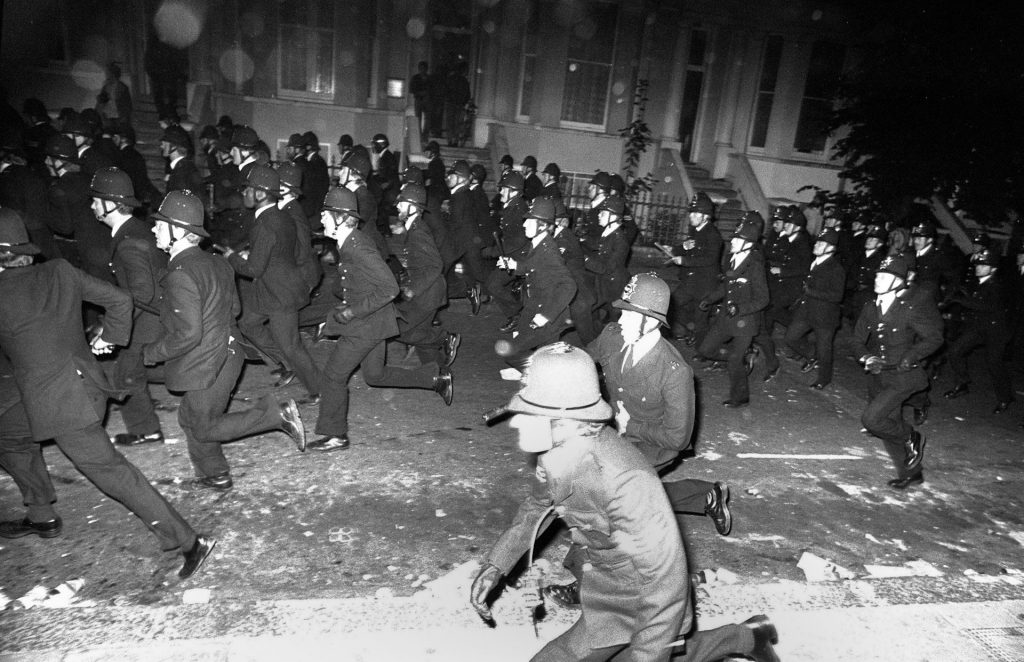
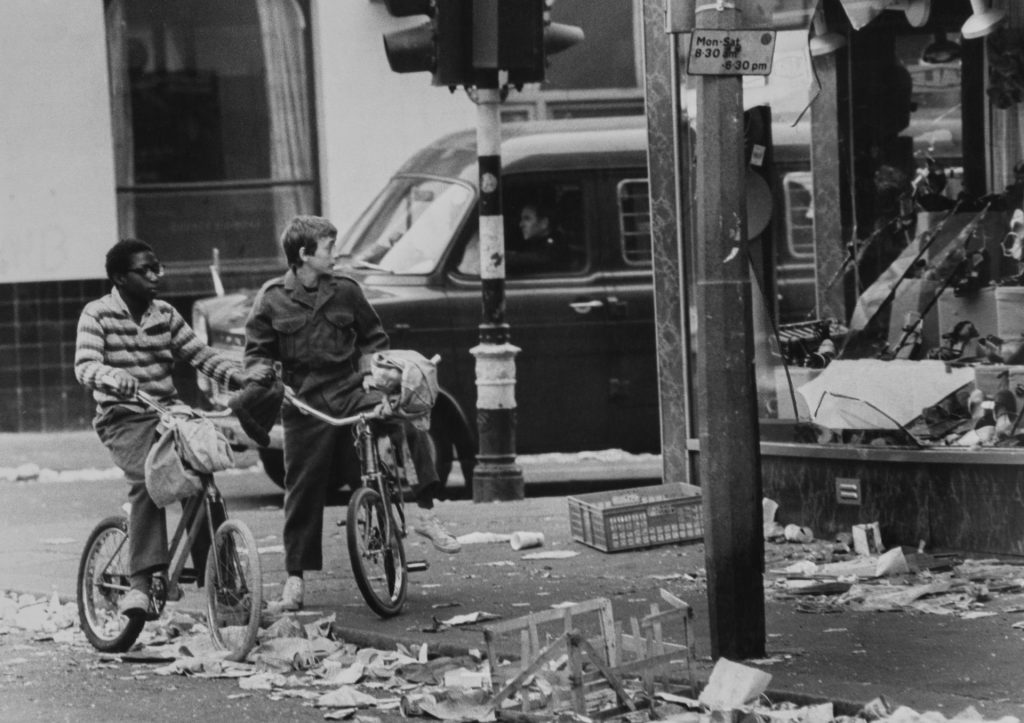
Teddy Boys took much of the blame, but upper-class fascist Sir Oswald Mosley had been trying to stir up racial tensions in the district that year, scapegoating its recent West Indian and African immigrants just as he had targeted the Jewish community in the 1930s. He hoped it would further his parliamentary ambitions, yet when prime minister Harold Macmillan called an election the following year, Mosley failed by a significant margin in his attempt to become the MP for the Kensington North constituency, the epicentre of the previous year’s riots.
Suggested Reading
Andy Burnham v London
In the aftermath of the 1958 riots, Claudia Jones, editor of the West Indian Gazette – aiming to give Notting Hill residents something to smile about and celebrate – organised a Caribbean Carnival, held on January 30, 1959, and broadcast that night by BBC television under the title Trinidad Comes to Town. Musical acts included Cleo Laine, the Southlanders, and calypso singer The Mighty Terror, and there was also a Caribbean Carnival Queen beauty contest, whose top prize was a round-trip sea voyage to the West Indies.
This event was held indoors in winter, and never looked likely to become an institution, yet something of its spirit remained, and on Sunday September 18, 1966, a gathering organised by Rhaune Laslett from Notting Hill’s community collective the London Free School saw an impromptu street parade by Russ Henderson’s Steel Band, which is where many would say the real carnival began. As local newspaper the West London Observer reported: “A pageant organised by the London Free School, which filled the streets of Notting Hill with music and laughter on Sunday afternoon, was so successful that the school has decided to make the pageant an annual event”.
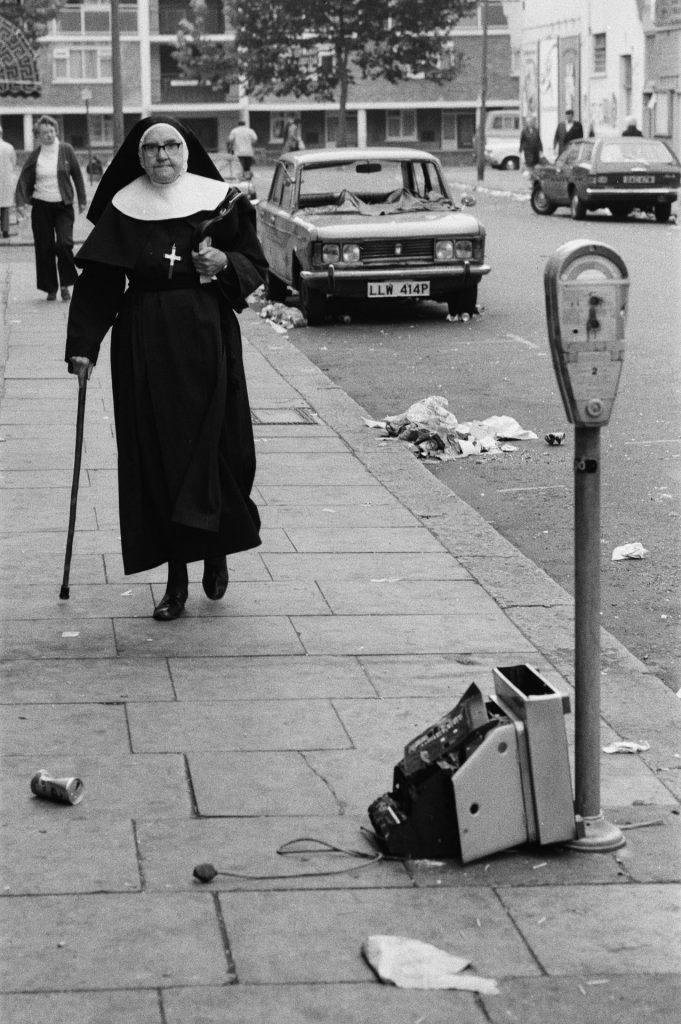
Ten years later, while carnival attendances had mushroomed from an estimated 500 people in 1966 to 150,000, the mood of the country had soured, becoming markedly less optimistic and plagued by divisions. Race hatred was being stirred up again, this time by the far right National Front – founded in 1967 by a former member of Mosley’s National Union of Fascists – and three weeks prior to the Notting Hill Carnival riots, Eric Clapton delivered a drunken anti-immigration tirade at his Birmingham Odeon concert, repeating National Front slogans to the crowd. Things seemed ready to boil over.
Added to this, the image of the Metropolitan Police had been tainted by the corruption trials of the early 1970s, while the activities of the Met’s Special Patrol Group and the application of the stop-and-search sus law had caused considerable resentment, especially among ethnic minorities, who felt unfairly targeted. Nevertheless, the swift escalation of violence that afternoon at the carnival as the police arrested a pickpocket took many observers by surprise.
Suggested Reading
Why you’ve never heard of the world’s highest bridge
The 1975 carnival had seen 200 police on duty, of whom three were injured. Met commissioner Sir Robert Mark told the press the day after the 1976 disturbances that 1,600 officers had been deployed this time, and 350 of them hurt. Civilian injury figures vary, estimated at between 60 and 100.
Mark joined calls for the carnival to be taken off the streets, saying that it should be held under “controlled conditions”, such as in a football stadium, while other commentators wanted it banned outright, but neither option was adopted.
In the event, the carnival has been held each year in those same streets ever since, barring a two-year break during the pandemic, sometimes marred by disturbances, while growing into a major tourist attraction and celebration of the area’s varied heritage. Sixty years after a few hundred people followed Russ Henderson’s Steel Band through the streets of Notting Hill, the crowd each year now numbers around two million, an unlikely survival in the face of heavy odds.
Max Décharné is the author of Teddy Boys: Post-War Britain and the First Youth Revolution.
This year’s Carnival is on Monday, August 31