
My current assumption is that, at some point, I mortally offended someone at the Treasury but simply do not remember doing it. It’s not entirely outside the realm of possibility: I worked in Westminster for a long time and was known for happily attending the opening of an envelope. When there were no receptions happening in SW1, I could often be found in a nearby pub instead.
Can I, Marie Le Conte, swear on my life that I never ended up being needlessly obnoxious to some civil servant? That I never made an edgy joke that fell far too flat? I’m afraid I simply cannot do that.
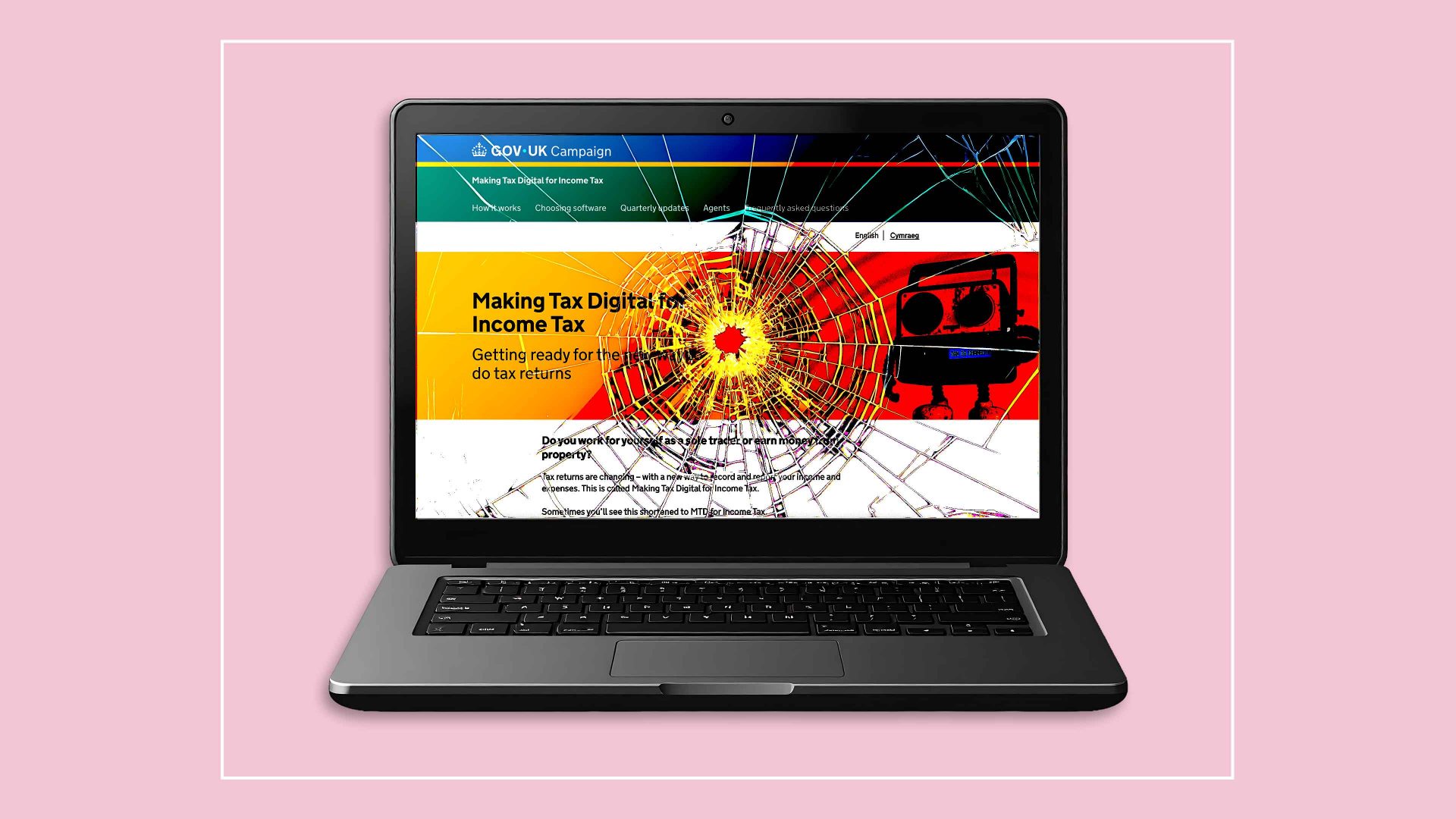
At this stage, my only question is: did they really have to punish the other 4.5 million self-employed workers as well? It’s what I was thinking about, acidly, as I tried to figure out Make Tax Digital last week. If you haven’t heard of it before, its name may have just confused you. Aren’t all taxes filed digitally already?
You would be right, of course. We freelancers and sole traders have been using the one and true world wide web to send our self-assessment tax returns to the state for some time now. It was and is, I must say, a deeply efficient system.
Until now, it would take me around one day a year to complete – one somewhat full-on day, granted, but that felt reasonable. I often talked about it with French friends and relatives, as they drowned under their Gallic paperwork. We, in Britain, have it wonderfully easy, I’d tell them, oblivious about what was coming my way.
Make Tax Digital, which officially launched this year, requires self-employed workers to tell the government, each quarter, about every single sum of money they have earned, and all of the expenses they plan to claim. There had once been a level of trust for not-so-high-earning freelancers, where you would simply input how much you’d earned and how much you were claiming in expenses once a year. HMRC has now decided to menacingly breathe down our collective necks, giving us a whole lot more work to do in the process.
Oh, and we’re losing money from it as well. If you’d assumed that the Treasury had built its own software for us to use, then I’m afraid you were wrong. Instead, we’ve been told to rely on software built by… more or less whoever, and an in-depth study conducted last Friday showed me that the only products that feel broadly usable are quite expensive. One piece of software I looked at costs £30 a month. Again, until now, I had been able to do everything myself, for the cost of exactly zero Great British Pounds.
As I sat there spitting feathers and watching my bank account nurse the wound to its side, I tried to understand why we were being made to jump through all those new hoops. The answer is, er, who knows? Instead of plainly and helpfully telling us why they’re doing what they’re doing, HMRC simply decided to go for a grating, hypocritical tone, and pretend that Make Tax Digital is better for us.
Suggested Reading


What Andy Burnham can learn from, er… Marine Le Pen?
Now, we all know that isn’t true, as no one would ever look at a quadrupled workload and spontaneously start cheering. The truth is, I assume, that it makes life easier for them in some way.
Couldn’t they just say so, then? My fury probably wouldn’t have subsided if I’d been told as such, but I would have at least respected the honesty.
Perhaps this can be a lesson for our new, shiny government: do please try to treat people like adults, and consider being upfront with them. If you’re going to change things for them, then make sure the shift is as painless as possible.
Ah, and finally: do please leave us self-employed people alone for a while, we’ve suffered enough for the time being. Ta.