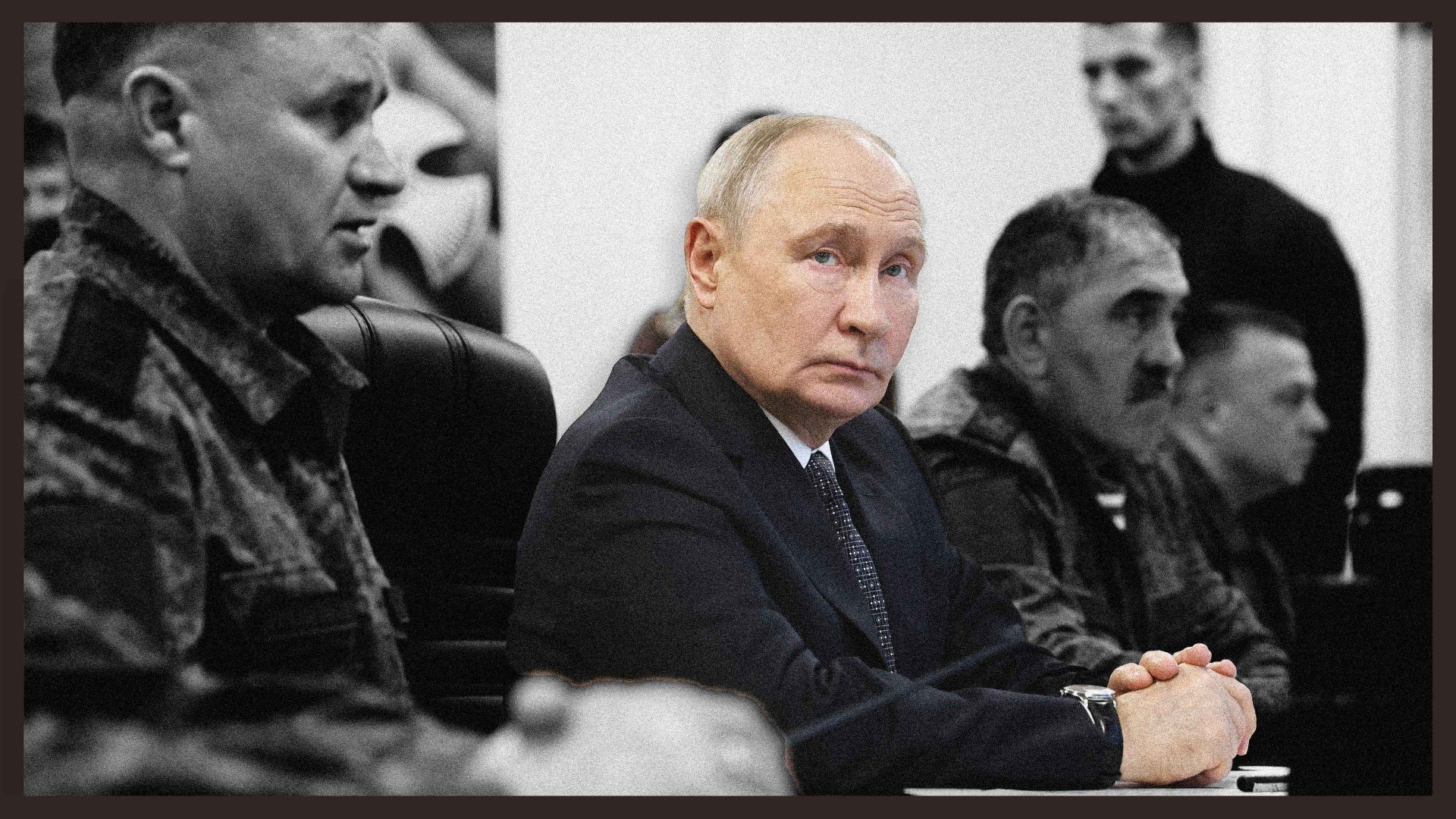
Vladimir Putin this week announced an increase in Russia’s defence forces to just shy of 2.5 million personnel. It was the fourth increase this year.
Russia’s defence budget is now 7.5% of GDP, the highest that defence spending has been since the Russian Federation was created in 1991.
The country is on the verge of full-scale war mobilisation; 20% of the federal budget is currently allocated to defence. That figure will increase to 35% next year. Add in national security issues to include the intelligence agencies and police, and the combined figure is projected to reach about 43% of government spending in 2027. To pay for this, Putin is raising taxes.
A sizeable chunk of this is going on the war in Ukraine. About two-thirds goes towards supporting the estimated 700,000 troops fighting there.
But an increasing amount also goes towards improving Russia’s nuclear forces and beefing up troop levels elsewhere. Putin recently announced that by the end of the year Russia would deploy a new Sarmat strategic nuclear missile. He claimed that the Sarmat would be able to penetrate and evade future missile defence systems in the US and Europe.
Suggested Reading
Russian voters are tired of Putin – and he is running out of options
Russia is also building a military base at Kandalaksha, about 65 miles from the Finnish border, to house a new artillery brigade and engineering brigade. At Petrozavodsk, about 90 miles from the Finnish border, they are renovating a Soviet garrison, and at Pechenga near the Finnish-Norwegian border, Moscow is trebling the garrison of 17,000 personnel.
The defence build-up is being accompanied by growing hybrid warfare. The US-based conflict-monitoring organisation Armed Conflict Location and Event Data reported that from the start of the Ukraine war to April 2025 Russia had conducted 190 “suspected” incidents. On top of that, there were several hundred foiled attacks, including sabotage, arson, cyber-attacks, drone incursions, airspace violations, and destruction of undersea cables.
The country is finding it difficult to keep defence production at the level Putin demands. The country’s main defence company, Rostec, reckons that it will need another 150,000 workers in the coming year to keep up.
But the economy is a mess. Unemployment is at a record 3%. Because of labour shortages, Putin has doubled the number of overtime hours Russian defence workers can do from 120 to 240 hours a year. Growth is stalling. Inflation is at 6%, but interest rates are at 14%.
The Russian Central Bank is predicting growth at between 0% and 1% for this year. Military spending is propping up the economy, while at the same time, oil revenues are down 30% because of Ukrainian drone attacks on Russian oil refineries.
Suggested Reading
An all-new breed of online secret agent
The Russian economy is on the brink of recession, but if the war were to end tomorrow, Russia could face worse problems as a depressed and under-financed civilian sector tried to absorb millions of newly unemployed defence workers.
This, plus, the long-term investment in defences along the Finnish border and in strategic forces, as well as the need to replenish munitions stocks and replace over a million casualties, has led Lithuanian intelligence and the US Center for Strategic and International Studies to believe that Putin would continue to increase defence spending, even after the war.
Continued expansion would also fit in with Putin’s world view that the main threat to Russia is not Ukraine but Nato. He was saying this as far back as at the Munich Security Conference in 2007.
The question, therefore, is not simply what Putin will spend to finish the war in Ukraine, but what kind of military Russia he intends to have when the fighting stops.