
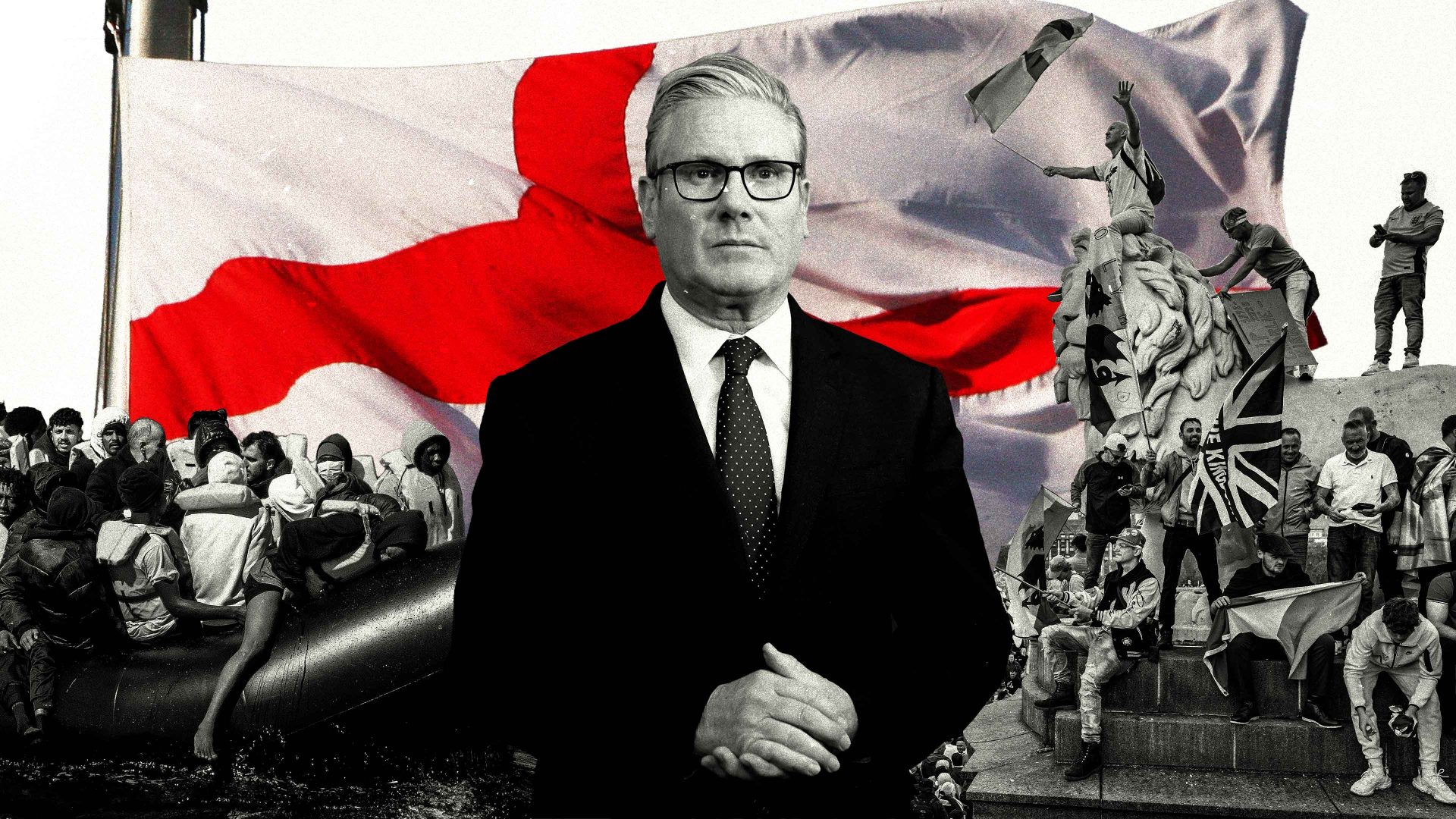
One thing Keir Starmer hoped he could do in government was give the country a break from the culture wars engulfing politics. One way that “change” would be felt would be in politics treading “a little more lightly” on our lives. The “exhausting” search for new enemies would be over.
Yet Starmer presided over an ever more febrile mood. There were six days of rioting before his government was a month old, and further outbreaks of racist rioting in Northern Ireland. Shock events like this can be a matter of contingency and chance. But it was the cumulative effect. There were clashes over asylum hotels and the largest far right marches in British history.
There was also intensifying antisemitism, rising anti-Muslim hostility, arguments about flags hoisted on lamp-posts, and an increasingly disinhibited politics of remigration that saw the mood darken on questions of immigration, race and cohesion.
The brutal early termination of Starmer’s half-a-parliament premiership shows how a project designed to bridge divides struggled to navigate these storms. The accelerated fragmentation of an increasingly polarised politics meant most Labour MPs saw the May 2026 local election results as presenting an existential threat to Labour’s viability without a change of leader.
Yet there are contrasting views of the drivers of this rising sense of division and how to respond. The right focuses on the scale and pace of demographic change. The left worries about the resurgence of racism and how economic pressures can create an increasingly zero-sum view of who gains and loses out. Starmer’s successor will face a profound series of questions on identity, cohesion and race.
Suggested Reading

Immigration is falling sharply – why haven’t politicians noticed?
Immigration
Starmer struggled to find an authentic voice on immigration, most obviously when retracting his comments about “the risk of becoming an island of strangers”. This unintentional echo of Enoch Powell completely overshadowed the launch of his immigration white paper.
Labour’s political strategy in opposition was to neutralise the issue of immigration. Starmer combined his liberal instincts with the pragmatism he had learned as a public prosecutor – he tried to get a grip on the immigration system, so as to secure public confidence in the rule of law and in Britain’s international obligations.
His first moves on immigration were liberal. He scrapped the UK-Rwanda deal, and began to process asylum claims again. He made the argument for this mainly on pragmatic grounds, particularly the eye-watering costs and unfeasibility of the Rwanda scheme.
Yet the partisan temptation was to challenge the Conservatives from their right, arguing that they had foisted an “open borders experiment” on Britain. That narrative misdiagnosed the chaotic, disastrous situation in which tens of thousands of asylum seekers had become stuck in hotels. Really it was a botched experiment in closing the borders, and declaring that no asylum claims would be processed for those who arrived without permission.
The Labour government’s voice and policy hardened considerably after the cabinet reshuffle of September 2025. There was no doubting Shabana Mahmood’s belief in what she was doing, but her proposal that the time it took to settle immigrants should be tripled in length split the parliamentary party, and Labour’s potential electorate.
The reforms were a strategic error. Labour elevated an issue that was obscure for most voters, and mobilised a million people against the government, most of whom were Commonwealth migrants with voting rights. Starmer again signalled a retreat on applying the proposals to care workers already in Britain, though his successor may have to settle the details this Autumn.
Having inherited record immigration, on a downward trajectory, net migration fell further and faster under Labour than anybody anticipated. Yet that did little to change how government ministers talked about the need to reduce immigration. Starmer’s successor will need to answer a question that has so far been ducked: what is the sustainable level of migration that the government will accept and defend?
Suggested Reading
Keeping Trumpism out of Britain
Racism and populism
The Starmer government found itself subject to events and narratives shaped by others, including from the radical right. The “two-tier Keir” narrative began when the hard right began objecting to the prosecution of rioters after the disturbances of the summer of 2024.
Tommy Robinson’s Unite the Kingdom rally in September 2025 marked a low point for the Starmer government. “Ministers were sent out to explain the protest, not to condemn it” as former health secretary Wes Streeting was later to note after his resignation from government. Peter Kyle’s Sunday morning interview in which he spoke of “free speech being alive and well” kicked off a major revolt among Labour MPs and ministers in the run-up to last Autumn’s Labour party conference.
The product of that row was a government with a stronger rhetorical commitment to challenging racism. There was a more confident Downing Street response on the eve of Robinson’s (smaller) follow-up rally in the spring.
The government needed more clarity on how to tackle racism. Seeking to express empathy with NHS frontline staff experiencing a resurgence of racism, Starmer expressed surprise as well as disappointment about a social problem “that frankly I thought we had dealt with decades ago”.
Bemusement at the irrationality of racism is not enough. There must be a stronger effort to explore the drivers and solutions.
Starmer’s government made a laudable effort to strengthen the response to religiously motivated hatred and was keenly aware of how conflict in the Middle East put more pressure on Jewish and Muslim communities. Religiously motivated hate crimes have spiked to 10,000 incidents a year. There were also a huge number of racially motivated hate crimes.
Yet this next prime minister will be the fifth since the government last found the bandwidth – under Theresa May – to adopt a hate crime strategy, or engage seriously with the causes and drivers of racial hatred that is not religiously motivated. That is an asymmetry that Starmer’s successor should address.
Suggested Reading
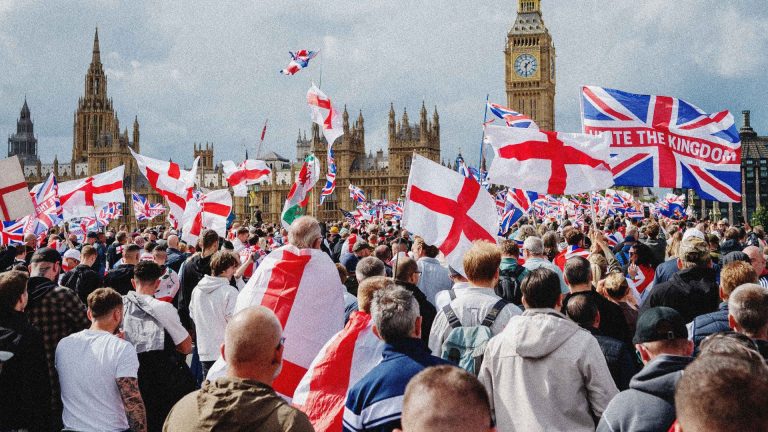
Racism in Britain is getting worse
Burnham’s cohesion challenge
The challenges of change and unifying the country will shortly fall to Andy Burnham. His Makerfield by-election victory was rooted in Burnham’s confidence in his own identity, successfully projecting him as a politician of “somewhere”.
How far Labour rebalances its voice on immigration remains contested. As long as this remains primarily an argument about the pros and cons of tough political rhetoric, it will divide MPs facing opponents from the left or the right in their own constituencies.
But the government will be judged primarily not by its media communications in 2026 but its outcomes in 2029. There is a strong case for refocusing the capacity of the Home Office on plans to deliver workable controls. There needs to be an annual immigration plan in parliament, a programme to close asylum hotels at greater pace and an expansion of controlled routes for returns deals in France and Europe. That could deliver a centre-left agenda for control, contribution and compassion with more chance of bridging Labour’s electoral coalition rather than splitting it.
The Burnham government will no doubt expect to be tested by events – like those in Southport or Belfast – though the form these may take are known unknowns.
Social media can now turn local incidents into national flashpoints more rapidly than ever before. There needs to be greater urgency in dealing with unlawful content, but the government should also consider its soft power ability to shift its audience. Renewing the BBC’s Charter offers one opportunity for broader arguments about the public spaces that a democratic society needs to value and protect.
The Starmer government’s Protecting What Matters cohesion strategy offers useful foundations to build on, though its public communication got entirely lost in the Mandelson crisis and the government’s own death throes. So the cohesion challenge for Starmer’s successor is not to offer a stronger public story about who we want to be – but to ensure that a plan to be tough on the causes of division has the institutional foundations it will need to succeed.
 Most popular

Churchill, the Beatles, St George: All the English heroes who aren’t actually English

The New World at 500: Independence isn’t our marketing slogan. It’s our business model

The problem is they just don’t care about us any more
Sorry Nigel, but the polls show you’ve had it