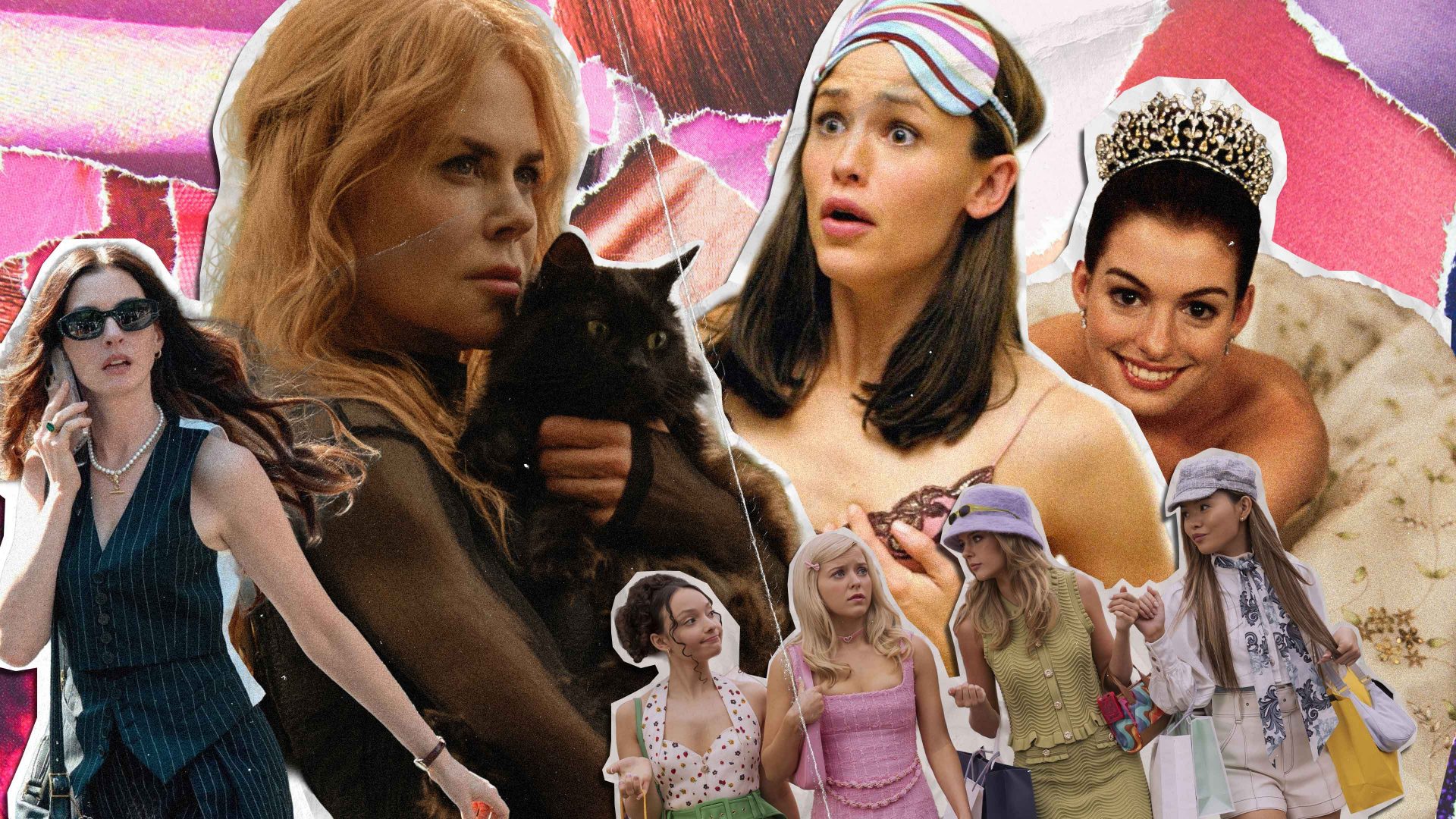
Successful feminine nostalgia begets successful feminine nostalgia. That’s the hypothesis Jamie Lee Curtis presented then-Disney CEO Bob Iger when Freakier Friday, the sequel to the 2003 film starring her and Lindsay Lohan as a mother and daughter who swap bodies, was in pre-production.
“‘Guys, I have one word for you: Barbie. If you don’t think the audience that saw Barbie is going to be the audience that goes and sees Freakier Friday, you’re wrong,’” she relayed to The Guardian last year ahead of the film’s release.
The achievements of 2023’s Barbie —the first film by and about women to take $1 billion at the box office— arguably set the stage for the spate of sequels and revisitations we’ve seen in recent years. As well as Freakier Friday, there have been last year’s Bridget Jones: Mad About the Boy, this April’s The Devil Wears Prada 2 and Prime Video’s recent Legally Blonde prequel series Elle. Next is Practical Magic 2 in September, with rthe Princess Diaries 3, Romy & Michele 2 and the 13 Going on 30 reboot, all currently in production.
IP is nothing new, of course. Hollywood has made a habit of rebooting everything from Top Gun to The Naked Gun; we have tiered phases of comic-book cinematic universes and we’ve even had at least five different Spider-Men in the past quarter-century. But until recently, it’s been rare that a female-led property gets the redux treatment.
Even a movie about the world’s most famous doll that has touched just about every girl child (and some children of other genders) in some way in the almost 70 years since her creation was considered a risk. Kevin Goetz, founder and CEO of the market research company Screen Engine, writes in his 2025 book How to Score in Hollywood: Secrets to Success in the Movie Business that “outside of very young girls and some of their mothers, there was not much excitement for a Barbie movie.”
“That does not surprise me,” says Courtney Brannon Donoghue, Associate Professor of Media Industry Studies at the University of North Texas and author of The Value Gap: Female-Driven Films from Pitch to Premiere, who is currently working on a book about the Barbie movie. “It’s reinforcing the industry lore that Hollywood has told itself for so long: this narrative that women don’t go to the movies and that these stories have no value.”
Arguably the fate of female filmmakers as a demographic was riding on Barbie’s tiny plastic shoulders. Because we know if Barbie failed it would be chalked up to the fact that women filmmakers, producers and stars can’t be trusted with big-budget blockbusters, and female audience members won’t go to see them. This, despite women possessing 85% of buying power and, according to a 2010 study, we buy 55% of movie tickets.
The opposite isn’t true though, a phenomenon Brannon Donoghue calls the “amnesia loop”: Hollywood seemingly only remembers women exist as an audience every few years when a film about one does well. “Ultimately, any lesson learned from an individual movie is forgotten until it happens again years later,” Brannon Donoghue tells The New World.
It’s something Elle showrunner Laura Kittrell has noticed, too, particularly in response to this year’s astonishing box office hits by Gen Z horror wunderkinds, Obsession and Backrooms.
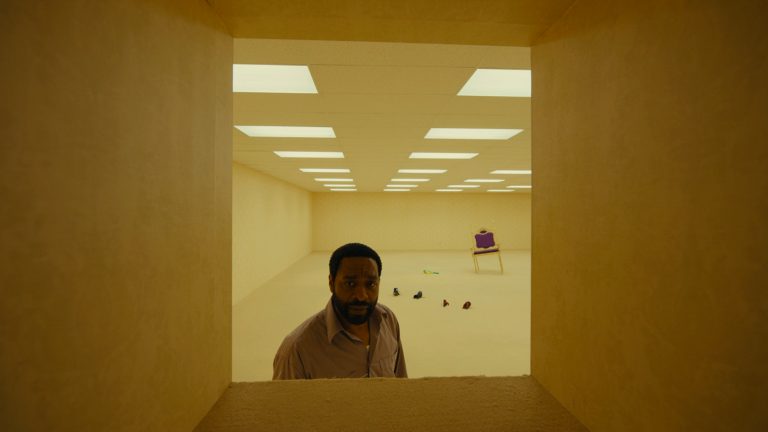
“It’s interesting because The Devil Wears Prada 2 made so much money and keeps getting left out of that story,” she tells The New World. “Even when that movie came out, there was this surprise that the sequel has done really well and made all this money. Something that consistently surprises me is how surprised we all are when things about women and starring women do well because women see things.”
This is what happened with the first The Devil Wears Prada in 2006. Though it starred then two-time Academy Award winner Meryl Streep in what would become one of her defining roles, the fearsome editrix of Vogue proxy fashion bible Runway magazine, Miranda Priestly, she was flanked by newcomer Emily Blunt and the relatively unknown Anne Hathaway.
With no support from the fashion industry, who were afraid of rankling Anna Wintour, on whom Priestly is allegedly based, The Devil Wears Prada became a word-of-mouth success, making $327 million at the worldwide box office on a $35–41 million budget that somehow still allowed for “those Chanel boots”.
“‘That’s our movie,’” said Chris Albrecht, former chairman and CEO of HBO from 1985 to 2007 on Sex & the City star Kristen Davis’ podcast Are You a Charlotte?, in response to the success of The Devil Wears Prada. “I said, ‘they just did our movie’.”
The first Sex & the City movie duly appeared in 2008, grossing over $418.8 million worldwide against a $65 million budget. “The Prada film helped prod us into, you know, doing it,” Albrecht conceded.
The second SATC film was critically panned but still commercially viable, making $295 million worldwide on a $95 million budget. And though the continuation series And Just Like That… ended on HBO Max last year after three seasons, it’s very much part of this new age of feminine nostalgia.
Like the first film, millennial women turned out in droves for The Devil Wears Prada 2, with audiences 76% female and 63% women over 25. The sequel reteamed Hathaway, Streep, Blunt and Stanley Tucci, as well as director David Frankel and screenwriter Aline Brosh McKenna, for a surprisingly apt examination of the state of media today, a far cry from the private cars and unlimited wardrobe budgets for fashion editors as depicted in the original.
That bodes well for Practical Magic 2, starring Sandra Bullock, who appeared in many a rom-com that made up millennials’ mid-’90s pop cultural diets, and the perpetually booked and busy Nicole Kidman. Though the 1998 original fell $7 million short of making back its $75 million budget, it was a mainstay of millennial Blockbuster rotations and, later, streaming, as well as #fallvibes inspiration.
“It’s smart that it’s coming on the heels of The Devil Wears Prada 2. If they market it correctly, I think it has potential to do well amongst target audiences,” Brannon Donoghue says. But, she ponders, “is there the same appetite for Practical Magic?”, before conceding that this is not a question that gets asked of the latest Fast & Furious movie. Though, perhaps with the disappointing yields of Masters of the Universe and Star Wars: The Mandalorian & Grogu, maybe the masculine nostalgia pipeline is running dry.
It speaks to the feminine nostalgia upswing, which also appears to have worked magic on Hocus Pocus 3’s release strategy. The third installment in the Bette Midler, Sarah Jessica Parker and Kathy Najimy occult comedy will reportedly receive a theatrical release, perhaps based on the success of fellow Disney properties The Devil Wears Prada 2 and Freakier Friday (thanks to Curtis pushing for a theatrical release—and the conglomerate needing to save face over The Mandalorian & Grogu and the live-action Moana remake). Hocus Pocus 2 was shunted onto Disney+ in 2022.
Suggested Reading
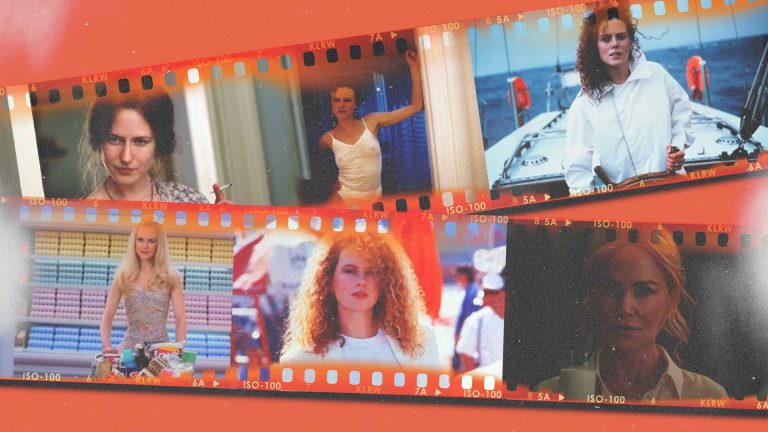

Nicole Kidman is great. But is she any good?
That was notably the pre-Barbie era, which coincided with the ghettoisation of romantic comedies and other female-driven films consigned to streaming. The much-hyped Romy & Michele’s High School Reunion sequel is proceeding with caution, though, getting the Hocus Pocus 2 treatment with a streaming premiere on Hulu. Though the original was considered a box office failure, making only $9 million more than its $20 million budget, it has since become a cult classic, powered by millennials hiring the VHS cassette and learning the lines by heart. (It me.)
And according to Netflix’s self-reported streaming numbers, In Her Shoes was the eighth most-watched movie, with 5.1 million views, in a random week this May, so perhaps the Toni Collette and Cameron Diaz-starrer from 2005 will be next in line to get a reboot…
Brannon Donoghue offers the new Supergirl as an example of how the old way is no longer working, both in terms of masculine (yes, it’s a movie about a woman but it’s set in the high-testosterone world of superheroes) IP falling flat and how this might not seal the fate of other female-led films in the future like its previous, 1984 iteration or the mid-2000s fiascos Electra and Catwoman did.
“I would like to say that things are a little bit more nuanced now because we have different data from streaming,” she says. “I guess the new question would be, which stories are given a theatrical release and which are relegated to streaming?”
Even when these nostalgic reboots fail to capture the essence of the original property, as with And Just Like That…, they generate discourse on social media and in the group chat—the modern version of dissecting our favourite movies at our lockers between classes or at the food court at the multiplex.
While feminine nostalgia might be a good thing for the box office at the moment, it comes at a time, like Kittrell noted, when upstarts like Backrooms’ Kane Parsons and Obsession director Curry Barker are simultaneously reaching novel heights for original films. I previously wrote for The New World about how the crowning of this new guard of filmmakers leaves out diverse creators, thus resulting in the same old, same old.
“I’m hopeful that The Devil Wears Prada 2 will have an impact on something else getting made,” says Brannon Donoghue. Just like Barbie begat Freakier Friday and Freakier Friday arguably begat The Devil Wears Prada 2. “I’m hopeful that there will be somebody in a position of power who will support emerging female filmmakers and not continue the cycle of the boy genius who is measured on potential and women who are measured on experience.”