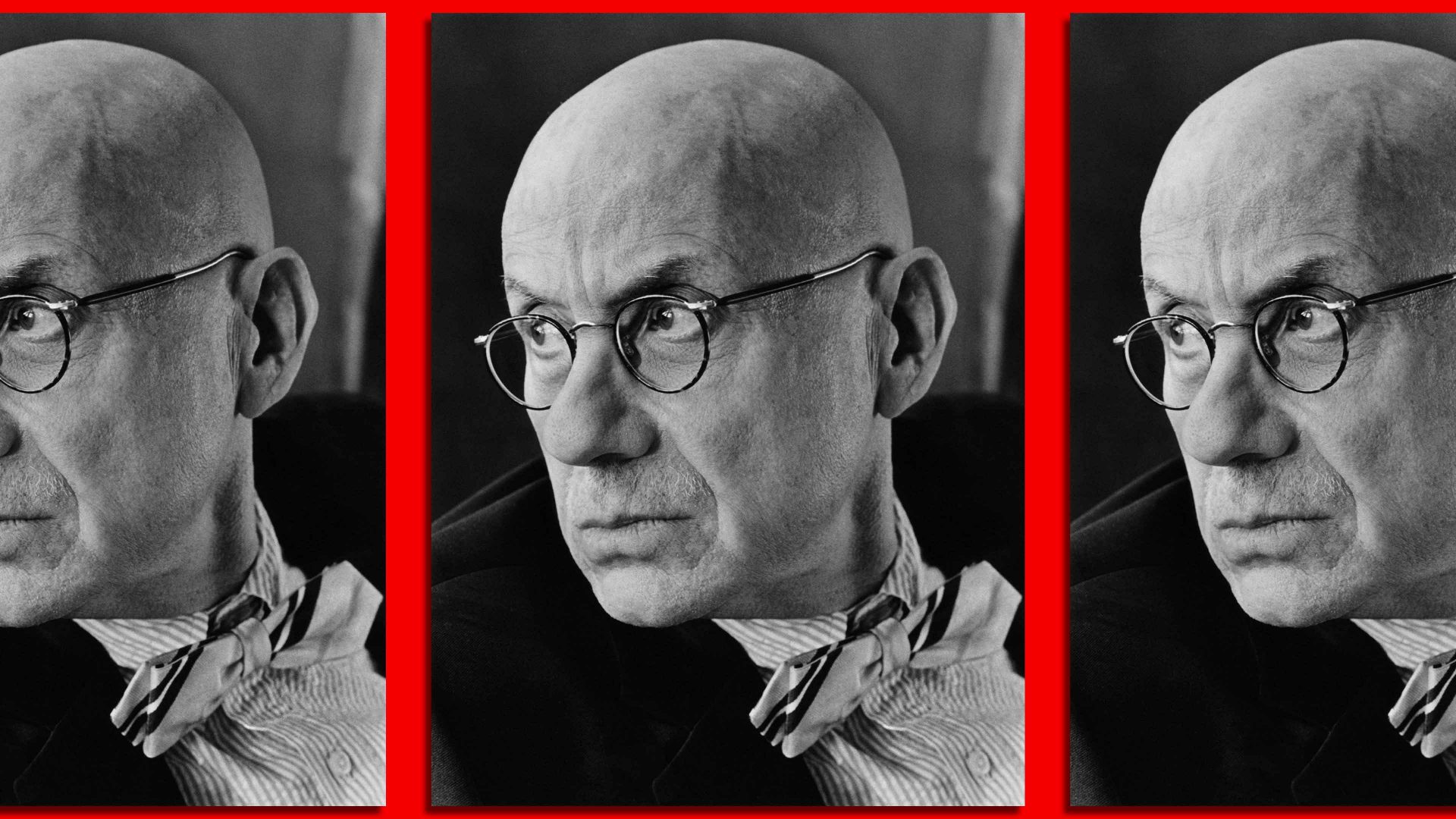
Ahead of my interview with author James Ellroy, the 78-year-old self-styled “Demon Dog of American Crime Fiction,” a footnote could be found appended to the email with his contact information. It noted, archly: “James will not answer any questions around Trump or politics.”
Given the nature of his new book, Red Sheet, this was on a par with being told before an interview with Steven Spielberg to promote Disclosure Day, “Steven will not answer any questions about UFOs or making films.” Forewarned might be forearmed, but it also asks more questions than it seeks to suppress.
Ellroy is nothing if not a political animal, a self-described “Tory mystic” who has railed against Bill Clinton (“monstrous and shallow”) and Barack Obama (“a coward, incompetent”) while praising Ronald Reagan (“a titanic human being”) and Margaret Thatcher (“a hero of mine”). He is also an iconoclast.
Consequently, it is hard to imagine him either declining the opportunity to support some of the crazier outbursts from the 45th and 47th president of the United States or running scared of official White House disapproval via an incoherent post on Truth Social at 3am.
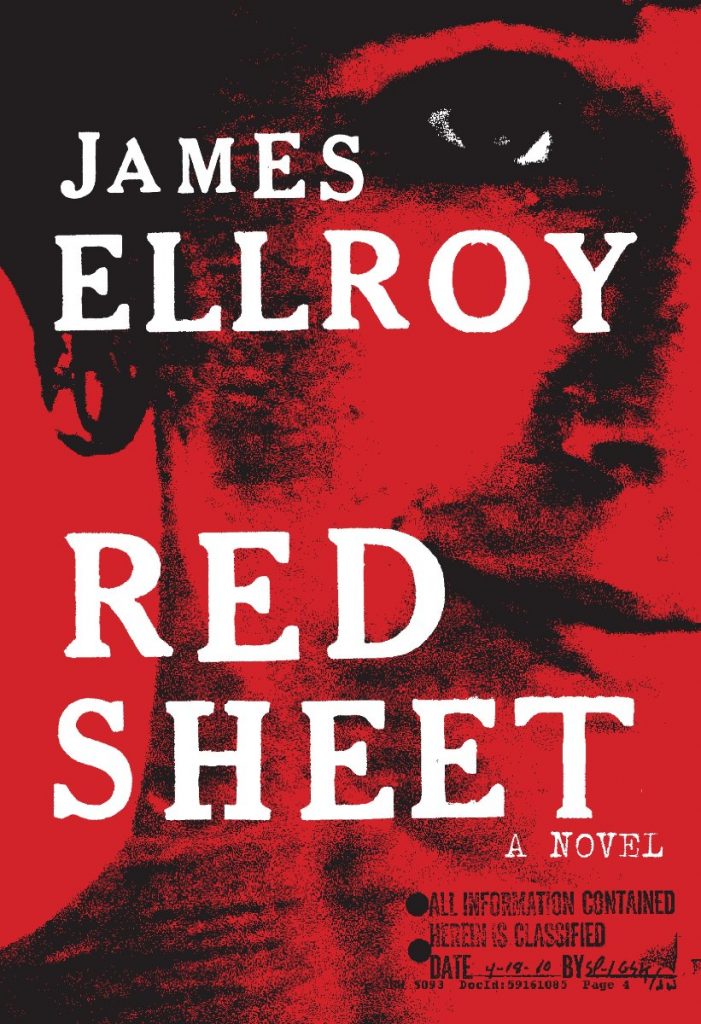
Whatever explanation might be behind the sudden coyness, the closest he came to name-checking Donald J Trump in almost an hour of conversation was when he was justifying the “audacity” of his Red Sheet – the fourth novel in his unfolding LA Quintet after Perfidia (2014), This Storm (2019) and The Enchanters (2023).
The story is set in late October 1962, at the time of the Cuban missile crisis. Cold war paranoia is at its high watermark. The book is typically expansive in scope and embraces Ellroy’s trademark clipped sentences and idiosyncratic right wing takes on the kidnap of the Lindbergh child in 1932, the Spanish civil war, the second “red scare” and the McCarthy-era witch hunts of the 1950s.
The title references the author’s slang for inter-agency files containing information on the real-life and fictitious suspected communists that the author takes great delight in vilifying and de-romanticising, framing, harassing and/or bumping off.
“It’s the idea of this particular book, at this particular time, when you’ve got a would-be dictator as the president of the United States [that’s audacious],” he says. “So people are anti-totalitarian.”
Asked if these “people” might be those who voted for the current president or whether this is just a feeling currently at large in the US, he replies with no real conviction, “Well, the people I’ve been speaking to. I’m a reclusive person. I don’t talk to a lot of people.” Other than the approximately 2,500 he will address on his new book’s US promotional tour, presumably.
It is an uncharacteristic retreat from a man who once said that Trump is “the big ‘fuck you’ to all pieties” but perhaps a sign that watching this administration run a supermarket sweep for grifters from the Oval Office has even been enough to turn off a man who has previously admitted to voting enthusiastically for George W Bush and delights in giving Richard Nixon a sympathetic rendering in Red Sheet.
His great LA Quartet – The Black Dahlia (1987), The Big Nowhere (1988), LA Confidential (1990) and White Jazz (1992), set between 1947 and 1959 – made Ellroy a literary celebrity just as Republican Party Reptile (1986), Holidays in Hell (1988) and Parliament of Whores (1991) were doing similar for another well-dressed American right winger, PJ O’Rourke. He shares page space with Ellroy in this illustrious left-leaning journal because, their undisputed brilliance as writers aside, their work remains a guilty pleasure for many liberals and, to borrow an apposite phrase, fellow travellers.
We love the books and are perilously close to admiring the men who wrote them but also struggle with the idea that we are feeling irritation or even resentment in precisely the Pavlovian way our tormentors intended and predicted. But don’t despair. There is a cure, you just need to read on.
Ellroy has had the edgy-author-does-preppy thing almost to himself since O’Rourke died of lung cancer in 2022. While the former Rolling Stone foreign affairs desk chief, with his blow-dry coiffure, could have stood in the window of Brooks Brothers without drawing a second glance, Ellroy, with the face of a pissed-off executioner jutting from the top of a button-down Oxford shirt, could not.
The clothes say Yale. Everything else says jail. The body language says fuck around and find out.
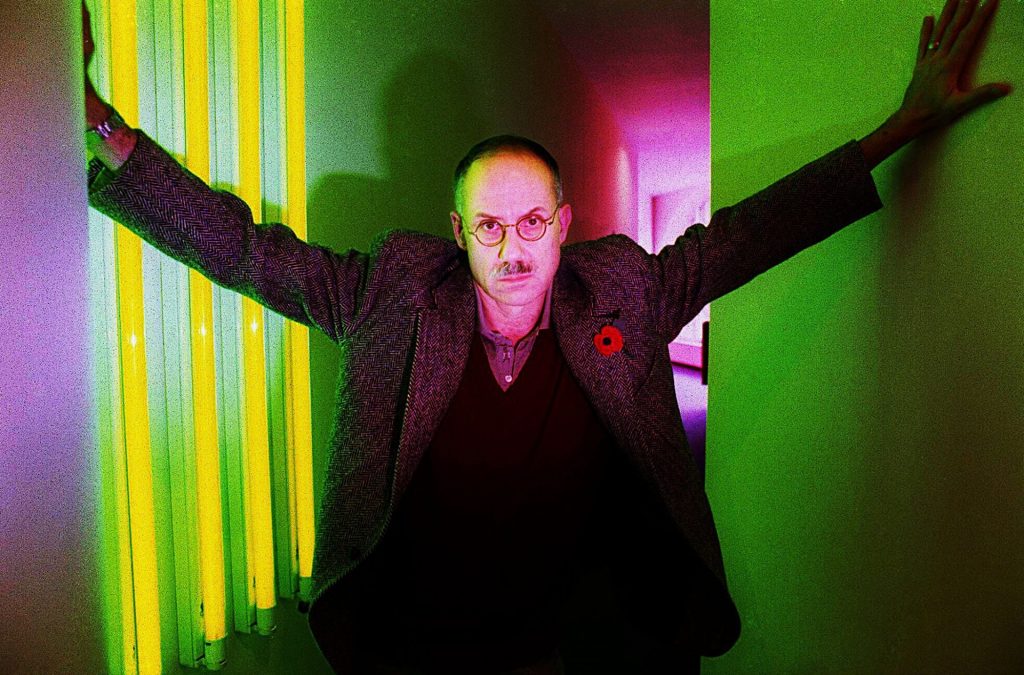
He instinctively favours this sartorial nod towards entitlement and privilege because it offends the egalitarian mindset. It is occasionally accessorised with loud Hawaiian shirts, but it’s the base outfit that is the perfect ensemble for his chosen vocation – the vicious and often very amusing baiting of those who arrogantly believe progressive thought is the only acceptable political position and that anybody who disagrees is either wrong or evil.
Typically, his detractors are not born on the wrong side of the tracks, whereas Ellroy’s backstory belongs in one of his own books. His mother was murdered by a sexual psychopath while he was still at elementary school and his father was the one-time business manager of 1940s screen siren Rita Hayworth. It gets no more noir.
Sent to a predominantly Jewish high school, he sought attention and violent confrontation by becoming a member of the American Nazi Party at 14. Later he served jail time – theft and vagrancy mostly – and became an alcoholic (the years of what he calls his “crazy man act”) before he found sobriety, fiction and a mission to rewrite American history in line with his own twisted, sleazy and fatalistic worldview.
His astonishing canon also includes The Underworld USA trilogy of American Tabloid, The Cold Six Thousand, and Blood’s a Rover, written between 1995 and 2001 and covering the years between 1958 and 1973 – the Bay of Pigs, the Vietnam war, the assassinations of JFK, RFK and MLK and the paranoia of J Edgar Hoover and Richard M Nixon.
“Nothing contemporary moves me at all,” he tells me. “Not in a positive way or a negative way. I’m a time-traveller and it’s my job to bring history alive again.”
Today, Ellroy is hunkered down in a hotel room in Andover, 30 miles north of Boston. He is on a tour to promote his new book but the landline to his room is not cooperating. It is the only way to contact him as he does not own a mobile phone and considers the internet to be “Satan’s work”.
A slow sandpaper growl eventually confirms that the problem has been resolved. The author then introduces himself with laid-back charm, apologises profusely and reveals himself to be in a mood best described as “upbeat”.
After the interview, he is due to attend an event hosted by, in his words, “An Ivy League clothing emporium” – of course he is – but first, he is delighted to report that “Red Sheet is doing well and, most importantly, the people who have read the book are wild about it… People have been nuts for this book in a manner that I have never seen before.” It could be his usual showboating shtick but it doesn’t feel like it.
The book thrives as an involved and intricate thriller (and, the author would add, love story) that crackles with the energy of American Tabloid, and the talk in the publishing trade – after a series of books that received less fanfare than his earlier work – is that it is a late-career comeback. It is also selling very well.
All the Ellroy trademarks are present and correct: the staccato prose, use of slang; extreme violence and humour combo. And of course, the provocative ideological thrust that in this case amounts to a carefully choreographed exsanguination of the American left’s most sacred cows.
“The big thrill for me is to go back in time,” he explains. “I was 14 years old in 1962 so I get to go back and live there and have the laughs and sleep with [folk singer and Ellroy crush] Judy Henske and do lots of groovy things that I didn’t do in real life. Fantasy has always been a very important part of my life, and history is my playground.”
Consequently, the details of suspected communist sympathisers are sought by the LAPD and US Attorney’s Office under a determined Robert Kennedy, while the young Nixon is revealed to be a tortured but tender soul. Elements of the International Brigade are painted as inhuman as the fascists they were fighting in Spain and the lionised “Hollywood Ten” – screenwriters and directors who fell foul of the House Un-American Activities Committee – are derided as sham martyrs and Stalinist collaborators.
“The public are wild about the humour of the book,” he insists. “They are really taken with the idea that Freddy Otash would become a handmaid to the civil rights movement with his friend Tom Bradley there, the ultimate mayor of Los Angeles.”
Otash has appeared in Ellroy books before, most recently in the previous book in the series, The Enchanters, and is familiar to the author’s army of dedicated followers. He was a real-life Hollywood “fixer”/PI and known to Ellroy, who says, “He was perhaps the biggest sack of shit in LA history. And considering it’s LA, that’s saying something”. He is depicted here as an ally of Bradley, the real-life first black mayor of Los Angeles.
Daryl Gates, a young LAPD lieutenant here, would become the city of angels’ controversial chief of police from 1978 to 1992 in the real world. He was infamous for championing aggressive policing that targeted the Black and Latino communities before being forced out over his disastrous handling of the Rodney King beating that precipitated the LA riots.
Suggested Reading

Secrets, lies and the spy who invented Blue Nun
In Red Sheet, Gates is tasked with rooting out and intimidating the far left and deploying the “Hat Squad” to do so. Ellroy uses the real names of the original detectives in this elite four-man team within the Robbery Division and lets them keep the fedoras that earned them their nickname, but equips them with a bogus political dimension and new purpose as an unquestioning, extrajudicial anti-communist strike force.
He has previously referred to this controversial combination of genuine historical people and events with outrageous reinvention to create something that feels historically authentic but is actually nothing of the kind as “reckless verisimilitude”. He has now decided upon a different name and a more current justification.
“I’m calling it the Secret Human Infrastructure of Large Public Events,” he announces grandly. “So we’ll never know how the good guys – Freddie Otash, Daryl Gates, the ‘Hat Squad’ – compared to [their real selves] during this time frame, but it’s fiction.
“The one question I never answer is what’s real and what’s not, and for the length of time people are reading the book, or rereading the book, the people will believe my version.” Like fake news? “Yes,” he cackles down the phone, “like fake news.”
Even though Ellroy writes his novels longhand before they are converted into typed pages via a retired FBI couple in France, this book has quite obviously been a labour of love.
“I am a megalomaniac and love to see my name in print and intend to continue writing books on a very large canvas for the rest of my career,” he declares. “But this book has been nothing but a kick. It’s funny, it’s outrageous. The police overstep their bounds, and we enjoy it, and the good guys win in the end.”
Who are the good guys for the liberal readers of Ellroy? What is the cure for that conflicted and unsettling feeling of being goaded by him, and enjoying it? And how can we endure the barbs or even laugh at the cruel and crude depictions of leftist icons in Ellroy without hating ourselves and therefore letting him win?
You can thank the late PJ O’Rourke for the answer. He accidentally revealed it to me during an interview for Esquire in 2008.
After admonishing me for turning up to a private members’ club in jeans and without a tie (“Good God man, are you trying to get me shot?”), he later fell into philosophical mode in the Red Lion in Crown Passage, talking about the effect he wanted his left wing readers to feel.
“It’s always delicious to find out that a zinger has gone right through the heart of whoever deserved it. It’s more than a perk of the job, it’s the raison d’être, but the opposite is also true,” he said.
“It’s not the idea that the zinger missed the target but that it landed perfectly, bullseye, and the well-meaning deluded liberal sap at the sharp end has not only failed to collapse on the floor, explode with rage or question their entire belief system but has actually taken it as some kind of compliment and gone out of their way to subsequently compliment the writing. That really sucks.”
In which case, it remains to thank and congratulate Mr Ellroy on his excellent new book about the heroic efforts of a few brave men to save America from the global communist threat. We enjoyed it but note that, if anything, he could have been harsher on Ethel Rosenberg, killed off at least three of the Hollywood Ten and made Richard Nixon the secret benefactor of a cat sanctuary. Maybe next time.
Red Sheet by James Ellroy is published by Hutchinson Heinemann