Sovereign View is a new-build mansion in Gloucestershire. Whoever buys it will drive through two gates – one onto a private road and the other to the house itself, where the high hedges and wrought iron railings will give them “ultimate privacy”.
As in Gloucestershire, so in Beverly Hills, where Jeff Bezos and Taylor Swift reportedly have a special arrangement with the city authorities. Their hedges exceed the 42-inch maximum height, but they do not have to pay the usual $ 1,000-a-month fine. Exceptions can be made – for the right sort of person.
Although “respect for a private life” is part of the Human Rights Act, English law has never satisfactorily defined privacy. But the Knight Frank property website makes it clear that shelter from the public gaze is a boon the wealthy are prepared to pay for. Houses are “nestled behind security gates” with “24/7 concierge and security”. The privilege extends to the healthcare the better-off buy, their travel, their children’s education and the non-disclosure agreements signed by their staff.
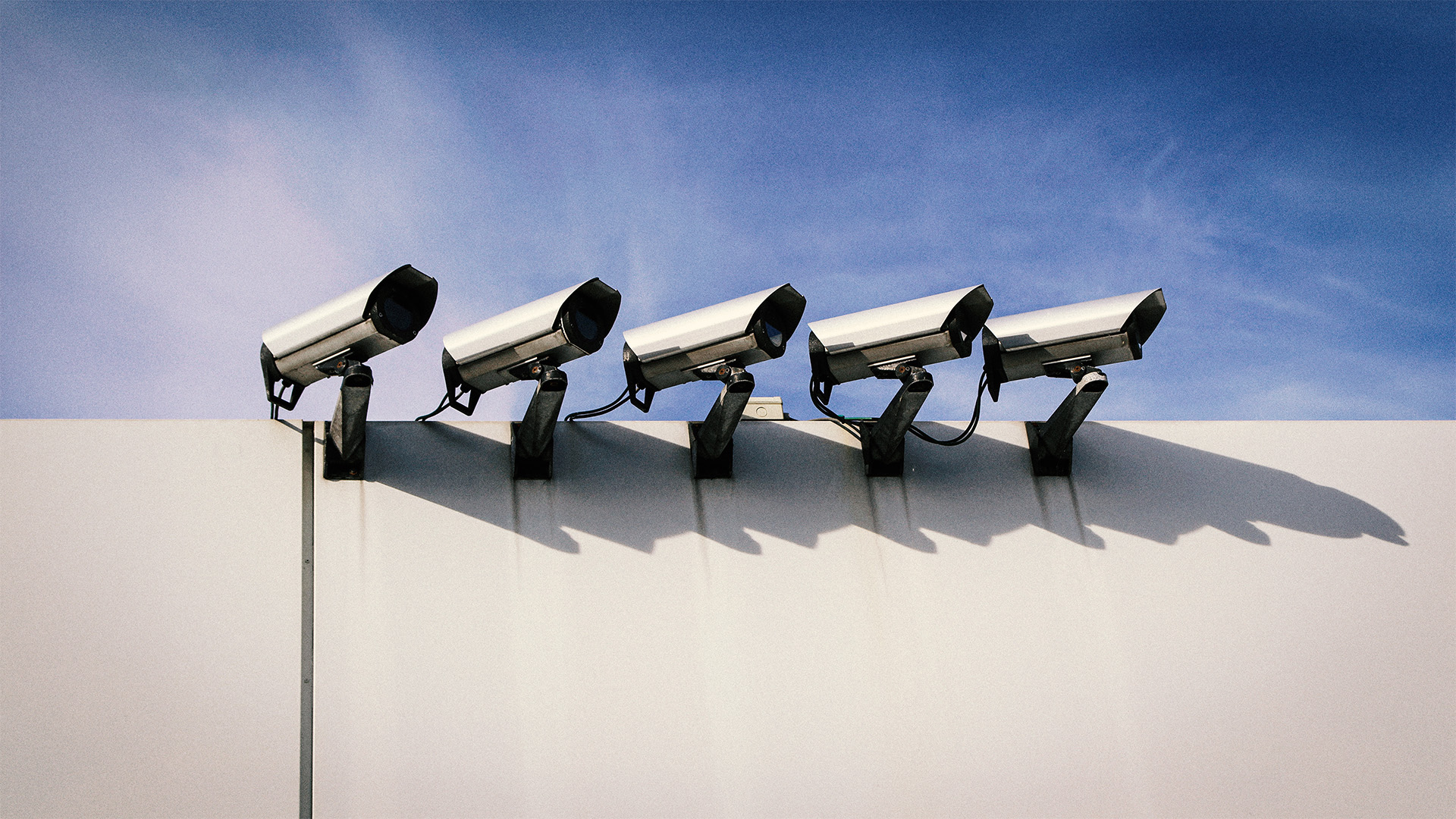
For the rest of us – who go shopping, take the bus and crowd into the stands at football matches – physical surveillance is a given. The police are notoriously reluctant to look at footage when mere theft is involved, but the cameras are there, just in case: CCTV has been used in the capital since 1960, and Transport for London alone operated 27,000 cameras in 2023.
Suggested Reading
Your new car is spying on you
Recently, however, the police and supermarkets have begun using new techniques that do not just watch people but try to identify them too. Despite all the rhetoric about the liberties of free-born Englishmen, we do not make a lot of fuss about it.
“In the UK, there’s been a more experimental approach compared to how they use it in Europe,” says Pete Fussey, a professor at the University of Southampton who researches surveillance techniques.
For the past decade, police have been using live facial recognition to pick out people who have previously been in police custody. This usually operates out of a van with a live camera feed. Officers can quickly stop someone if their face matches one of the approximately 17,000 wanted individuals the Met is looking for. This technology has been deployed at major sports events, as well as at last month’s Unite the Kingdom march and permanently at a location in Croydon.
Police are now trialling the use of a handheld device to scan faces for the same purpose. “You could quite convincingly argue that’s an intrusive search,” says Fussey. “You’re basically giving powerful surveillance tech to every police officer on the street without proper regulation.”
A third type of technology is retrospective facial recognition, where images from CCTV footage are matched with those on the passport and driving licence databases. Chains like Sainsbury’s, Co-op, Budgens and Sports Direct have launched their own, separate systems called Facewatch, which identify people previously suspected of shoplifting. In February, Warren Rajah was ejected from a Sainsbury’s in south London after staff wrongly matched him with a suspect.
Suggested Reading
Will we all end up as Chinese AI death clones?
Most of the time, people are unaware this is happening – which is part of the problem, says Fussey. “There’s something about the remote nature of this technology which makes it less intrusive.” A more direct form of surveillance would raise many more objections. “If we had to scan our fingerprints to get onto Oxford Street,” says Fussey, “we wouldn’t have it.”
But camera surveillance is not universal. Police and retail chains choose where and how to deploy it.
“Surveillance, historically and in perpetuity, is always visited on particular populations,” says Fussey. “That’s why the Orwellian [comparison] doesn’t work for me.”
In other words, Big Brother is far more likely to be watching you if you belong to a lower socio-economic class or an ethnic minority. Indeed, the Notting Hill Carnival was the first place where the Met ever deployed facial recognition. “These technologies will just reinforce the over-policing of these communities,” Fussey says.
Privacy, he argues, is a more urgent issue for some people than others. “The view of a Reform boomer in Surrey isn’t really relevant because they’re not really affected by this technology,” says Fussey.
Those who argue that people already give away huge amounts of information about themselves online are missing the point: “Snapchat aren’t going to come and kick your door in. We all give up some of our privacy for convenience, but that doesn’t mean we should be scanned in the street. We’re allowed to do anything as long as it’s not against the law.”
He argues that if ID cards or a digital equivalent do one day become a reality, the people who will be told to produce them will largely be younger, male and from an ethnic minority, as anyone who has seen French police in action can attest.
Shops and the police defend their surveillance methods by saying that they concentrate their efforts where crimes are most likely to be committed. If those places happen to be diverse, urban areas with lots of poorer people, then so be it. In January Sainsbury’s rolled out Facewatch to Dalston, Elephant and Castle, Ladbroke Grove, Camden and Whitechapel – all areas where houses worth more than a million pounds sit just a couple of streets away from run-down council estates.
But if physical surveillance is firmly targeted on poorer communities, what about the digital surveillance of what we do online? Can the better-off evade that too?
“I don’t think it’s entirely true,” says Ben Collier, a senior lecturer in cybercrime and technology at the University of Edinburgh. He cites “the huge amount of data collected about us by tech companies – location, biometric, and not just the big platforms” but the private companies that buy it from them.
Indeed, the very rich operate in a world that demands privacy but can also be surprisingly heedless of it, confident that money and power will keep people quiet. Jeffrey Epstein committed many of his crimes on a private island, but the existence of the Epstein files shows how careless he was about keeping his activities secret.
“What [people like Epstein] are paying for is a lack of consequences for their actions,” says Collier. The fact that so few of the Epstein files have been released suggests this impunity may be well-founded.
Suggested Reading
Should robots decide whether or not you get a job?
In a country with a welfare state, like Britain, the wealthy are not necessarily exempt from digital surveillance by the public sector. The more joined-up services become, the more efficient they should be. That is the rationale for asking a company like Palantir to merge NHS databases. But this comes at the expense of privacy. “When you look at the harms that you get from concentrating power in these very large companies concentrating surveillance power in government, it tends to be the most vulnerable that have the most negative effects accrue to them,” says Collier.
Yet this power can be applied in a more egalitarian way. In some Nordic countries, says Collier, tax records are linked to the criminal justice system and fines vary according to wages. At the same time, transparency is applied in ways that tend to bother the rich more. The US used to make citizens’ tax liabilities publicly available; it stopped doing that in 1976. Only Finland, Sweden and Norway currently have a public register, and in Norway you can no longer search anonymously.
However, governments are not always interested in collecting data about the most vulnerable. That might be because they do not want to scrutinise the consequences of some of their policies – austerity, for example – or simply because the data is difficult to collect. “This has been a real problem for Gypsy and Traveller groups, who are not well represented in statistics,” says Collier.
On the other hand, there are some people whom the state would like to know a lot more about, but who deliberately stay under the radar – sex workers, for example, or migrants who overstay their visas and work illegally. That makes them less likely to be prosecuted or deported. It also means that public services know very little about them.
Collier argues that we need to rethink our assumptions about privacy. “A lot of the discourse around privacy is stuck in this quite American, quite libertarian view that surveillance is about being watched,” he says. “Privacy is much more about power, not just about the state.
“It’s not necessarily that they can know lots of really personal things about us, although they absolutely do. It’s more they have the power to shape our lives.”
Although none of us, however wealthy, can escape a degree of surveillance, it is the better-off who escape much of the state’s scrutiny and who have more control over the uses to which it is put. Why do Swift and Bezos get away with their high hedges? Because no one wants to get into a legal quarrel with a billionaire – and because, in most people’s minds, their celebrity entitles them to an unusual degree of privacy in their private lives.
After all, the richest men in the world – and some of the best-protected from public scrutiny – made their money by tracking ordinary people around the web and anticipating their desires. They understand the value of privacy, and they can pay for it.
Ros Taylor hosts the More Jam Tomorrow and Oh God, What Now? podcasts