On June 24, the war in Ukraine that Vladimir Putin believed would last 72 hours hit the 1,567-day mark, the same duration as the first world war. The resilience of the invaded (backed by western intelligence and hardware) has been a major factor in Russia’s failure, but so too have been hubris, corruption and incompetence in the ranks of the invader. Anyone who picks up a copy of the remarkable book Soviet Scientific Institutes by Eric Lusito will understand exactly how things went wrong.
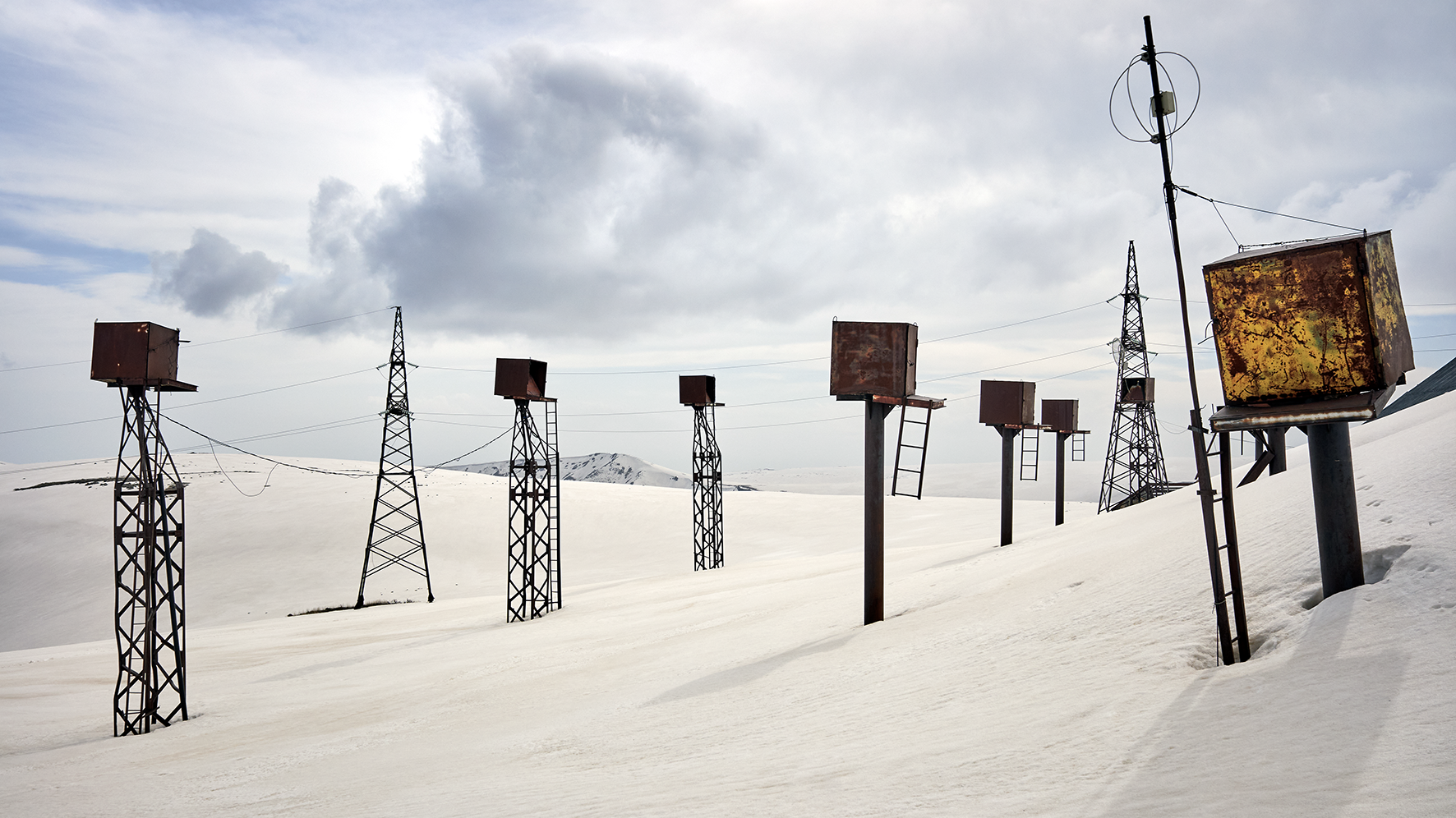
Lusito, a French photographer who has been travelling in the former Soviet bloc since the 2000s, spent nearly five years taking pictures of research stations across the iron curtain states – from Ukraine to Uzbekistan, from central Budapest to the remote foothills of Almaty, Kazakhstan. State-run and seen first as a path to rapid economic modernisation, then as the means to power the atomic and space races against the US, they were astounding in their scope.
Suggested Reading
Locked up and written off: The prison photos of Jane Evelyn Atwood
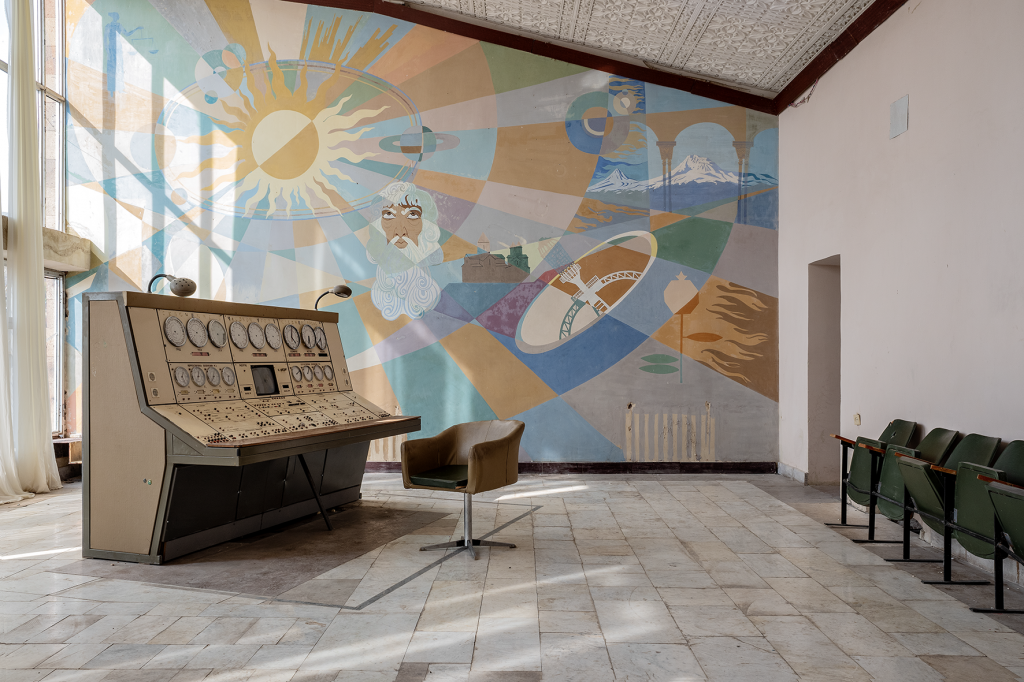
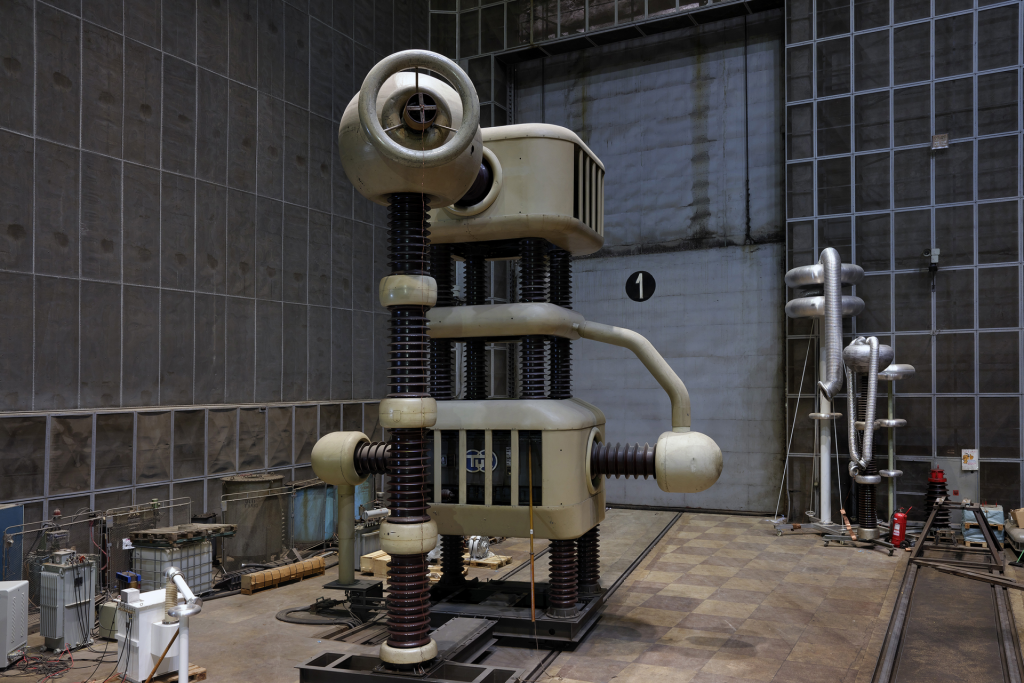
Oddly beautiful constructivist projects rose, complete with impossible-looking machines, brightly coloured control panels, gleaming tiles and dials, huge murals celebrating the power of workers united in the pursuit of progress (the inscription on one reads: “Shine like a guiding star, living union of science and labour! Glory to Soviet Science!”). They were staffed by armies in white coats or hard hats – by the time the bloc collapsed, it employed 1.3 million scientific specialists; one-third of the world’s engineers and one-quarter of its physicists.
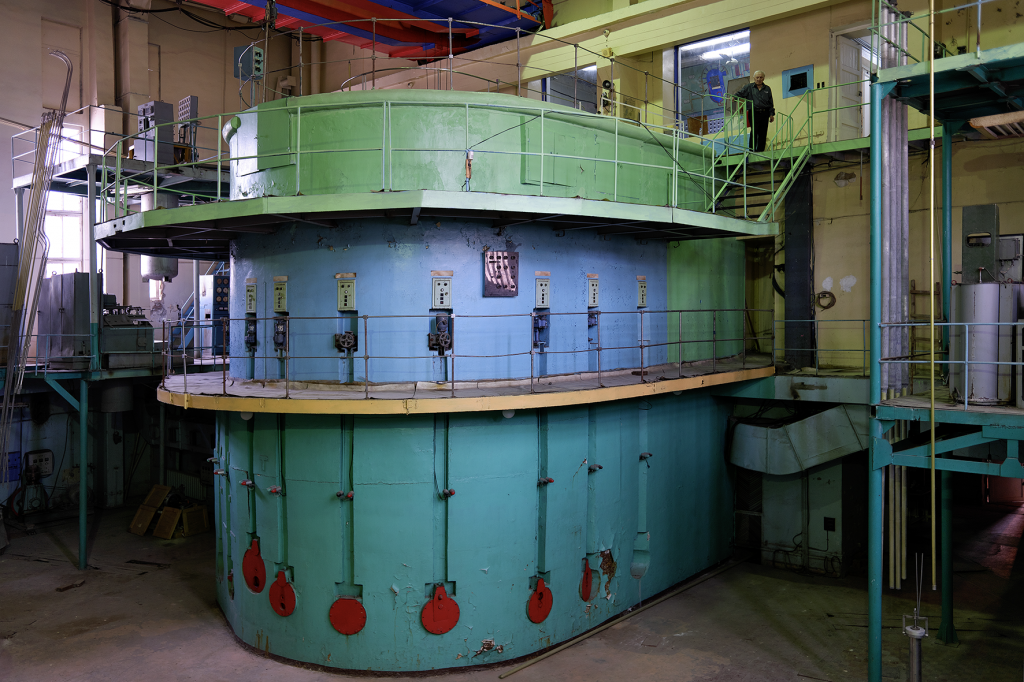
But as science and tech historian Paul Josephson makes clear in his introduction, ruin was built in, too. He writes: “Empty corridors and solitary researchers in many of the photos reveal another side to the story: a mere 35 years after the fall of communism, the rusty equipment and peeling paint hint at the fragility of socialist science. It was planned, funded and controlled from above, and this meant that scientists were denied the autonomy needed to adjust quickly to any crisis.”
Suggested Reading

A blue world hangs in the balance
Since the fall of communism, he adds, “The sciences in Russia and the other nations of the former Soviet Union have fallen into disarray. Budgets have dried up, bills remain unpaid, workers are let go. The photographs capture the squalor of abandoned science: lonely instruments in otherwise empty rooms, tired walls adorned with messages and portraits from a past era.”
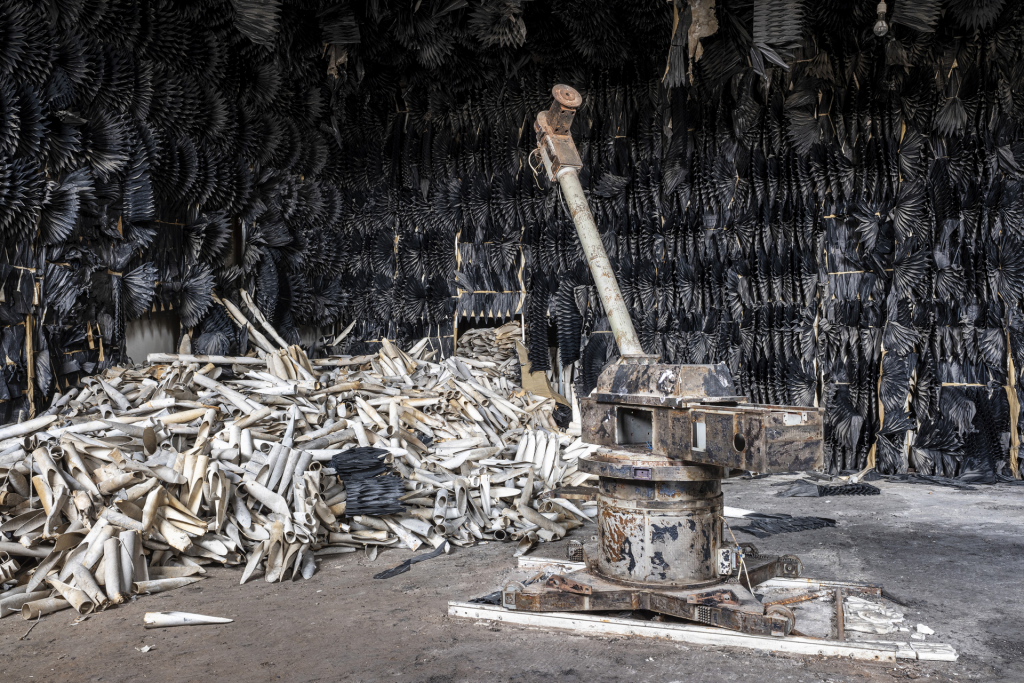
anechoic chamber at the
Radiophysics Research
Institute in Orgov, Armenia.
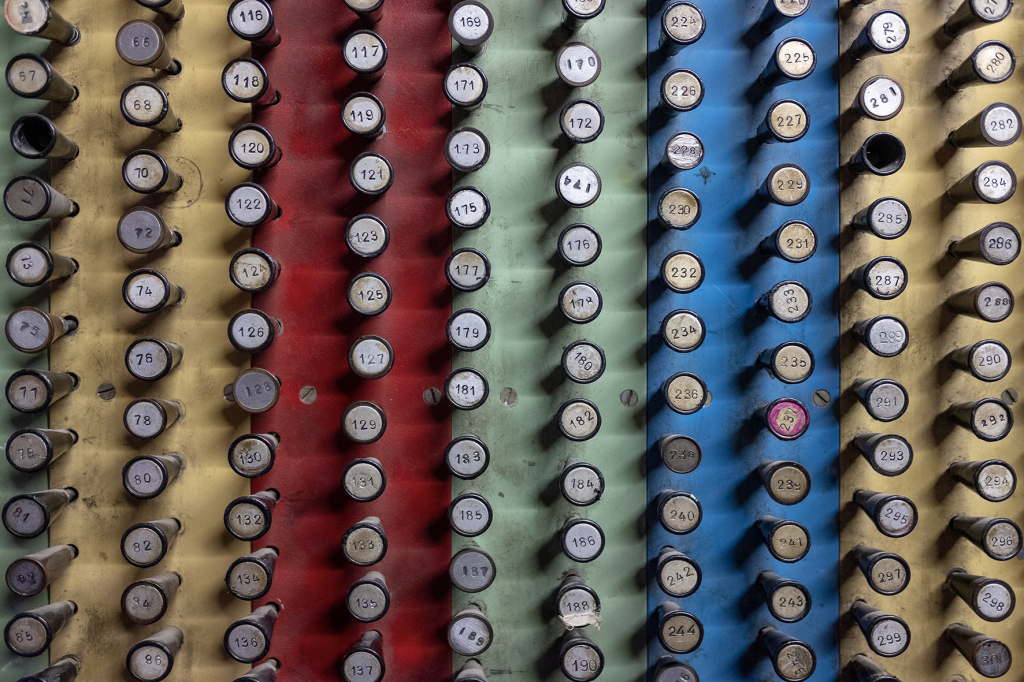
to the Usikov Institute for
Radiophysics and Electronics
in Kharkiv, Ukraine
There is only a smattering of human life in the vast sites captured by Lusito, but the faded glory of these alien spaces is somehow shot through with humanity. They remind me of the moment in the great monologist Spalding Gray’s Swimming to Cambodia (1987), when he describes meeting a US Navy officer who tells him: “The Russians are stupid people; they’re backwards. You know on their ships, they don’t even have electrical intercoms? They still speak through tubes?”
Gray continues: “Suddenly, I had this enormous fondness for the Russian navy, for all of Mother Russia. The thought of these men, like innocent children, speaking through empty toilet paper rolls, empty paper towel rolls, where you can still hear doubt, confusion, brotherly love, ambivalence, all those human tones, coming through the tube.”
Soviet Scientific Institutes by Eric Lusito is published by Fuel.
fuel-design.com/publishing/soviet-scientific-institutes/
Sadie Harper is a journalist from Connecticut