
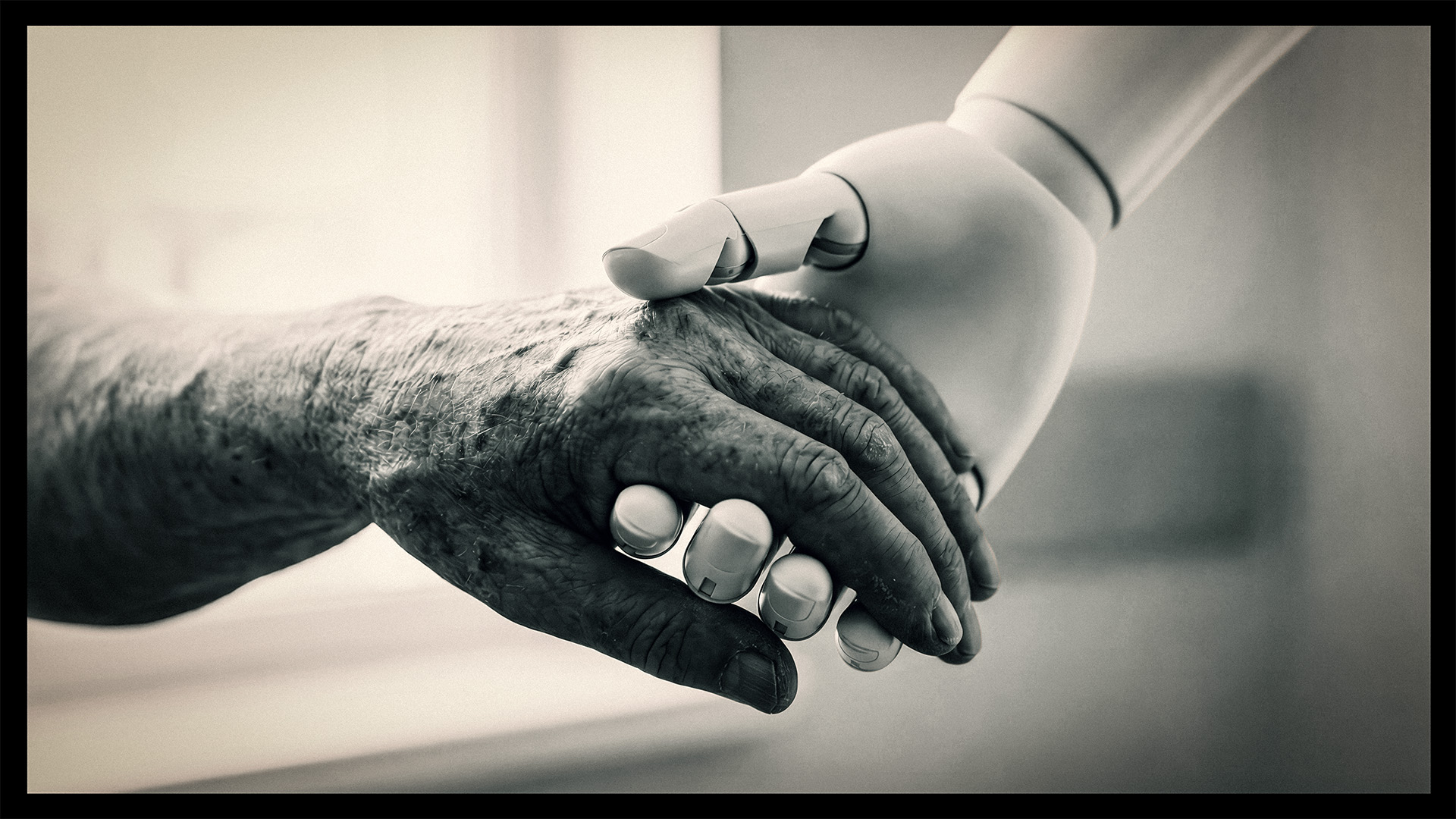
While it is a regrettable side-effect of being made of meat that we will all, eventually, die, humans have long yearned for immortality. Whether through the pursuit of empire or the creation of works of art we hope will outlive our fleshy carapaces, for millennia we have sought to extend ourselves beyond the meagre threescore years and ten biblically allotted – but it’s only now, thanks to AI, that we can truly live forever, and all this for the low, low price of $3.
Ok, fine, so “live” is perhaps stretching it – but, in China, a company called Super Brain is offering anyone who can stump up a few quid the chance to create a digital avatar of themselves (or indeed anyone else) that will exist in perpetuity.
Varying degrees of fidelity are available. The more expensive options can cost up to $1,400, but the basic premise is familiar to anyone who’s played with training an LLM. If you feed “the machine” enough data about a person’s life, opinions, thoughts, fears and dreams, the thinking goes, then it can provide a reasonable simulacrum of that person.
Through the ingestion of fragments of text, audio or video – in some cases as little as three seconds of footage – an interactive avatar can be spun up in relatively short order. Footage on Reddit shows eerie, pseudo-holographic figures imprisoned in plastic boxes: a Temu version of the Leia projection from Star Wars, forever ready to respond in statistically-probable fashion to any query you want to put to it.
“With enough data inputs, the AI chatbot can learn the thinking patterns of the person it ‘cloned’,” the co-founder of Super Brain, Zhang Zewei, told the South China Morning Post. “For people who are not ready to deal with death, technology can help alleviate their prolonged grief and provide a sense of closure.”
Suggested Reading

The moral minefield of water cremation
AI clones, whether of the living or the dead, are potentially big business. According to a report from iMedia Research, the core market size of virtual digital humans in China was worth 12bn yuan in 2022, and was on course to reach 48 billion yuan ($6.6bn) by 2025.
This isn’t a wholly new concept. The “companion AI” chatbot Replika started “life” as an attempt by its founder to create a posthumous, interactive copy of a former lover from chat records, and there are companies in the west that offer similar services. It is in China, though, where the idea has gained the most traction.
Despite Super Brain offering the service since 2022, the concept of “Chinese AI Death Clones” (in a packed year, already a frontrunner for the most dystopian concept of 2026) has gained international attention. This was after a family in Shandong province used the tech to “comfort” their octogenarian mother following the death of her middle-aged son.
The mother now has daily “video calls” with her son’s avatar, encouraging it to eat well and dress warmly. The “son” tells her he loves her. Heartbreakingly, some reports suggest that the woman is unaware that she is speaking to a digital copy of a dead man.
Suggested Reading


Artificial intelligence and the end of capitalism
One might argue that if such services provide a crumb of comfort to the grieving then they are a legitimate use of technology. After all, many of us who’ve experienced loss will have found ourselves talking to our long-gone loved ones in moments of difficulty, running through imagined dialogues as we seek to parse the day-to-day without their guidance and companionship.
On the other hand, however, the reduction of the full, messy, beautiful and complex entirety of a person to a photorealistic avatar and a few points in latent space does feel perhaps like it underplays the magic of humanity just a touch. A moment’s reflection on the practicalities of the process of creating an afterlife avatar brings some not-insignificant ethical considerations into play.
For a start, the choice of source material is its own set of considerations. The version of you created from your Substack will be different from the version built from your Whatsapp messages or your emails (not to mention, heaven forfend, your LinkedIn). The accessible training data will heavily influence the eventual persona. Would you want the forever-you to be built from a decade or so’s shitposting across socials? Who determines which corpus gets ingested and which rejected?
Suggested Reading

The AI candidate running for the White House
Then there are questions of use, and where your digital clone shows up. You might be broadly okay with it being used by family members seeking succour in a one-to-one conversation, but in theory there’s literally nothing to stop the forever-you being public-facing, existing in perpetuity across socials as some sort of eternal revenant made of 1s and 0s, capering away in a ghastly simulacrum of you-ness for time immemorial (or at least until the servers go dark).
You may think that it’s just a fad, some mad scifi rubbish from the fringe of the future that will never become mainstream, and, of course, you might be right. It is, though, worth noting that a patent was approved on December 30 2025 that describes an LLM able to simulate a user during a period of absence from social media, including when “the user is deceased”. The AI would post, reply and engage with content, as though the user in question were still alive. The company behind the patent? Meta.
While the Zuckerbergian machine has claimed it “no longer” has plans to move ahead with the technology, anyone concerned that they might end up being mimicked by The Machine in the afterlife might want to consider taking provisions. The old, nihilistic “DNR” tattoo could soon be updated to read “DNAI”.
 Most popular

The problem is they just don’t care about us any more


The New World at 500: Independence isn’t our marketing slogan. It’s our business model


Churchill, the Beatles, St George: All the English heroes who aren’t actually English


Sorry Nigel, but the polls show you’ve had it