In March 1996, health secretary Stephen Dorrell rose in the Commons to concede what Britons had long been assured was impossible: ‘mad cow disease’ had crossed into humans. Ten cases were confirmed, a decade after its discovery in cattle and after years of confident assurances that it posed no such risk.
What followed was not just a public health scare, but the opening act of a now familiar political drama. The resulting EU ban on British beef quickly became a proxy battle over sovereignty, fairness and national pride—an early rehearsal for the arguments that would culminate in Brexit.
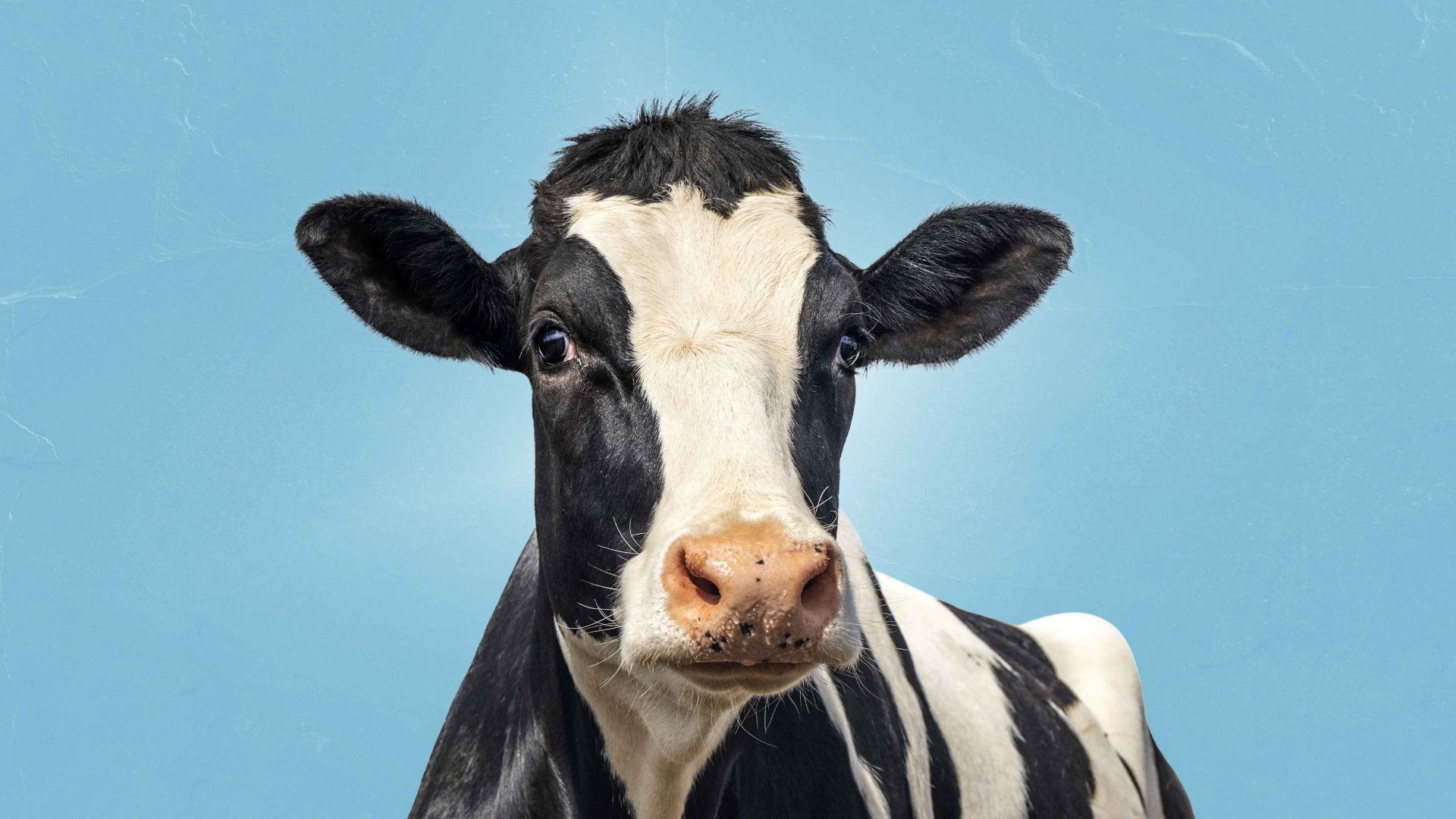
Bovine Spongiform Encephalopathy – BSE – was a grim fixture of late-1980s and early-1990s news. A disease in cattle caused by abnormal proteins that damaged the nervous system, it led to coordination loss and ultimately death.
The defining images were hard to shake: cattle stumbling around farmyards as their legs gave way, and agriculture minister John Gummer awkwardly trying to feed a beefburger to his young daughter, Cordelia – a gesture that came to symbolise the government’s faltering response.
Suggested Reading
Brexit was for the rich, and they’re not even pretending anymore
By 1988, the risk from feed containing the remains of infected cattle or sheep had been identified, and bans introduced. So too were restrictions on high-risk parts of the animal, such as the brain and spinal cord, entering the food chain. But enforcement was patchy, and confidence fragile.
Officials insisted there was no evidence the disease could pass to humans. Few were reassured. In May 1995, 19-year-old Stephen Churchill became the first known victim of the human form, variant Creutzfeldt–Jakob disease (vCJD). Even then, that December, Dorrell maintained there was “no conceivable risk” from eating beef.
It was a position that could not hold. The parallels between BSE and vCJD were increasingly difficult to dismiss. Four months later, Dorrell made his bombshell admission in the Commons that a further nine cases had been identified—some already dead, others dying—and that “the most likely explanation” was exposure to BSE.
The victims were young – between 18 and 41 – and the disease was indiscriminate, incurable, and slow to surface. With an incubation period of up to 15 years, fears spread that millions could be at risk. Beef sales collapsed. Schools and hospitals stripped it from menus. Around 4.5 million cattle were slaughtered, at a cost of £4 billion.
This was a catastrophe, but what happened next – though completely understandable – would set another disaster in train.
Germany had already banned British beef imports. Within two days of Dorrell’s announcement, Belgium, Sweden, Holland and Portugal all followed suit. French agriculture minister Philippe Vasseur said his country would build a ‘hygienic wall’ to keep out British beef. It was the opening salvo of what became known as the ‘Beef War’; the ‘CATTLE OF BRITAIN’ as The Sun labelled it.
Suggested Reading
Ignore the Daily Telegraph: the Brexit horror stories are true
By the end of the week, the European Union had imposed a worldwide ban on the export of British beef and related products, EU agriculture commissioner Franz Fischler declaring: “the aim is to help us ring-fence the problem in the UK.” Europe’s stance was clear: the problem was British, not bovine.
The country’s beef farmers, already struggling due to the collapse in domestic sales, now had their access to an overseas market worth around £640m per year (£1.3bn in today’s money) cut off. Many retired, many more were made bankrupt. Some were driven to suicide.
However, the BSE-related ban was also a cultural affront. As prime minister John Major put it, beef was “part of the psyche of our nation” – a stereotype the French have captured, albeit mockingly, by labelling their cross-Channel rivals ‘les rosbifs’. It could be framed not just as a threat to the nation’s economy, but its culture, its very sense of self.
The Sun seized on this, warning that “If Brussels has the power to stop Britain from selling a product anywhere in the world, then we are no longer an independent sovereign nation with control over our own affairs. We are just one of the herd. John Bull has been neutered.”
The editorial channelled mounting Euroscepticism born of the Maastricht Treaty four years earlier, which created the EU and set the Euro on its course. Long before slogans like “Take Back Control,” opponents of greater integration weaponised the BSE crisis, turning it into a miniature culture war over Britain’s place in Europe.
Teddy Taylor, a Conservative backbencher who had been stripped of the party’s whip for opposing Maastricht, called for a retaliatory ban on French wine and beef. Fellow rebel Bill Cash called for the European Commission to be taken to court. Notably, the USA, China and Japan, which all also banned British beef and for far longer, drew scant political or media hostility.
Major found himself fighting on two fronts. With his leadership openly defied by several key members of his own party – “bastards” as he called them in an unguarded moment caught on a hot mic – and his 21-seat majority dwindling, he needed to keep his most unruly Eurosceptic MPs in check.
Various responses were considered, including a retaliatory ban on French cheese and apples and on beef from European countries where there had been cases of BSE. In the end, the government employed a more theatrical tactic: an ‘empty chair’ policy, first used by Charles de Gaulle in the 1960s. Britain would veto any EU decision requiring unanimity, effectively grinding business to a halt.
While de Gaulle’s tactics had successfully won concessions, Major found them far less effective. The approach was unsustainable. The EU had little appetite for a single member obstructing its work—and Britain soon found itself in the absurd position of blocking proposals of its own.
Suggested Reading
Whatever happened to the Brexiteers?
The policy also split the Conservative Party. The pro-Europe wing was concerned about the damage such a confrontational approach would have on relations between the UK and the rest of the EU. The anti-Europe wing saw it, in Major’s own account, as “a declaration of war”.
Yet, it did little to placate them, instead stoking the fire of their Euroscepticism. Critics claimed other European countries lacked proper systems to trace BSE, or quietly concealed outbreaks when they occurred. The ban, they argued, was less about public health than protectionism. Often their arguments were couched in martial language, invoking the second world war.
Serious questions about Britain’s EU membership began to be asked in both London and Brussels. Sensing the genuine possibility of Brexit before the term had been coined, Leon Brittan, then the UK’s commissioner, urged business leaders to start speaking up in support of the EU “if we are not to be lured, step by insidious step, on the dangerous path towards leaving”.
In an interview with The Observer, European Commission president Jacques Santer issued his own blunt assessment: “The EU is reaching a moment of truth. We are reaching the limit of our tolerance.”
To resolve the situation, he developed an apolitical compromise informed by science that all member states could sign up to. The ban began to be phased out in 1999 and was fully lifted in 2006, but the crisis caused lasting damage.
What had begun as a technocratic food-safety measure quickly took on symbolic force. It reinforced a long-standing suspicion that Britain was never fully European, nor fully committed to the project. In its wake, Euroscepticism found a potent script: an inflexible EU, British interests overridden.
That narrative endured – and in 2016, it delivered Brexit.
 Most popular
Suella Braverman’s book has sold only 106 copies. This is why
The Brexit majority has gone for ever – rejoin now has a majority of 9 million
The mask has slipped – now we can see the real, shameful face of Reform
The riots in France are being stoked by Russia and Iran