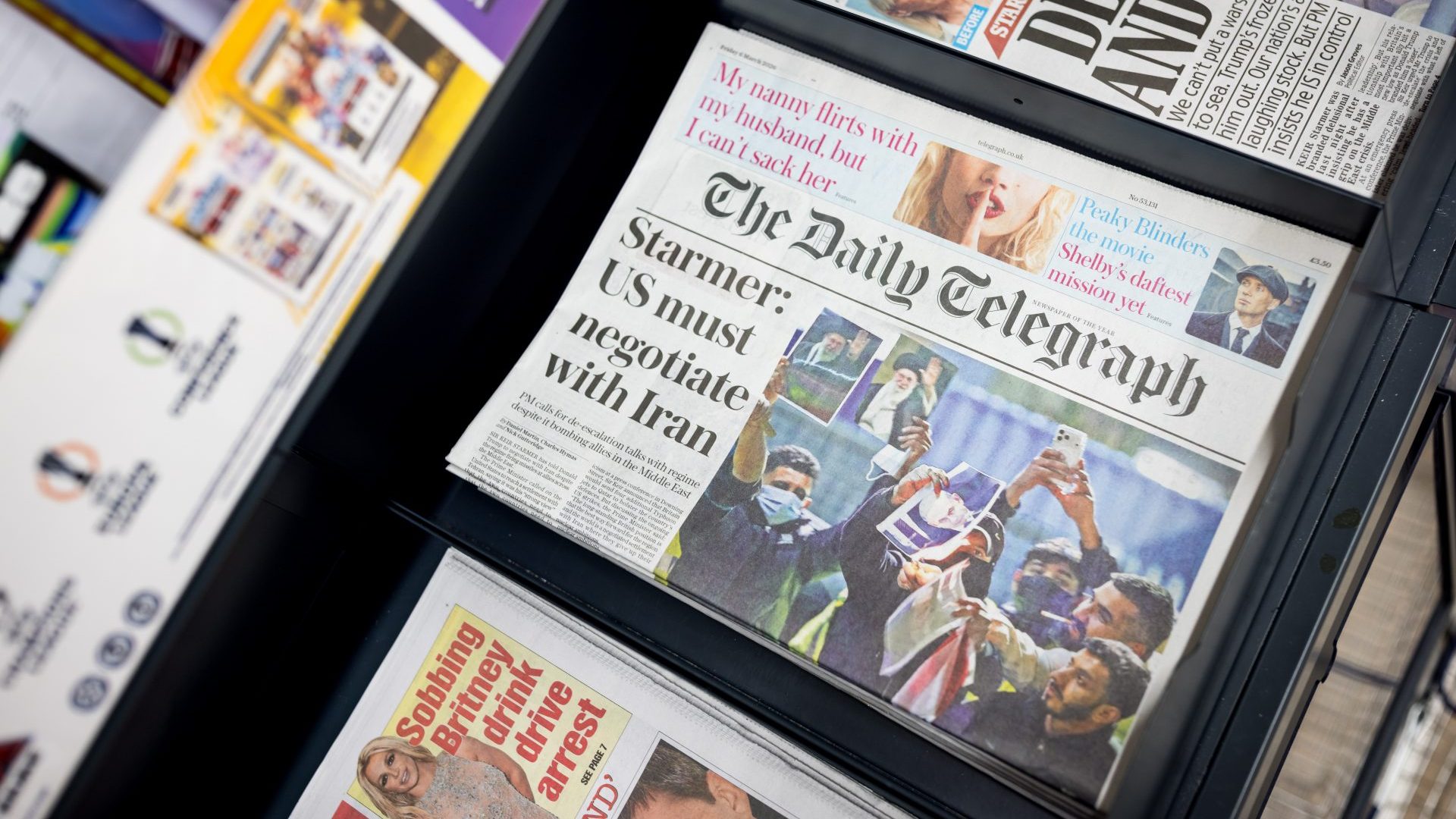
“The Brexit horror stories aren’t true”, the Daily Telegraph assured its readers this week with an article by economics columnist Liam Halligan subtitled “Project Fear – led by George Osborne and the Treasury – was pure propaganda.”
“Conventional wisdom says that leaving the European Union has harmed the British economy,” harrumphs Halligan. “Listen to almost any Brexit debate – over the airwaves or on the professional conference circuit – and it’s invariably taken for granted that being outside the EU has done serious economic damage.
“As we go into June, and the 23rd approaches – the 10-year anniversary of that hotly contested, era-defining referendum – this message will be rammed home again and again. But it simply isn’t true.”
Clichés apart, though – “hotly contested”, ugh – is it true that it simply isn’t true? Or is the Telegraph, still flag-waving for its pet project, despite every available jot of evidence it’s been a disaster – guilty of pure propaganda itself?
Halligan’s article is full of holes. Dismissing the loss of trade with the EU, he writes: “Yes, our trade is pivoting away from Western Europe and towards the rest of the world, and rightly so.
Suggested Reading

Why have we let Putin get away with it for so long?
“This is partly because Brexit allowed us to sign trade deals not just with Australia and New Zealand, but also India, the Gulf States and, most significantly, the Trans-Pacific Partnership (TPP) bloc – giving our goods and services preferential access to the fastest-growing region on earth.”
The trade deals with Australia and New Zealand? The ones which have allowed a flood of cheaper food to enter the country to the dismay of the farming industry?
The ones of which the National Farmers’ Union says: “Increased meat imports are landing at a time when our domestic livestock farmers are already under significant strain from a challenging dry season.” The ones which led to a headline last year saying ‘Farmers’ anger grows as Australian beef floods into Britain’? Yes, those (that headline, by the way, was in the… Daily Telegraph).
And just how much of a boost have those free trade deals with India and the Gulf states been? We don’t know, because they don’t technically exist yet. Beset by arguments over visas, tariffs and agricultural standards, the free trade agreement with the Gulf Cooperation Council was only concluded two weeks ago, while it must be news to business secretary Peter Kyle that we have a deal with India: he must be wondering why, at the time of writing, he’s currently in New Delhi still trying to bring it into force.
Meanwhile, Halligan boasts that “The 12-nation TPP bloc now commands a bigger slice of the global economy than the EU. This is set to double to well over 30pc over the next 20 years”.
Really? The TPP’s share of global GDP, at around 15%, is virtually identical, or even, by some estimates, slightly smaller than that of the EU. And for it to “double to well over 30pc” over the next few years is economically impossible, unless Halligan knows something we don’t and either the USA or China are about to join.
Suggested Reading

My airport row with a Trump supporter
“The Office for Budget Responsibility (OBR) continues to cite the ubiquitous ‘fact’ that Brexit has caused a 4pc reduction in UK GDP,” snorts Halligan. “This estimate was never the result of in-house modelling, but merely the watchdog’s collation of various external pre-Brexit forecasts, mostly from Remain-backing organisations.”
In fact, the OBR, while initially basing its 2019 figure on a cross-section of external studies, has continually updated its analysis using real-world, post-Brexit data – and stands by it. And it has never claimed a 4% reduction in GDP – that figure is a measure of lost potential growth (i.e, the economy is 4% smaller than it would have been had the UK remained), not a claim that the economy would shrink by 4% from 2016 levels – something you might think an award-winning economist would know.
Elsewhere, Halligan says that “outside the protectionist racket that is the EU’s customs union, we also no longer send £3-4bn a year to Brussels in tariffs paid by hard-pressed UK shoppers on non-EU-imported food, clothing and footwear”.
Which is true: we don’t. But that doesn’t mean that we’ve magically stopped paying tariffs. The government simply replaced them with its own UK Global Tariff (UKGT) regime. What’s more, because the UK left the customs union, British businesses now face billions in new administrative costs (rules of origin, customs declarations and border checks), which has increased the cost of food imported from the EU.
Finally – and you know this is where you are going wrong – Halligan praises former negotiator and certified Brexit botcher David ‘Frosty’ Frost, referring to “the wide-ranging UK-EU trade deal negotiated by Lord Frost”. Except, of course, it wasn’t “wide-ranging” enough to actually include services – which make up roughly 80% of the UK economy. Still, Frosty is a fellow Telegraph columnist!
Inventing completed trade deals, inflating the economic might of the Pacific bloc, confusing nominal growth with structural productivity losses? Sounds rather like pure propaganda to us…
 Most popular
My truly deranged encounter with Trump apologist Kellyanne Conway

Suella Braverman’s book has sold only 106 copies. This is why

The moral depravity of Robert Jenrick


Hungary’s lesson to the world: Populism isn’t permanent