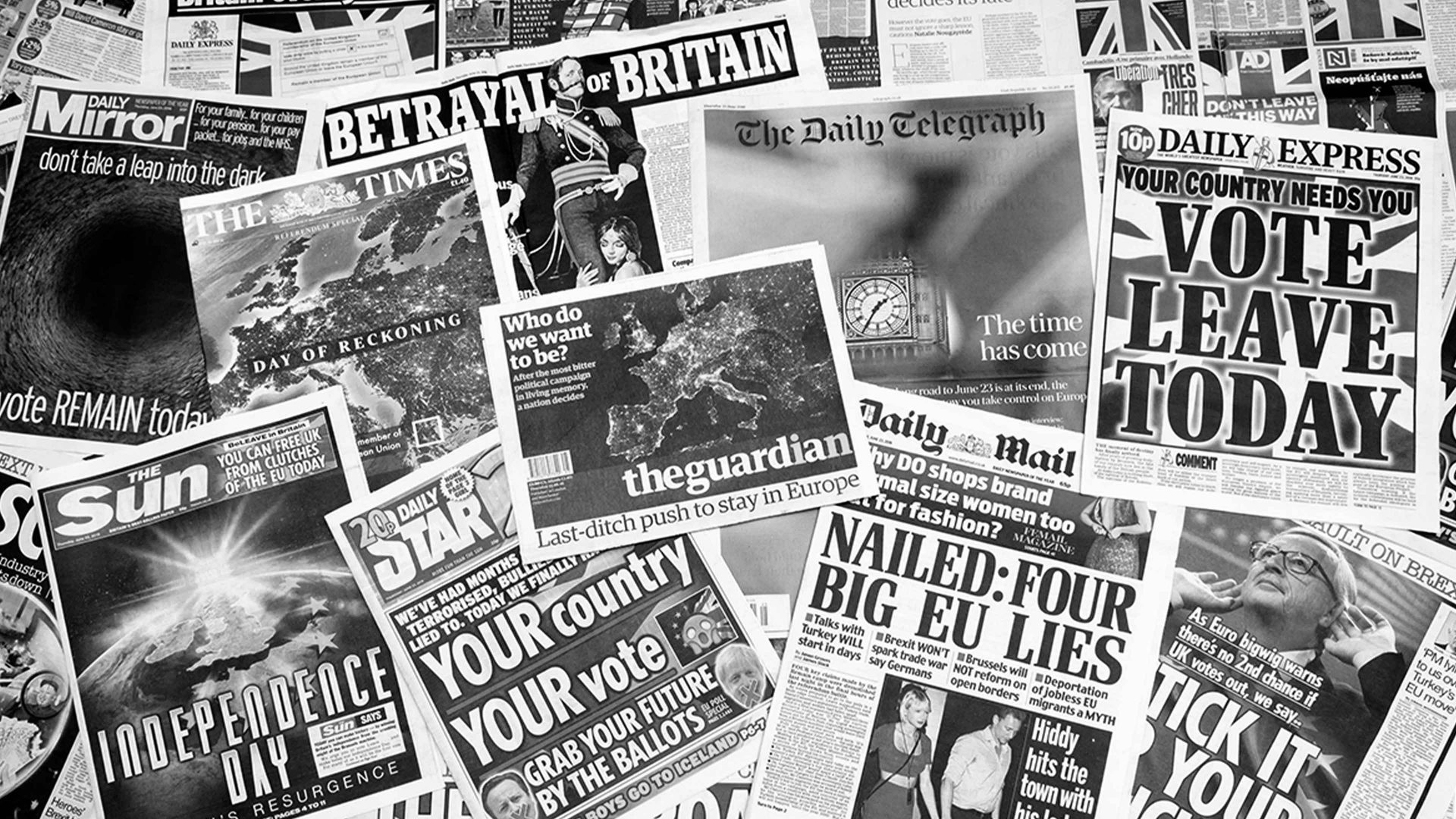
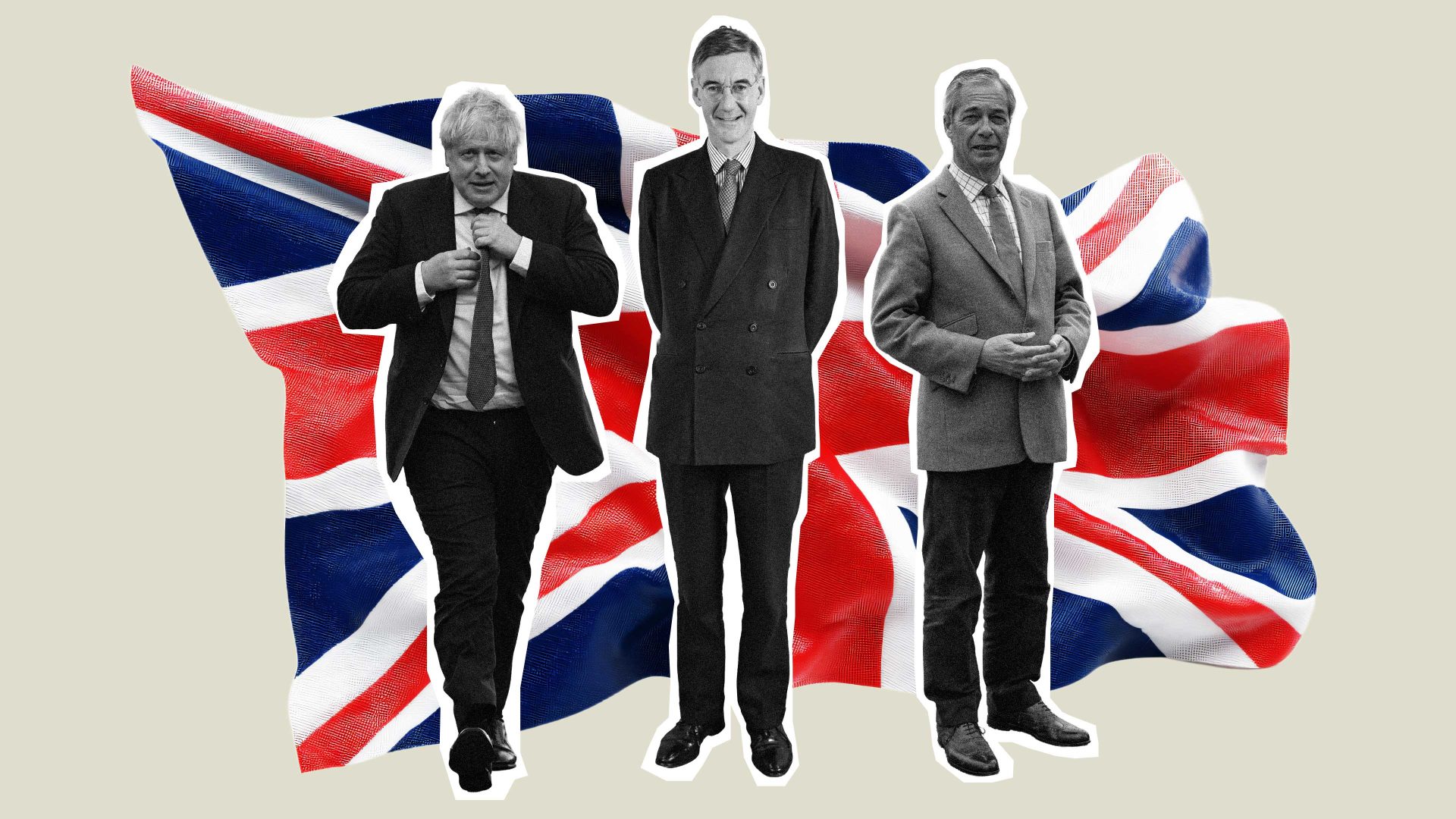
There are those who say that if the British electorate had summoned the courage to leave the European Union in 2016, the United Kingdom would today be booming.
If the UK had exited the EU, its economy would be resurgent, the NHS would be in receipt of an extra £350m a week, and the cost-of-living crisis would have been mitigated by the removal of EU restrictions limiting hoovers to 900w.
With King Charles III this week agreeing to relocate to a replica Balmoral in Florida, in exchange for president Trump promising to row back on his plan to annex the Shetland Islands, the thorny issue of managed decline is once again at the forefront of the national conversation.
In bureaucratic, grey, single-currency Britain, where the bananas are straight, pint glasses don’t have crown stamps, and fish speak French, we decided to track down the movers and shakers from the defeated Brexit camp to ask: where are they now?
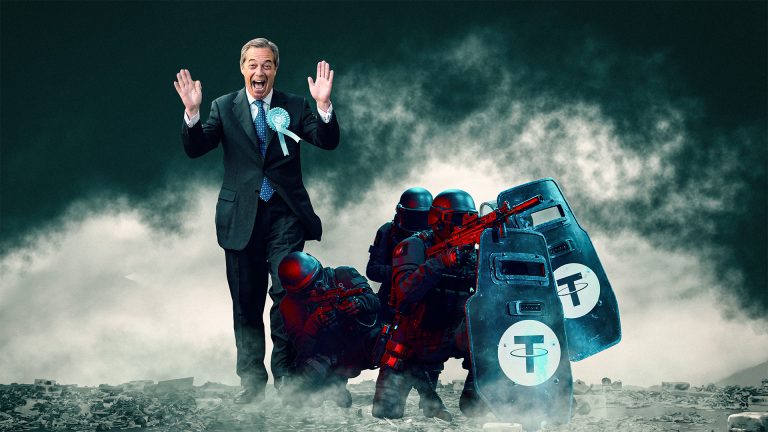
Nigel Farage
Exhausted by the emotional toil of trying to convince a nation it was about to be invaded, in a surprise pivot Farage began presenting Cathedrals and Abbeys of England and Wales on Russia Today. With Nige at the helm, it became the channel’s most popular factual programme, particularly among the notoriously hard to crack FSB demographic.
Having also carved out a lucrative niche on social media by pretending dinghies full of refugees were responsible for decades of chronic underinvestment, Farage was installed by new Question Time showrunner and balance-hire, Toby Young, as the programme’s first ever permanent panellist.
There were rumours during the extradition of prime minister Jeremy Corbyn, that he was set to be crowned Donald Trump’s de facto leader of Vichy England. However, the project was foiled when Farage’s advance column – televised live on GB News – got stuck behind a convoy of tractors protesting that they were still allowed to export food to the EU.
As a result, he was beaten to Downing Street by deputy prime minister Keir Starmer, who was sworn in without an election on the grounds that he was a grown-up.
Farage denies this, maintaining that he was saluting to Horst-Wessel-Lied in the back of a Mercedes-Benz 770K at the head of a convoy of Range Rovers flying MAGA flags, in solidarity with arable farmers.
Today Farage lives in the Dungeness lighthouse where he chain-smokes Rothmans, scans the horizon for men of fighting age, and records videos for OnlyFans. In his spare time, he is MP for Clacton.
Boris Johnson
After months of speculation that he was to be Team Leave’s secret weapon, in February 2016 Boris Johnson famously authored a column for The Daily Telegraph which praised the benefits of the single market and argued for the UK to remain in the EU.*
In the ensuing Tory civil war, Johnson emerged victorious and called a general election. His campaign platform of fixing the party’s Brexit hangover with an oven-ready EU fiscal and defence integration deal, increased the Tory majority.
2020 looked set to be his year, but then, with Lulu Lyttle wallpaper to choose and a book about Shakespeare to finish, Covid arrived and rejected his valiant efforts to handshake it back to Wuhan. These factors, combined with a Number 10 wine fridge that wasn’t going to drink itself, meant his responses to the novel coronavirus were largely catastrophic.
With public anger mounting – not least over claims that EU bureaucracy was hindering the vaccine rollout – salvation arrived from Brussels. When outgoing president of the European Commission Ursula von der Leyen nominated him as her successor, Johnson was on a Eurostar quicker than you can say “let the bottles pile high”.
His presidency proved no less turbulent than his premiership. While praised by some for finally securing Turkish accession, his tenure was repeatedly overshadowed by scandals, which peaked with the infamous Committee on Fisheries chem-sex party he hosted in the Berlaymont Building with Evgeny Lebedev, unconvincingly defended by an unslept Johnson on CNN as a “routine cultural exchange.”
In 2025, facing a no-confidence vote from MEPs displeased at being described as “party averse woozy willies” and “tank topped bum boys” Johnson became the first president to prorogue the EU’s legislature.
In the ensuing constitutional confusion, he installed an ultra-loyal College of Commissioners composed largely of Spectator staffers, ex-KGB officers, and nineteen-year-old interns who bore more than a passing resemblance to him. This new Commission voted 27-0 to appoint Johnson “Interim European President for life” a title later amended by treaty lawyers to the more legally robust “World King”.
*There were rumours at the time that he had written an alternative article for Leave, but that this never saw the light of day.
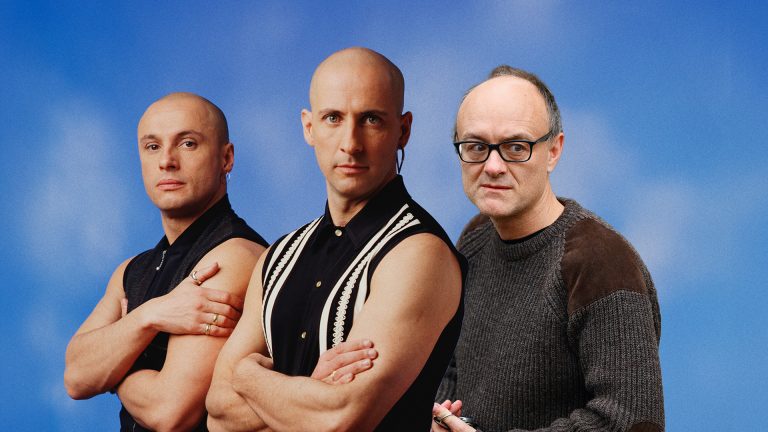
Dominic Cummings
After Team Leave’s notorious 48–52 defeat, the highly rated campaign director Dominic Cummings pursued other opportunities. A year at Thomas Cook ended with the liquidation of the world’s oldest travel agent; a six-month stint heading R&D at Uber’s self-driving division, in the Ombudsman’s words, “put the cause of driverless cars back a decade”. The once-in-a-generation thinker’s need to be proximal to power then led him to become Jeremy Corbyn’s campaign manager at the 2024 general election.
But the idea that Cummings would get to dismantle the entire civil service in exchange for delivering Corbyn to Downing Street on a mandate of renewal quickly soured when it became apparent that everything from ordering lanyards to decommissioning Trident is significantly harder if you’ve just issued 550,000 P45s to the people who could do it.
Cummings’s replacement “Savant Service” was supposed to fill the gap, but to everyone’s surprise, locking sixteen super-talented autists, coders and physicists in Black Rod’s store cupboard and telling them to rebuild the Government Gateway on a Commodore 64, didn’t arrest the country’s descent into chaos.
Things came to a head on Binfire Night, the 5th November 2024, when marauding gangs of unemployed mandarins rioted in Westminster and several thousand motorists still waiting for points to be added to their licences, burned down the DVLA’s Swansea offices.
With the country on a knife edge, in the early hours, six UH-60 Black Hawks descended on Downing Street. After overpowering a security detail consisting of Seamus Milne, Richard Burgon and Ken Loach, a team of US Navy Seals extradited prime minister Corbyn on Donald Trump’s orders.
Claiming that he needed to head north for an eye test – or as some argue, tipped off by US ambassador Rogan – Cummings abandoned Corbyn and fled to his family seat in Durham.
Many said it was an inside job that could not have happened without the complicity of the British state, a theory strengthened by the fact that not one establishment voice has ever called for Corbyn’s return from the New York jail in which he languishes.
Anti-establishment maverick Dominic Cummings, meanwhile, today blogs about Bismarck and NFTs from his wife’s dad’s castle.
Suggested Reading
Dominic Cummings: a one hit blunder
Mark Francois
Nobody caught the Brexit zeitgeist like Mark Francois. A veteran of the Royal Anglian catering corps (TA), Gino effortlessly turned his pugnacious potato-peeling skills into political capital during the referendum campaign. Despite insisting he “wasn’t trained to lose”, after the Referendum Francois lost his Rayleigh and Wickford safe seat. We found no evidence to support his claim that he had “fought and died in over two world wars”, but he was the only Leaver willing to speak to us directly.
“After the count at Wickford leisure centre I couldn’t face going home, so I just started walking until I reached the A127 Fortune of War roundabout. In modern nanny-state parlance you might call it a ‘mental health crisis’, but I prefer the more traditional ‘shellshock’.”
“I became a kind of Essex Ray Mears, living on the intersection, burning AA road atlases to keep warm, sleeping under a makeshift shelter made of windscreen sunshades taped together, and surviving on Bombay Badboy Pot Noodles and Pepperamis from the nearest Esso. People kept beeping their horns at me. I assumed this was in solidarity, but in retrospect, I think it was probably because their headlights illuminated the inside of my tent and they could see my most intimate moments.”
“Things got dicey during the riots. HMRC was a big employer in the Essex commuter belt, and I’ll tell you this for free: when you’re living in the middle of a roundabout, the last thing you want to do is attract the attention of sixty rioting accountants. Which is what the reflective poncho I was wearing did. Mercifully, in the moments when they were debating whether getting hit by a Ford Focus counted as a recoverable expense, I got the phone call that saved my life: the outgoing secretary of the Essex Masters Paintball League asking if I wanted a job. I’ve never looked back.”
“I love the work, even if it is more time-consuming than running a constituency office. The league is flourishing: membership is up 11% year on year, and while collecting subs and chairing match-review panels to decide whether the Basildon Bombers successfully stole Epping Delta Force’s flag is a far cry from legislating against same-sex marriage, in what other line of work do you get to wear camouflage paint to the office?”
“I do a lot of charity work too. Every Armistice Day I do a sponsored lap of the M25 in my Range Rover Velar before placing an individual porkpie on the doorstep of Thurrock services in honour of the unknown soldier. Last year I raised £327 (£136 after deductions for petrol, Doritos, and other expenses) which I divided between Help4Heroes and (because mental health has become important to me since my experiences on the roundabout) the RAC.”
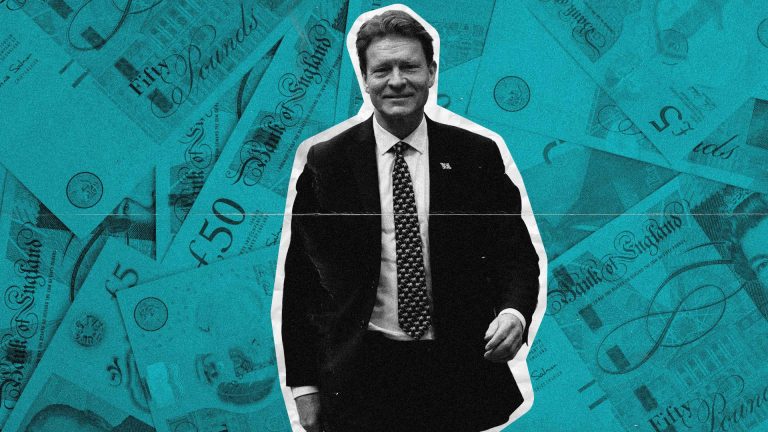
Richard Tice
Operating a sex shop in a former Little Chef on the A1.
Michael Gove
Unable to reposition himself like his nemesis Johnnson, Michael left politics to pursue a career as a German industrial techno DJ. An initially meteoric rise saw him go from playing Bohemia in Aberdeen, to getting booked to play The Berghain inside six months.
But his career imploded when, after playing what should have been a career defining set at Berlin’s global capital of techno, the tastemakers in The Darkrooms (spaces dedicated to the Berghain’s roots in gay fetish culture) accused Gove of being “too freaky, even for us”. The gigs dried up, leading to his announcement at a poorly attended Boiler Room B2B with Craig Richards that he’d had enough of CDJs and was going to edit the Spectator instead.
David Davis
Crisis management consultant at Eurostar. Davis specialises in turning up to high-stakes meetings completely unprepared and presuming that a quick flash of his charming grin will restart broken-down trains.
Daniel Hannan
Hannan understood the 2016 defeat to mean that the British public was ignorant of both the 664 Synod of Whitby and later medieval open field agriculture. Leave’s intellectual architect regrouped. He now spends his days pacing the towers at Reculver, recording daily seven-hour podcasts arguing that Magna Carta specifically prohibited two-pronged European plug adaptors.
Anne Widdecombe
Volunteers in her local abattoir.
Christopher Chope
Longtime advocate of upskirting, Chope took early retirement. In a recent interview in his parish magazine, he says he’s enjoying retirement and likes nothing more than to “idle away a day riding the Central Line wearing a pair of Meta glasses.”
Steve Baker
The self-styled ‘hardman of Brexit’, who also happened to be the chief architect of global financing at Lehman Brothers shortly before their collapse precipitated the 2008 global economic crash, gave himself to evangelical Christianity.
Former members of the Totteridge Pentecostal Church say Baker’s Laying on of Hands nights were legendary among young eurosceptic Christians who liked ex-backbench MPs in rimless bifocals channelling the Holy Spirit by performing the Bloodhound Gang’s “The Bad Touch” on an acoustic guitar.
Following claims that the church was getting “too groovy”, Baker’s sect splintered into the Good Vibrations Church, seceded from the Anglican communion and set up a commune on an isolated farm near Beaconsfield Services. Little is known of what goes on at the “Woburn Waco”.
A nineteen-year-old former nail technician once escaped to the service station where she told the staff at Chozen Noodle that it was a cult revolving around growing turnips, burning wicker men full of PPE, and late-nineties pop-rock.
She returned to Good Vibrations less than forty-eight hours later after a Hawaiian shirt-wearing Baker located her temporary accommodation home and stood outside it singing Reef’s “Oh Place Your Hands” for three hours.
Jacob Rees-Mogg
As politics slipped back into a technocratic routine that left little room for his ostentatious ahistorical parliamentary theatre, Rees-Mogg welcomed losing the whip, stayed true to his principles and repositioned himself as a reality TV star.
His unexpected second act The Rees-Moggs House, an offbeat fly-on-the-wall documentary that follows a self-styled anachronism as he navigates modern domestic life became a huge smash hit on both sides of the Atlantic.
Quotes like “Anselm have you seen my pocket sundial?” and “Alfred, release Sixtus from the catchpole” are now ubiquitous, particularly among Gen Z.
Regularly compared to the earlier genre-buster The Osbournes, albeit with Rees-Mogg offering fewer rabid reactionary talking points than Sharon, the family are now among the world’s most marketable celebrities.
Jonathan Gullis
Shouting.
John Redwood
One consequence of Johnson’s withdrawal of the whip from 21 prominent Brexiteers was the detonation of the European Research Group.
While hardliners such as Bill Cash and Peter Bone regrouped to form the continuity European Research Group, Redwood formed a splinter paramilitary outfit, the Decimalisation Repeal Front (the fastest growing Facebook page among people who have liked the “Justice for Tony Martin” and “Bring Back Top Gear” pages.)
He is said to operate an underground imperial-currency mint from the basement of the Wokingham Conservative Club, which supplies a shadow economy of freemasons, British Legion daytime drinkers, and Morris Dancers with pounds, shillings and pence.
Penny Mordaunt
Employed by the replica Balmoral estate in Florida to stand to attention in 95-degree heat with a massive broadsword to protect King Charles III from alligators.
Lord Cruddas
The billionaire financier reacted to single-currency Britain by launching PeerCoin, a digital trading platform operated from a superyacht that allows users to trade cryptocurrency for virtual seats in a simulated House of Lords.
Chris Grayling
Grayling became the operational manager of PeerCoin. After a spreadsheet input error minted 500,000 Baronesses of Cockermouth in a single afternoon, the knock-on hyperinflation in the ermine market saw both the collapse of the entire venture, and the extinction of the Eurasian ermine stoat.
Nadine Dorries
Following the relocation of her political idol Boris Johnson to Brussels, Dorries channelled her grief into writing nine-hundred-page clogs and shawls historical fantasy novels where Brexit had won by 98%. The Sunlit Uplands became the biggest selling book series by a British author since Harry Potter, and made Dorries a billionaire. The first two screen adaptations, The Boy Who Kept Sovereignty and a Heart Bound By Fishing Quotas both swept the Oscars to become the highest grossing British films of all time. The highly anticipated third film in the series, The Red Wall Whispers, is due for release in August.
For more satire from Henry Morris, read his Substack