In May, 1969, Colombian artist Luis Caballero wrote to his friend Beatriz González. “Unfortunately for you, the world of your painting is exclusively Colombian, which no one outside of Colombia can understand, let alone feel. You will never be appreciated abroad… unless one day (far, far away) the world’s experts take an interest in Colombia and discover your painting.”
Well, they have. More than 50 years later, the work of the artist who became known as La Maestra is being celebrated around the world with a travelling retrospective at the Pinacoteca de São Paulo, London’s Barbican (until May 10) and the Astrup Fearnley Museet, Oslo. It follows previous major shows in Bordeaux, Madrid and Berlin (2017-18) and in Miami and Houston (2019)
This time, there is extra poignancy. González died on January 6 in Bogotá, at the age of 93. The 150 artworks in the touring exhibition, collected in a book by Prestel, are an eloquent testimony to her talent.
Her career is traced in a blaze of colour from early days as a subversive interpreter of the European masters, witty satires of celebrity, to dramatic representations of her anger and pain at the corruption of Colombia’s ruling class and the violence which beset the country for decades.
Caballero, himself a familiar figure in Colombia’s art world, suggested that the work González created was rooted in the culture and history of her country. ‘Someone who has never travelled from Bogotá to Bucaramanga (her home town) will never be able to understand your workload,” he wrote, and she acknowledged the influence on her of the streets with their houses and shop windows burnished with a kaleidoscope of colour.
Her earliest paintings eschewed the Abstract Expressionism of the US artists which was all the rage in the early 1960s. Instead she turned to artists such as Diego Velázquez and Johannes Vermeer, not just for artistic inspiration but to show how artists in underdeveloped countries such as her own could challenge the assumption that the only art which mattered was western and inevitably, colonial.
In that spirit she transformed the delicate precision of The Lacemaker by Vermeer into a series of sturdy, abstract figures in blocky, primary, colours. She sought inspiration from the shop signs, posters and adverts she saw on the streets, even appropriating the colours of a calendar for a cigarette brand, Pielroja for her Lacemaker Pielroja Almanac. It could not be more of a contrast to the original which hangs in the Louvre .
The most spectacular re-working of a classic is her version of Edouard Manet’s Le Déjeuner sur l’Herbe, which González had noticed as a tatty poster in a food shop. “This is how one witnesses a work of art in an underdeveloped country,” she said and in what is something of a riposte to its importance in the western canon she transformed its shabby provenance into a painting 12 metres wide by seven high which fills a wall of the gallery from top to toe.
Suggested Reading
Does anyone really understand Gertrude Stein?
By the mid-1960s she decided that she didn’t want to be ‘a lady who paints’ and sought inspiration from the everyday – newspaper cuttings, magazine stories, postcards – many of which included graphic scenes of violence.
One of her first was generated by a photograph in a newspaper’s crime section which showed an unremarkable couple, smartly turned out, both clutching the same bouquet of flowers. She did not know that the couple were to commit suicide by jumping into the reservoir of the Sisga Dam to ensure the girl’s purity or that the photograph was intended to be a memento for the couple’s families.
González made three versions of The Sisga Suicides (1965) which contrast the ordinariness of the couple with the drama of their deaths and prompts the question: why? The more you study the images, the answer remains elusive.
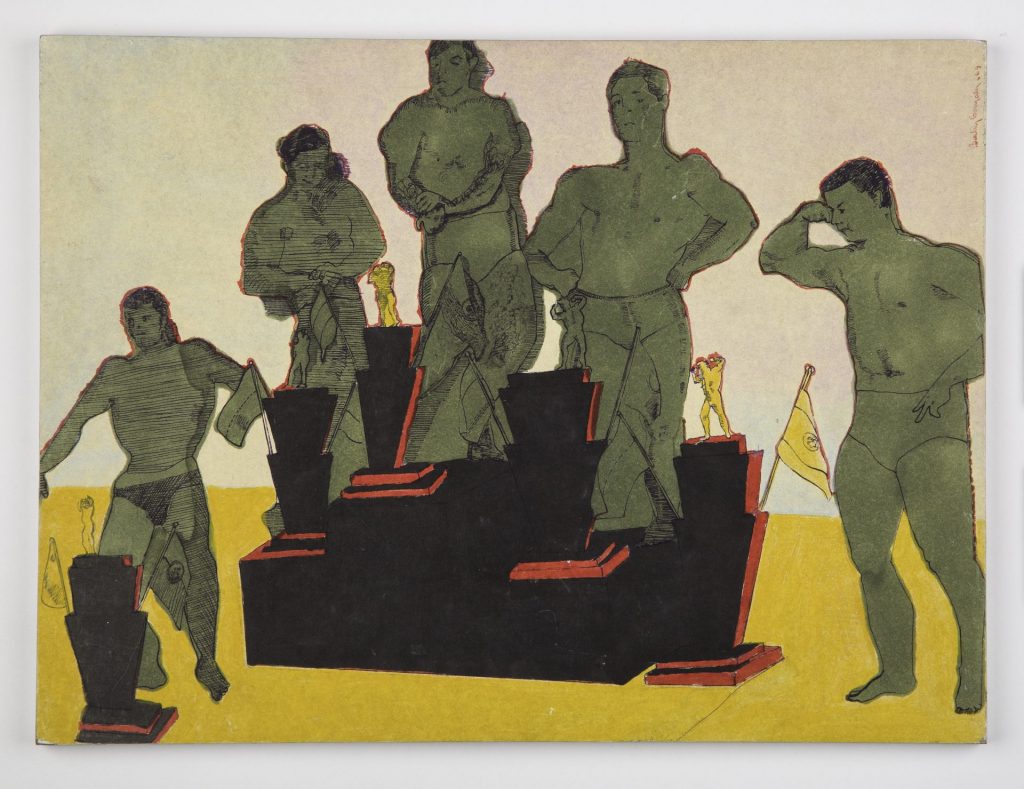
She drew from the postcards pumped out by a publishing house, Graficas Molinari, which specialised in religious scenes, cosy pictures of pets, images of motherhood and classic works of art. She was fascinated by the icons of royalty and celebrity, particularly the British royal family – the late Queen on horseback, waving, posing in regal splendour – Jacqueline Kennedy on a camel, Simon Bolivar on a peso, and a still life with cats. Kitsch but sometimes caustic.
González applied that iconography to furniture culled from Bogotá’s flea markets and decorated tables, TVs, beds and chests of drawers with pictures of famous faces such as John F Kennedy, various popes, and a tabletop based on a postcard of Leonardo da Vinci’s The Last Supper. She painted the Mona Lisa in place of the mirror of her coat rack and kept it at home.

But then she changed. From the 1980s, González became increasingly disillusioned with the criminality and corruption which characterised the Colombian government headed by president Julio César Turbay Ayala. His party-loving persona contrasted with the plight of his people, hundreds of thousands of whom were dying in the whirlwind of violence stirred up by guerrilla groups, drugs gangs and the military.
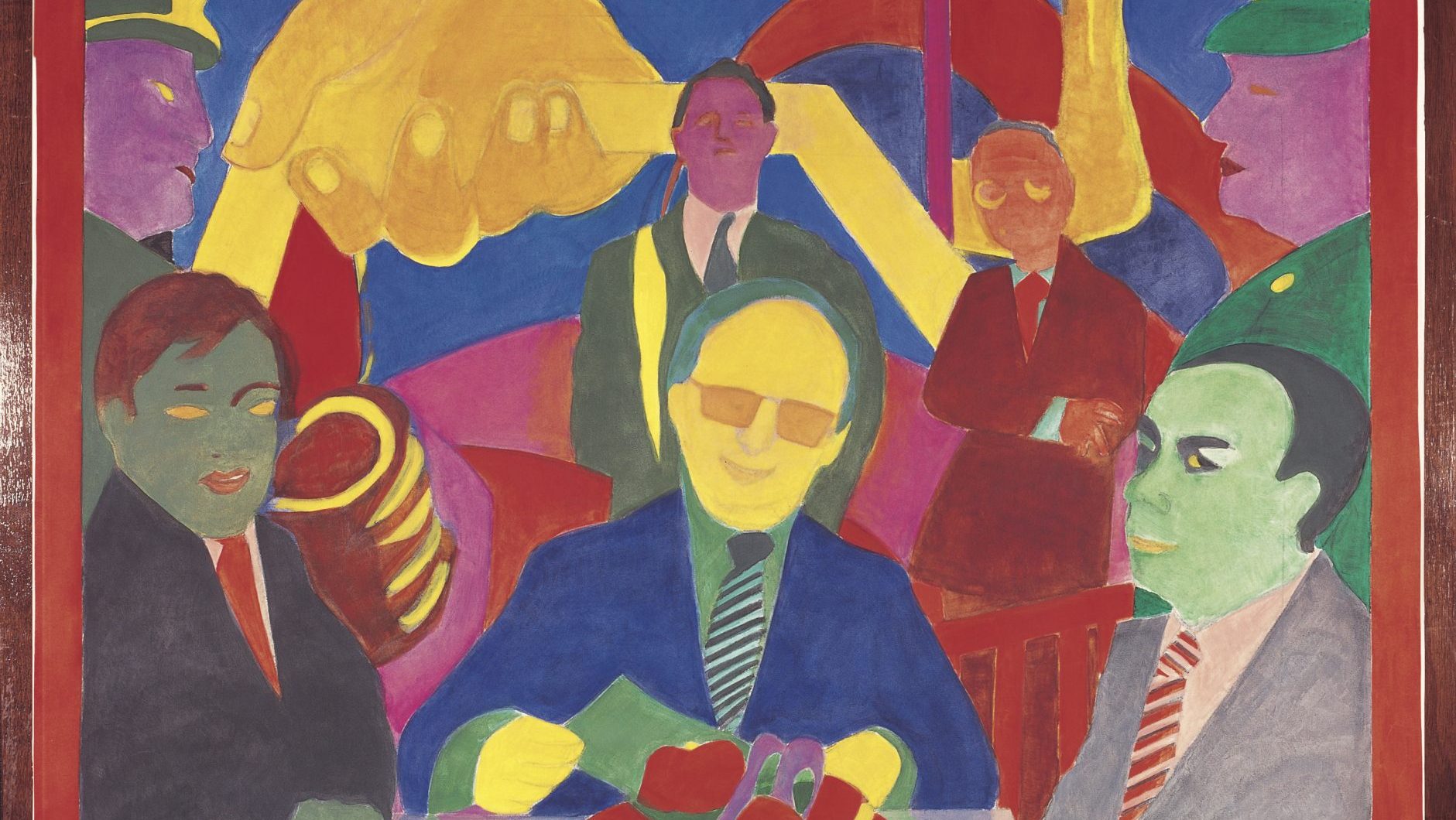
González made countless sketches of Turbay glad-handing politicians, water skiing or holidaying with his family and in Interior Decoration (1981) she exaggerated his excesses by showing him at a party, glass in hand, surrounded by fawning acolytes, in a 140-metre-long fabric curtain which she then cut up and sold by the metre.
After 1985, her satire turned to angry despair after a guerrilla group holding about 100 hostages in the Palace of Justice in Bogotá, were driven out and killed in their scores when the president of the day, Belisario Betancur ordered his military to set fire to the building.
“I could no longer laugh,” said González, who attacked the leadership with a series of damning images, but saved her particular savagery for Betancur with Mr. President, it is an Honour to be with you at this historical moment, based on a photograph of him and his aides celebrating the outcome.
A 1986 version in muted colours has him smiling contentedly at a charred corpse laid out before him, while in another painted the following year, the corpse is replaced by a bunch of flowers. Their brilliance and his smile are a mockery of the tragedy.
As she got angrier, the imagery became bolder, highlighting killings, racism and injustice and increasingly focusing on the women who had been bereaved in the violence.
Suggested Reading
The secrets of the painter who made cloth come alive
In a powerful tableau, four portraits of women are placed together in an alcove, a little apart from the main gallery and set against a dark blue backdrop. It is an electrifying moment. One woman covers her ears, another her mouth, another her eyes. González herself appears naked. In Self-portrait Nude, Crying (1997) she stands in all her vulnerability, her head in her hands despairing at the cruelty around her. “I am all the mothers together,” she said.
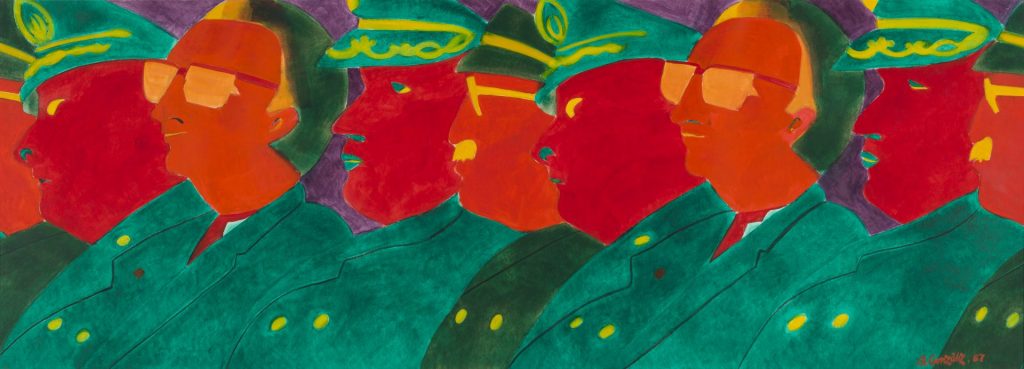
For her, as the paintings show, death was an everyday occurrence. Mourners with a shadowy, almost otherworldly, character carry wooden caskets containing the bodies of those they loved to the cemetery in Bogotá where she made perhaps her most noble work, Auras Anónimas. She lined the wall of a crumbling columbarium, where urns are placed in niches, with 8,956 silhouettes in silkscreen prints of the cargueros – the porters who carried the dead to their rest.
The exhibition fills one room with the cargueros to claustrophobic effect, but, obviously it cannot compare with the emotion of standing before the niches in the heat and dust of the cemetery where others also come to bury their dead.
Catalina Casas, whose gallery Casas Riegner is one of the most important in Bogotá and who worked with Gonzalez for many years, says: “It was a perfect example of how art became a tool to protect history, architecture, and mourning. The idea that the auras of so many unidentified dead from our war-torn history could persist was fundamental for her.”
It is intrinsically Colombian; it couldn’t be anywhere else. But says Casas: “She always insisted she was a ‘provincial artist’ and therein lay her greatness and immensity: from her origins and the depths of her own story, she managed to speak to anyone, anywhere in the world.”
Beatriz González: A Retrospective is published by Prestel. The exhibition is at the Barbican until May 10 and then the Astrup Fearnley Museet, Oslo, from June 12– October 11
 Most popular

My truly deranged encounter with Trump apologist Kellyanne Conway


The moral depravity of Robert Jenrick


Is this the real reason Trump keeps falling asleep in public?


Suella Braverman’s book has sold only 106 copies. This is why