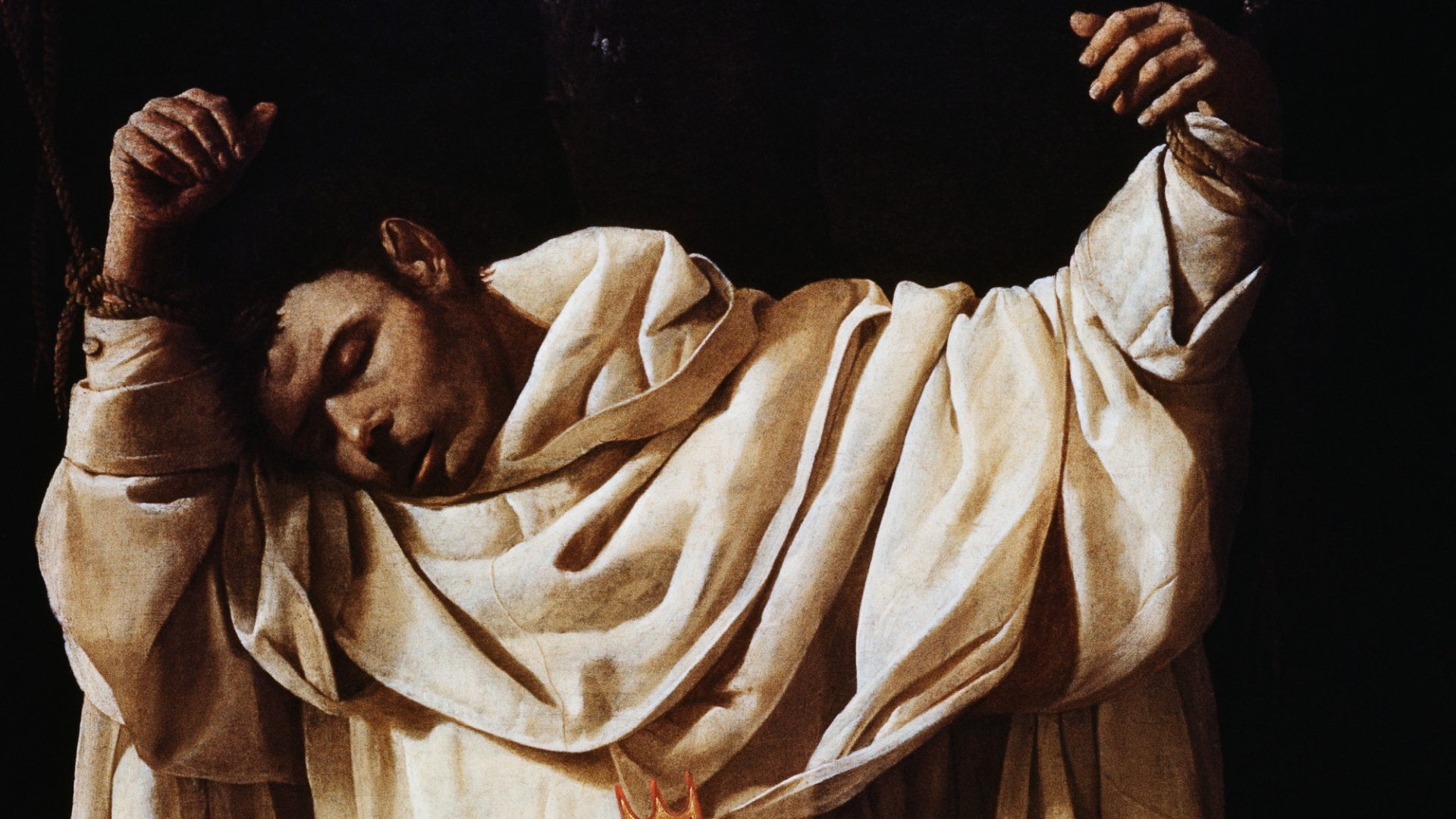
A priest’s lace-edged gauzy overgarment is so crisp and pristine it seems to shimmer and crackle. An ample, twisting loincloth, long enough and wide enough to be a shroud, pulsates with purity. And the deep recesses of a friar’s habit are so dark that the figure seems to dissolve before the viewer’s eyes.
The Sevillian painter Francisco de Zurbarán had textiles in his blood, and the first UK exhibition of his work, at the National Gallery, proves it. His prosperous family were from Extremadura, western Spain, wealthy from fabrics as well as from property. Zurbarán worked from cloth hung on mannequins, and mastered the way it fell.
Born at a time of abundant art commissions by burgeoning monasteries, Zurbarán started his career in the Seville workshop of the obscure Pedro Díaz de Villanueva, learning drawing and sculpture as well as painting. In a time of superb craftsmanship and intense religiosity, lifelike sculpture was considered the superior art form. The useful combination of knowledge of both fabric and of three-dimensional composition gave Zurbarán a special talent for creating realistic volume in paintings that, 400 years later, still stop gallery-goers and church visitors in their tracks.
Zurbarán’s work is predominantly found in Seville, where he largely lived, and also in Madrid’s Prado, from where several prestigious loans have travelled to London. Their arrival illustrates the significance of this exhibition, the UK’s first dedicated to the artist.
Although it is religious figures that dominate his work, Zurbarán is also admired for monumental still lifes, simultaneously lifelike and timeless. Early in his career, Zurbarán was commissioned by the Sevillian “barefoot” Mercedarian order to produce 22 large works for one of three cloisters in their rebuilt monastery in the heart of the city. These portraits on canvas of significant and inspirational figures in the order would have hung under cover, but open to the extremes of temperature and humidity around a hedge-lined quadrangle.
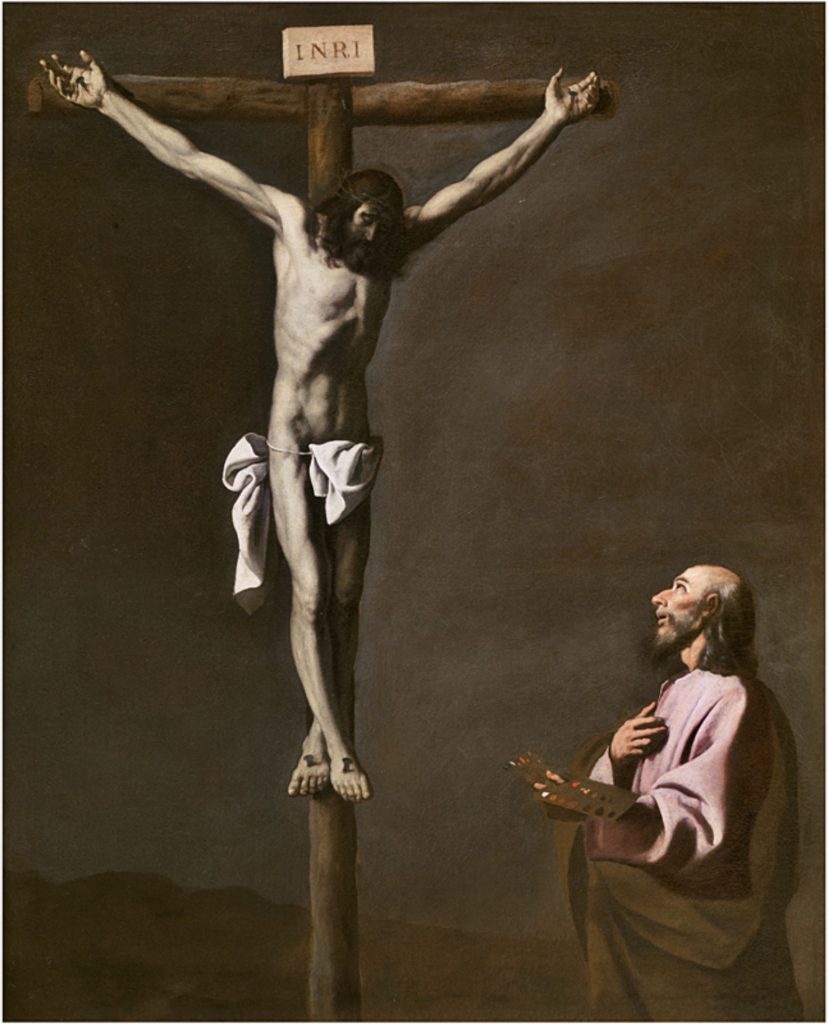
In the monastery’s mortuary, a painting by Zurbarán of Saint Serapion shows the martyr standing with his hands bound to an overhead pole, as almost sumptuous lengths of fabric hang from his broken body. The paradox of lengths of plain material lavishly arranged runs through much of Zurbarán’s work: in his Crucifixion, on loan from the Museo de Bellas Artes in Seville, Christ’s loincloth is beautifully rendered.
So many saints whose lives were held up as examples of Christian piety and sacrifice came to horrific ends, as recorded in almost ghoulish detail by some other artists. Zurbarán is not interested in depicting these martyrdoms, but in the saint’s ensuing serenity.
This quality was not confined to devout men. Female saints were celebrated by Zurbarán too, among them Saint Casilda of Toledo, who also showed compassion to prisoners. She took to sneaking bread, concealed in her skirts, into their cells.
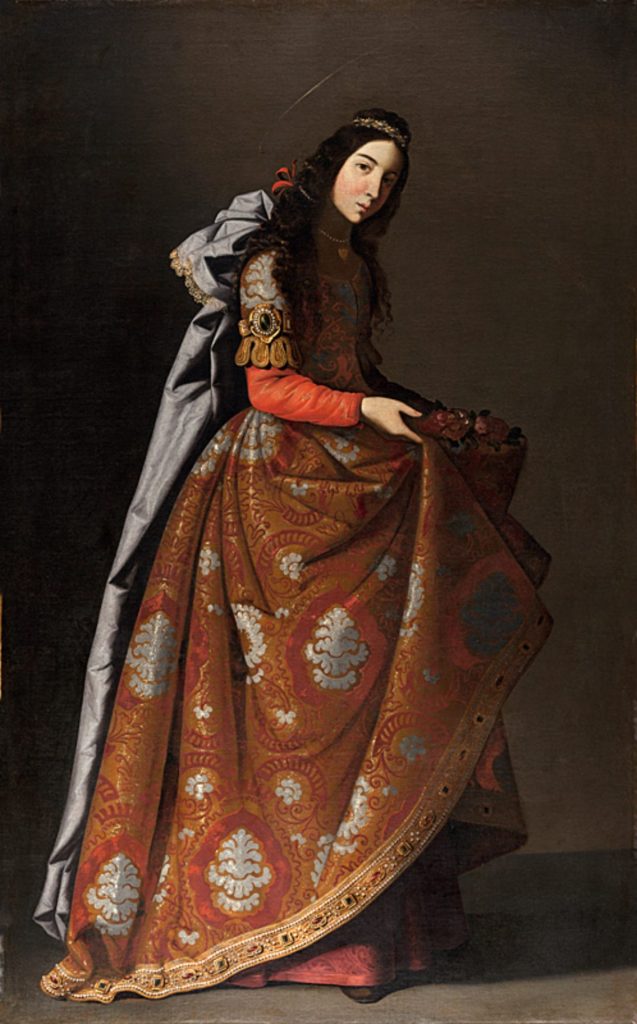
Zurbarán’s portrait shows his talent with fabric, this time jewel-encrusted braid. The bread concealed in the folds of her clothing has turned miraculously, upon inspection by suspicious soldiers, into roses.
The painter’s rise came at a time when trade with the Americas had made Seville immensely wealthy – it was the sole point of entry for lucrative cargoes such as potatoes, tomatoes, cocoa and tobacco. In time, the artist would send his canvases in the other direction, painting speculatively for sale across the Atlantic. That this was a hazardous business is proved by correspondence with a ship’s captain, who appears to have had something of a side hustle as an art dealer, in which Zurbarán demands to know what has happened to his promised sales.
Such success was short-lived. In 1649, plague raged through Seville, killing half the population, including Zurbarán’s artist son Juan, a skilful painter of still lifes. Zurbarán married three times, losing his first two wives at a young age, and none of his many other children appears to have survived beyond infancy.
The plague had professional as well as personal consequences. Commissions diminished, and Zurbarán would no longer employ a busy workshop.
Born only the year after Diego Velázquez and nearly 20 years before Bartolomé Esteban Murillo, Zurbarán is arguably the least well-known of the triumvirate who dominated early 17th-century Spanish art. He worked alongside Velázquez on big set-pieces for the extravagant Philip IV’s Hall of Realms at his Buen Retiro Palace in Madrid, with Zurbarán contributing 10 labours of Hercules and a line-up of stern gentlemen in big breeches devising the plan of action that will stop an invading English fleet.
The patron saint of painters is Saint Luke. Like most saints, he has a busy portfolio that also includes physicians, goldsmiths, butchers, brewers, glass workers, notaries and bachelors. But it is as an artist, as well as an evangelist, that he often appears in religious artworks and with a variety of attributes, including a palette or brush.
Suggested Reading

Ovid and the sublime art of suffering
In one of the important loans from the Prado, the rapt artist at the foot of the cross is a cypher for Zurbarán himself. For all his huge output, we know so little about the artist – we have no likeness, and cannot assume that this is a literal self-portrait. But it is easy to warm to his gaunt features and reverential expression.
Instead of searching for Zurbarán in his painting, we should perhaps see this self-effacing figure as the paradigm of a man dedicating his distinctive gift for painting to a faith that was central to his time and place. It was a different world, but our fascination with faces, love of beautiful clothes and response to the calm contemplation of still life are unchanged. To those preoccupations, Francisco de Zurbarán speaks even now, in a voice like no other.
Zurbarán is at the National Gallery, London, from May 2 to August 23; at the Louvre, Paris, from October 7 to January 25, 2027; and at the Art Institute of Chicago from February 28 to June 20, 2027