Deborah Levy’s latest novel, My Year in Paris with Gertrude Stein, promenades joyously through the City of Light in search of its subject, but sometimes it can feel a little style-over-substance.
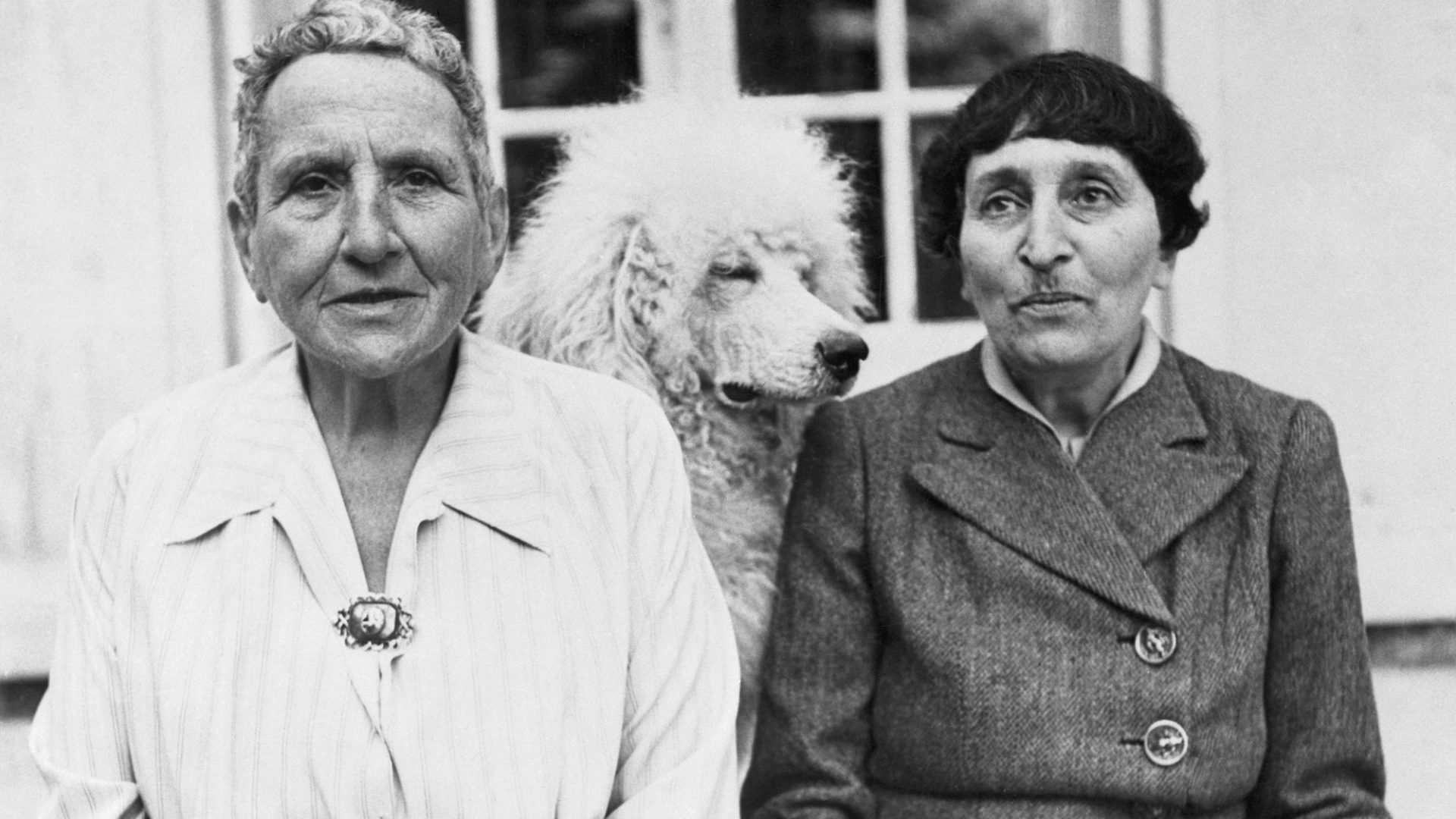
Stein was the American novelist who went into self-imposed exile in Paris in 1903 and lived there for nearly 40 years. Today she’s best known for sayings like “there is no there”, about her home town of Oakland, California, and for her misleadingly titled 1933 best-seller The Autobiography of Alice B Toklas, about her cannabis brownie-making publisher partner.
Levy is the celebrated author of Swimming Home and Hot Milk, recently made into an above-average film starring Emma Mackey and Fiona Shaw. She is famed for her autobiography as much as her novels and for her brave meditations on female experience.
My Year in Paris… explores new territory for Levy in both style and subject. It leans lightly into non-fiction, drawing on the life of a colourful and well-known literary figure and the history of Paris, the city of that aimless female wanderer, the flâneuse.
Stein has been the subject of numerous biographies, academic studies and thoughtful investigations, not to mention name-checks, blandishments and nods from artists, writers and undergraduates who wish to seem dark, mysterious or exceptionally learned. This is because her writing has a long history of being maligned as difficult, obtuse or deliberately obscure.
Stein immersed herself in the literary and artistic scene of the Left Bank in Paris at the height of its power, numbering among her friends and acquaintances luminaries like Picasso (who painted her portrait), Hemingway, poet and arch-fascist Ezra Pound, and countless others. Levy’s narrator attempts to do similarly, to explore female creativity in the City of Light and to revel in its affinity with artistic community and history.
Stein is one of those modernist writers who people try to throttle meaning from, in order to project something important about themselves. Levy seems instinctively to know this and allows Stein’s style and words to flow through this text, alongside biographical elements and details of her works, without trying too hard to translate or interrogate them for her readers.
There are some wonderfully Steinian phrases: Stein is “bulksome” not “buxom”, phrasing that perfectly encapsulates her stocky handsomeness. Yet there are moments where Levy seems to lunge for profundity and come up short, which is unfortunate because the thing about profundity is that you is or you ain’t. You’re profound or you’re a woman giving airs to a sandwich you once ate in a French rainstorm.
Suggested Reading
Rebecca Solnit’s radical optimism
The text flits between insights into Stein’s own life in the 1920s and the narrator’s experiences of Paris in 2024 alongside fictional characters Fanny and Eva, whose prosaic and very 1920s names and dilettante urges create a slippage between both eras. So too does the historical period, that being characterised by Europe’s slide towards a world war and this being, well, characterised by Europe’s slide towards a world war.
As the narrator remarks: “No one wanted to dig it all up, to dig up the twentieth century and find Hannah Arendt in 1947, dust on the shoulders of her suit jacket, a pack of cigarettes in her pocket, speaking calmly to them about the banality of evil in their own century.”
“Dilettante” means someone with a great and immersive interest in a particular subject, but often it is applied to mean hobbyist or, at worst, a charlatan. At its most unkind, it denotes a desire to belong that is denied or falls short. Levy’s characters can seem a little contrived or unconvincing in their pursuit of arts and of Stein.
In some ways, it’s unclear whether they are being sent up for their earnestness, whether as the text is gently mocking in its attempts to emulate the Steinian, or whether it is a genuine attempt to eulogise and memorialise Stein and those who wish to follow in her footsteps.
In fact, there are plenty who would call Stein a phoney. An American in Europe. Using her brother’s wealth to live the life of an impoverished French writer. Collecting members of the avant garde like buttons.
Perhaps this is a double bluff. Perhaps she was a “real phoney”, like Holly Golightly. Perhaps Levy is too. Someone so enraptured with style that it can seem like an exercise, a costume, a mannerism. Perhaps that is what art is, and this is a very knowing meditation on it.
Here we hit the problem with Stein: Stein’s writing is brilliant and baffling, daft, whimsical, occasionally racist, a huge overreach and a stroke of genius. I know 20-year-olds who write the most profound and beautiful essays on her Tender Buttons, and elderly male professors who have studied her all their lives and don’t get it.
She is elusive. She requires a submersion and a submission. You have to submit to Gertrude.
Which is why My Year in Paris with Gertrude Stein feels a little too much like pastiche. The paddle without the plunge.
My Year in Paris with Gertrude Stein by Deborah Levy is published by Hamish Hamilton.
Dr Katherine Cooper is a writer and literary historian