Why use a picture of a bare foot to spearhead the publicity for a photographic exhibition? Not a glamorous, beautifully pedicured, brightly nailed foot, but one with scabby skin and flaking varnish. Not a pretty sight.
But, as Isaac Blease, curator of Dark Tales, an exhibition at the Martin Parr Foundation in Bristol explains, this is an example of documentary photography making the familiar strange.
The scope of the show is drawn from 5,000 prints owned by the Foundation and covers the 80 years since WWII, an era, like too many others, characterised by violence, industrial decline and social discord as well as the wryly amusing and the obscure. Among the familiar names on show are Parr himself, Kjell-Åke Andersson, Bill Brandt, Don McCullin, Lee Miller, Donovan Wylie and Gilles Peress.
The premise of the show is that the darkness depicted shares common ground with the gothic art and fiction books like Mary Shelley’s Frankenstein, the outlandish paintings of Henry Fuseli and Horace Walpole’s haunting classic novel The Castle of Otranto.
The dictionary defines gothic as “a style of writing or films in which strange things happen in frightening places”, and Blease admits: “None of these photographers would necessarily deem their work gothic. We’re using it as a window to look at these works in a different context and see what meanings can be evoked.”
Nowhere is that ambiguity better illustrated than by Sarah Pickering in her 2008 series Incident. In one, the familiar insignia of Boots the chemist is charred and blackened, hanging in a foreboding gloom where boxes have been upturned in some violent altercation.
A lift door is framed at the end of a corridor with, incongruously, boot prints on the sooty wall. Why? What? There has obviously been a fire, maybe given the current climate, a terror attack, from which everyone has fled, leaving an eerie emptiness behind.
It’s all a fake. The lift and shop were part of a set-up used by the fire service and the police in training exercises made 20 years ago when Pickering was artist in residence at the UK Fire Service College in Moreton-in-Marsh, Gloucestershire. As she says, in the spirit of making the familiar strange: “The ordinary always holds the potential for something extraordinary to happen.”
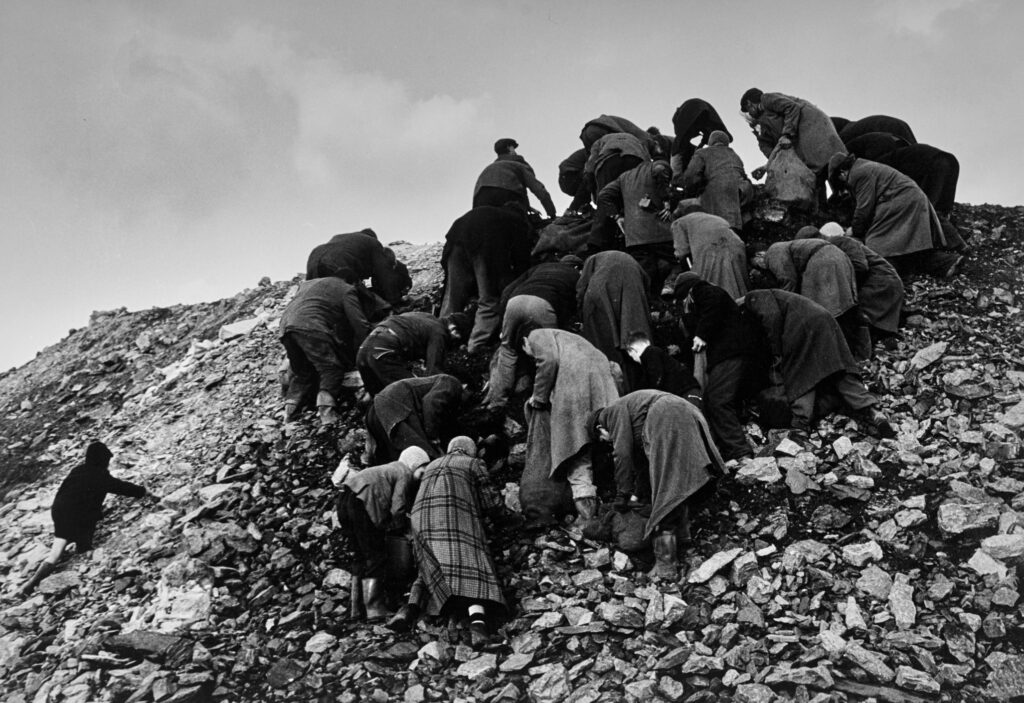
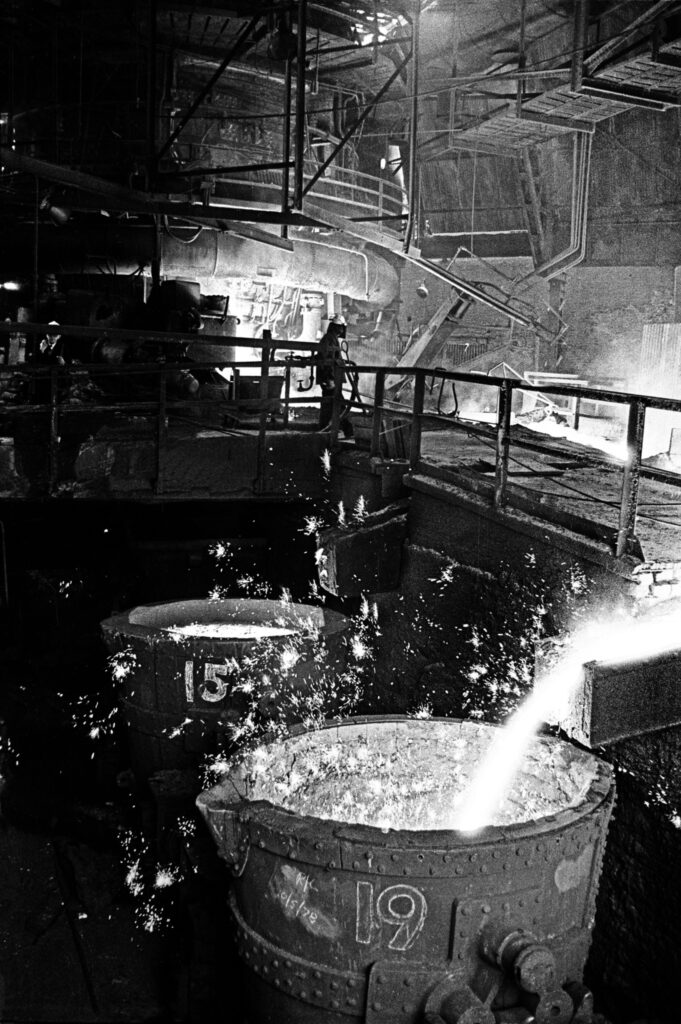
In a section entitled The Castle, the cameras tell an unequivocal story of industrial decline and individual hardship in what the exhibition notes fancifully describe as making “deals with vampiric market forces.”
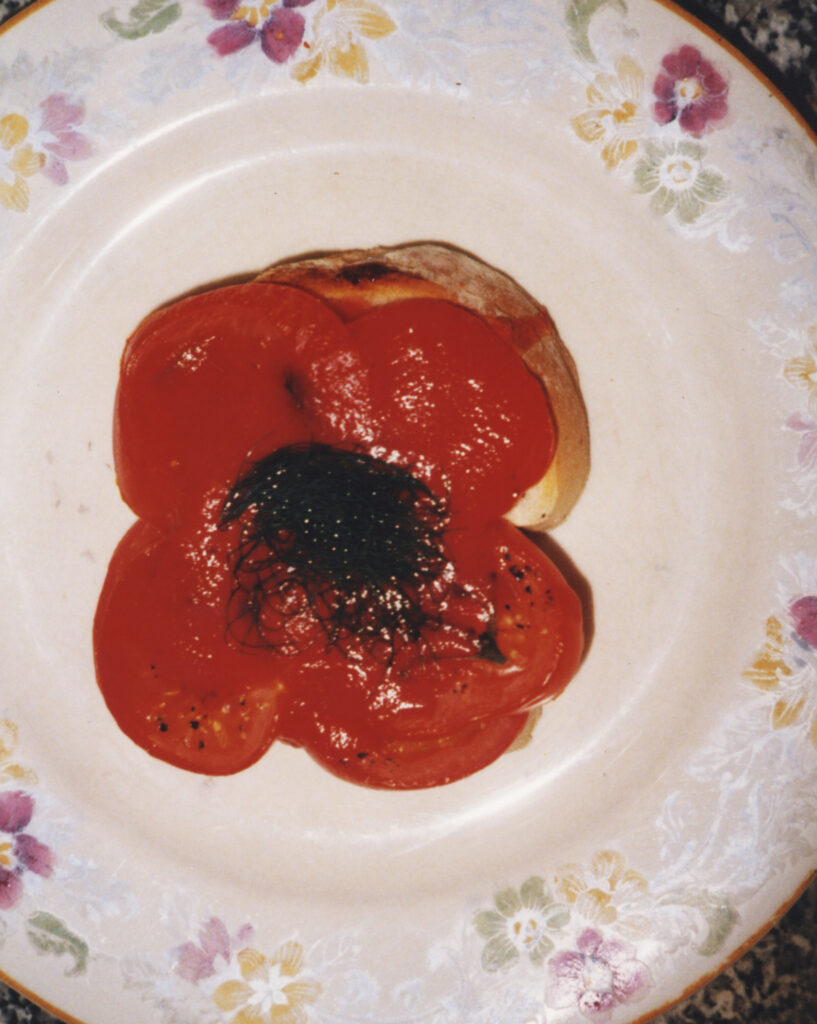
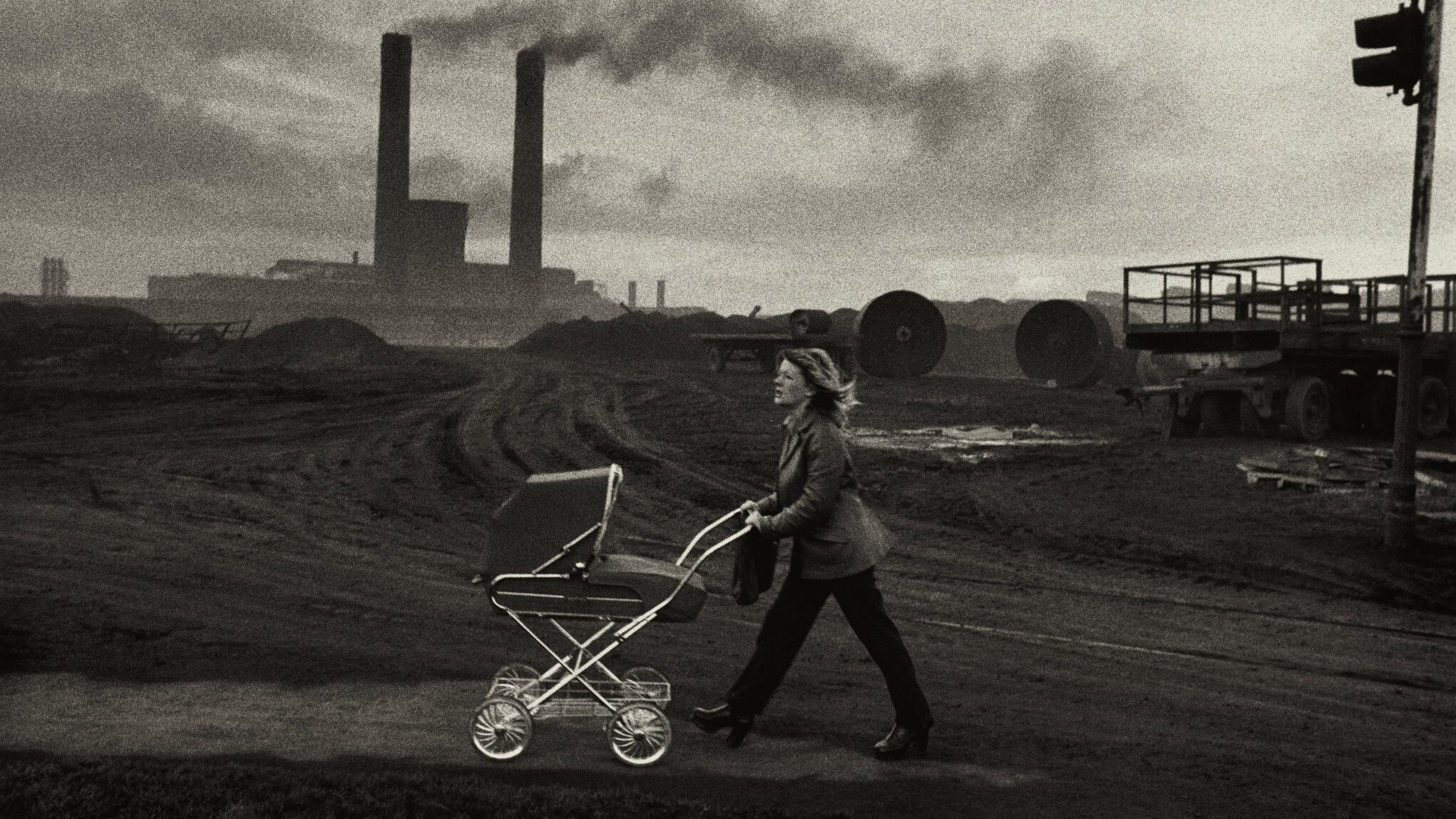
Don McCullin captures the wasteland of Consett, County Durham, in 1974 with a mother resolutely striding out, pushing a pram through fields of ash and dereliction while in the distance factory chimneys belch plumes of pollution.
Kjell-Åke Andersson lived with the miners of Bargoed Colliery, South Wales, in 1972, for three months and portrayed the well of pessimism which gripped so many. A miner sits resigned, huge hands clasped, eyes sunken and expressionless, numbed by years of gruelling work, while the pressure of working underground in the dark and the dirt, is dramatised by the stark image of a miner’s face covered in coal dust is illuminated only by his helmet lamp and torch. There is a desperation in the way the whites of his eyes gleam from the black of the mine.
Perhaps the most poignant in this section is Graham Smith’s Thirty Eight Bastard Years On in which an exhausted worker from a Middlesbrough steelworks in 1983 sits, worn out and defeated, nursing a mug of tea in a spartan, tiled canteen.
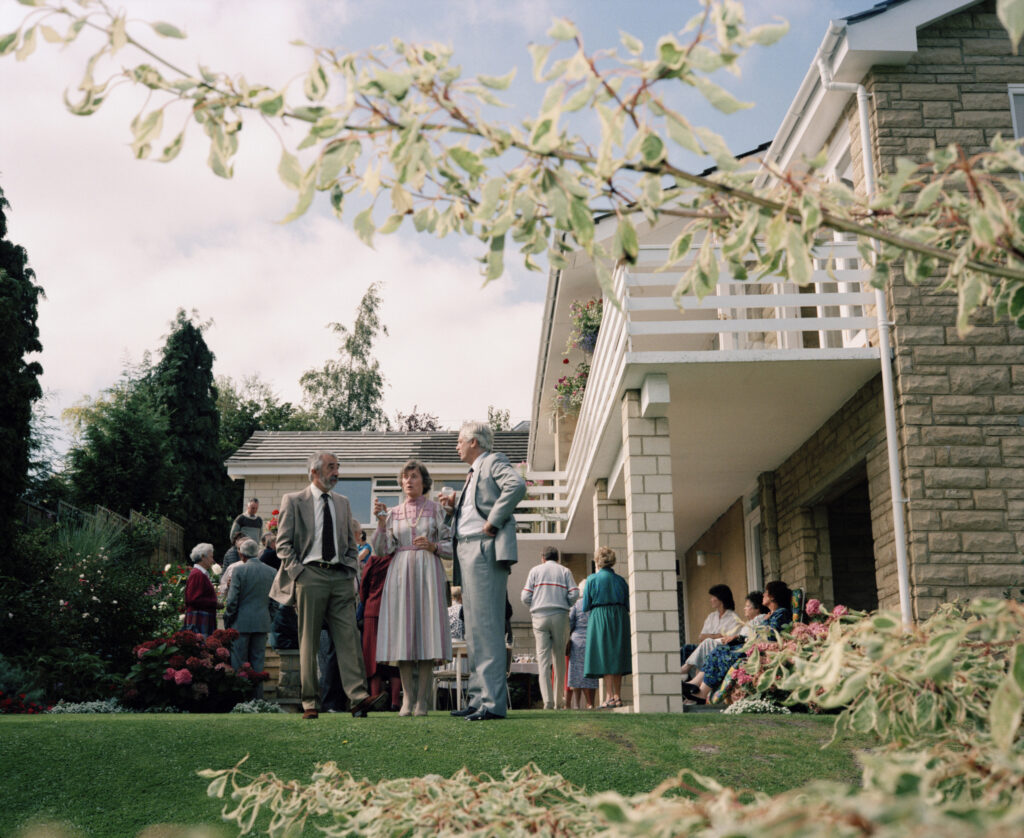
In Conservative Party Fundraiser, taken in 1988, Martin Parr takes a typically wry look at the men in their suits and ties, the women in their summer frocks, drinks in hand, assured of their place in society. In Parlourmaid and Under Parlourmaid Ready to Serve, taken by Bill Brandt almost 50 years earlier , two servants stand obediently and rather apprehensively by a loaded dinner table, crisp table napkins, three wine glasses for each placement and an elaborate floral arrangement. They too know their place.
In complete contrast, Jo Spence, whose unadorned foot kicks off the show’s publicity, is one of a series of self-referential works by her and collaborator Terry Dennett in The History Lesson (Remodelling Photo History) from 1982. Another example here is Subordination, in which a pair of hands vigorously scrub clothes, but others include her in a bathtub, lying naked in a field in a field and standing topless and looking determined by her back door holding a broom.
What to make of it? Spence, who died in 1992, explained that they were attempting to “make strange” the everyday, “reinventing” photography so that their common-sense meanings became disrupted.
It is hard to be more common-sense than John Myers’ Looking at the Overlooked (1975), represented here by a row of prefab concrete garages, one of a series which includes a rooftop car park with a solitary car, a TV set with a bunch of wilting flowers on top, an unidentified power substation and a bus stop.
He has dubbed them landscapes without incident, ‘boring’ photographs, but their very banality elicits a curious fascination. What might lurk behind the garage door? Will the bus ever arrive?
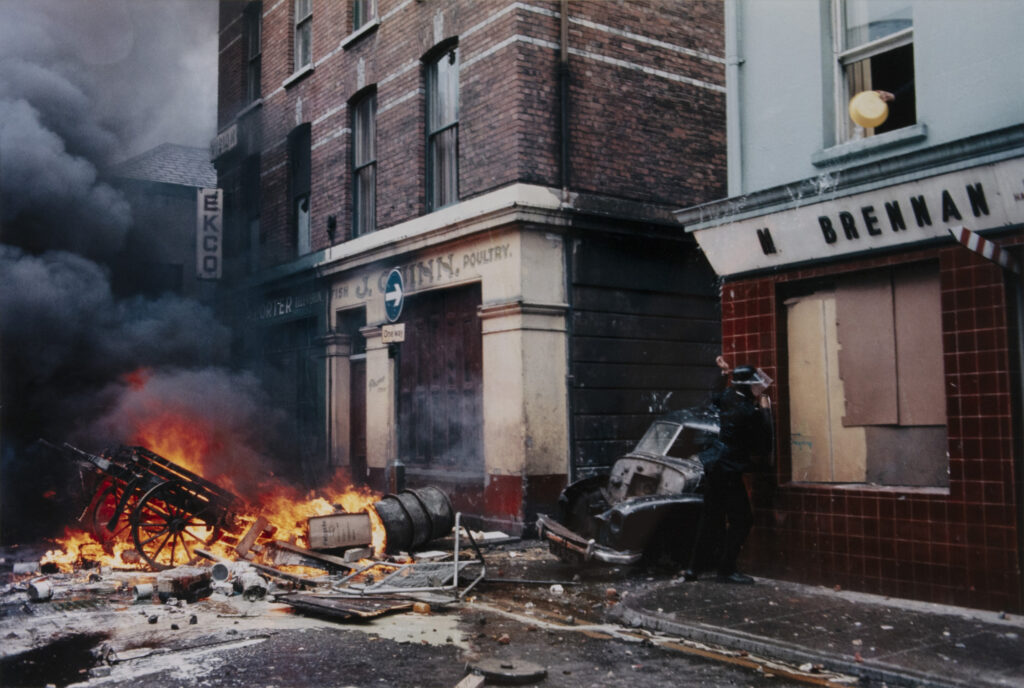
No such ambiguity in a section labelled Double Take. Donovan Wylie spent almost 100 days photographing the Maze Prison, built at the height of the Troubles in Northern Ireland. Two cells, with their immaculately made steel beds and friendly floral curtains bely the fact that they were used by prisoners.
The reality outside the cells is starkly represented by Gilles Peress with Bloody Sunday. A dead body, blood seeping from his head, lies on the pavement of a forsaken housing estate.
Maybe this is where the Gothic and the dark meet. As Walpole wrote in his preface to The Castle of Otranto: “there is no bombast, no similes, flowers, digressions, or unnecessary descriptions. Everything tends directly to the catastrophe.”
Dark Tales runs until November 15 as part of the Bristol Photo Festival. Sarah Pickering is giving a talk at the Parr Foundation on November 4.
 Most popular
I went looking for Trump’s America – this is what I found
18 things that will absolutely, definitely happen if Trump gets whopped in the midterms

Emily Maitlis’s diary: Why are we turning away the people who could make Britain richer?

‘The deep state stole my mini-budget’: An exclusive extract from Liz Truss’s new book